Uptick in airfreight rates creates mirage of market recovery

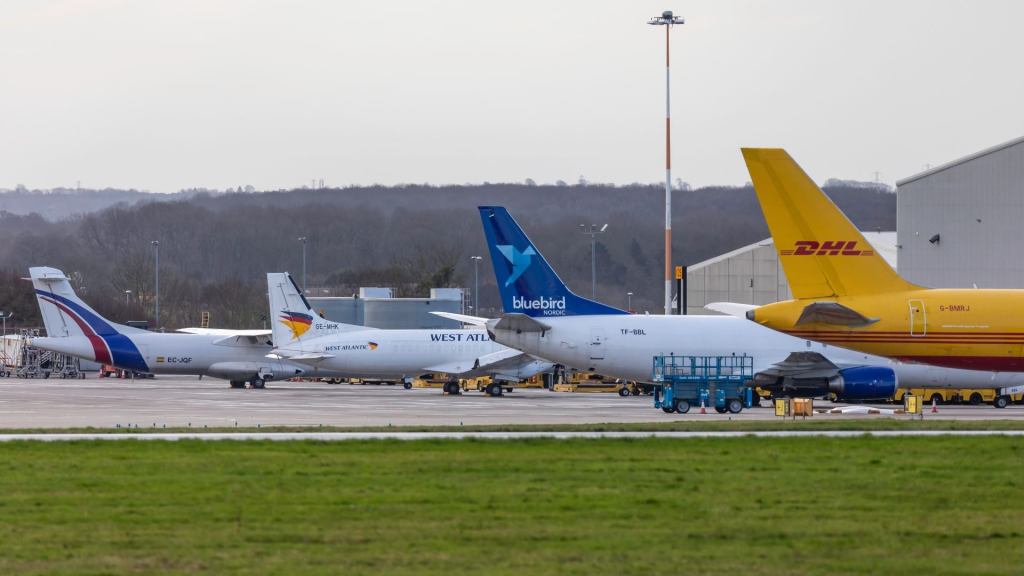
Cargo jets, including a yellow DHL plane, in a row at an airport.

Air logistics stakeholders may want to pump the brakes on celebrations of shipping volumes and rates finally climbing from the depths of a prolonged downturn. Newfound optimism is tempered by the fact that growth has more to do with normal seasonal patterns than a fundamental shift in demand. The market is essentially flat versus an anemic final stretch in 2022, according to the latest data.

And with no signs of a demand push as consumer finances get squeezed, analysts remain bearish about prospects for a traditional shipping peak leading up to the holiday season. More industry experts now say real growth in the air cargo sector is still a year away.  

Many media outlets jumped on the International Air Transport Association’s recent announcement that air cargo traffic grew 1.5% in August — the first year-over-year (y/y) gain in 19 months — as a sign of a turnaround. A more complete analysis, taking into account different methodologies and IATA’s distance multiplier on tonnage, indicates the industry’s economic cycle has hit bottom. Market intelligence firm Xeneta previously reported airfreight demand was negative 1% in August. Taken together, growth for the month was essentially zero.

And it didn’t change in September. Xeneta reported global demand increased 6% month over month. But demand didn’t budge from the September 2022 level, when cargo bookings were quickly sinking.

Meanwhile, cargo capacity in September grew at the slowest pace in 11 months as passenger airlines entered the shoulder season and pulled flights from the market to match lower travel interest, but it is still about 10% more than a year ago. 

Capacity numbers can be misleading because passenger aircraft aren’t always on routes needed by shippers. The Asia-Pacific is still heavily dependent on freighters because passenger flights have not recovered to pre-pandemic levels with the slow travel recovery in China and strained relations between the U.S. and China preventing both sides from granting full access to each other’s airlines. 

Fewer flight hours for dedicated freighters reflect the weak demand and rising supply of passenger belly capacity. Freighter utilization for dedicated cargo jets has improved in recent months but was 2% lower y/y in September, according to research by Fadi Chamoun at BMO Capital Markets.

The reduction in transport supply was the main reason for a 2% rise in rates from August, which accelerated 10% over the final three weeks of September and into October. Figures from WorldACD, another data provider, tracked Xeneta with sequential volume growth of 3% and rates up 5%. It said volumes were down 2% y/y, representing the smallest monthly decline this year.

Global rates are about 30% lower than a year ago after being 40% to 50% lower for many months. But yields are still about 25% higher than before the COVID crisis.

The supply and demand rebalancing pushed up load factors by 2 points to 58%, but the fill rate for passenger bellies and freighter holds was still 2% less than before the COVID crisis. 

One airline executive in a private conversation expressed concern that market conditions weren’t improving relative to last fall, which represents a low bar since the downturn was gaining momentum then. Delta Air Lines on Thursday reported a 36% drop, y/y, in third-quarter revenue.

“There’s more talk about will there be a peak than we see being materialized in volumes,” said Niall van de Wouw, Xeneta’s chief airfreight officer, on the latest Freight Buyers’ Club podcast. He attributed the recent jump in air cargo prices to seasonal increases that routinely occur between a slow August and September.

U.S. import tonnage from the Asia-Pacific, the United States’ largest air trade corridor, in August was below the rolling eight-year average, U.S. Commerce Department statistics show.

Still, the airfreight market is in a better spot now than 10 months ago. Cargo volume is down 6% to 7% year to date through August versus the same period in 2022, an improvement from the double-digit contraction at the start of the year.

Xeneta said several trade corridors out of Southeast Asia experienced a sharp increase in prices, driven by a rush to move shipments ahead of factory shutdowns for the Sept. 29 Golden Week holiday in China and Apple airlifting its new iPhone 15 around the world, rather than any fundamental shift in demand. (Golden Week had the opposite effect in early October, pulling down global air tonnage by 5% from the prior week.)

When Apple and other companies charter entire freighters for new product launches, it has a downstream effect for other air cargo providers, according to Matt Castle, vice president of global forwarding air at C.H. Robinson. 
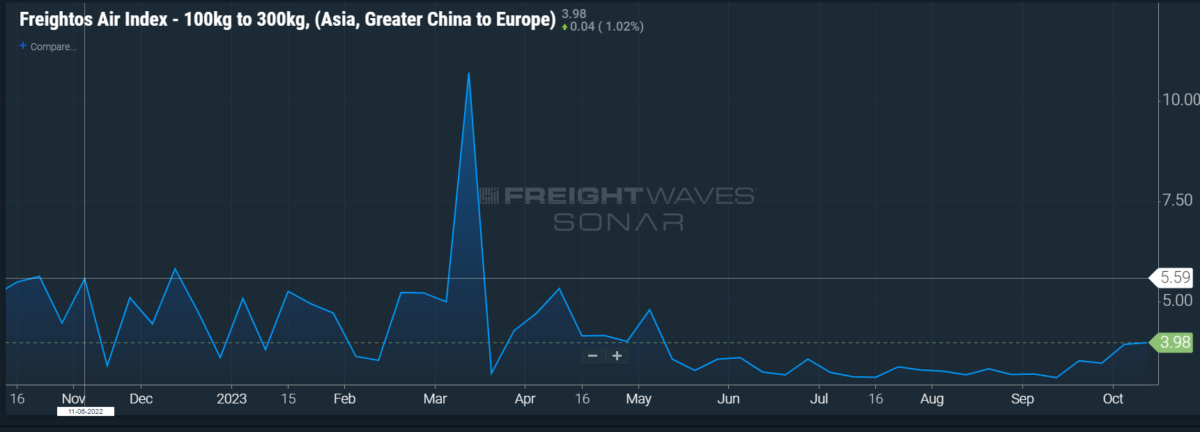
Air cargo prices outbound from China to Europe picked up in September from August. In the first week of October, however, rates out of Asia to Europe dipped 4%, according to the Freightos Air Index. (Source: Freightos Air Index on FreightWaves SONAR platform)

“All the components or accessories that circle around those tech releases — think cases, cords, screen covers — are items that typically fall into the forwarding space and are contributing to the uptick in Asia volumes,” he said.

Vietnam led the way, with rates surging 54% to Europe and 32% to the U.S. from August to September on the back of export manufacturing growth, according to Xeneta. For the region as a whole, rates to the U.S. moved up 40%, putting them on par with pre-pandemic levels after being well below that benchmark. In contrast, the trans-Atlantic lane declined another 3% from the prior month to $1.73 per kilogram.

Load factors on major lanes out of the Asia-Pacific are close to 90%, which indicates a seller’s market for carriers. 

“While recent increases are a positive indication that could suggest a stabilizing market, we think it may be premature to celebrate [because] rates are still well-below where they were last year and where they started this year,” supply continues to enter the market and rising fuel prices account for roughly half the overall rate increases on certain lanes, said Bruce Chan, director of global logistics at Stifel Financial Corp., in a research note this month.

More shippers are committing to long-term freight contracts now because the market has set a floor on rates and there is more price certainty, Xeneta said in its monthly report. The number of shippers signing contracts of six months or more during the third quarter rose to 34% from 28% in the prior three months. On the Asia-to-Europe corridor, spot rates accounted for 43% of total volumes during September — down 4 points from a year ago. That’s a problem for many freight forwarders, which are buying shipping space as spot rates rise while selling contracts at a lower price, van de Wouw said on a webinar. 

Logistics companies with long-term leases for self-controlled freighters contributed to rate deflation this year, as previously reported, by aggressively lowering rates to attract customers and cover sunk costs. Yields might be low enough now that some aircraft could be pulled out of service because it doesn’t make economic sense to operate them anymore, which could drive some cargo to passenger airlines, said Greg Schwendinger, president of American Airlines Cargo, on the latest edition of the Cargo Masters podcast.

Air cargo pallets are loaded onto a Boeing 747-8 freighter. (Photo: Jim Allen/FreightWaves)

“The break-even point of putting it on a passenger-operated aircraft in the belly as opposed to operating a freighter is starting to change. To some extent that could serve as somewhat of a yield floor,” he said. “We’ve heard from some of our customers, particularly those that operate a network of aircraft on their own, that they’re making efforts to potentially put a few aircraft on the ground and are looking to move that business onto passenger operations. So that could be one silver lining to a challenging macroeconomic environment that we find ourselves in.”

Seattle-based logistics provider Expeditors said in an August filing that it believes use of air charters will be significantly reduced as charter contracts expire, which will impact supply to some degree. 

In search of peak season

The last week of August through early December is normally the busiest, and most profitable, shipping period each year as retailers rush in merchandise for the big holiday shopping events and other businesses try to meet annual sales goals. The shipping surge normally starts in July for ocean shipping before transitioning to airfreight. There was no measurable peak season in 2022 as the trade and freight downturn gathered steam. 

The price to ship goods from Hong Kong to North America was up 12% over the past six weeks, but still below the 2016-2019 average of 19% during the same period, said Bascome Major, a transportation analyst at Susquehanna Financial Group, in a research note last Tuesday. Over the same six-week period, rates from Frankfurt, Germany, to North America have fallen 3%, worse than last year’s 7% gain and also below the pre-pandemic average growth of at least 10% during a similar time period. 

Industry and macroeconomic developments suggest that any fourth-quarter pickup will be fleeting and very modest, with weakness persisting through the first half of 2024.

Although the U.S. economy could escape a mild recession as inflation calms down, consumers aren’t gearing up to buy imported goods. In fact, American pocketbooks are under increasing pressure.

Consumer spending has been relatively sluggish in recent months and the Federal Reserve Bank of  San Francisco says 80% of Americans have used up pandemic-era savings. Meanwhile, credit card delinquencies are now above 2019 levels, the COVID student loan moratorium has ended, child care subsidies are expiring and the four-week strike by the United Auto Workers continues to widen  — all of which could mean a drag on retail spending. 

Analysts at BNP Paribas estimated the resumption of student loan payments could remove $100 billion out of consumers’ savings and slow overall growth during the fourth quarter.

Also, industrial production and new export orders are still contracting in the U.S. and other major economies. Consulting firm Trade and Transportation has data showing that about 60% of international air trade is to support manufacturing, Managing Director Tom Crabtree said on a recent episode of the Time on Wing podcast

Central bank tightening of the money supply through higher interest rates is beginning to slow the economy and those effects could be more evident in the next few quarters, economists say.

Many logistics professionals mistakenly expected retailers to finish clearing out excess inventory by early summer and start ordering new products. That cycle took longer than expected and some sectors, such as electronics and apparel, still have more stock on hand than necessary, according to Jason Miller, a professor of supply chain management at Michigan State University. Even with the inventory corrections, many companies say it is difficult to gauge the underlying strength of the economy and have been cautious about placing new merchandise orders. 

The downward spiral for PC shipments, for example, continued during the third quarter as global volumes declined 7.6% y/y, according to International Data Corp.

Robert Khachatryan, CEO of freight forwarder Freight Right Global Logistics, said on a September webinar hosted by booking platform Freightos that many customers are booking fewer shipments on expectations of a drop in consumer spending in the fourth quarter. 

3M Co. is still seeing tepid demand for electronics and consumer products and CFO Monish Patolawala said at a Morgan Stanley conference last month the company expects weakness in consumer demand will continue through the year. 

The outbreak of war in the Middle East adds to the uncertainty felt by consumers and businesses. 

The International Monetary Fund last Tuesday downgraded its 2024 economic forecast, saying inflation and geopolitical friction will slow global economic growth to 2.9% from an expected 3% this year. It previously called for 3% growth. The global economy grew 3.5% in 2022.

The U.S. economy is expected to grow 1.5% next year, down from an estimated 2.1% in 2023, the IMF said. S&P Global also revised its 2024 forecast for the U.S. GDP to 1.5% from 2.5% and said it expected U.S. imports from Asia to be flat next year after a 25% decline in the first seven months of 2023.

The eurozone is barely expected to grow next year, the United Kingdom could be in a recession and China’s growth will be well below par, economists say.

“The global economy is limping along, not sprinting,” IMF Chief Economist Pierre-Olivier Gourinchas said in outlining the report.

The World Trade Organization recently cut its forecast for global trade growth in half to 0.8% for 2023.

A read through of ocean shipping developments doesn’t paint a promising picture for airfreight. Lower consumer demand is the reason U.S. seaborne imports of consumer goods fell by 26% y/y in the first eight months of 2023, according to S&P Global Market Intelligence. Ocean volumes in the trans-Pacific peaked in August as many importers ordered early and a cooldown is expected for the remainder of the year, said the National Retail Federation.

Amid a glut of container vessel capacity and air cargo 23 times as expensive as ocean, according to Xeneta, airlines are the last option for shippers with general commodities that don’t need special care.

“With inflationary pressure and rising energy prices putting strain on consumer discretionary spending, the likelihood of a breakaway restocking is unlikely, in our view. And while we think inventories have, for the most part, bottomed, we also think the risk of fundamental demand grinding lower, coupled with the memory of last year’s overstocking, will likely lead shippers to position conservatively,” wrote Stifel’s Chan. “Despite a modest sequential uptick in airfreight pricing, we believe indications are still for a slow grind off the bottom in terms of demand.” 

Or, as van de Wuow succinctly put it: “I still hear very little hope of demand growth before the third quarter of 2024.” 

Click here for more FreightWaves/American Shipper stories by Eric Kulisch.

Sign up for the weekly American Shipper Air newsletter here

Delta Air Lines cargo revenue drops 36% on slow freight demand
Price war keeps air cargo rates below natural level

Freight recession unlike any other in history 

The rise of freight brokerages

In 2000, freight brokerage was a cottage industry, representing a small percentage of the trucking industry — 6%. Fast forward to 2023, and freight brokers handle more than 20% of all trucking freight.

Brokerages are ‘mainstream’ today

As freight brokerages have taken on a larger percentage of the market, they have reshaped the typical freight cycle. 

In the early 2000s, it was uncommon to see a freight broker in the primary position of a shipper’s routing guide. 

Back then, freight brokers usually handled freight that asset-based carriers didn’t want or that was priced too low for the carriers to make their margins. Freight brokers would also serve as a last resort if carriers had freight surges that they could not handle. 

Since then, however, things have changed dramatically. As freight brokerages invested in technology and customer service, they began to offer a more compelling product than their asset-based competitors and took on a greater role in routing guides. 

Today, it is common for multiple freight brokerages to be in primary positions in shippers’ routing guides, often as the top choice, beating out their asset-based competitors. 

Moreover, the quality of freight that brokers handle now is far better than it was in 2000. In 2023, freight brokers often are assigned highly desirable, carrier-friendly freight. 

Why? Shippers both large and small now rely on freight brokers’ deep databases of reliable carriers to ensure that their loads are shipped and delivered on time. 

In addition, carriers — particularly small carriers — also need the leads and business that freight brokers can supply.

Why is that? 

As of April 2023, there were more than 531,000 active trucking fleets that own or lease at least one tractor in the U.S., according to Carrier Details, which provides trucking authority intelligence using data from the Federal Motor Carrier Safety Administration (FMCSA) and insurance registrations (available on SONAR). 

Contrast that with 1980, when there were around 18,000 U.S. trucking companies.

Trucking deregulation led to the need for freight brokerages 

The Motor Carrier Act of 1980 deregulated the trucking industry. In addition to all the other changes generated by trucking deregulation, it led to the development of the freight brokerage industry as we know it today.

Prior to deregulation, the trucking industry was highly regulated by the Interstate Commerce Commission, or ICC. From 1935 to 1980, the ICC set the rates and routes of interstate carriers. The ICC even mandated the types of freight trucking companies could haul. Also, in most circumstances, backhauls were not allowed.

Therefore, there was little need for freight brokers during the reign of the ICC. But by the 1970s, many believed that competition was being strangled by the ICC and that freight rates were too high because the industry was so tightly regulated. 

Those circumstances led to President Jimmy Carter and Congress working together to deregulate the trucking industry, as well as the airline and railroad industries. 

The Motor Carrier Act of 1980 made the trucking industry much more competitive as the ICC yoke was removed. Of the 18,000 trucking companies in existence at that time, many went out of business in the newly competitive environment. However, thousands of new trucking companies were started.

The results were lower shipping rates and the start of a greater use of backhauls. 

Among the first successful freight brokerages was American Backhaulers, which began operations in 1981. The company was acquired by C.H. Robinson in 1999.

Post-deregulation, motor carriers began to operate wherever they could find profitable freight, although rates were much lower because of increased competition. Many carriers needed backhaul freight to generate sufficient round-trip revenue — an issue brokers were able to assist the trucking fleets of the time.

Freight brokerages grew and evolved

As more carriers began using freight brokers, new and more professional freight brokerages started. Moreover, a number of the larger carriers started in-house brokerage divisions.

In most cases, these in-house brokerages provided an additional revenue stream for their carrier owners. The in-house brokerages also created a demand pool that was controlled by those trucking companies. The in-house brokerages supplied freight for the carriers’ trucks in lean times and could sell excess freight to other carriers when their fleets were fully booked.

Brokerages assist small carriers 

As the link between shippers and carriers, freight brokers are “traffic managers” for shippers as well as “sales agents” for carriers. Today, brokerages are responsible for thousands of daily freight transactions.  

When they are at their most efficient, brokerages can decrease transportation costs for shippers and also increase carriers’ revenue.

As noted above, the number of motor carriers has exploded since deregulation. U.S. Department of Transportation statistics show that of the roughly 531,000 carriers, 99% operate 100 or fewer trucks — and almost 97% have fewer than 10 trucks. 

Therefore, freight brokers often take on the sales and customer service roles that small carriers cannot afford. Most importantly, brokerages provide a continual stream of freight for many of the small carriers. Those small carriers that do not have relationships with at least one brokerage are at a distinct disadvantage. 

An altered freight cycle

The current freight cycle has been different. In previous cycles when freight rates have been low, many of the weakest carriers exited the industry. While some of the companies that went out of business in 2019 — the last major down cycle — were quite large, such as Celadon and New England Motor Freight, most were small “mom-and-pop” companies that lacked the resources to stay in business.   

In 2023, many people, including me, expected that as before, many small carriers would roll over and quickly exit the freight market as conditions became difficult. After all, we thought, when the freight economy slowed, high-quality loads for small carriers would dry up. It wasn’t just rates, but also load counts that dropped. 

FreightWaves’ Rachel Premack reported in an April 28 article that the “number of authorized interstate trucking fleets in the U.S. declined by nearly 9,000 in the first quarter of 2023 …”

So while companies have certainly left the industry, small carriers overall have held on for far longer than many of us expected. The reason is that even as rates have declined — in many cases lower than 2019 rates — freight brokerages have kept many small truckers supplied with quality load opportunities. 

So much has changed in the past decade 

In the 2008 freight recession, freight brokerages were a much smaller percentage of the overall trucking market, representing just 10% of the total freight in the market. This number has doubled since then, along with the quality of freight. 

When I was working the freight desk at U.S. Xpress in the early 2000s, freight brokerages weren’t a part of many shippers’ routing guides.

Shippers preferred to do business only with asset-based trucking companies. They used freight brokers sparingly, mostly for low-quality loads that carriers didn’t want or in a pinch due to a surge of freight or unexpected rejection. 

But over the past decade, freight brokerages have played a key role in routing guides. And since freight brokerages tend to rely on small carriers, their success in winning primary roles in routing guides has strongly benefitted the smallest carriers. 

Small carriers have gained market share as a result. 

Going back to the number of U.S. trucking companies, capacity has exploded. The number of trucking companies in the market grew by 28% from 2019 to 2022. 

Nearly all of these new trucking companies are small, drawn to the market by pandemic-induced high rates. 

‘What goes up, must come down’

Newton’s law of gravity, a fundamental rule in physics, is commonly cited in commodity markets like trucking. 

When capacity tightens and drives up rates, new entrants enter the market, flooding it with capacity and driving down rates. 

The same carriers that entered the trucking industry to take advantage of high rates are now being forced to take much lower rates to keep their trucks moving. 

In past cycles, when the freight market softened, we would see a massive purge in capacity. While there have been reductions, it has happened much slower than anticipated. 

A key reason it has been so slow to churn out capacity is because of the proliferation of freight brokers. 

In past down cycles, freight brokers would lose a large percentage of their volume, as shippers kept to a small number of core carriers in their routing guides. 

But over the past decade, freight brokerages have positioned themselves in the role as a core carrier, enabling them to maintain load volumes, even in down markets. 

So in this down market, most freight brokerages have maintained a high percentage of load volumes, even as rates fall. 

The loads may not pay much, but brokers are able to supply carriers with loads that pay just enough to cover the monthly truck bill.

Carriers may be losing money, but that small amount of cash flow will keep them in the game longer than would be otherwise expected. 

How long will it take before the market is in balance? 

While there are many variables that impact the balance of supply and demand in the freight market, we can look to historical models for some guidance. 

According to SONAR‘s Carrier Details Total Trucking Authorities index, from 2010 to August 2020, the trucking industry added an average of 199 new trucking fleets per week. 

From August 2020 to September 2022, the number of new trucking fleets exploded by an average of 1,124 new fleets per week. 

The trucking market currently has 63,000 more fleets than the 2010-2020 trend line would suggest.

Since September 2022, the market has churned an average of 435 fleets per week. 

Unless there is an acceleration in revocations (i.e. trucking companies shuttering their authorities), FreightWaves models suggest the trucking market has 78 weeks to go before capacity is back in balance with historical trends. 

To put that in perspective, I wrote an article on March 31, 2022, that warned about an imminent freight recession. That was 78 weeks ago. 

This would suggest we are only about halfway through the worst trucking downturn since 2008. 

While it is possible that freight rates could increase in anticipation of a capacity reset, FreightWaves and many other analysts don’t believe that freight rates will increase until at least the second quarter of 2024, and few predict large increases in rates even then. Therefore, it is likely that the attrition process will continue as the market slowly grinds out the weakest players. 

Interested in freight market intelligence? 

FreightWaves SONAR is the most comprehensive tool in logistics, offering high-frequency intelligence across millions of data points. 

Sign up for a SONAR demo today. 

US economy tops trucking industry’s list of challenges

Rebecca Brewster, ATRI president

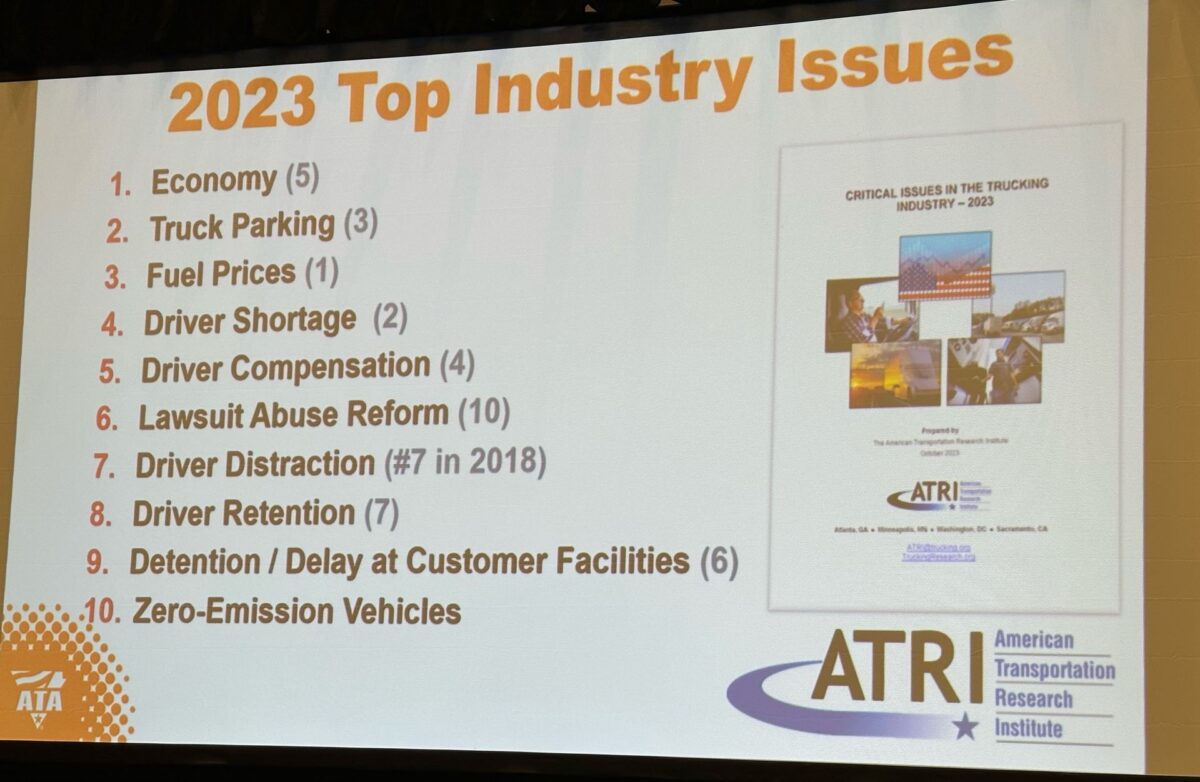
AUSTIN, Texas — The unsteady U.S. economy topped the list of trucking industry issues, the highest ranking since the Great Recession in 2008, according to the American Transportation Research Institute’s annual survey of top-of-mind concerns for carriers and commercial drivers.

Economic jitters replaced fuel prices at the top of the report revealed Saturday at the American Truck Associations Management Conference and Exhibition. Fuel prices, on the rise for much of the year except for a brief respite from March top June, fell to third. Truck parking availability finished second, its highest finish since first making the list in 2012.

Zero-emission vehicles appeared on the list for the first time, occupying the No. 10 position.

“It’s been a ride for the past year. It’s been tough,” said Cari Baylor, president of Baylor Trucking, an Indiana-based 75-year-old company operating 200 trucks, 980 trailers and two terminals in the eastern and southern U.S. Baylor was acquired by Werner Enterprises in October 2022.

Rising interest rates, higher diesel and maintenance costs, increasing pay for truckers and rising insurance premiums drove the operating cost of a truck to $2.25 per mile in 2022. That’s the first time it has exceeded $2 in history, according to ATRI’s analysis in a downloadable separate report.

Truck parking a hardy perennial

Truck parking, which has been a Top 5 issue since 2015, came in at No. 2. ATRI has been studying truck parking since 1993. A congressionally directed study to look at the issue began the same year, ATRI President Rebecca Brewster said.

Rebecca Brewster, president of the American Transportation Research Institute, reveals the trucking industry’s top issues. (Photo: Alan Adler/FreightWaves)

According to ATRI, truck drivers spend an average of 56 minutes a day looking for parking. It found there is just one spot for every 11 truck drivers. The parking problem has worsened since full enforcement of the electronic logging device mandate in 2018. That requires truck drivers to do all their driving within a 14-hour window. 

Rather than engaging in the dangerous practice of parking near freeway off-ramps or squatting in retail parking lots, Baylor authorizes its long-haul drivers to pay for overnight parking if needed. Technology like highway signage with near real-time alerts of open spaces at upcoming rest stops helps, but it hasn’t solved the issue.

Driver shortage falls to lowest position since Great Recession

After fuel prices at No. 3, the rest of the Top 10 issues were:

4. Driver shortage. It was No. 1 for five consecutive years from 2017-2021. The issue shows up annually. The driver shortage, especially for over-the-road jobs, is less of an issue during slower economic times. The issue was No. 6 during the Great Recession in 2009.

5. Driver compensation. ATRI’s operations study showed the all-in cost of driver pay and benefits was 90 cents a mile in 2022, or 40% of total operating costs. The issue fell one spot from No. 4 a year ago.

6. Lawsuit abuse reform. It first cracked the Top 10 in 2005. ATRI studies on nuclear verdicts against trucking companies helped illuminate the issue. Trial lawyers spend $1 million a month nationwide seeking truck crash lawsuits to pursue, Baylor said.

7. Driver distraction. The issue made it to No. 7 in 2018 but then dropped until the latest study. “We see it every day, eating, reading papers, reading books,” said Dean Key, a driver with Ruan Transportation. Distraction topped the list among law enforcement, which made up about 5% of the 4,000 trucking industry stakeholders who participated in the survey. 

8. Driver retention. The issue dropped from No. 7 a year ago and fell two places on the manufacturers’ list.

9. Driver detention. Delays in loading and unloading and access to restrooms and other amenities at shipper facilities ranked No. 5 among commercial drivers but did not make the carriers’ list.

10. Zero-emission vehicles. The first-timer reflects the growing awareness of regulations in California and from the U.S. Environmental Protection Agency forcing fleets to adopt battery- or fuel cell-electric vehicles. In a December study on the costs of trucking electrification, ATRI found that having electric chargers at all 313,000 truck parking spots would cost $35 billion.

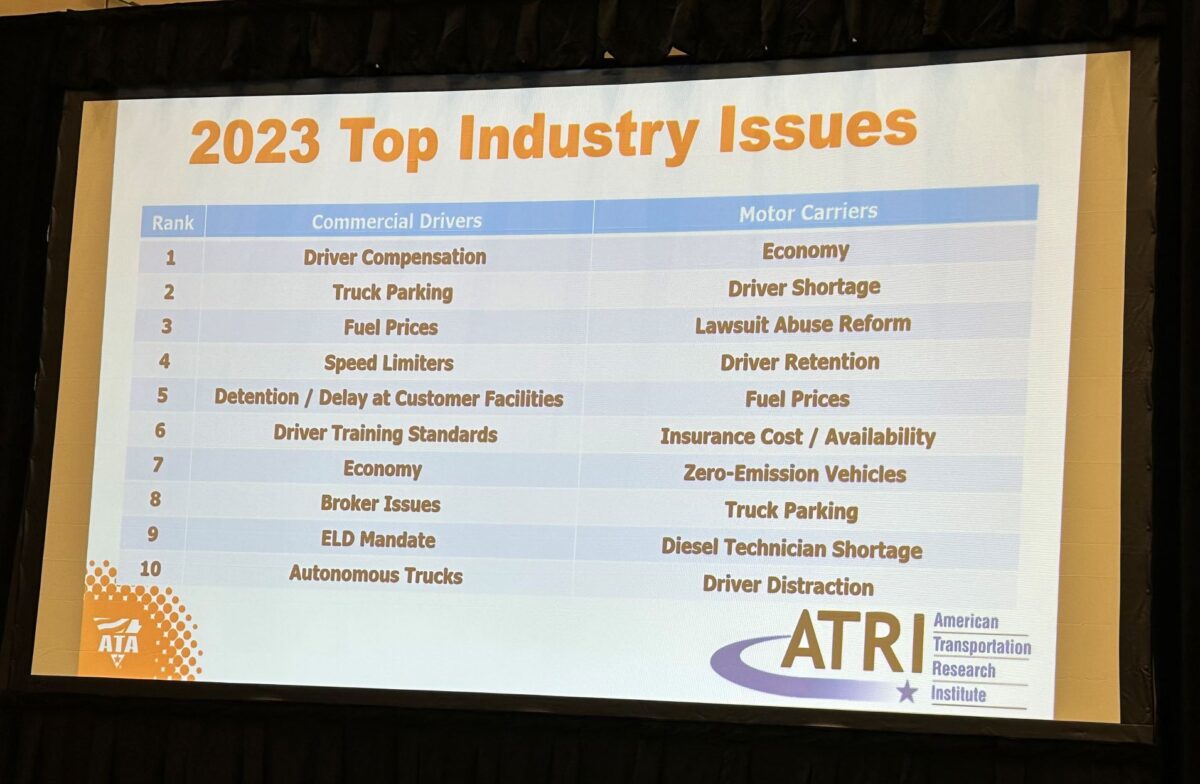
Little agreement between carriers and drivers on top issues

Carriers and drivers agreed on just three of 10 issues — the economy, truck parking and fuel prices. They ranked them differently. Carriers place the economy first. Drivers listed it No. 7. Truck parking was No. 2 for drivers and No. 8 for carriers. Fuel prices were No. 3 for drivers and No. 5 for carriers, the closest to a matching priority.Motor carriers and commercial drivers agreed on just three of 10 critical issues facing the trucking industry. (Photo: Alan Adler/FreightWaves)

Motor carriers and commercial drivers agreed on just three of 10 critical issues facing the trucking industry. (Photo: Alan Adler/FreightWaves)

A freight market turnaround in 2024?

ATRI crunches electric truck infrastructure needs — and they’re huge

We’ve got a truck parking crisis. Who should solve it?

Click for more FreightWaves articles by Alan Adler.

Borderlands: Mexico top US trade partner in August, Laredo No. 1 gateway

Borderlands is a weekly rundown of developments in the world of U.S.-Mexico cross-border trucking and trade. This week: Mexico remains top US trade partner in August, Laredo No. 1 gateway; Eden Green begins $40M vertical farming expansion near Dallas; Production, exports of Mexican-built trucks fall for second straight month; and Port of Brownsville receives $11.5M to overhaul cargo dock.

Mexico remains top US trade partner in August, Laredo No. 1 gateway

For the fourth consecutive month, Mexico was the No. 1 trading partner of the U.S., totaling $70.8 billion in August.

It’s the seventh time in the past eight months that Mexico ranked No. 1, according to the U.S. Census Bureau.

During August, Canada ranked No. 2 at $66.2 billion in trade, while China ranked third at $47.5 billion.

Mexico’s trade with the U.S. was $532.7 billion through the first eight months of 2023, a year-over-year (y/y) increase of 2.4% from the same period in 2022, according to a WorldCity analysis of Census Bureau data.

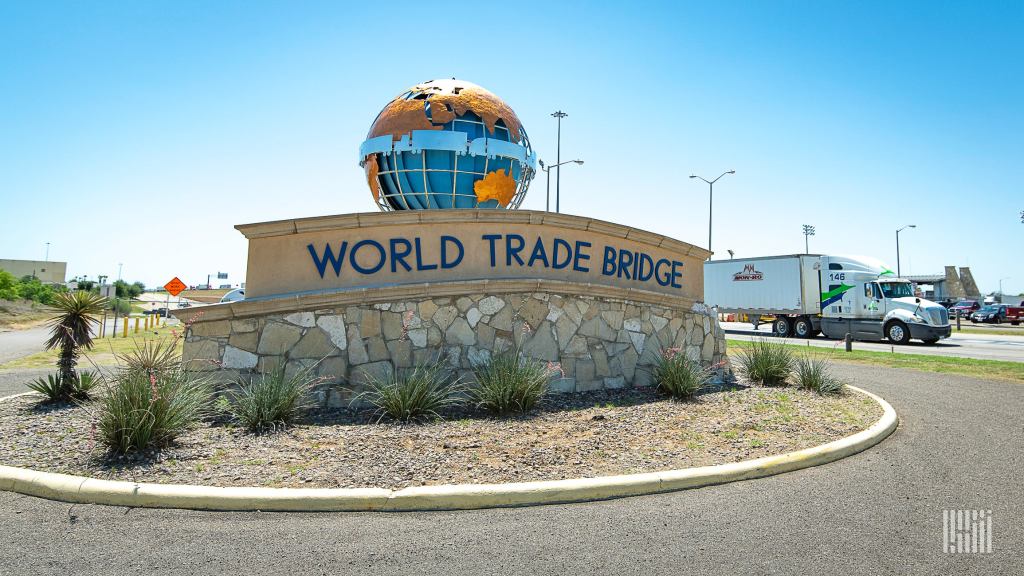
Laredo, Texas, retained the No. 1 spot among the nation’s 450 international gateways for trade in August with $28.6 billion, according to WorldCity. It was the seventh straight month the Laredo border crossing was the country’s top-ranked international commercial trade port.

The Port of Los Angeles ranked No. 2 with $27.1 billion and Chicago O’Hare International Airport was No. 3 , reporting $25.4 billion in trade.

The top 3 imports from Mexico to the U.S. through Laredo in August were auto parts ($2.4 billion), passenger vehicles ($1.3 billion) and commercial trucks ($1 million).

The top exports from the U.S. to Mexico were auto parts ($1.5 billion), gasoline ($326 million) and diesel engines ($272 million).

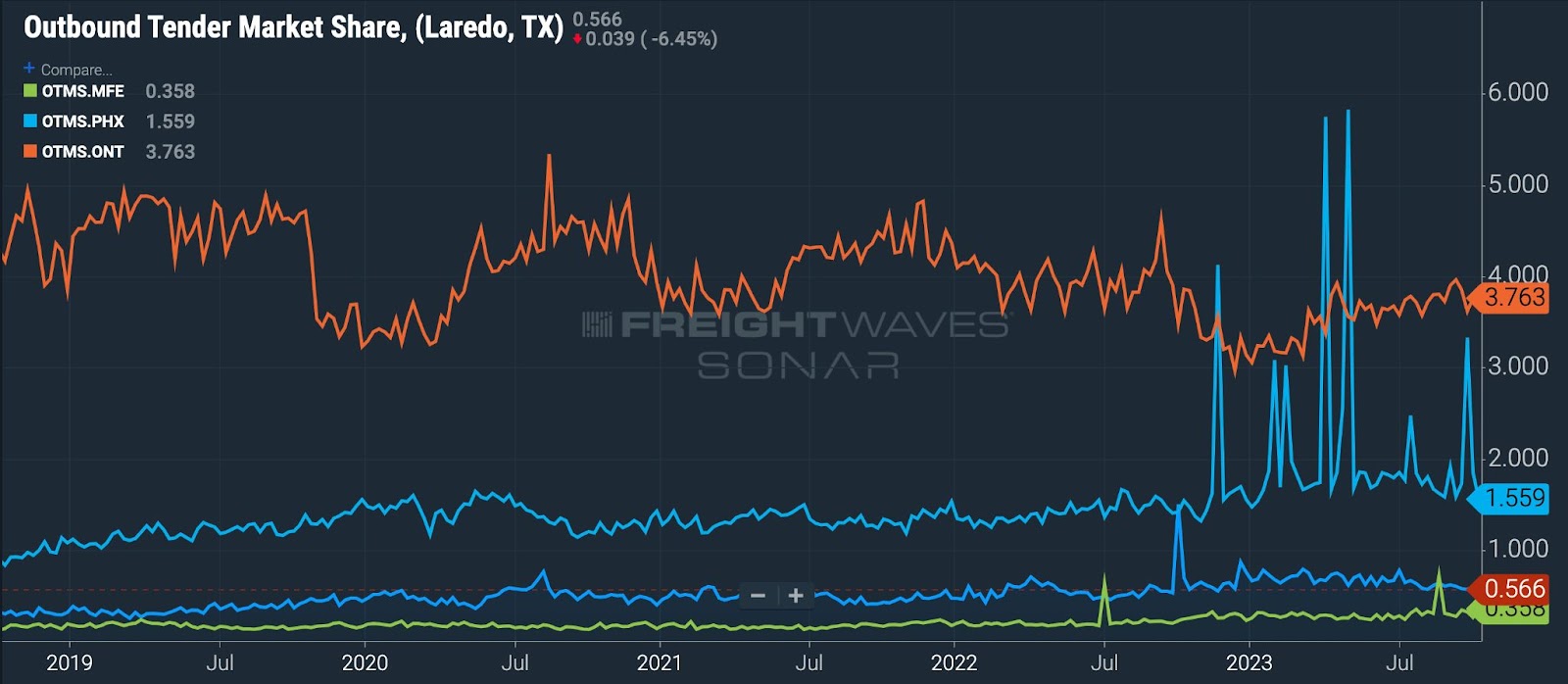
Since 2018, truckload demand has nearly doubled out of the Laredo port of entry, which includes the World Trade Bridge and the Colombia Solidarity Bridge. FreightWaves’ SONAR platform shows that Laredo’s outbound tender market share (OTMS.LRD) is currently 0.566% of the overall freight market, compared to 0.321% in 2018.

The Outbound Tender Market Share index measures the percentage of outbound tenders relative to all the other 135 markets in the U.S.

While Laredo’s current value may be low compared to other markets, FreightWaves market expert Zach Strickland recently wrote, “the rising trend is more important than the current value in this situation.”

Outbound tender market share in Laredo (OTMS.LRD) is currently 0.566% of the overall freight market. Also shown are market shares for Phoenix (OTMS.PHX); McAllen, Texas (OTMS.MFE); and Ontario, California (OTMS.ONT). To learn more about FreightWaves SONAR, click here.

“Truckload demand has nearly doubled out of the border town Texas markets of Laredo and McAllen since 2018,” Strickland said. “Phoenix has experienced a similar developmental boom, becoming a proxy for California’s old warehousing capital in Southern California’s Inland Empire. This shifting demand pattern is changing transportation networks and will subsequently impact future pricing structures.”

Eden Green begins $40M vertical farming expansion near Dallas

Farming technology company Eden Green recently broke ground on a $40 million expansion of its campus in Cleburne, Texas, just outside the Dallas-Fort Worth metroplex.

Company officials said the expansion is aimed at scaling commercial production to meet rising market demand.

“Extreme weather events, an unstable market and an ever-rising demand for fresh, affordable produce year round has created a perfect storm in our food supply chain,” Eddy Badrina, CEO of Eden Green Technology, said in a news release. “Eden Green was founded to solve these challenges and this next phase of growth is a critical stepping stone.”

The $40 million expansion includes the construction of two additional greenhouses in Cleburne. Both facilities are expected to open in early 2025 and create 100 jobs.

The company currently has two vertical greenhouses totaling more than 100,000 square feet, which grow lettuce and other fresh produce and herbs.

Eden Green’s long-term plans are to build a network of 20 greenhouses across the U.S. over the next five years.

The company also announced the hiring of Will Parkey as chief financial officer. Parkey will be responsible for leading financial operations and driving the company’s strategic expansion.

Production, exports of Mexican-built trucks fall for second straight month

Mexico’s monthly truck production declined 8% y/y in September to 17,344 units, according to data from Mexico’s National Association of Bus, Truck and Tractor Producers (ANPACT).

Exports declined 9% y/y in September to 14,151 units. The U.S. was the overwhelming destination for trucks produced in Mexico during September, accounting for 96% of exports, followed by Canada at 2.4% and Colombia at about 1%.

Freightliner was the top truck producer and exporter in Mexico during September. The company built 10,083 trucks, a 7% y/y decrease, and exported 9,185 units, a 5% y/y decline.

International Trucks Inc. produced 4,719 units in September, a 21% y/y decrease, and exported 4,465, a 16% y/y rise.

The 10 truck makers and two engine producers in Mexico that are members of ANPACT are Freightliner, Kenworth, Navistar, Hino, International, DINA, MAN SE, Mercedes-Benz, Isuzu, Scania, Cummins and Detroit Diesel.

Exports of Mexican-made commercial trucks declined 9% year-over-year in September to 14,151 units, with the U.S. accounting for 96% of the international market. (Photo: Jim Allen/FreightWaves)

Port of Brownsville receives $11.5M to overhaul cargo dock

The Port of Brownsville recently received an $11.5 million grant to redo one of its cargo docks, aiming to enhance its capacity, efficiency and safety standards, according to a news release.

The project to reconstruct cargo dock 3 at the port will consist of three stages, including demolition of the existing dock, the acquisition of steel piles to provide structural support for the new dock and the construction phase.

The Port of Brownsville is about 277 miles south of San Antonio at the southernmost tip of Texas along the Gulf of Mexico and is a major trade facility between the U.S. and Mexico.

Cargo dock 3 began operations in the 1940s and was key for the shipment of agricultural commodities in the region. Today, cargo dock 3 is utilized for general bulk cargo movements.

Officials for the port did not provide a timeline for the completion of the project.

Is Forward Air’s merger with Omni Logistics in trouble?

Click for more FreightWaves articles by Noi Mahoney.

More articles by Noi Mahoney

Texas resumes cargo truck inspections at Laredo port of entry

Mexican president blames Texas-run inspections for border delays

Border bottleneck continues, creating huge delays for truckers

Blanca, Colorado Post Office 81123

Blanca Colorado Post Office

The Blanca, Colorado Post Office serves ZIP Code 81123. Photo by Jimmy Emerson, some rights reserved. Photo shared under the Creative Commons License.

Blanca Post Office
406 Smith St
Blanca, CO 81123

Location at Google Maps

Flexport CEO Petersen overhauls top management

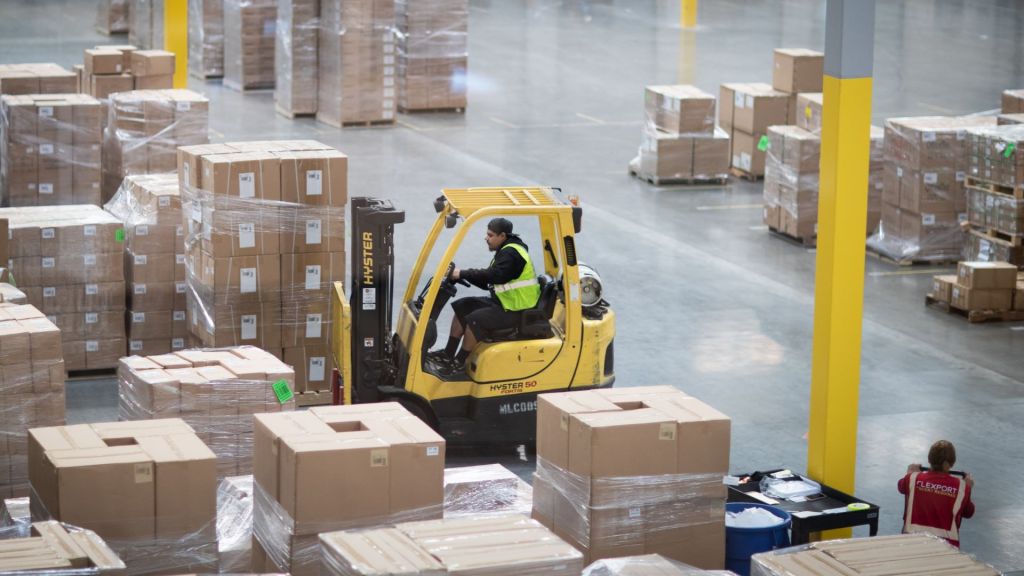
A yellow forklift operates around stacks of boxes in a warehouse.

Flexport CEO Ryan Petersen has reorganized his executive team after retaking the company reins a month ago, leaning on several veteran managers as well as a couple recent hires from Amazon who have taken on new and expanded roles, a company official confirmed Friday.

News of leadership changes comes the same day that the San Francisco-based logistics company laid off 20% of its staff as it copes with a sharp drop in revenues related to weak shipping demand. The freight forwarder has been on a roller coaster ride ever since Petersen returned to the CEO role, replacing Amazon logistics guru Dave Clark after a tenure that ended after only a few months over disagreements about the direction of the company.

People selected for core leadership positions fit Petersen’s vision for growth centered on serving large and small customers by addressing their specific needs on import/export transportation, as well as direct-to-consumer delivery, a new organizational chart shared with FreightWaves shows. Petersen has previously said that Clark lost touch with customers in an effort to automate more freight processes.

The Information was first to report the new leadership team. The flatter management structure is organized around making decisions faster, delivering on customer service and developing customizable products and technology for customers.

Stuart Leung is the new chief financial officer. He replaces Kenny Wagers, who CNBC previously said was fired. Leung was promoted from head of finance. He also spent four-and-a-half years prior to that in top executive roles for North American logistics operations after joining the company from the investment banking sector.

Parisa Sadrzadeh has expanded her scope in her role as executive vice president, small-and-medium business and omnichannel. Her responsibilities include Flexport’s new bundled fulfillment product that manages international freight shipping and warehouse order fulfillment for small businesses. She followed Clark to Flexport from Amazon, where she played a key role in managing last-mile delivery.

Neel Jones Shah was named chief customer officer and executive vice president for key global accounts, moving from executive vice president, air strategy and carrier development. In his new role as the primary liaison to large shippers, he will map out Flexport’s products and services to solve their freight challenges. A former cargo chief at Delta Air Lines and vice president of cargo sales at United Airlines, Jones Shah has more than 25 years’ experience in logistics running large sales organizations and has been at Flexport for seven years, including as global head of airfreight serving some of the company’s biggest customers.

Zeid Houssami, who earlier this year took over day-to-day management of air cargo activity, is the new vice president of airfreight. He joined the company two years ago from Expeditors, where he was in charge of air strategy.

Harish Abbott, who was CEO of Deliverr and came over when Flexport acquired the last-mile fulfillment company from Shopify last summer, is the chief customer officer, omnichannel. Bill Driegert, the former head of Uber Freight who was hired in May to build Flexport’s trucking product, is the executive vice president, North America.

Petersen appointed Sanne Manders as president, international. He previously was president of ocean and air. Manders has been part of Flexport’s executive team since its founding, including a stint as chief operating officer.

Rounding out Petersen’s team are:

  • Nader Kabbani: EVP, customs, trade and financial services.
  • Anders Schulze: SVP of ocean freight.
  • Charles Chang: VP of technology.
  • Akash Chauhan: SVP of fulfillment and distribution operations.
  • Ted Boeglin: VP of marketing.
  • Ashianna Esmail: chief legal officer.
  • Michael Brown: SVP, head of restructuring and CEO initiatives.

Click here for more FreightWaves/American Shipper stories by Eric Kulisch.

Twitter: @ericreports / LinkedIn: Eric Kulisch / ekulisch@www.freightwaves.com

RELATED NEWS:

Flexport lays off 600 workers amid difficult freight market

Flexport founder says ousted CEO lost customer focus, spending discipline

Flexport to cut 20% of workforce as global shipping demand wanes

Walmart to open fifth next-gen fulfillment center in 2026

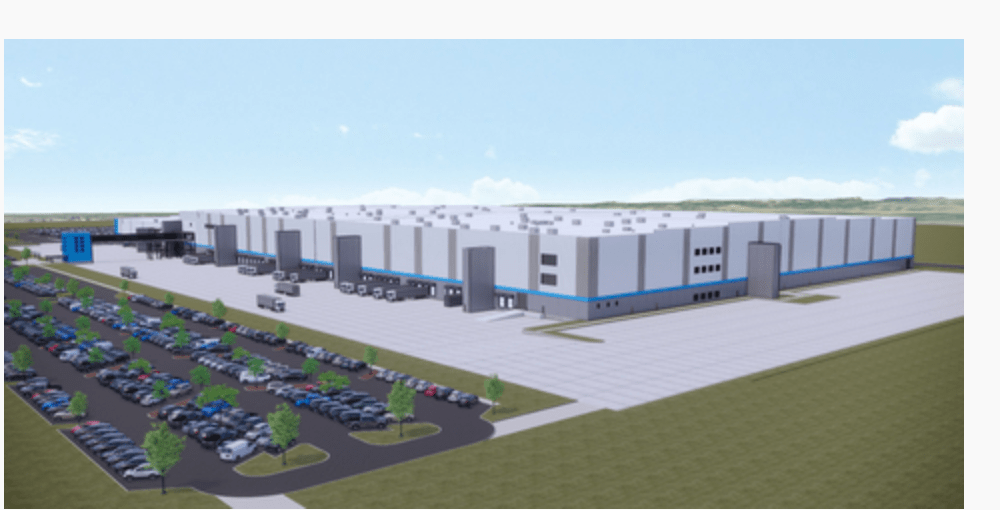
Walmart Inc. plans to open its fifth “next-generation” fulfillment center, this one in Stockton, California, in 2026. 

The 900,000-square-foot facility located about 50 miles south of Sacramento will enable the retailer to fulfill online orders throughout the West Coast with greater speed and efficiency, Walmart (NYSE: WMT) said in Thursday’s announcement. 

The Stockton fulfillment center also will increase fulfillment capacity for Walmart.com orders, the company said.

The facility will feature an automated, high-density storage and retrieval system that streamlines a manual, 12-step process to just five steps. The new technology will double the storage capacity and process twice the number of customer orders Walmart can fulfill in a day, expanding next- and  two-day shipping for Walmart customers, the company said.

“The announcement of our high-tech fulfillment center in Stockton commemorates yet another significant stride in our omni-channel retail efforts,” said Karisa Sprague, senior vice president, fulfillment network operations for Walmart U.S., in a statement. “In response to increasing customer demand for online shopping, we are implementing technology to enhance delivery speed and accuracy” for Walmart customers.

Combined with the rest of Walmart’s fulfillment network, next-generation fulfillment centers, like the Stockton facility, will enable the retailer to reach 95% of the U.S. population with next- or two-day shipping. Walmart Fulfillment Services, Walmart’s end-to-end third-party fulfillment service, will also leverage the space to fulfill third-party Marketplace items.

Walmart expects to hire more than 1,000 employees at the center, it said.

The first location opened in summer 2022 in Joliet, Illinois, servicing customers across Illinois, Indiana and Wisconsin. Along with a recently opened facility in McCordsville, Indiana, other facilities will open in Lancaster, Texas. and Greencastle, Pennsylvania.

Running on Ice: Walmart moves south

Blue Truck on a sheet of ice over a blue background and Running on Ice Logo

Hello, and welcome to the coolest community in freight! Here you’ll find the latest information on warehouse news, tech developments and all things reefer madness-related. I’m your controller of the thermostat, Mary O’Connell. Thanks for having me!

All thawed out 

(Photo: Jim Allen/FreightWaves)

Walmart has made some bold decisions. Instead of setting up a new milk processing facility in the Upper Midwest, heart of dairy country, it has decided to set up shop in Valdosta, Georgia. Bold choice. Knowing Walmart, there is a reason for the move to the South. That reason would be increased access to Walmart and Sam’s Club stores in the Southeast.

This new facility will focus strictly on milk processing and will create 400 jobs for the Valdosta community. It’s expected to service more than 750 Walmart and Sam’s Club stores. It’s Walmart’s second plant exclusively for processing milk, the first being in Fort Wayne, Indiana.

Walmart is looking to take similar steps with other commodities. The company is working on two case-ready beef facilities in Georgia and Kansas in addition to partnerships with rancher-owner Sustainable Beef LLC.

Temperature Checks

(Photo: Jim Allen/FreightWaves)

Massachusetts-based Cold Chain Technologies grows internationally … again. This time the acquisition is Exeltainer, an international thermal packaging company with hubs in Spain and Brazil. This is the third acquisition by Cold Chain Technologies since it was acquired by Aurora Capital in 2019.

“Exeltainer has developed an impressive portfolio of solutions to meet the stringent compliance requirements of its global pharmaceutical clients,” Cold Chain CEO Ranjeet Banerjee said in a press release. 

Also growing here in the U.S. is Portland, Maine’s cold storage space. A year after breaking ground, construction is picking up speed on a 107,000-square-foot warehouse on Portland’s coast. The project will open only a few months after the originally planned date. It has been stalled by issues underground.

The new facility is expected to meet demand for the Icelandic shipping company Eimskip and companies in Maine as well. It will recapture some of the almost $2 billion of seafood exported from the East Coast that doesn’t pass through Portland.

Food and drugs

(Photo: Business Wire)

The man who gave us the show “Bizarre Foods with Andrew Zimmern” has taken his talents to the slightly less bizarre. Zimmern has come out with his own line of frozen entrees that don’t appear to be bizarre in nature. His meals focus on comfort food and the convenience of not having to wait 45-plus minutes for a meatloaf to cook.

His meals include Pulled Pork Mac and Cheese, Meatloaf, Turkey Dinner and Swedish Meatballs. Personally, the Turkey Dinner intrigues me the most as I love a good roast turkey but hate waiting a few hours for a whole turkey to cook.

“These frozen meals are a result of years of exploration, passion, and dedication to the art of cooking,” says Zimmern. “Whether you’re enjoying the comforting notes of Pulled Pork Mac & Cheese or savoring the rich flavors of Swedish Meatballs, each dish tells a story of authentic flavors and family. With ‘By Andrew Zimmern’ frozen entrées, it is possible to enjoy chef-quality comfort food meals with all the quality and none of the stress.”

Cold chain lanes

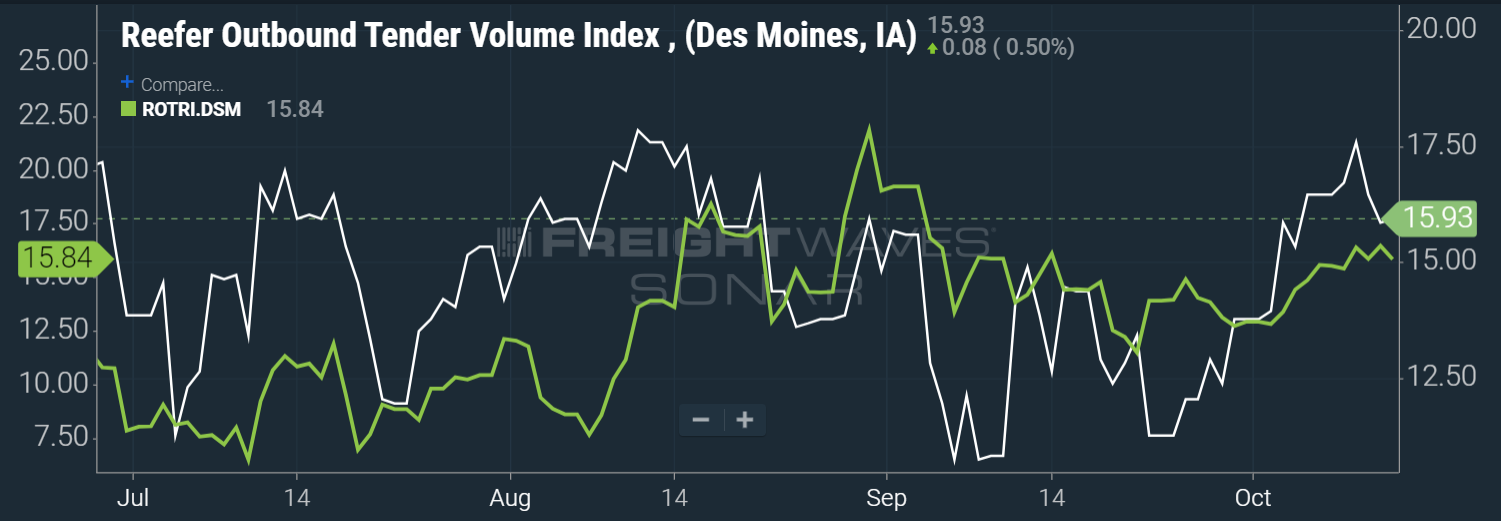
(SONAR Ticker: ROTVI.DSM, ROTRI.DSM)

This week’s SONAR market is Des Moines, Iowa. Reefer outbound tender rejections increased 203 basis points week over week for a ROTRI of 15.84%. Rejection rates over 10% indicate that there are inflated spot rates for a market, so hitting well above that should make for some lucrative rates on the carrier front. Shippers should expect a fair amount of contracted freight to get rejected and pushed to the spot market.

Is SONAR for you? Check it out with a demo!

Shelf life

The curse of Thawed Loadoma and managing refrigerated assets

Conagra Brands focused on finding the ‘sweet spot’ amid shifting consumer demands

Constellation Cold Logistics entered into an agreement to acquire Colso Coldstorage

California isn’t banning Skittles, but four additives will be restricted 

Once again California tells a court AB5 isn’t disrupting trucking in state

Wanna chat in the cooler? Shoot me an email with comments, questions or story ideas at moconnell@www.freightwaves.com.

See you on the internet.

Mary

If this newsletter was forwarded to you, you must be pretty chill. Join the coolest community in freight and subscribe for more at www.freightwaves.com/subscribe.

How to ship a manatee; Flexport cuts 20% of global workforce; and the war in Israel – WTT

On today’s episode of WHAT THE TRUCK?!? Dooner is talking about DHL Express joining forces with four zoological institutions to fly eight manatees more than 1,000 miles back to their temporary Florida homes. We’ll learn from Joe Collopy at DHL and Becky Ellsworth at the Columbus Zoo the logistics of hauling manatees for rehabilitation. 

FreightWaves’ Greg Miller looks at global shipping’s new flash point, Israel. He lays out how shipping executives are preparing for the conflict.

AIT Worldwide Logistics’ Angela Mancuso discusses the hiring market for freight forwarders. How hard is it to find employees, are there opportunities and what’s the value of building a skilled workforce?

F Staff founder and CEO Justin Clarke talks about the business of placing drivers. We’ll learn what the job market is like right now for truckers.

Plus, Flexport cuts 20% of its global staff; two trucking companies shut down; a port tour; how not to deal with a flat tire; and more.

Watch on YouTube

Visit our sponsor

Subscribe to the WTT newsletter

Apple Podcasts

Spotify

More FreightWaves Podcasts

Did you know there are ships named after college football teams?

FreightWaves Classics is sponsored by Old Dominion Freight Line — Helping the World Keep Promises. Learn more here.

This story was originally published on Dec. 2, 2019.

College football kicked off more than 150 years ago with Rutgers University defeating Princeton University 6-4 in that first game in 1869. 

With football season in full swing, this is an appropriate time to focus on a few U.S.-flag ships that invoke the spirit of college football. The first ships to come to mind feature two collegiate rivals, Harvard and Yale universities, of the American Line. 

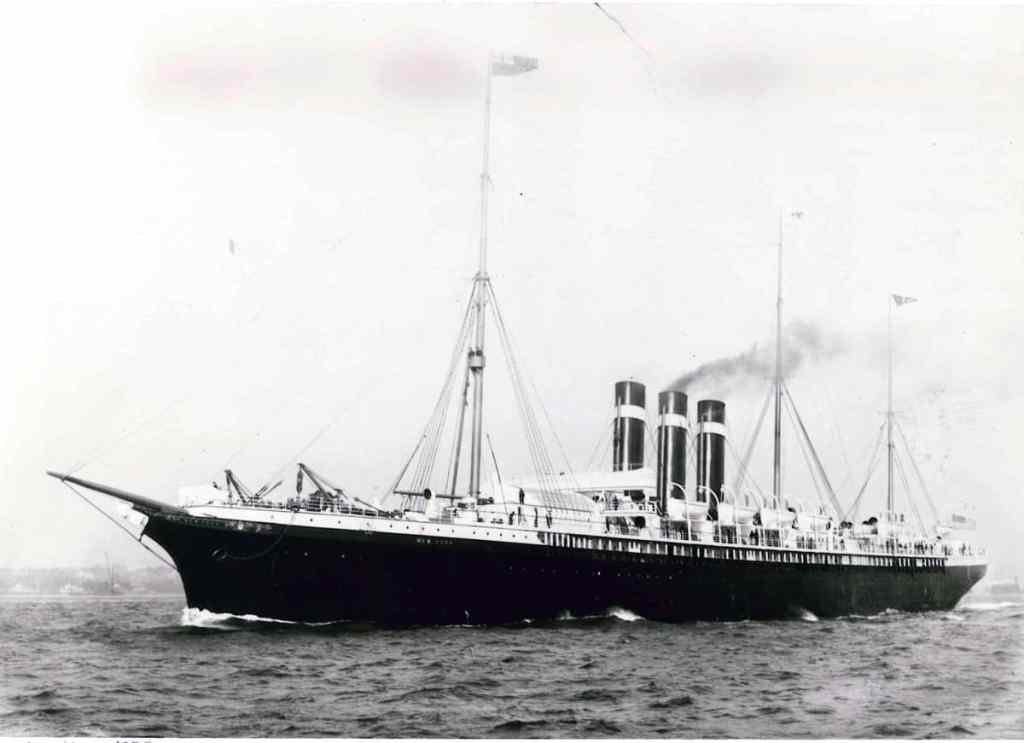
Both twin-screw-propelled vessels were built in Glasgow, Scotland, in 1888 and 1889, respectively, as the City of New York and City of Paris. They measured 560 feet in length and were the first ships to exceed 10,000 tons (not counting the Great Eastern). They were also “Blue Riband” holders and able to steam at over 20 knots. 

In 1893, American Line purchased the two ships, placed them under the U.S. flag and shortened their names to New York and Paris. On April 14, 1898, the U.S. Navy requisitioned both ships and renamed them USS Harvard and USS Yale. They were then fitted out as auxiliary cruisers for the Spanish-American War.

The SS Yale in 1907 arriving at the Port of Los Angeles. (Photo courtesy of Capt. James McNamara)

When the students at Yale heard about this, they conducted a fundraiser to purchase guns for their namesake ship. They soon raised enough money to buy and install two 6-pounders, which they named Eli (in honor of the school’s founder, Elihu Yale) and Handsome Dan (the Yale bulldog mascot) to distinguish them from the other batteries. 

The ships were fitted with eight 5-inch guns and six 6-inch guns. Both Harvard and Yale served gallantly in the Caribbean and were returned to their owners later that year.

Then there were the famous 24-knot coastal liners: the Harvard and Yale of 1907. 

Both were built at Roach’s Shipyard in Chester, Pennsylvania. They were identical in every detail except for their interiors, where they took on the decor and trimmings of their respective names. The Yale featured school-color blue decor and stained glass, while the Harvard featured the school color of crimson. 

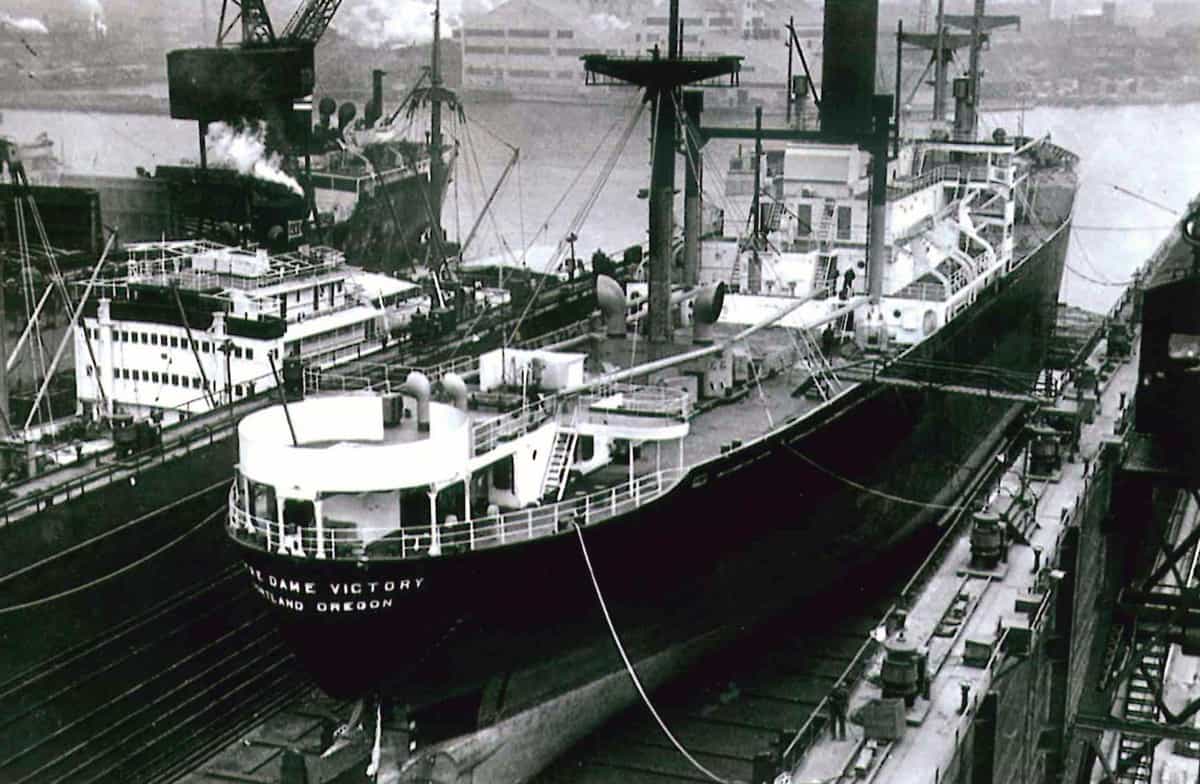
The SS Notre Dame Victory while on a Moore McCormack charter in the Cape Cod Canal. (Photo courtesy of Capt. James McNamara)

They were built for the overnight service from New York to Boston but wound up on the West Coast, plying an overnight route from San Francisco to Los Angeles and San Diego. Both ships distinguished themselves during World War I, serving as cross-English Channel troop transports before returning to their West Coast routes.

During World War II, many Victory class ships were named after American colleges and their football teams. 

One of those was the 8,500-horsepower Notre Dame Victory. Built in Portland, Oregon, in 1945, it was operated worldwide by the Interocean Steamship Co. for the U.S. government. Shortly thereafter, Moore-McCormick Lines chartered the ship for its South American service. Upon receiving modern C-2 and C-3 class ships, the Notre Dame Victory was returned to the U.S. government and laid up in the James River Reserve Fleet.

The SS Notre Dame Victory on arrival at the Key Highway Shipyard in Baltimore. (Photo courtesy of Capt. James McNamara)

In 1950, the U.S. Office of Defense Mobilization, recognizing an increasing need for steel, requested the American steel industry to increase production. Cleveland-Cliffs Iron Co., the oldest of the Michigan ore mining operators, needed to obtain a ship quickly. At the time, all the shipyards on the Great Lakes were busy.

The decision was made to purchase the Notre Dame Victory from the U.S. government and lengthen and convert the ship to a Great Lakes ore carrier. Cleveland-Cliffs, Bethlehem Steel Shipyards in Baltimore and the Army Corps of Engineers made maritime history as they developed a plan to convert the ship by cutting it at the No. 3 hatch and inserting a new 165-foot midsection. 

The ship would then be towed to New Orleans and up the Mississippi and Illinois rivers leading to the Chicago River and through the city to Lake Michigan. The transit of the Chicago River proved most hazardous. The ship had to be taken around sharp bends and proceed through several simultaneously raised bridges through the center of Chicago.

The SS Cliffs Victory after conversion, prior to removal of deck structures required for the tow to the Great Lakes. (Photo courtesy of Capt. James McNamara)

Before its departure from Baltimore, two 120-foot pontoons were fitted to increase the waterplane, so the draft of 8 feet, 6 inches could be maintained for the river transit but also available to be ballasted to get under certain bridges. Since this was the largest vessel to transit the rivers, radio stations announced its progress and thousands of people gathered along the shores to watch it pass. 

On May 9, 1951, the ship arrived at Chicago and work immediately commenced lifting deckhouses, masts and the smokestack into position. The propeller and rudder were fitted and on June 2 the ship commenced its sea trials. On June 4, renamed the Cliffs Victory, the ship proceeded to its first load port.

The SS Rutgers Victory loading cargo in the late 1960s for another voyage to Vietnam. (Photo courtesy of Capt. James McNamara)

Thus, the first ocean cargo vessel to be converted to a Great Lakes ore carrier started life as the Notre Dame Victory. The conversion took an amazing 167 days. 

In 1956, the ship was again lengthened another 96 feet, increasing its total to 713 feet and deadweight tonnage to 18,175. It was considered the longest and fastest ship on the Great Lakes. The ship enjoyed a long life until being sold in 1985 to South Korean scrappers.

 The SS Princeton Victory steaming at full speed. (Photo courtesy of Capt. James McNamara)

Other notable World War II Victory ships to bear the names of American colleges included the Kings Point Victory, Princeton Victory, Rutgers Victory and about 100 more. After the war, another Kings Point was built as a tanker in 1958, and a 1973-built tanker became the second Notre Dame Victory. Central Gulf Lines named its flagships the Green Wave in honor of the founders’ alma mater, Tulane University in New Orleans.

FreightWaves Classics articles look at various aspects of the transportation industry’s history. Click here to subscribe to our newsletter!

Have a topic you want us to cover? Email bjaekel@www.freightwaves.com.