Latest truck crackdowns sidelines 48 drivers, 159 vehicles across US

State police agencies in New York, Nevada and Arizona have stepped up commercial vehicle enforcement in recent weeks, issuing hundreds of violations and placing scores of trucks and drivers out of service.

The actions ranged from a bridge-strike prevention campaign along the New York State Thruway to increased roadside inspections in Nevada following a rise in commercial vehicle crashes and targeted enforcement against truckers in Arizona.

New York inspection campaign finds nearly 1,000 violations

New York State Police said Tuesday that its Troop T Commercial Vehicle Enforcement Unit conducted 348 commercial vehicle inspections during the state’s “Check Your Height, Know It’s Right” campaign at the end of July.

The initiative was aimed at reducing bridge and overpass strikes involving commercial vehicles through enforcement and driver education. Of the 348 vehicles inspected, 126 were immediately placed out of service for safety-related violations.

Troopers issued 966 violations, including five involving over-height vehicles. The enforcement effort also resulted in 189 uniform traffic tickets for offenses including speeding, seat belt and restraint violations, cellphone use and registration and license issues.

State police said more than 375 bridge strikes have occurred on the system during the past five years. The agency said recent incidents involving over-height commercial vehicles in downstate New York and Western New York highlight the importance of drivers knowing their equipment’s height and planning routes around low-clearance structures.

Nevada puts 45 drivers, 33 trucks out of service

Nevada State Police Highway Patrol has also intensified commercial vehicle inspections following what the agency described as a recent increase in crashes involving CMVs around U.S. 50 and U.S. 395.

The Highway Patrol’s Commercial Enforcement Section increased inspections and enforcement in the affected area, according to Carson Now.

During a two-week enforcement period, inspectors:

  • Conducted 102 roadside inspections;
  • Documented 286 violations;
  • Placed 45 drivers out of service; and
  • Placed 33 commercial vehicles out of service.

Violations involved driver documentation, equipment and mechanical condition, motor carrier operating authority and drivers’ daily logbooks. 

Recent commercial truck enforcement actions in New York, Nevada and Arizona

StateRoadside/CMV inspectionsDocumented violationsVehicles out of serviceDrivers out of service
New York348966126Not reported
Nevada1022863345
ArizonaNot reportedNot reported*Not reported3
Total reported4501,25215948
Sources: New York State Police, Nevada State Police Highway Patrol and Arizona Department of Public Safety.

Arizona troopers target false logbooks, left-lane violations

Arizona Department of Public Safety troopers recently conducted two smaller targeted enforcement actions involving commercial drivers.

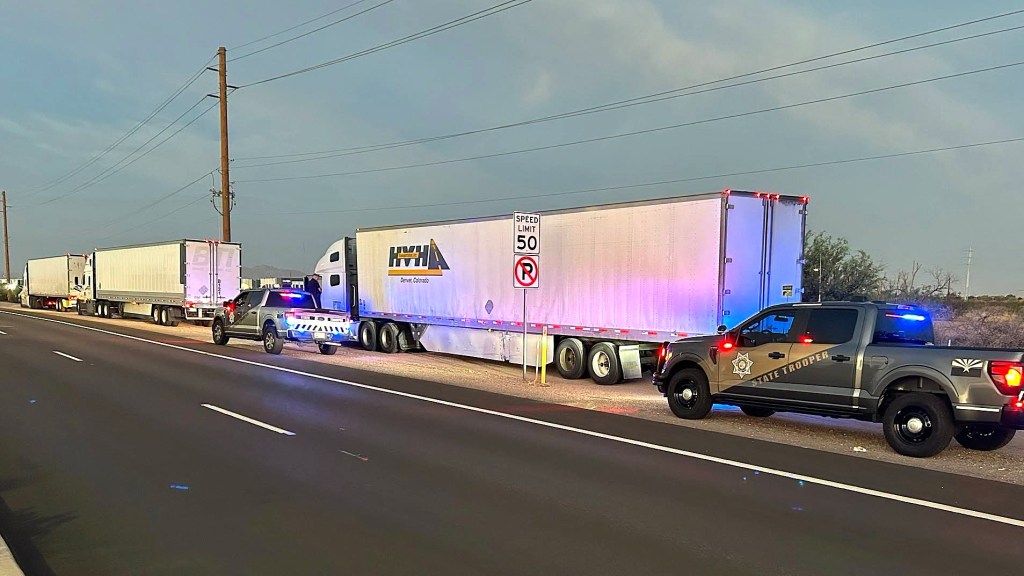
On July 31, troopers found three commercial drivers parked near Arizona State Route 202 and Elliot Road despite more than six posted “No Parking” signs.

Commercial Vehicle Enforcement Unit troopers contacted the drivers and discovered that all three had false logbooks, according to Arizona DPS. The drivers were cited and placed out of service.

Five days later, Arizona Highway Patrol troopers conducted a targeted traffic enforcement detail along Interstate 10 in an active construction zone between Phoenix and Tucson.

Troopers took enforcement action against five commercial vehicles for violating a posted requirement that commercial trucks remain in the right lane.

Each of the trucks was observed traveling in the left lane for distances ranging from 1.5 miles to more than 4 miles, according to DPS.

DPS said the violations caused traffic to slow and bunch behind the trucks, followed by unsafe accelerations after the CMVs returned to the right lane. The agency said commercial vehicles must remain in the right lane in construction zones when signs requiring them to do so are posted.

Why it matters: The latest actions show commercial truck enforcement broadening beyond traditional roadside inspections, with states increasingly using targeted operations to address specific risks including bridge strikes, crash-prone corridors, falsified logbooks and unsafe driving in construction zones.

The boring press release machines learned to love

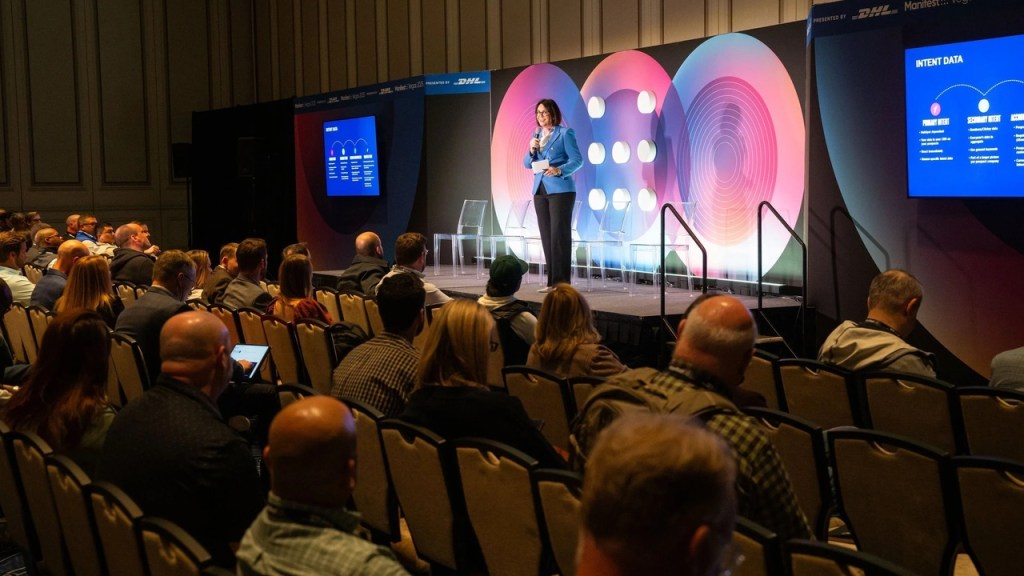
Kara Brown, CEO and co-founder of LeadCoverage, speaks on stage about intent data and AI-driven marketing at a supply chain conference

The humble press release was, for most of the past decade, the chore nobody in freight wanted. It sat near the bottom of the marketing budget. It was filed as an obligation. Executives who would sign off on a six-figure trade show booth without blinking balked at 500 words crossing the wire.

That was the status quo until the machines started reading them.

A quarter-long field test by LeadCoverage, found that press releases leading with a specific, economically relevant number earned 3.5 times more AI citations than releases without one. 

Over the quarter, the Atlanta go-to-market freight and supply chain agency published one release a week and logged 1,058 AI citations, up from nearly zero. ChatGPT accounted for roughly 90% of them.

What the results mean for carriers, brokers and 3PLs is not an abstraction. An example: When a shipper asks a large language model (LLM) which provider handles omnichannel distribution out of Florida, the answer arrives before anyone visits a website. Whoever published a number wins and gets named. To those unaware, they missed out on a conversation they never knew was happening.

“AI Cannot Invent a Number”

The finding is narrower than “send more press releases.” Luckily, that narrowness is the point. Ordinary releases built around company announcements, personnel changes or awards generated minimal citations. The releases built around a hard figure carried the whole result.

“AI cannot invent a number, so it cites whoever published one,” said Kara Brown, CEO and co-founder of LeadCoverage, in an interview with FreightWaves.

That constraint explains the mechanics behind the magic. Language models can only generate; they do not report. When a query demands a figure, the model reaches for a source that supplied one, and wire copy is unusually easy to reach. Every release on GlobeNewswire shares the same skeleton: headline, subhead, data, and quotes. AP style, uniformly applied, turns out to be machine-readable by accident.

Brown’s warning to companies sitting on proprietary data doesn’t mince words.

“The companies that publish specific, useful data on a consistent schedule are the ones AI cites most, and that citation is often the first impression a prospect gets before they ever visit your website,” she said. “The companies sitting on their data simply aren’t getting citations, and they never see the potential prospects and deals that pass them by.”

Why AI Citations Favor the Middle Market

Google was always an auction. That is the part freight marketers understood, and the part that priced most of them out.

“If you pay Google money, they will put you at the top of the answer whether or not it’s organic or paid,” Brown said. “If you don’t pay Google, they will diminish your visibility on Google.”

She has a word for the arrangement: mercenary. Google has advertisers to serve and a business reason to serve them. The LLMs, at least for now, run on different incentives. There is no keyword auction on a citation.

For a mid-market 3PL, broker, forwarder or tech vendor with a specific niche, that gap is the entire opportunity, because the traditional route is closed.

“You can’t compete with Old Dominion on LTL,” Brown said. “They already own the search volume for LTL. Trying to outrank them on that term isn’t a fight worth picking.”

The opening has a clock on it. Brown describes the citation effect as a flywheel with a half-life: early participants accumulate weight the way compound interest does, and latecomers spend their budget fighting incumbents who started first.

“The earlier you start, the more time you have to let this half-life percolate with the LLMs,” she said. “The later you start, the more you’re competing with the folks that have already started.”

Money is no longer solving it in a post-search world. The old escape hatch, outspending the field on keywords, does not exist inside an answer engine.

Trade Press, Reweighted

Two figures from Muck Rack are reframing where the effort should go.

About 1% of all answer engine optimization citations come directly from a press release, which works out to roughly 33,000 searches a day resolved by wire copy. Separately, 27% of industry-specific searches are answered by trade publications.

That second number matters more in freight than almost anywhere else, because freight queries are never generic. Nobody asks an LLM for a dentist nearby. They ask which 3PL runs omnichannel distribution near a Florida headquarters, and the model looks for a publication that has already answered.

Brown’s order of operations follows directly: wire first, trade press second, website third. The sequencing runs against the instinct of most supply chain marketers, who default to redesigning the site.

“The LLMs don’t care about your website. They’re not going to your website,” she said. “The content on your website is important, but the order of operations is: send more press releases, get picked up by the trade media, and then make sure that you have pretty good content on your website.”

The reasoning is arithmetic and not aesthetics. No model is going to crawl 50,000 broker websites to find the one that answers a niche question in the fraction of a second it has to respond. It will reach for the wire and the trade desk that already did the work.

The consequence for an industry that has spent 10 years writing trade coverage off as legacy media is uncomfortable. “Trade press is more important than it was a year and a half ago,” Brown said.

The Index Is Where the Number Comes From

If the rule is to publish a number, the operational question becomes where the number comes from. Brown’s answer is an index, and she recommends one to nearly every company she talks to.

Two structures have worked. The first is mode-specific, and the discipline lies in picking a lane nobody owns.

An example she gave: Competing with DAT on macro rate data is a losing proposition, and the talent that built that advantage has since spread across the industry. Ken Adamo, DAT’s former chief of analytics and general manager of its shipper business, joined EASE Logistics as chief strategy officer in May. “He’s crushing it,” Brown said.

Competing on a mode that has not been claimed is a different proposition entirely.

ITS Logistics built its Port/Rail Ramp Freight Index into effective ownership of drayage commentary, to the point that Paul Brashier appears in the news whenever something breaks at a port. Brown points to heavy and light final mile as territory still sitting open.

The second structure is industry-specific, and the math is smaller than most marketers expect. One LeadCoverage client draws roughly 30% of its book from steel.

There are 123 steel manufacturers and distributors in America.

“The niche inside the niche is so small,” Brown said. The program reaches 1,200 to 1,400 people a month with an index on what is moving steel transportation rates: energy prices, fuel, disruption in the Middle East. One new customer a quarter clears the bar.

The origin story she returns to is Redwood Logistics, a client since 2020. Redwood had an internal cross-border newsletter, something built for internal use, not for outside eyes. It was a straightforward rundown of numbers and shipping data, nothing designed to be published.

Brown and her team saw an opportunity in it. They proposed repurposing that internal newsletter into something external: an index the industry could actually use. That idea became Redwood Cross-Border Index, which eventually brought CNBC to the company’s Laredo operation for a mini-documentary.

“The PR works if you are sharing regularly with the press a point of view with an economic perspective that matters to the shipper,” Brown said.

The Measurement Trap That Kills AI Citation Programs

The uncomfortable part is that the industry cannot yet prove any of this the way a CFO wants it proved.

Attribution tracking for citations is, by Brown’s own assessment, not yet reliable, and she is candid about the gap. The tooling is roughly six months old. Agencies can see citation volume and which model delivered it. What happens next is dark.

“We can tell you how many times you’ve been cited, but we can’t tell you what happens after that,” she said.

A buyer might click. A buyer might write the name down, or drop it into an analysis that goes to a boss. None of that is visible today.

Meanwhile, the numbers that are visible look wrong to anyone still grading on the old scoreboard. LeadCoverage’s search impressions rose 83% during the test. Google clicks fell, because AI answers were resolving buyer questions before a click could happen. Direct and brand traffic kept climbing, which is what it looks like when buyers find you somewhere other than search.

Read that dashboard with 2019 assumptions and it reads like failure. Brown expects that misreading to be the industry’s costliest mistake.

“The most common mistake we expect to see is companies grading these programs on clicks and shutting them down right as they start working,” she said. “Clicks are declining across the board. The measure that matters now is whether AI cites you when a buyer asks about your category. The source cited today is hard to unseat tomorrow, because these systems reward freshness and repetition. This is a position to claim before a competitor claims it.”

Werner not deterred by July slowdown

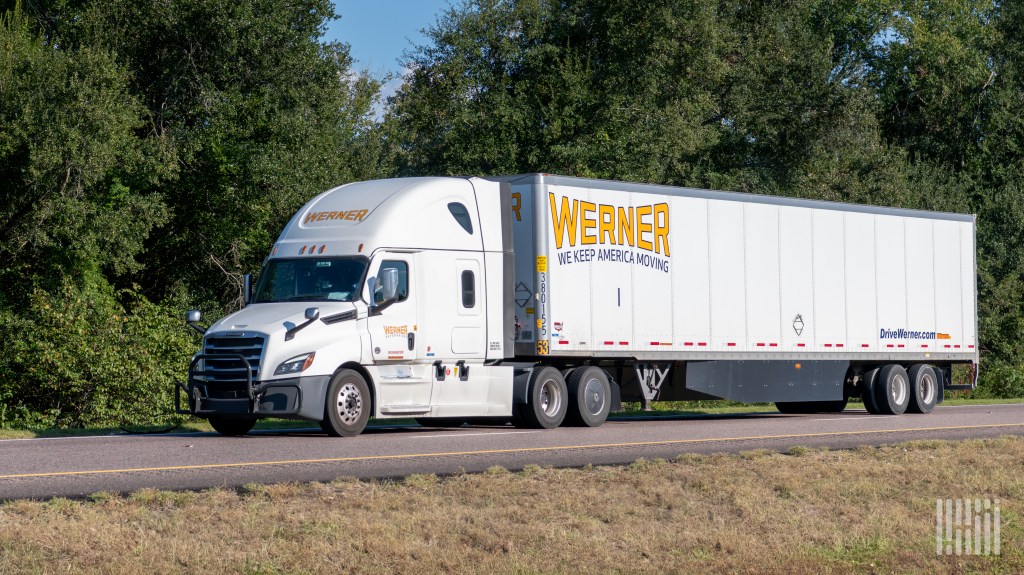
a white Werner tractor-trailer on a highway

Executives from Werner Enterprises sounded unfazed by the seasonal slowdown in truckload spot market trends during July. Chairman and CEO Derek Leathers told investors Tuesday that the supply-led recovery shows no signs of slowing as the current administration is not backing off its crackdown on bad actors.

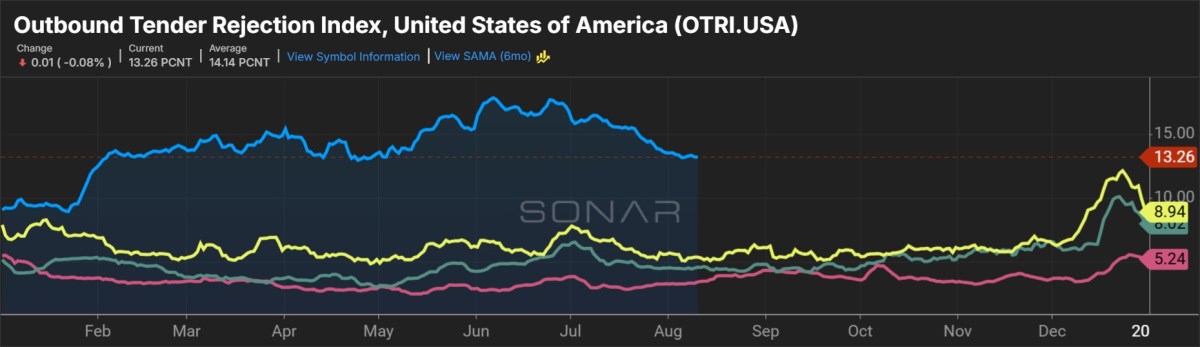
Tender rejections peaked in June and spot rates have continued to slide from the Fourth of July (holiday) high. The summer lull has investors jittery. Second-quarter earnings reports were solid, but shares of most carriers have sold off by mid-single to mid-teen percentages since.

“There’s no concern, if you will, from my perspective about … some of these little snippets of news that we’ve seen in July,” Leathers said at Deutsche Bank’s Chicago Industrials Summit.

SONAR: Outbound Tender Rejection Index (OTRI.USA) for 2026 (blue shaded area), 2025 (yellow line), 2024 (green line) and 2023 (pink line). A proxy for truck capacity, the tender rejection index shows the number of loads being rejected by carriers. Current tender rejections show a tight truckload market. To learn more about SONAR, click here.

The top of the funnel has been significantly constricted. Leathers estimates that 850 to 900 CDL schools have been forced to close due to insufficient training standards. That’s in addition to roughly 10,000 training programs that have been removed from the FMCSA’s Training Provider Registry.

Capacity has been significantly impacted by a crackdown on ELDs allowing operators to alter hours of service. As Leathers noted, “10 trucks were able to behave like 15.”

Well before regulatory enforcement ramped up last year with stricter oversight of English-language proficiency and non-domiciled CDL restrictions, carriers were exiting the market due to weak economic conditions. After an extended downturn, numerous fleets continue to struggle to stay afloat, meaning the recent uptick in rates might have arrived too late for some.

Leathers also believes more enforcement is on the way as the FMCSA is likely to see an increase in funding from its annual budget allocation in October.

Even with only modest demand, Leathers said a supply-driven recovery has legs. “Christmas is still going to come. Peak season is still going to be a reality.”

He noted an “increased acceptance” from shippers that the supply crunch “is real,” which bodes well for an industry that “hasn’t been reinvestable in several years.”

Inventories at some of Werner’s retail customers are a little lean while others are holding satisfactory stock levels. The company sees a normal peak season this year. But unlike last year’s, this year’s peak will have the benefit of significantly higher rates.

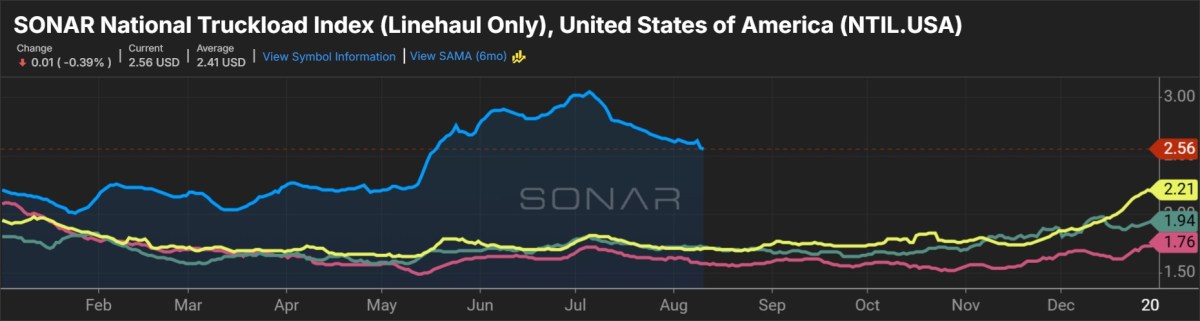
SONAR: National Truckload Index (linehaul only – NTIL.USA) for 2026 (blue shaded area), 2025 (yellow line), 2024 (green line) and 2023 (pink line). The NTIL is based on an average of booked spot dry van loads from 250,000 lanes. The NTIL is a seven-day moving average of linehaul spot rates excluding fuel. Rates remain significantly higher on a y/y comparison in August.

During the second quarter, Werner’s (NASDAQ: WERN) one-way TL fleet saw a big turnaround following a restructuring.

Revenue per truck per week (excluding fuel surcharges) jumped 28% year over year, as miles per truck were up 16% and revenue per total mile increased 10%. The rate increase was notable as Werner had only half the spot market exposure it had a year ago, and length of haul was up nearly 100 miles. (Longer lengths of haul usually accompany lower per-mile rates.)

Under the restructuring plan, the company exited non-profitable accounts, and repurposed or disposed of under-utilized trucks. The one-way fleet was 34% smaller y/y at 1,700 units at the end of the second quarter. Higher pricing and better utilization pushed the total TL segment’s adjusted operating ratio (inverse of operating margin) to 94.5%, 270 basis points better y/y.

Werner expects one-way rate per mile to increase by 10% to 13% y/y in the third quarter. With the turnaround largely complete, the company will now look to grow this fleet again.

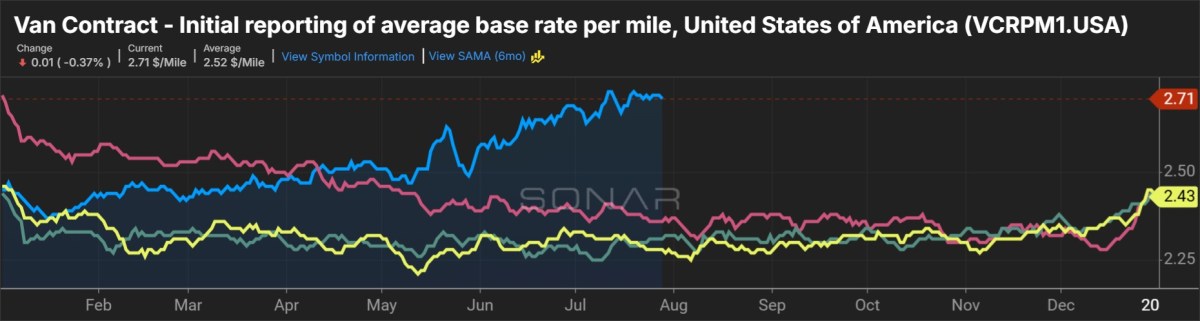
SONAR: Van Contract Rate Per Mile Index (VCRPM1.USA) for 2026 (blue shaded area), 2025 (yellow line), 2024 (green line) and 2023 (pink line). The index shows a 7-day moving average of the initial reporting of dry van contract rates without fuel or accessorial charges.

The dedicated fleet, 80% of Werner’s total TL network, is capturing low- to mid-single-digit contractual rate renewals. Revenue per truck per week (ex-fuel) was 5% higher y/y in the second quarter. Werner acquired dedicated carrier FirstFleet for $245 million in January. Excluding FirstFleet from the results, Werner’s legacy dedicated operation recorded an 8% increase in revenue per truck per week. The metric is expected to increase by 3% to 5% y/y for full-year 2026.

While the consolidated TL margin was more than 10 percentage points worse than the prior peak, it was the unit’s best performance since the 2023 fourth quarter. Management reiterated a path to low-double-digit margins during the middle of the freight cycle, which it said could occur next year. Higher rates, better demand, truck additions to existing dedicated accounts (no start-up cost offset), higher gains on sale as used prices rise (150 bps of margin alone), and automation and cost takeout initiatives are the levers.

Shares of WERN were down 0.7% on Thursday compared to the S&P 500, which was off 0.3%. Werner’s stock is up 57% since spot rates first inflected positively ahead of Thanksgiving.

Why it matters? Werner’s Tuesday presentation provided key insights into how current market and regulatory forces are driving improved financial results.

More FreightWaves articles by Todd Maiden:

Ex-CBP officer used emoji code to let 477 kilos of Sinaloa Cartel drugs cross

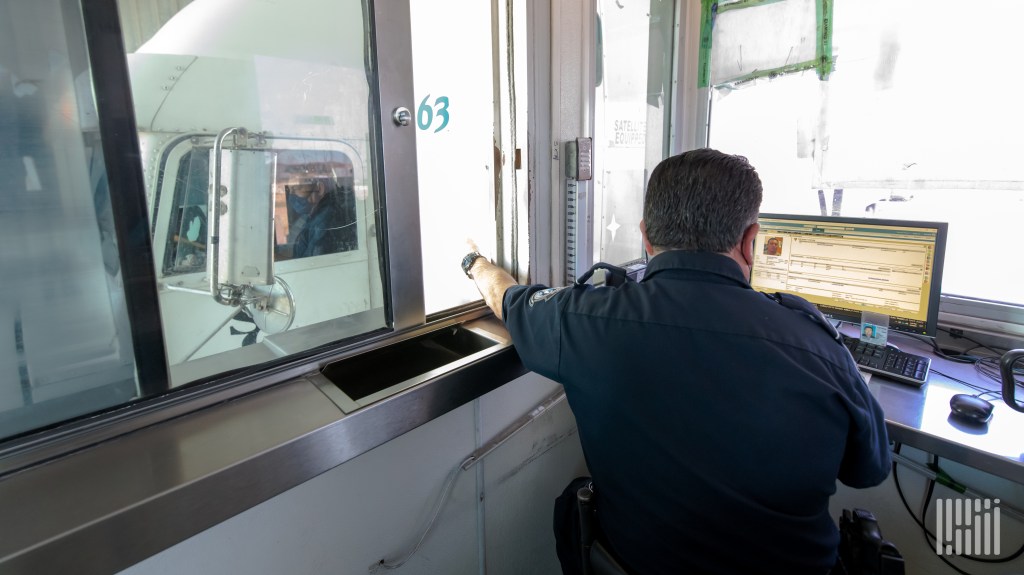
Drug-filled vehicles approached California’s Tecate Port of Entry and reached Jesse Clark Garcia’s inspection lane. The U.S. Customs and Border Protection officer knew when smugglers were coming. He allowed each driver to enter the United States without required checks. Prosecutors say every passage brought him at least $10,000.

Garcia supplied a Sinaloa Cartel-linked trafficking organization with duty schedules and lane assignments. He sent those details through text messages using a secret emoji-based code. The group then routed cocaine, methamphetamine and fentanyl toward the designated checkpoint. That arrangement began by 2021, according to court records.

The U.S. Attorney’s Office for the Southern District of California announced the punishment Aug. 7 in San Diego. A federal judge sentenced Garcia to nine years in prison. The result followed a long-term investigation involving several agencies. The corruption case also included then-CBP Officer Diego Bonillo.

Emoji code guided cartel vehicles

Garcia exploited CBP’s flexible duty-switching policies to reach lanes outside his assigned schedule. On other occasions, he falsely claimed technical problems blocked mandatory checks. Those excuses let drug shipments continue despite system alerts. His plea agreement detailed both methods.

On July 8, 2025, the former officer pleaded guilty to nine felony counts. His admissions included conspiracy to import controlled substances, importation, and aiding and abetting. Garcia accepted responsibility for facilitating at least 100 kilograms of fentanyl, 107 kilograms of methamphetamine and 270 kilograms of cocaine. Combined, the three amounts reached a minimum of 477 kilograms.

Diego Bonillo joined Garcia in pleading guilty during July 2025. A federal judge sentenced the co-defendant to 15 years on Nov. 7. Investigators identified both men as participants in the same corruption scheme. Both defendants used coded messages to share schedules and assignments.

Bonillo admitted allowing no fewer than 15 vehicles to cross without inspection between October 2023 and April 2024. Those loads carried at least 75 kilograms of fentanyl and 11.7 kilograms of methamphetamine. The shipments also contained more than one kilogram of heroin. Agents discovered a second phone that he used to send traffickers his lane assignments and working hours. The Mexico-based organization used that information to direct smugglers toward his checkpoint.

Illegal proceeds funded luxury purchases

Evidence showed Garcia’s spending far exceeded income from government work. Illegal proceeds funded luxury purchases, a high-end vehicle and a San Diego residence. The money also supported his co-ownership of an equine racing business. Authorities connected additional funds with ranch construction in Mexico.

As the investigation progressed, Garcia tried to evade law enforcement. He stopped reporting for duty and ignored inquiries from CBP supervisors. Agents watched him drive into Mexico during late March 2024. Prosecutors described the vehicle as fully packed.

Mexican authorities arrested Garcia on May 2, 2024, after receiving a U.S. request. A federal warrant authorized the action. Officials transferred him into American custody later that evening. The prosecution then continued in San Diego.

Nine felony counts carried life maximum

Federal records identify Garcia, 38, as a San Diego resident in case 24-CR-0908-RBM. His conspiracy charge cited Title 21 sections 952, 960 and 963. Importation counts relied on the first two provisions. Federal law set a maximum life sentence and 10-year mandatory minimum for each charge category. The DOJ release did not explain why Garcia received less than that minimum.

“Officer Garcia betrayed his oath, his fellow officers, and his country,” U.S. Attorney Adam Gordon said. “Officer Garcia’s conduct warranted this significant sentence.” DHS Inspector General Joseph V. Cuffari also addressed internal corruption after the sentencing. “The Office of Inspector General will continue to relentlessly root out corruption,” he added. The inspector general also thanked DHS OIG’s law enforcement partners.

FBI Special Agent in Charge Mark Remily said Garcia “knowingly and repeatedly allowed” narcotics into the country. “The corrupt few do not represent the whole of the federal law enforcement workforce,” Remily added. CBP Special Agent in Charge Sara Esparagoza called her office’s commitment to high standards “unwavering.” Her statement also emphasized “rooting out corruption” and internal accountability.

The FBI Border Corruption Task Force participated with the Department of Homeland Security Office of Inspector General. CBP professional responsibility personnel and Border Patrol’s San Diego Sector Intelligence Unit also investigated. Homeland Security Investigations teams from SDNET and the Hermosillo Attaché supported the work. The Drug Enforcement Administration joined those agencies. Assistant U.S. Attorneys Shauna R. Prewitt, Sean Van Demark and Bianca Calderon-Peñaloza prosecuted the case. The U.S. Attorney’s Office told FreightWaves it had no further information or comment beyond the public record.

Why it matters

Border controls fail when trusted insiders manipulate assignments, ignore alerts and wave vehicles through unchecked. Freight and security leaders should watch for employees who repeatedly bypass required processes.

Click here for more articles on cargo theft and freight fraud by Phil Brink.

CBP finds $1.17M in cocaine after inspecting bell pepper truck at Texas border – FreightWaves

Stolen trailer investigation leads police to nearly $800K in cargo and vehicles – FreightWaves

Police: Little Debbie snack fraud scheme involved deliveries that never happened – FreightWaves

New harbor commission president backs Long Beach port plans

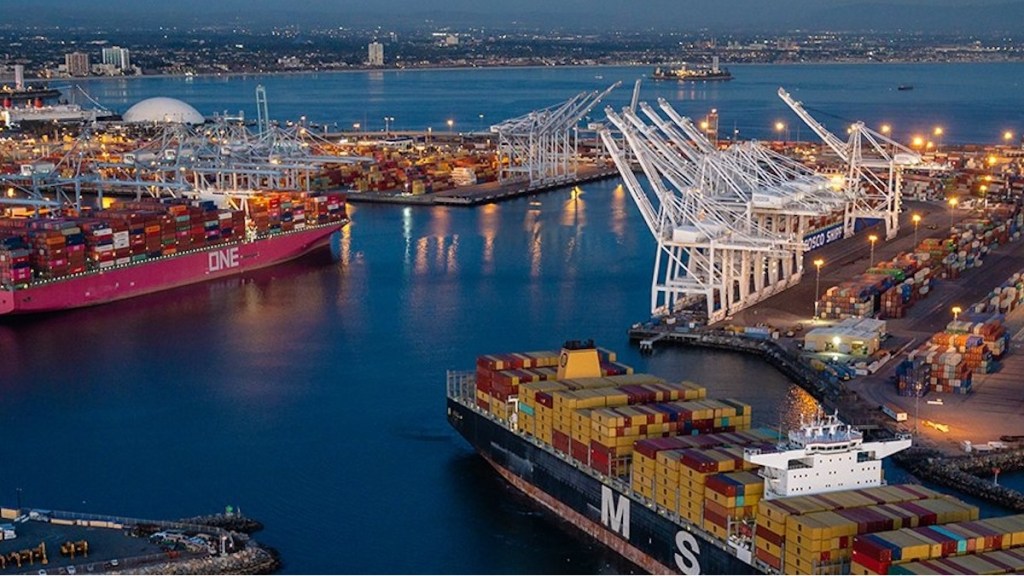
Newly installed Long Beach Harbor Commission President Steven Neal said Monday he will prioritize the infrastructure, sustainability and technology programs underpinning the Port of Long Beach’s long-term “Port of the Future” strategy.

At his first meeting as board president, Neal said the commission would maintain progress on initiatives intended to reinforce the Southern California gateway’s position in cargo handling, rail connectivity, customer service and environmental performance.

The agenda includes the port’s recently launched objective of doubling annual container throughput to 20 million twenty foot equivalent units (TEUs) by 2050 while transitioning to a fully zero-emissions seaport.

“Innovation has always defined the Port of Long Beach,” Neal said. “From pioneering environmental initiatives to building world-class infrastructure, we have never been afraid to explore bold ideas. Today, we are continuing that legacy by responsibly evaluating technologies that could redefine how ports operate for generations to come.”

A central infrastructure project is the Pier B On-Dock Rail Support Facility, which is designed to triple the port’s on-dock rail capacity, strengthen connections to the national rail network and reduce rail dwell time from about four days to 24 hours. The project is also intended to reduce truck traffic and associated emissions in and around the harbor complex.

This week, the port purchased a 13-story office building in downtown Long Beach for $36 million, with plans to create a maritime business hub.

Neal also highlighted the port’s efforts to expand the use of electricity, hydrogen and methanol as lower-emission energy sources. He pointed to a recent partnership with the U.S. Department of Transportation’s Maritime Administration aimed at developing operational, safety and security standards for potential nuclear-energy deployment in port operations.

“As global trade continues to expand and the demand for reliable, clean energy grows, we have an opportunity to lead — not simply by adapting to change, but by helping shape it,” Neal said.

Neal is serving his second six-year term on the Harbor Commission after first joining the board in 2019. He previously chaired the commission from 2021-2022 and has served two terms as vice president. Before joining the commission, he represented North Long Beach on the Long Beach City Council from 2010-2014.

Under the city charter, the five-member Harbor Commission establishes policy for the port and oversees Chief Executive Officer Noel Hacegaba, who leads an organization of about 600 employees.

Read more articles by Stuart Chirls here.

Read more:

Trump extends Jones Act waiver; direct effect “pennies per gallon,” say analysts

Asia-US East Coast box rate hits new high of $9,400

After massive Q1 loss, Maersk returns another service to Suez

Sale of major shipping line in U.S. trade on the rocks: Report

Asia ocean line in $135M expansion of US box terminal

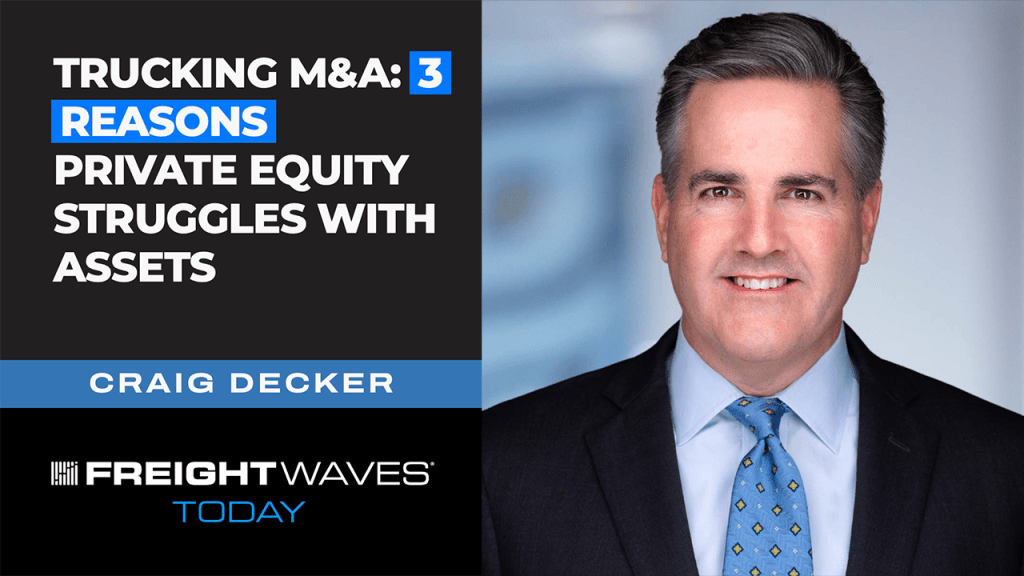
Trucking M&A: 3 Reasons Private Equity Struggles With Assets

The freight market is showing signs of recovery, reigniting interest in M&A across the logistics sector. But while non-asset brokerage deals have historically attracted private equity, asset-based trucking presents unique challenges. Craig Decker, Managing Director at Brown Gibbons Lang & Company, explains why financial engineering alone isn’t enough in asset-heavy operations and how a lack of understanding of replacement cycles and operational complexities can lead to ‘miserable’ investment outcomes. Discover what investors are now looking for in the evolving M&A landscape.

Private equity’s persistent losses in asset-based trucking come down to three compounding failures: overleveraged balance sheets, misread freight cycles, and underestimated operational complexity. Speaking on FreightWaves, Decker said the industry is now seeing a resurgence in M&A interest that began in the third quarter of last year as truckload rate indexes shifted and regulatory changes began tightening capacity — but warned that old mistakes could repeat.

Strickland argued that the core financial error is leverage. Asset-intensive trucking businesses carry fleet replacement cycles of three to five years for truckload and seven years for LTL, meaning depreciation and amortization is a real cash expense, not a paper one. When PE firms load debt onto those businesses, debt service competes directly with capital expenditure. “What they might do is extend the trade cycle on their equipment or defer some maintenance,” Decker said. “When you start doing that, that just really, really deteriorates your business, whether it be from your assets not running at the right OR to your customer satisfaction rate going down.”

A decade-plus of near-zero interest rates made the leverage math appear manageable. Decker noted that investment professionals who entered PE after the 2008 financial crisis modeled businesses against LIBOR rates of around 50 basis points — effectively 1.5% to 2% all-in borrowing costs. Those same professionals are now senior decision-makers who have not been tested in a real rate environment, making the current high-cost-of-capital era a rude adjustment.

“It’s not a good business within their holding period. Part of it is that their lifespan of their investment or their thesis on that is 3 to 5 years. It’s really too short,” Decker said.

Operational unfamiliarity compounds the balance-sheet problem. Decker cited driver turnover as one variable that PE spreadsheets routinely underestimate — the industry average runs roughly 1.8 to 2 drivers per truck per year at approximately $10,000 per driver to test, seat, and train. Insurance incident rates, weather disruptions, and customer service failures cascade in ways that cannot be modeled, he said, and PE firms that try to manage trucking companies by spreadsheet rather than through experienced operators tend to spiral downward.

The cycle timing problem is equally punishing. Decker said acquirers frequently rely on trailing-12-month financials without accounting for where a carrier sits in the freight cycle. Because of the operating leverage embedded in trucking, a 12-month snapshot at the wrong point in the cycle is, in his view, essentially irrelevant for underwriting a multi-year hold.

Where PE can succeed, Decker said, is in specialized or dedicated segments — cold chain serving pharma, hazmat, or other end markets with low price elasticity and sticky margins — rather than commoditized truckload. He pointed to the growing investor interest in those niches and noted that port diversification is adding another layer of complexity for investors, with freight increasingly routing through Savannah, Gulf ports, and Norfolk rather than solely through Los Angeles-Long Beach. “66% of our population is east of the Mississippi,” Decker said, arguing that Mid-Atlantic and Southeast logistics hubs offer lower labor costs, fewer union constraints, and better highway access than California gateways. Decker said deals are now beginning to close after what he called “4 very, very long years” of a freight recession, with brokerage transactions leading and asset deals starting to follow.

  • PE firms overleveraging asset-based trucking carriers — with fleet replacement cycles of 3 to 7 years — leads to deferred maintenance and deteriorating operations when debt service crowds out CapEx.
  • A generation of PE professionals who modeled deals at ~1.5–2% interest rates lack experience managing heavy-asset businesses in a high-cost-of-capital environment.
  • M&A activity is rebounding after four years of freight recession, with investors targeting specialized niches like cold chain pharma and dedicated transport over commoditized truckload.

This Summary is generated thanks to a transcription of the interview, for the full interview please enjoy the video above.

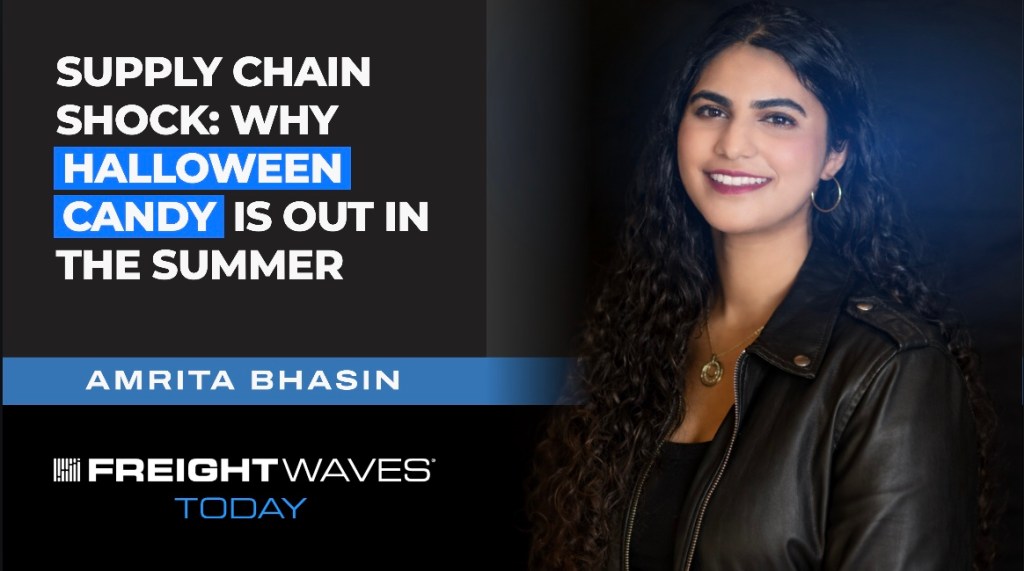
Supply Chain Shock: Why Halloween Candy is Out in Summer!

Get ready for “Summerween”! Retailers are stocking Halloween candy in August, but it’s not just an anomaly. Sotira CEO Amrita Bhasin joins FreightWaves Today to reveal how macro challenges like tariffs and changing consumer habits (hello, GLP-1 drugs!) are pushing inventory planning earlier and creating massive overstock issues. Discover why the reverse logistics of returns is a growing sustainability problem and what brands are doing to adapt their products and marketing to these disruptive trends.

Halloween candy appearing in grocery stores in early August is not a supply chain anomaly — it is a deliberate retailer strategy driven by tariff uncertainty and front-loaded import cycles, according to Amrita Bhasin, CEO of inventory liquidation company Sotira. Bhasin, speaking on FreightWaves Today, said May was the peak month for imports in 2025 and that she expects volumes to decline for the rest of the year, a view that puts her at odds with Port of Los Angeles Executive Director Gene Seroka, who has projected a robust second half for imports.

The early-season stocking trend — dubbed “summerween” by retailers — reflects a broader shift in inventory planning as brands scramble to get goods into the country while tariff conditions are more favorable. Bhasin said the dynamic now spans nearly every consumer goods category, with Christmas decorations also expected to hit shelves significantly earlier than in prior years. “Everything is getting pushed out earlier across pretty much all consumable or consumer good categories,” she said.

The candy and chocolate category illustrates the pressures compounding at once. Bhasin said a small bag of candy at convenience stores reached upward of $20 in some ZIP codes last year, driven by spiking cocoa prices. Manufacturers responded by overbuying, leaving excess stock that now needs to move. At the same time, GLP-1 drug adoption, consumer concern over food dyes — with some manufacturers pledging to phase out certain dyes by end of 2026 — and declining appetite for high-sugar products are all suppressing demand in the category.

“I think last year we saw a big return season. Returns the last few seasons have been high. Retailers are coming up with new policies,” Bhasin said, noting that some e-commerce platforms now track return thresholds and may ban repeat offenders regardless of the dollar value involved.

The returns challenge is costly across the supply chain. Bhasin said warehouses pay $1 to $2 just to scan a single returned unit back into inventory — a significant burden when the item’s MSRP may be only $8. She added that data shows 45% to 50% of e-commerce returns go directly to landfill without ever returning to a warehouse shelf. Sotira is working with retail partners to route excess and returned goods to nonprofits via backhaul on existing truck lanes, generating tax deductions for brands and producing impact reports that companies use in investor disclosures.

Overstock is concentrated in packaged food and beverage, Bhasin said, including cereals, protein and nutrition bars, and chocolate-heavy CPG items, across the past 18 months. The firm also sees growing excess in ultra-luxury goods — handbags and prestige perfumes — as consumers question whether elevated price points justify quality. Categories performing well include fiber-enriched beverages, high-protein products, and clean beauty items, where consumers have shown a willingness to pay a premium.

On the demand side, Bhasin pointed to GLP-1 adoption as a structural shift affecting not just food but broader consumer behavior, including reduced impulse buying. She said the behavioral changes tied to these drugs are “underappreciated” and could reshape how brands market and procure products well beyond the grocery aisle. With overstock volumes already elevated and consumer spending pulling back in recent months, she argued that the inventory already sitting in U.S. distribution centers may be sufficient to supply demand through the remainder of the year.

  • Sotira CEO Amrita Bhasin says May 2025 was the peak for U.S. imports and expects volumes to decline through year-end, as tariff-driven front-loading has already stocked domestic warehouses.
  • Halloween candy and seasonal goods are hitting shelves in summer as retailers compress planning cycles to hedge against tariff costs and weakening consumer spending.
  • 45% to 50% of e-commerce returns go directly to landfill, and warehouse processing costs of $1 to $2 per unit are pushing brands to explore backhaul donation routes for excess inventory.

This Summary is generated thanks to a transcription of the interview, for the full interview please enjoy the video above.

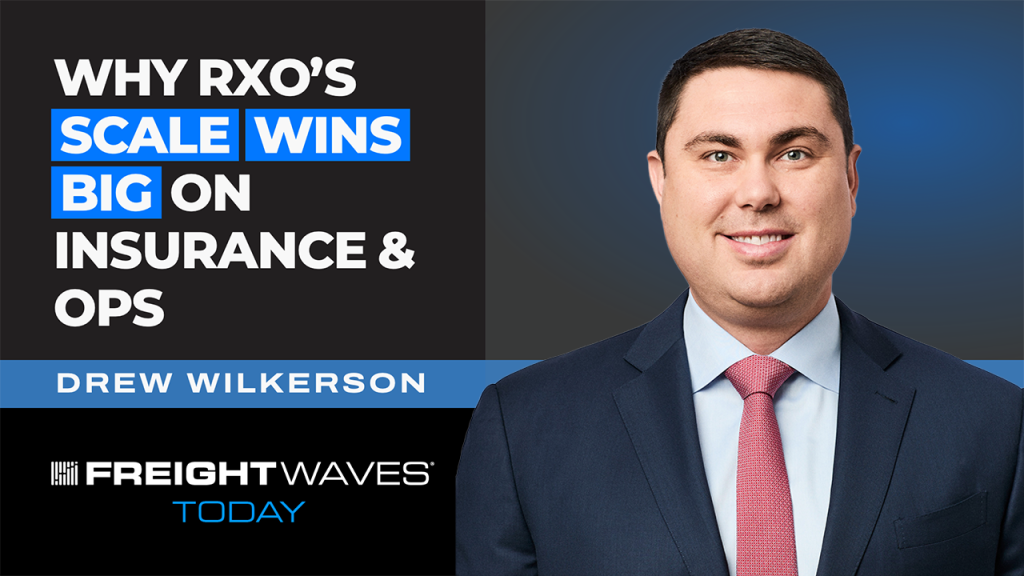
Freight Market Shift: Why RXO’s Scale Wins Big on Insurance & Ops

RXO CEO Drew Wilkerson reveals how recent market shifts and regulatory changes have made financial stability and extensive insurance coverage non-negotiable priorities for shippers. He explains why these factors, alongside continuous innovation and strong client relationships, are positioning RXO to capture outsized market share in both spot and contract freight, even as the market remains dynamic.

RXO’s excess liability coverage exceeding $100 million has become a front-line sales advantage as shippers tighten carrier and broker vetting in the wake of the Montgomery ruling, CEO Drew Wilkerson said in an interview with FreightWaves. Wilkerson said financial stability and insurance coverage now open every enterprise customer conversation — a shift that accelerated sharply over the past few weeks.

“I only know of 2 that have excess liability of $100 million or more” among the top 5 to 10 brokers, Wilkerson said, adding that the field of providers capable of serving large enterprise shippers at scale is narrowing quickly. He noted that the coverage threshold is not something competitors can build overnight.

“We don’t want to just scrape by on this. We don’t want to just scrape by for our customers. We want to make sure that we’ve got more than enough to be there for our customers.” — Drew Wilkerson, CEO, RXO

The liability discussion comes as RXO reported truckload spot mix of 42% of volume, with spot loads rising 900 basis points sequentially and roughly 1,000 basis points quarter over quarter — the kind of flex the company had promised investors since its spin from XPO. Wilkerson attributed the gross profit per load improvement to that spot mix shift, along with a pickup in higher-margin project and mini-bid freight and technology-driven productivity gains. Truckload volume was up 2% year over year in the second quarter, with low-to-mid single-digit year-over-year growth expected in the third quarter.

On the technology side, RXO rolled out a spot-quote agentic email tool that Wilkerson said allowed employees to process five times the number of orders quarter over quarter. He said the best-performing technology investments check all three of the company’s internal criteria: growing volume, increasing margin, and improving productivity. An AI agent now reviews installation photos from independent contract drivers in the last-mile business, though Wilkerson noted that tool primarily addresses productivity rather than margin or volume.

Wilkerson said the company keeps staffing levels calibrated to absorb 15% to 20% volume growth overnight, a posture it has maintained for the past three years heading into peak season. He described the current freight recovery as early-stage, pointing to tender rejections running at 14% to 16% on SONAR — well below the 25% to 30% levels seen in a robust upcycle — while demand remains down year over year according to Cass data. He said the company is two years into integrating the Coyote acquisition and is now focused entirely on innovation rather than integration.

On food and beverage, Wilkerson pushed back slightly on the notion that the sector is a drag, saying RXO saw year-over-year increases with those customers — though he credited market share gains rather than underlying volume growth. He cited two factors weighing on the category broadly: GLP-1 drug adoption reducing consumption and deportations shrinking the U.S. consumer base. RXO’s top customers have been with the company an average of 16 years, Wilkerson noted, a relationship depth he said is central to winning outsized spot and project volume as shippers pare down their provider lists.

  • RXO carries excess liability insurance exceeding $100 million, a threshold Wilkerson says only 2 of the top 5 to 10 brokers can match, making it a decisive factor in enterprise shipper conversations post-Montgomery.
  • Spot mix hit 42% of truckload volume, up ~1,000 basis points quarter over quarter, with a new agentic spot-quote tool enabling 5x more orders processed per quarter.
  • Wilkerson says the freight recovery is early-stage, with tender rejections at 14%-16% on SONAR versus the 25%-30% of a robust cycle, and Q3 truckload volume growth guided to low-to-mid single digits year over year.

This Summary is generated thanks to a transcription of the interview, for the full interview please enjoy the video above.

Spot vs. Contract Rates: Don’t Be Fooled by Short-Term Declines

The gap between spot and contract freight rates is widening, with contract rates up almost 20% year-over-year while spot rates see a monthly dip. Dive into SONAR data to understand why this isn’t just seasonal softening. We’ll explore the strategic shift to intermodal in key markets like Indianapolis and what it means for your procurement teams.

Van contract rates have climbed 19.3% year over year while NTI spot rates have dipped roughly 5% month over month — a divergence that FreightWaves’ Craig Fuller says procurement teams should not mistake for a softening market. Fuller, presenting the SONAR Update on Tuesday, Aug. 12, warned that the spot decline reflects some seasonal softening but more significantly signals that carriers and brokers are pricing forward risk into committed rates as new mini-bids and contract renewals roll in.

“Don’t get fooled by the short-term spot bit of decline,” Fuller said. “The contract rates rising is a huge part of that.” He added that procurement teams need to keep benchmarking against contract rates and prepare for the continued double-digit increases that major carriers have flagged in recent earnings calls.

Modal conversion is emerging as the market’s leading indicator, Fuller said. Truckload tender volumes are down about 2% overall, yet intermodal container volumes are up 2% in the same window — a simultaneous shift that points to deliberate shipper strategy rather than demand destruction. The 32% cost spread between intermodal and truckload rates is a primary driver, according to Zach Strickland.

“The fact that you see a 32% spread on the cost is — you can’t ignore it,” Strickland said.

Intermodal growth is concentrated in an unexpected geography. While Los Angeles volumes are up year over year, Atlanta and Chicago are posting significantly larger growth rates, suggesting the capacity crunch is pushing freight onto eastern rail corridors more than traditional west-coast import lanes, Julie Van de Kamp noted. She pointed to BNSF’s strong recent earnings and JB Hunt’s commentary as confirmation that rail is capturing meaningful share from truckload.

Van de Kamp and Strickland also emphasized that the intermodal shift may be structural rather than cyclical. Large intermodal providers have told FreightWaves that shippers who had never used intermodal are now trying it and staying. “It’s sticky. It’s very sticky, ’cause it’s not like somebody’s gonna just pull that infrastructure right back off,” Strickland said.

Indianapolis offers a case study in why headline numbers can mislead. Van rejection rates in the market have eased modestly, but the HAL Index remains above 90 and Indianapolis registers deep blue on the SONAR map — well above the national average. Reefer rejections in the market are actually still rising, reflecting the city’s heavy concentration of grocery, refrigerated, frozen, and fulfillment operations, including major Amazon and FedEx facilities. Spot rates out of Indianapolis continue to increase. “From everything I can see, Indy is still quite hot,” Fuller said.

  • Van contract rates are up 19.3% year over year even as NTI spot rates fall ~5% month over month, a gap carriers and brokers are pricing with forward risk in mind.
  • Intermodal container volumes are up 2% while truckload tender volumes are down 2%, driven by a 32% cost advantage that industry participants say is creating sticky, long-term modal shifts.
  • Indianapolis’s HAL Index remains above 90 and reefer rejections are still rising despite a modest dip in van rejections, underscoring the need for market-level context beyond headline data.

This Summary is generated thanks to a transcription of the interview, for the full interview please enjoy the video above.

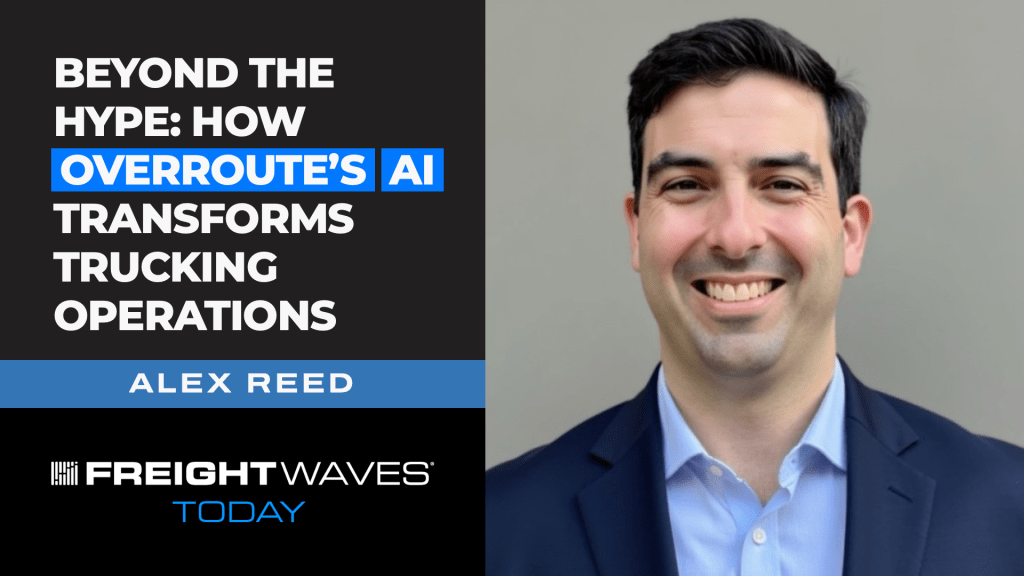
Beyond the Hype: How Overroute’s AI Transforms Trucking Operations

Overroute CEO Alex Reed explains their partnership with JB Hunt, focusing on how their AI agents are automating workflows and optimizing asset utilization. Discover Overroute’s unique “carrier-native” approach, prioritizing user adoption and empowering frontline operators with AI for maximum ROI in trucking logistics. This deep dive into supply chain innovation reveals how practical, user-focused AI is changing the game.

Overroute, an AI software company incubated through JB Hunt’s UpLabs program, has deployed its platform across hundreds of JB Hunt users spanning the carrier’s intermodal, over-the-road, and dedicated business units, Chief Executive Officer Alex Reed said in an interview with FreightWaves. The tool surfaces internal data and helps customer-facing representatives respond to requests, build reports, and manage service exceptions — work Reed described as the first phase of a broader push into asset utilization.

The deployment matters to carriers and shippers alike because it targets the hardest layer of trucking technology to crack: asset-side operations. Rather than building for brokers — typically the earliest adopters of freight tech — Overroute is working directly with one of the largest asset-based carriers in North America, giving it an unusually detailed view of enterprise workflows from the start.

Reed said the current rollout is deliberately focused on lower-risk automation. The company is piloting appointment-setting capabilities and has already tested what he called “operationally focused data gap calling.” The next phase, expected over the coming months, will move toward helping frontline transportation managers and operations managers make better decisions about driver and asset positioning across JB Hunt’s network.

“I think what I’ve seen coming in is if you look at how these decisions are getting made across the network, the most impactful place you can be is really at the frontline, the transportation managers, the ops managers, where they move the assets, they move the drivers,” said Reed.

Reed framed Overroute’s approach to automation in three tiers: tasks that can be fully automated, tasks that require human approval, and tasks that will always require a human in the loop. Track-and-trace monitoring and customer response fall into the first category today. Asset routing and driver assignment decisions are firmly in the third, at least for now. “Those decisions then compound across the network,” Reed said, arguing that improving frontline decision quality produces outsized downstream effects on backhaul positioning and network balance.

On change management — a persistent obstacle for enterprise AI deployments — Reed said Overroute focuses on demonstrating value at the individual user level before seeking executive buy-in. He likened frontline freight work to Maslow’s hierarchy of needs, with operators spending disproportionate time on low-level, repetitive tasks. “The easiest way we found is to actually show people how we can make their lives better. And then once they actually see that and they have that aha moment, then they’re able to do that,” Reed said. He added that once workers buy in, they often surface new use cases the vendor had not anticipated.

Asked about success rates for AI implementations — a sector where most projects are widely reported to underdeliver — Reed set a demanding internal standard. He said vendors entering enterprise accounts must win early and win consistently, taking on more complex and riskier use cases only after establishing a track record. “You gotta deliver because we’re all looking at this for ROI and we all know that we’re not gonna be around if we can’t deliver ROI with AI,” he said. He acknowledged that once trust is established, carriers and vendors can jointly take on higher-risk projects where occasional failures are mutually accepted.

Overroute is also in early conversations with additional carriers beyond JB Hunt. Reed said the lessons learned inside JB Hunt’s network — particularly around tool adoption at the user level rather than the executive level — are shaping how the company approaches those new relationships.

  • Overroute has deployed its AI platform across hundreds of JB Hunt users in intermodal, OTR, and dedicated operations, focusing initially on customer exception handling, data retrieval, and report generation.
  • Asset utilization optimization — targeting frontline transportation and ops managers making driver and load routing decisions — is the company’s stated priority for the next several months.
  • Reed said AI vendors must aim for near-perfect early win rates when entering enterprise accounts, taking on riskier use cases only after establishing credibility and organizational buy-in.

This Summary is generated thanks to a transcription of the interview, for the full interview please enjoy the video above.