FMCSA considering ELD exemption from ‘inactive’ trucker

Electronic logging device for truck drivers.

Federal regulators are considering an ELD exemption for a truck driver who claims his money would be better spent on other safety issues.

Arbert Ibraimi, a Chicago-area owner-operator, is requesting that the Federal Motor Carrier Safety Administration relieve him of the ELD requirement until Oct. 9  because buying an ELD “is virtually only practical for companies that have multiple CMV’s,” he wrote in his October 2023 application, posted by FMCSA on Thursday. Ibraimi stated he would use paper logs to record his hours of service in the meantime.

Because he is a “one-man operation with limited funds,” the money, Ibraimi wrote, “could be invested in the safer operation of the organization by investing it in the monitoring of high safety standards” and “a safety management control system that the company would benefit more from in its beginning stages, e.g., training on current safety topics” such as automatic emergency braking.

In explaining how he would ensure an equivalent or greater level of safety if he were granted an exemption — which is required in an FMCSA exemption request — Ibraimi did not address the safety benefits of ELDs compared with paper logs or with his other planned safety investments. “Since it’s only the owner that will be driving the CMV, the operational safety impact will be virtually identical and manageable,” he stated.

Ibraimi could not be reached for comment. The U.S. DOT number provided in his application registered as “inactive” in FMCSA’s safety database, and the company name, GTLM Transport Inc., was not found in the system.

FMCSA did not comment on the specifics of Ibraimi’s application. The agency confirmed there are three ELD-related exemptions currently in effect, to members of the Motion Picture Association, the Truck Renting and Leasing Association, and the American Pyrotechnics Association.

The ELD rule went into effect in December 2017 (December 2019 for carriers that had already been using ELD-style equipment) and allows only limited exceptions, including for short-haul carriers and for those operating pre-2000 model-year trucks.

The cost to comply with the rule, particularly for small-business operators, was considered extensively by the agency. Prices for a range of ELDs recently rated by Forbes Advisor were $100 to $250, or free devices that charged a $20-to-$25-per-month service fee.

FMCSA revokes five ELDs

In a related notice, FMCSA announced it had revoked five ELD models from its list of registered ELD devices for failing to meet minimum functional specifications:

Source: FMCSA

Carriers have up to 60 days to replace the revoked ELDs with compliant devices. “Beginning April 28, 2024, motor carriers who continue to use the revoked devices listed above will be considered as operating without an ELD,” FMCSA stated.

The agency said it will place the ELDs back on the list of registered devices and inform the industry if the companies correct the deficiencies.

Click for more FreightWaves articles by John Gallagher.

Amazon’s return of leased cargo jets hurts ATSG profit

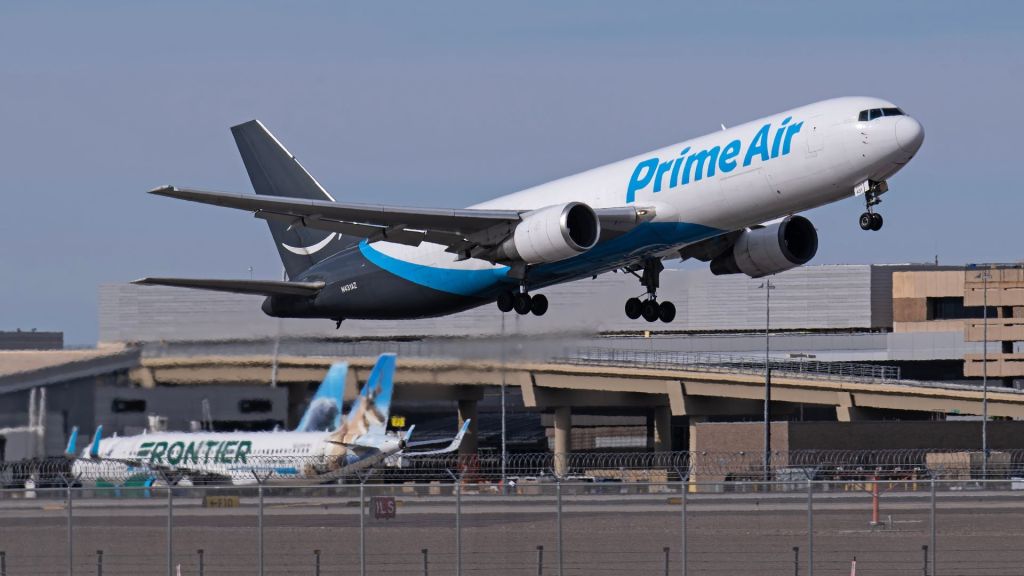
A dark-and-light blue Amazon cargo jet takes off from an airport.

Less leasing demand for freighter aircraft significantly contributed to a 12% reduction in adjusted core operating profit at Air Transport Services Group during 2023, including a 20% decline in the fourth quarter, and to management’s decision to further slash the budget for investment in new equipment. 

Lower revenue and higher costs for ATSG’s transportation segment, especially passenger airline Omni International, also weighed on earnings.

The cargo-oriented aviation company gave a sober outlook, saying in Monday’s results that adjusted earnings are expected to fall an additional 10% this year, from $562 million to $506 million, absent potential new lease signings, with capital spending lowered to $410 million.

ATSG (NASDAQ: ATSG) last year responded to investor concerns about overspending in the midst of a down cycle for airfreight by cutting $65 million from planned capital expenditures for used widebody jets and having them modified to carry main-deck cargo. In November, ATSG shrank the 2024 capital budget to $505 million. The capital spending plan is now $380 million less than the company spent last year. Most of the reduction ($330 million) reflects fewer aircraft being purchased and sent to airframe repair shops to become freighters, as well as fewer expected engine overhauls.

The biggest drag on financial returns was the acceleration in lease returns of Boeing 767-200 freighters by primary customer Amazon (NASDAQ: AMZN) which reduced adjusted earnings, excluding taxes, loans and capital expenses, in the leasing subsidiary by $33 million last year. ATSG removed 10 of the cargo jets from service and sold five of them, as well as three 767-300s. 

The return by Amazon in April of an additional seven 767-200s and lower engine utilization will drive down 2024 earnings by $55 million, to $506 million. 

Management said three 767-300 leases will also expire this year but didn’t quantify the financial impact. The returned aircraft will offset the benefit from any new lease placements.

Amazon didn’t renew expiring leases for the 767-200s, and ATSG hasn’t been able to place the aircraft with different clients because the aircraft are nearing the end of their useful life. Fourteen of the medium widebody freighters will remain in service, and the rate of removal will slow to two or three over the next few years. 

“These aircraft were in high demand as Amazon built its own air express network starting in 2015 and even more so during the pandemic when customers kept the aircraft in service longer than originally planned. While we always envision the market transitioning to the 767-300s from the -200s, the market softness has accelerated that process,” said Joe Hete, who returned as CEO in November when the board lost confidence in Rich Corrado, during a Tuesday conference call with analysts. “In addition to the lower lease revenue, we also lose power-by-cycle engine revenue as the -200s are removed from service and the aircraft remaining in service fly fewer cycles.”

Adjusted earnings per share of 18 cents was 10 cents below analysts’ consensus expectation.

Total revenue in the fourth quarter slipped 3% year over year to $517 million. ATSG’s full-year revenue ticked up 1% to $2.1 billion, due primarily to a full year of contributions from six new leases of 767-300s made in 2022, as well as partial-year contributions from 13 leased aircraft in 2023, including the company’s first three Airbus A321 narrowbody freighters. 

President Mike Berger said ATSG recently received European Union approval for its A321 freighter conversion design and is now able to lease those aircraft into the European market. Passenger-to-freighter reconfiguration is a new line of business for ATSG. It outsources conversions for its widebody fleet but has partnered with an aerospace engineering company to modify aircraft for itself and other parties.

Pretax losses for the leasing segment were $11 million. Revenue for the year increased 6%, but it wasn’t enough to offset increased expenses for interest and depreciation.

At the end of 2023, ATSG had 90 owned aircraft out on lease, one fewer than in 2022. 

Twenty-three aircraft were in, or awaiting, conversion to freighters at the end of 2023, including 14 767s, six A321s and three Airbus A330s — a new widebody aircraft for the company. It plans to acquire four 767-300s and five Airbus 330 aircraft this year as feedstock for cargo conversions.

Airline flight hours decrease

Omni’s reduced passenger activity and lower cargo margins were behind a fourth-quarter pretax loss of $2 million in contract transportation versus a $26 million gain in 2022. Full-year pretax earnings were $32 million for 2023 and $95 million in 2022.

Omni experienced a 12% decline in flying for the U.S. Department of Defense, primarily because of conflicts in the Middle East. 

Flight hours for the two cargo airlines, which mostly operate under contracts with express delivery carriers to provide aircraft, crews, maintenance and insurance, decreased 2% in the normally busier fourth quarter and were flat for the year. Both customers also provide a handful of planes for the all-cargo carriers to fly on their behalf. Management attributed the decrease to ABX Air, where short-term contracts to operate some international routes for DHL Express during the pandemic boom came to an end in the first quarter of 2923, said Hete.

Flight activity at Air Transport International (ATI), which focuses on hauling packages for Amazon, was flat for 2023 but increased in the fourth quarter. The relative strength of the Amazon business comes against a backdrop of slower consumer shopping online and Amazon’s transformation to a more regional fulfillment network that can be more easily served by truck.

No movement on pilot contract

Hete declared that collective bargaining with the ATI pilots on a new contract is unlikely to be completed this year, saying the two sides are far apart on terms. ATI spent about $70 million on pilot salaries in 2023. 

Talks, which have been underway for more than three and a half years, have broken down over pay, retirement benefits and work rules. ATI pilots, represented by the Air Line Pilots Association, last month asked the National Mediation Board to declare an impasse in contract negotiations and move the process to binding arbitration. In a Jan. 31 interview with FreightWaves, Capt. Mike Sterling, chair of the ATI Master Executive Council, accused ATSG of dragging its feet until 2026, when the Amazon transportation contract expires and can be renegotiated.

The pilots union on Thursday reiterated that experienced pilots continue to leave ATSG, which is replacing them with individuals who meet the lowest minimum qualifications. In 2023, 45% of the airline’s 600 pilots quit the airline. So far in 2024, more than 30 pilots have left the carrier. The situation could eventually erode ATI’s operational reliability and jeopardize relations with Amazon, the union claims.

“The pilots of ATI have invested heavily in growing the airline since Amazon operations began in 2015. We delivered record reliability during the 2023 holiday season despite demanding schedules that deteriorate our quality of life — in an overwhelming demonstration of our commitment to Amazon. ATI pilots help generate more than $500 million in revenue for ATSG, yet management continues to ignore their responsibility to deliver the market-rate pilot agreement we have earned,” Sterling said in a statement.

ATSG’s 2024 outlook is for lower flight hours at its airline operations.

The airline’s story is similar to Canadian counterpart Cargojet, which this week reported a fourth-quarter loss and also backpedaled on planned investments in new freighters. The main difference is that ATSG also leases out aircraft and is slowing fleet expansion rather than stopping altogether. Cargojet said, however, that  shipping volumes have been strong so far this year after ending 2023 on a high note.

With less money devoted to aircraft investments, ATSG is expected to generate positive free cash flow this year.

Wall Street has punished ATSG’s stock in the past year. It closed Wednesday trading at $12.19 per share, down from $22.97 on Aug. 4.

“We’re well positioned going forward with the assets that we have, the investments we’ve already made to be able to react quickly if, and when, the market finally turns around, whether that’s 2024 or 2025. … But the other [key] is execution on our part in terms of better performance overall. That’s been a focus of mine since I came back in November, to have better execution on the part of all the operating units and a more conservative approach in terms of the capital spending,” said Hete. “So I think all those things combined, a more balanced capital allocation strategy going forward after generating some free cash flow puts us in a better position to start moving the stock back up where it should be.”

Click here for more FreightWaves/American Shipper stories by Eric Kulisch.

Sign up for the weekly American Shipper Air newsletter here.

Pilots flying Amazon cargo say employer stalling contract talks

Cargojet sees strong volumes after 2023 fleet reversal

Jetran buys Cargojet rights for 777 freighter conversions

Cargo airlines throttle back on aircraft leases, ATSG says

Texas, Louisiana ports’ January cargo volumes a mixed bag

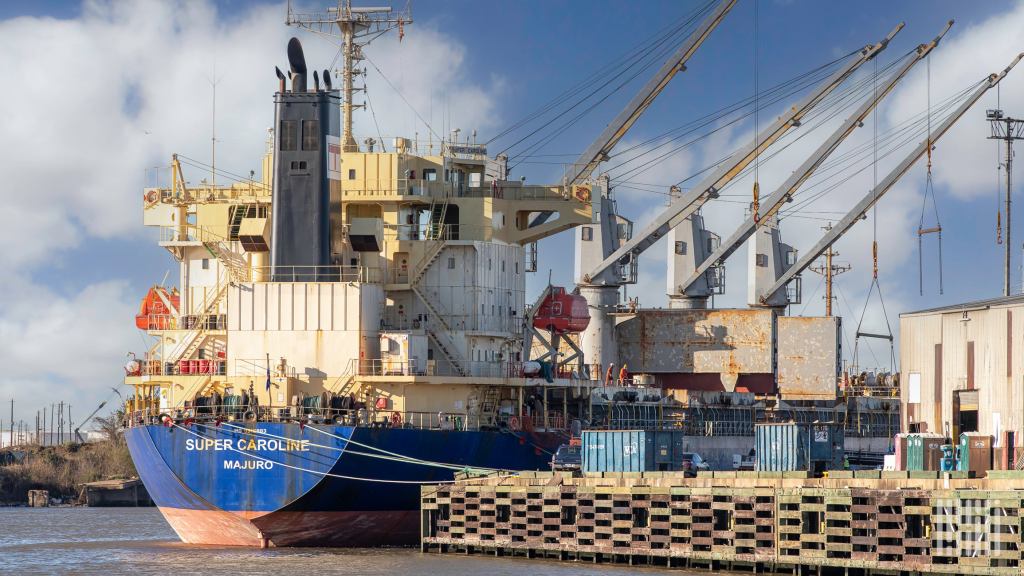
Cargo flow was up at ports in Houston and New Orleans, but freight movements slowed slightly in Corpus Christi, Texas, due to lower exports of oil and petroleum in January. 

Port Houston container shipments up 4% in January

Container movements started off the year on high note at Port Houston, with the port handling 332,961 twenty-foot equivalent units in January, a 4% year-over-year (y/y) increase compared to 2023.

Officials said total container imports exceeded any January on record at the port’s two container facilities, Barbours Cut and Bayport. Full container imports increased 3% y/y in January to 154,493 TEUs.

“Import and export demand through Houston remains strong and we are certainly off to a great start in 2024,” Roger Guenther, Port Houston’s executive director, said in a news release

Port officials said imports for the month were driven primarily by goods arriving from China in advance of the country’s Lunar New Year celebrations, which began on Feb. 10. 

Total export tonnage increased 12% y/y in January to 2.6 million tons, led by general exports at 1 million tons.

However, steel imports and exports at Port Houston are off to a slow start for the year. Steel imports declined 45% y/y in January to 280,660 tons. Exports of steel declined 71% y/y to 1,776 tons.

Total revenue tonnage across all of Port Houston’s terminals also declined 3% y/y in January, totaling 4.9 million tons.

Port Houston recorded 645 ship calls in January, a 7% y/y decline, while barge calls totaled 304, a 16% y/y decrease.

Port of New Orleans records spike in containers, slips in breakbulk cargo

The Port of New Orleans reported total TEUs in January of 45,871, a 23% increase compared to the same period last year.

“January 2024 was a record month with 45,871 TEUs — a number we had not seen since the second quarter of calendar year 2021,” Kimberly Curth, Port of New Orleans spokeswoman, told FreightWaves. “Compared to January 2023, loaded imports were up by 24% and loaded exports were up by 19%.”

Curth said the port’s total TEUs are up 13.4% for the fiscal year.

“To support our empty supply, our import empties were up by 44% fiscal year over year,” Curth said.

Top import containerized commodities were plastic resins and miscellaneous chemicals. Exports through the port included coffee, furniture and wood products. 

Breakbulk cargo totaled 86,503 short tons in January, a 35% y/y decline compared to the same month in 2023. Top breakbulk imports continue to be steel and natural rubber.

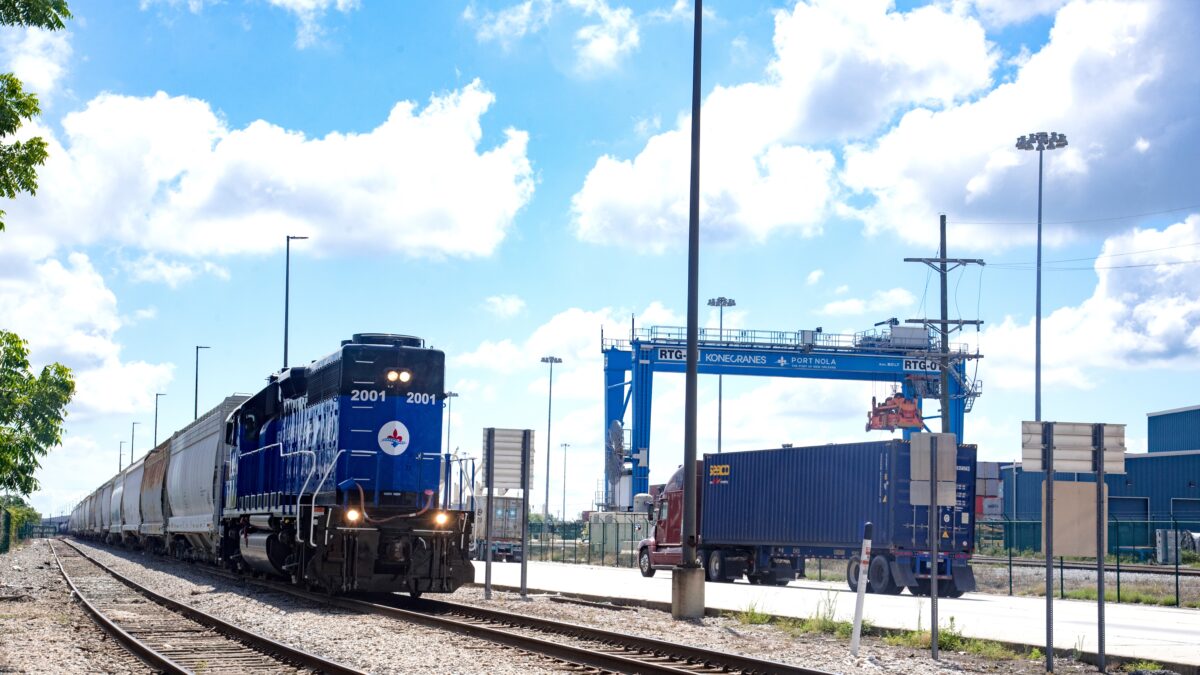
The port handled 8,708 Class I rail car switches in January, a 38% y/y decrease. The port handles switching operations for six Class I railroads: BNSF, CN, CSX, CPKC, Norfolk Southern and Union Pacific.

The port had 36 vessel calls in January, a 14% y/y increase compared to 2023.

The New Orleans Public Belt Railroad (NOPB) board of commissioners also recently awarded a $2.2 million contract to Cycle Construction Co. for the NOPB Transloading Industrial Park project.

The industrial park will provide a site for shippers to enhance the movement of freight between rail and truck across the U.S., port officials said.

Port authorities in New Orleans recently announced construction is underway for the $3 million Transloading Industrial Park. (Photo: New Orleans Public Belt Railroad)

“The Port of New Orleans and the NOPB continue to provide multimodal infrastructure improvements to move freight more efficiently through our global gateway,” said Brandy D. Christian, the CEO of the port and NOPB. “These upgrades not only offer customers and railroad partners a competitive edge, but also will help grow the economy and bring jobs to the region.”

Once completed, the transload yard will have the capacity to service up to 21 rail cars. Infrastructure improvements include three additional rail tracks, rail switching capabilities, drainage improvements and road upgrades.

Construction on the Transloading Industrial Park is scheduled to be completed by the end of the year. 

Port of Corpus Christi’s cargo volume results mixed

The Port of Corpus Christi in South Texas moved 16 million tons of cargo in January, a 2.4% y/y decrease from the same month in 2023.

The port handled 9.74 million total tons of crude oil during the month, a 0.4% decrease compared to the same year-ago period. Exports of crude oil for January were 8.9 million tons, a 1% decrease from last year.

Shipments of petroleum totaled 5 million tons during January, a 6.7% y/y decrease. Exports of petroleum were 4.2 million tons for the month, a y/y decrease of 4.5%.

Dry bulk cargo totaled 634,662 tons during the month, a 24% y/y decrease. Shipments of bulk grain totaled 356,626 tons, a 357% y/y increase.

Shipments of chemicals totaled 185,792 tons in January, a 26% y/y decline.

The Port of Corpus Christi had 560 ship and barge calls in January, a 19.5% y/y decline from 2023.

More articles by Noi Mahoney

Shifting supply chains boost trade in California-Baja mega-region

Trump-supporting truckers boycott loads to New York City

573 layoffs hit logistics firms in California, Illinois and Michigan

Knight-Swift President and CEO David Jackson steps down

Knight-Swift President and CEO David Jackson steps down

(Photo: Jim Allen/FreightWaves)

On Tuesday, Knight-Swift President and CEO David Jackson stepped down to be succeeded by Chief Financial Officer Adam Miller. FreightWaves’ John Kingston writes, “The change follows multiple quarters of depressed results, largely due to a prolonged freight recession, but also as the company’s third-party insurance venture has been operating at a loss. The business, which brokers liability coverage to small carriers, has suffered from unfavorable claims developments and has struggled to collect premiums from carriers during the downturn.”

Under Jackson’s tenure, the company completed many mergers and acquisitions, beginning with Knight Transportation acquiring Swift Transportation for $6 billion, the largest merger in U.S. trucking history. Knight-Swift then began an expansion into LTL in 2021 by acquiring AAA Cooper Transportation in July for $1.35 billion and MME in December. The most recent large acquisition was U.S. Xpress in March 2023 for $808 million, adding 7,200 tractors and 14,400 trailers to the Knight-Swift fleet. 

The impact of Jackson’s decision to step down remains unclear. Satish Jindel, founder and president of ShipMatrix, told FreightWaves, “I expect this change would lead to greater attention and speed for KNX’s investment in LTL, which has been slow after acquiring AAA Cooper Transportation in July 2021 and MME for $150M in December 2021.”

Morgan Stanley analyst Ravi Shanker said on Tuesday: “We do not believe this change was precipitated by the discovery of bad news at USX or any other factor that would derail KNX’s current earnings trajectory. We believe the sudden and extreme step of a CEO change could be viewed by the Street as the Board showing urgency to put KNX back on a path to normalized EPS, which will be viewed as a positive.”

Shelley Simpson named CEO at J.B. Hunt

(Photo: J.B. Hunt)

On Thursday, J.B. Hunt announced the appointment of Shelley Simpson as CEO of the company. She will also join the board of directors. Simpson has been J.B. Hunt’s president since August 2022. Before becoming president, Simpson had a decades-long career at J.B. Hunt. FreightWaves’ John Kingston writes, “In 2007, she was a founder of in-house brokerage Integrated Capacity Solutions and became its president. Simpson was named chief marketing officer in 2011 and head of the truckload segment in 2017. In that role, she led the launch of J.B. Hunt 360, the company’s digital platform. Human resources came under Simpson’s direction in 2020.”

There will also be a shift toward newer board members being added who do not have a J.B. Hunt background.

Market update: January trailer cancellations rise as orders fall

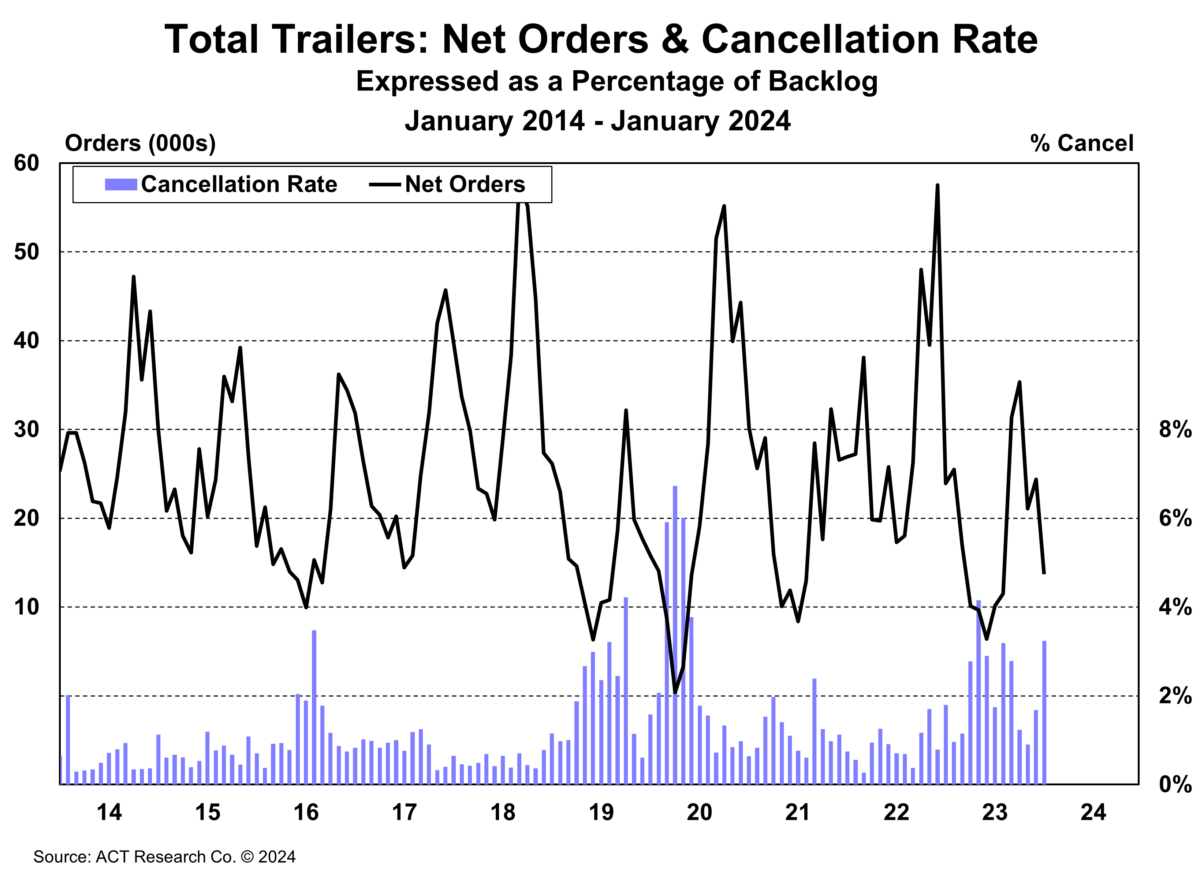
Recent trailer order and cancellation data from ACT Research points to higher declines in both categories as fleets cut equipment spending in the face of weak freight rates. January net trailer orders came in at 13,700 units, down 43% year over year and 10,700 units lower than December. Trailer cancellations also rose to 3.2% compared to 1.7% in December. Looking at order changes in detail, Jennifer McNealy, director-CV market research and publications at ACT Research, said in the report, “On a seasonally adjusted basis, dry van orders contracted 55% y/y, with reefers down 37%, and flats 34% lower compared to January 2023.”

For cancellations, changes in energy markets may be a factor. Mcneally added, “Digging down into cancellations, several markets led the way, including dry vans at 4.2% of backlog and lowbeds at 1.5%. Clearly, with markets swimming in capacity, no one needs a higher trailer-to-tractor ratio. Additionally, both tank categories reported high cancels this month, with liquid at 3.7% and bulk at 10.2%. We continue to believe recent oil price weakness may bear most of the culpability there.”
Part of the reason for lower equipment orders and higher cancellations may be that fleets have largely finished upgrading their assets after being delayed from pandemic-related supply chain and labor backlogs. Schneider President and CEO Mark Rourke noted on the company’s Q4 earnings call, “Our CapEx guidance range of $400 million to $450 million is down fairly considerably from a year ago because of the catch-up with the OEMs and the age of fleet.” J.B. Hunt noted a similar sentiment. Nick Hobbs, executive vice president, president of contract services and COO at J.B. Hunt, said on the Q4 earnings call, “We have cleaned out our older equipment and feel our fleet is refreshed and in good position heading into 2024.”

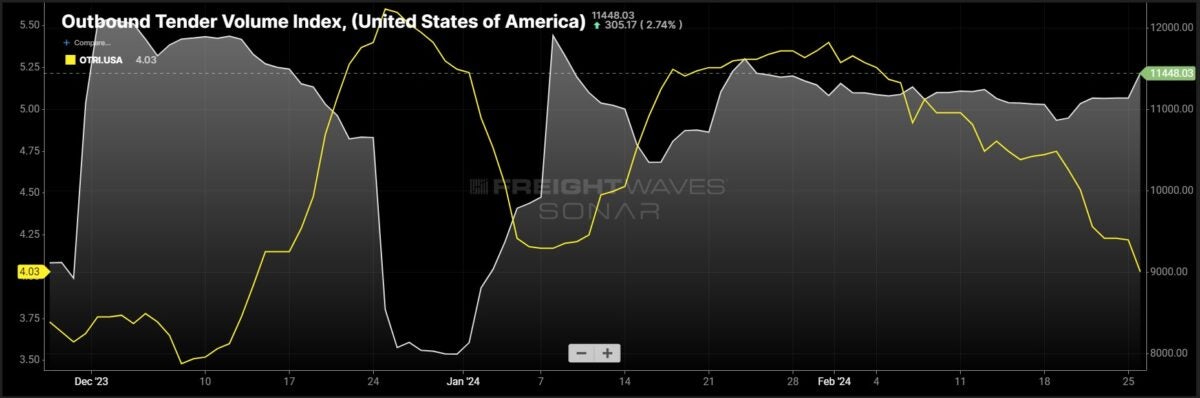
FreightWaves SONAR spotlight: Outbound tender volumes jump

(Source: FreightWaves SONAR)

Summary: Outbound tender volumes climbed in the past week while outbound tender rejection rates continued their monthlong decline. OTVI rose 579.01 points or 5.3% w/w from 10,869.02 points on Feb. 19 to 11,448.03 points. In spite of stronger contracted volumes, tender rejection rates continued to fall, by 72 bps w/w from 4.75% on Feb. 19 to 4.03%. The current outbound tender volume level is the highest since the last week of January.

For shippers, the improving tender compliance is a positive sign as they start moving into spring, when volumes traditionally pick up from the beginning of produce season. The challenge for carriers remains utilization and balancing customer tender compliance needs if any ad hoc or pop-up business is offered by shippers. Given declining tender rejection rates, incumbent carriers will feel additional pressure to maintain service levels, with carriers further down the routing guide soliciting for additional volumes before attempting to secure loads on the spot market.

Bills in Wisconsin, Indiana could reduce nuclear verdicts against carriers (FreightWaves)

Deadline nears for filings as Werner seeks review of nuclear verdict (FreightWaves)

BMO’s Q1 earnings show more credit deterioration in trucking industry (FreightWaves)

ATRI calls on carriers to share operational costs (Trucking Dive)

Trucking bankruptcies fuel ‘hyper-competitive’ insurance marketplace (Insurance Business Mag)
Morgan Stanley cuts earnings expectations amid surging insurance costs (FreightWaves)

Like the content? Subscribe to the newsletter here.

SONAR update helps users identify areas of risk and opportunity

The FreightWaves SONAR team has announced a new iteration to its Lane Scores feature to ensure it provides the most reliable data source for the supply chain world. FreightWaves SONAR is the leader in freight market intelligence, and Lane Scores are a critical indicator of market trends when comparing corridors, helping users identify areas of risk, opportunity and priority. 

A data partner like no other

FreightWaves SONAR is uniquely positioned as a transparent intermediary among all players in the supply chain world, partnering most frequently with transportation technology companies to deliver unbiased data across this space. No freight company spends more time and energy investing in fine-tuning and improving data, nor can any organization compare in terms of the volume and timeliness of FreightWaves SONAR data. That is why more than 500 of the world’s leading brands choose FreightWaves SONAR as their source of truth for managing supply chain operations.

An accurate Lane Score helps transportation teams educate users, regardless of position, around lane volatility and challenges. While companies can get a rate from a variety of places, Lane Scores create an additional indicator for faster and stronger decision-making.

At FreightWaves SONAR, we believe that complexity is the enemy of execution. While there are more than 300,000 unique data deliverables based on $200 billion in annual domestic truckload data and $1 trillion in ocean data (in addition to rail, air and energy), FreightWaves SONAR has applications that are simple and easy to use. This empowers users with the most educated, real-time decision-making capabilities. The data is available in simple dashboards, more complex bulk analysis or via API to guarantee delivery of the right information to the right people in the right place and at the right time.

Did we mention constant iteration?

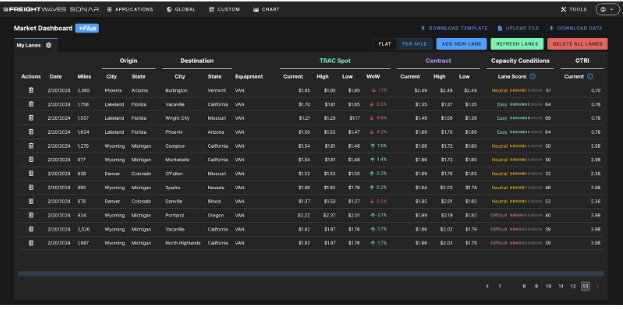
Updates to Lane Scores come along with several enhancements to FreightWaves SONAR’s benchmarking and analysis tools, SCI (Supply Chain Intelligence) and Market Dashboard+. Speed, accuracy and guidance are the name of the game as companies look to make incremental improvements to navigate shifting markets. Finding pennies per mile can make a big difference when managing millions in freight spend. Doing it with optimal compliance is the next step.

The news only gets better from here. You can expect to hear about more impactful releases very soon from the FreightWaves SONAR product team. If you’re curious to hear more about FreightWaves SONAR or what’s coming, you should reach out. Contact bd@www.freightwaves.com to schedule time to talk with one of our experts.

Forward Air’s Q4 call offers no financial targets after Omni merger

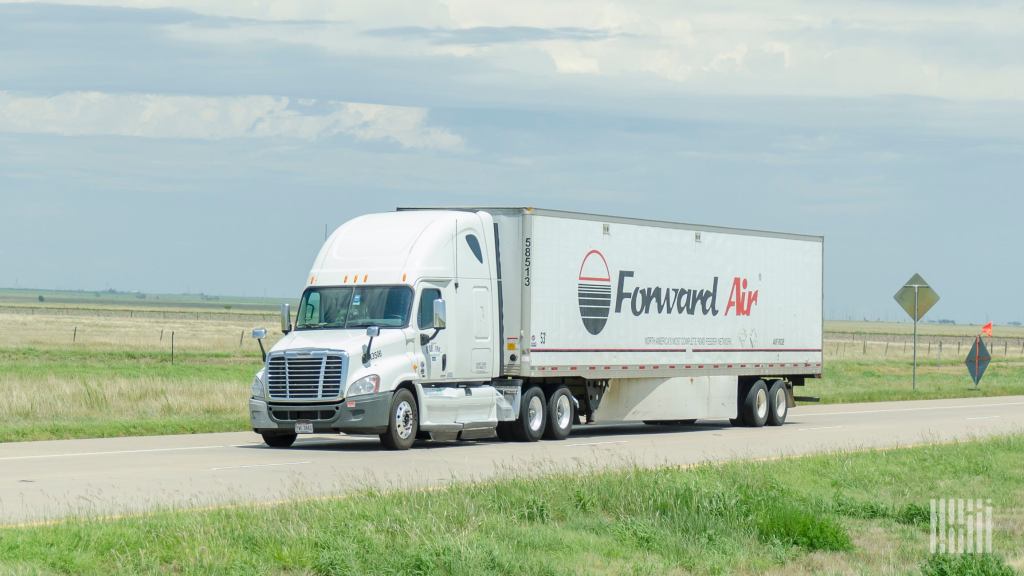
A white tractor pulling a white Forward Air trailer on a highway

Forward Air’s fourth-quarter earnings call didn’t provide the financial targets analysts were seeking following its controversial merger with Omni Logistics. The main takeaway was the company’s disclosure that the combined entity was cash flow-positive during February without any significant help from cost or revenue synergies.

Forward (NASDAQ: FWRD) closed the acquisition of Omni on Jan. 25, more than three months behind schedule. Legal challenges from investors and Forward’s efforts to exit the deal led to the holdup. Allegations of bad faith and unscrupulous document handling ended with the departure of the CEOs from both companies.

A $2.1 billion closing price required Forward to issue $1.8 billion in debt to take on Omni’s outstanding balances and restructure its existing debt. At closing, Forward’s net debt to adjusted earnings before interest, taxes, depreciation and amortization was estimated to be 5.2 times. The adjusted EBITDA number included the expectation of $75 million in cost synergies.

Forward expects to lower debt leverage to 4.5 times by the end of 2025 and to less than two times longer term. It will look to divest other noncore units to deleverage the balance sheet, and it has suspended a 24-cent quarterly cash dividend. In December, it sold its final-mile segment to Hub Group (NASDAQ: HUBG) for $260 million.

Interest expense and principal repayment are expected to total $181 million annually. The company generated more cash than needed to service its debt during February without the benefit of integration synergies. The cash flow number was adjusted to exclude deal-related and other one-offs, which were described as “minimal.”

“The fact that we [were] cash flow-positive for the month of February, given the environment that we’re in, should be reflective, I think, of just more positive news to come in terms of being able to generate that cash,” said Chief Financial Officer Rebecca Garbrick on a Thursday call with analysts. “We know that the combined entity has synergies, cost synergies that are there for us to be realized.”

Forward said it has more than $200 million in cash on hand currently and additional availability under a $340 million revolving credit facility.

The company will provide details on a go-forward plan at a later date as it is still awaiting Omni’s audited financial results. A delay in receiving timely financials from Omni was a reason Forward tried to break the deal, previous court filings showed.

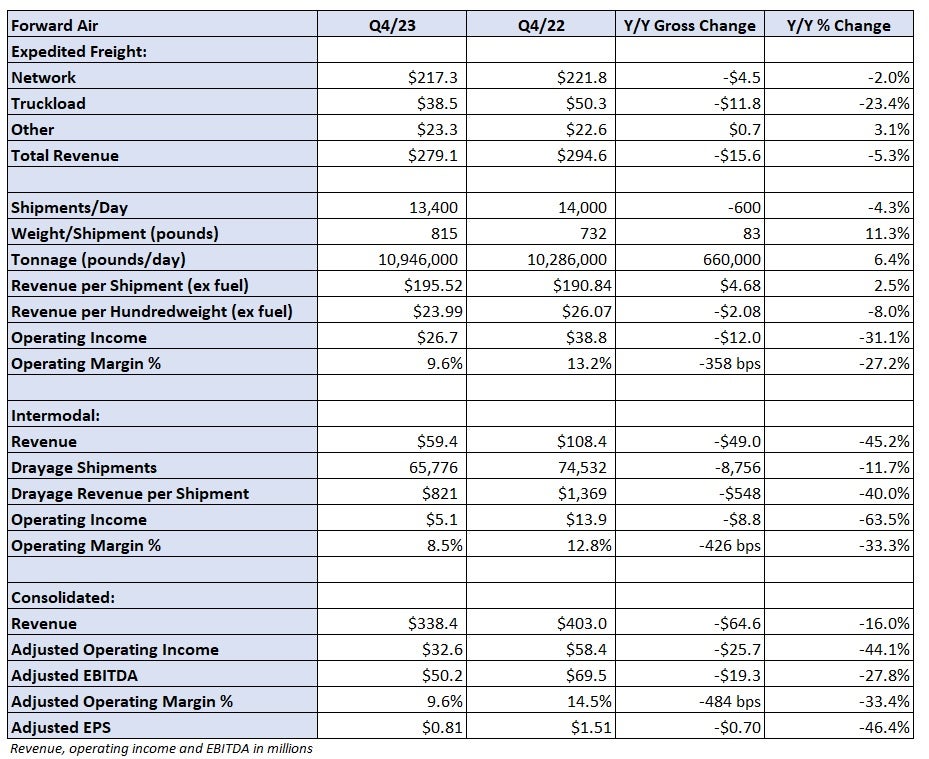
Table: Forward’s key performance indicators

The company reported adjusted earnings per share of 81 cents from continuing operations during the fourth quarter, which was 70 cents lower year over year (y/y) and 17 cents below the consensus estimate. However, the number excluded 20 to 22 cents per share in earnings from its final-mile segment, which is now recorded as a discontinued operation. It’s unclear if analysts accounted for the exclusion in their forecasts.

The 81-cent result was 1 cent higher than management’s revised guidance range of 78 to 80 cents, which excluded final-mile operations.

A headline net loss of $14.7 million from continuing operations included one-off deal-related costs and excluded final-mile results.

Consolidated revenue of $338 million was 16% lower y/y.

Revenue from its expedited segment, which includes less-than-truckload operations, fell 5% to $279 million. Tonnage in the expedited segment increased 6% y/y as shipments fell 4% and weight per shipment was up 11%. Revenue per hundredweight, or yield, was down 8% y/y excluding fuel surcharges.

Tonnage was 9.2% higher y/y in January as weight per shipment increased 9.8%. The combination implies daily shipment counts were off slightly. Revenue per ton mile increased 1.9% y/y excluding fuel surcharges. Tonnage was up 8% y/y in the first two weeks of February. The increase excluded the integration of Omni’s linehaul operation.

Forward said it will not be providing quarterly guidance during the transition.

The company will now operate in three segments: wholesale, shipper asset and Omni services.

The wholesale channel includes the company’s legacy forwarding business (freight forwarders, airlines and 3PLs). Shipper asset includes direct shippers needing an asset-based provider. Omni services provides end-to-end supply chain services.

Interim CEO Michael Hance said there has been little customer attrition, which was a concern as Omni competes directly with Forward’s freight forwarding customers.

Wholesale volumes were off 8.9% in the six months before and after the deal was announced, “But we believe almost all of that decline is driven by a softer freight market rather than customer attrition,” Hance said.

He said volumes with half of its legacy wholesale customers were up during the past six months and it has added $17 million in new premium LTL business since closing the transaction.

“We’re going to manage the rules of engagement in our channels really well, to make sure that we give our legacy customers confidence that we can be the provider that we’ve always been to them without fear of any kind of encroachment into their space, unnecessarily,” Hance said.

Hance is also the company’s chief legal officer and secretary. A search committee was formed to find a new CEO, following former Forward CEO Tom Schmitt’s departure earlier this month.

Shares of FWRD were down 6.2% at 11:56 a.m. EST on Thursday compared to the S&P 500, which was up 0.1%.

More FreightWaves articles by Todd Maiden

CNBC supply chain reporter, daughter pen book on family histories of slaves

A new book published in February and co-written by global supply chain reporter and author Lori Ann LaRocco and her daughter Abby Wallace traces the ancestry of four enslaved Black families and their stories and experiences.

“Embracing Your Past to Empower Your Future” was inspired by a trip the authors took to Mount Vernon, the home of George Washington; Monticello, the home of Thomas Jefferson; and Montpelier, the home of James Madison.

While at Monticello, the mother and daughter learned about those who had been enslaved there from relics they had left behind.

“When the docent showed us the fingerprints of the enslaved that were left in the bricks for the building, it was the intent of leaving those there that drove us to write this book. Children and women had made those fingerprints and once they did that, the enslaved men who built the actual homes purposely put the prints outward and upright for the world to see them and recognize their contribution to history,” LaRocco told FreightWaves.

She said she and Wallace left the tours knowing that they wanted to find these families, “people whose loved ones helped build America, see where they came from and how subsequent generations have built onto it.”

Photo: Lori Ann LaRocco

Working alongside historians, the pair interviewed four families: the Allens, survivors of the slave ship Clotilda and founders of Africatown in Mobile, Alabama; the Madisons, slave descendants of President James Madison; the Quander family, one of the oldest recorded Black American families in the United States; and the Brooks family, the only Black American family with three generals in the immediate family.

Throughout this process, Wallace said on SiriusXM’s FreightWaves radio show “Drive Time” that this was a lesson she would never get from her high school textbooks, even if it’s a hard history pill to swallow.

“It is one of those topics that we don’t really want to take a look back at, but the reason we have history class is so that these things don’t happen again. … I went into this [research] when I was 15 and now I am 17 going on 18 soon learning these stories has completely changed me as a person, knowing all of these details that history books don’t tell you,” the young author said.

Photo: Abby Wallace

From the stories, supply chain readers can even get a better understanding of the history of U.S. infrastructure.

LaRocco explained that while researching Africatown and the story of the Clotilda survivors, she learned more about the urban planning of Mobile.

“The survivors created Africatown in 1868 once they were able to buy their own land. They created it just like they did in Tikar back in Africa. The roads were built into the flow of the land instead of the grid pattern that we more commonly see. The roads are curved and a lot more narrow. … You cannot get a semi-truck in there. The land plots were bigger because it was family-based, so you could get three or four homes on an acre. They built their dwellings like a sharing community,” she said.

However, more recent infrastructure in Mobile has literally paved over part of the history of Africatown.

“When you drive over the big six-lane highway (Interstate 10) that goes over the bridge, you are heading into the business district of Africatown that the city of Mobile bulldozed to build that highway. It destroyed the town. I am now in this big fight to help reinvigorate Africatown with jobs. I am putting on my logistics muster if you will, because it is only 2 miles from the Port of Mobile and it could be a huge opportunity for the people of Africatown.”

Giving back

Helping bring awareness to these families’ history isn’t the only work LaRocco and Wallace are doing to give back.

The two started a nonprofit, Embracing Your Past to Empower Your Future Inc., to create a book stipend for slave descendants called “Each One Teach One.” Royalties from the book will go to funding the project.

LaRocco and Wallace’s new book

“There is an African proverb called, ‘Each one, teach one.’ It goes back to the days of slavery where if you had the opportunity to learn how to read, write or do arithmetic, it was your responsibility to pay that forward and teach somebody else. These families recognized the importance of education and how that would help lift them and liberate them to greater things. We want to create this movement where readers know if they buy the book, they are helping somebody too. I hope the movement can really grow,” said LaRocco.

For Wallace’s part, she hopes readers of her generation look at their elders and their stories in a different light.

“I really want people to realize how important it is to respect and especially take a moment to listen to those who have come before us. We are so wrapped up in social media, the latest TikTok trends and keeping our Snapchat streaks alive that we don’t take a moment to look back at the people who quite literally built America from the ground up.”


25% more containers out of LA/Long Beach ports possible: ITS Logistics

Red Sea crisis and peak season — do you have a container plan?

Tanker transits plunge 20% in Red Sea: Lloyd’s List

Shelley Simpson named CEO at J.B. Hunt in long-expected move

In a long-awaited move, Shelley Simpson has been elevated to CEO at J.B. Hunt. 

Simpson is currently the president of the trucking and intermodal provider. She has been wFith the company for almost 30 years and has been president since 2022.

Simpson will assume her new role July 1. She will remain president as well.

A recap of Simpson’s career provided by J.B. Hunt (NASDAQ: JBHT) in the announcement of her new job noted several highlights. In 2007, she was a founder of in-house brokerage Integrated Capacity Solutions and became its president. Simpson was named chief marketing officer in 2011 and head of the truckload segment in 2017. In that role, she led the launch of J.B. Hunt 360, the company’s digital platform. Human resources came under Simpson’s direction in 2020, and she became president in 2022.

As part of her new role, Simpson will also become a member of the company’s board of directors. 

Current CEO John N. Roberts III will become executive chairman. Kirk Thompson, current executive chairman and a former CEO, will retire from the board as will Wayne Garrison. Garrison is a former chairman and CEO of J.B. Hunt.

Thompson and Garrison are also being bestowed with the position of nonvoting honorary founding directors. Thompson joined the company in 1973 and Garrison joined in 1976. 

“Shelley challenges us to be excellent and innovative and always in pursuit of customer value,” Roberts said in the prepared statement announcing Simpson’s appointment. “She will continue to remain focused on disciplined investments to drive appropriate returns and long-term growth for the benefit of our people, customers and shareholders. These steps help to ensure the culture and innovative growth mindset that has been so vital to the success of our company remains strong and intact to support the vision and the values of the Company for the foreseeable future.”

The press release devoted more space to the executives who are departing than to Simpson. It noted that Thompson and Garrison are both retiring from the board before being required to take that step because of age.

Part of the focus on those moves appears to be that the board will be shifting toward a greater percentage of members who do not have a J.B. Hunt background. The company statement said with Thompson and Garrison not running for reelection at this year’s annual shareholders meeting, that will “allow for additional independent directors to join the Board in the future.” It added that Pat Ottensmeyer, the former CEO of Kansas City Southern, who as CEO led the sale of the company to Canadian Pacific (NYSE: CP) last year, joined the J.B. Hunt board as an independent director in January and two other independent directors, Thad Hill and Persio Lisboa, joined last year.

With Thompson and Garrison not seeking reelection but Simpson joining, that is a net reduction of one member with a J.B. Hunt background on the board, as current CEO Roberts will be executive chairman. He already is on the board.

In J.B. Hunt’s most recent earnings call, Simpson said little except to wrap up the conversation about the outlook for 2024. 

Focusing on “operational excellence to further separate ourselves as the best-in-class” would create more value for J.B. Hunt customers, Simpson said.

Foreshadowing a possible strengthening of prices for those services, Simpson added that customers would “recognize that value.”

“And then, we believe we can earn the right to have a conversation with our customers around cost,” she said. “That is a key focus for us and that started on January 1.”

More articles by John Kingston

If truckers haul bread and cakes, is their business baking or trucking?

Deadline near for filings as Werner seeks review of nuclear verdict

Live on stage: The complex relationship between a trucking job and life

GXO offers $965 million for UK logistics firm Wincanton

Image of inside of warehouse

Contract logistics provider GXO Logistics Inc. (NYSE: GXO) said Thursday it has made a $965 million, or $7.65 per share, all-cash offer for U.K. logistics firm Wincanton, topping by 26% an offer made earlier this week by French logistics rival Ceva Logistics.

The latest step in the bidding war involving one of the U.K.’s largest logistics firms sent Wincanton’s shares soaring in London trading. Shares were up 20% from Wednesday’s close. 

Wincanton’s board earlier this week agreed to an improved, final offer from Ceva of about $764.3 million, which was raised from an initial bid of about $716.5 million in January after GXO expressed interest in the company. On Tuesday, Wincanton’s board unanimously recommended that shareholders accept Ceva’s revised offer.

GXO said that it has received support from shareholders controlling about 34% of Wincanton’s shares. 

Ceva was acquired by French transport giant CMA CGM in 2019. CMA CGM was unavailable to comment on Greenwich, Connecticut-based GXO’s offer.

Founded in 1925 as a milk hauler, Wincanton is a key player in the aerospace, electric utilities and industrial categories, verticals that GXO highlighted in its announcement.

“Wincanton is a world-class business, and we have long been impressed by their high-quality people and diverse customer relationships across key industries,” said Malcom Wilson, GXO’s CEO. Wilson added that “our superior offer reflects our conviction in the value of this business and the opportunities the combined company will realize.”

GXO, which serves 27 countries including those in the U.K. and continental Europe, said the proposed acquisition will provide it with a “springboard” to offer industrial services across Europe.” Wincanton customers will be able to leverage GXO’s network to expand their operations, GXO said.

Tenstreet offers modern tech solutions tailored to private fleets

Most technological solutions in trucking focus on improving some aspect of the for-hire fleet experience. Despite often being left out of the conversation, private fleets face a unique set of challenges that can often be addressed by different applications of the same solutions.

When software providers do not cater to private fleets, both the provider and the carrier suffer. To truly provide value to these companies, third-party partners must understand their differing priorities.  For example, private fleets have significant differences in operational structures, often placing an outsize emphasis on operational efficiency and customer service. 

Private fleets place such a high value on efficiency and service due, in large part, to their position as in-house transportation providers and brand representatives for their own organizations.

“Unlike for-hire carriers serving many clients, private fleets are almost exclusively dedicated to meeting the transportation demands of their parent company. As a result, their primary focus is in optimizing transportation operations to guarantee timely and cost-effective delivery of goods,” according to Joe Franco, director of strategic sales at Tenstreet, who has worked with dozens of private fleets to create optimal processes.

This focus on cost-effective delivery often extends to creating and maintaining strategies to manage fuel, maintenance, and driver compensation within the framework of the organization’s profitability and financial goals.

“In contrast to for-hire carriers, private fleets have direct oversight and control over their drivers, equipment, and routes,” Franco explained. “This level of control allows them to pivot their operations to meet business needs in real-time, adapt to market changes, and maintain a competitive edge.”

Due to the high level of control and responsibility private fleets exercise when managing their operations, compliance and risk management are often top of mind for decision-makers.

“Private fleets prioritize investments in training programs, safety initiatives, and technological solutions to achieve driver compliance, minimize accidents, and fleet well-being” Franco highlighted. “Given their typically larger scale, they face heightened scrutiny compared to some for-hire carriers.”

Due to their unique business models, private fleets also face different challenges than their for-hire counterparts, including:

  • Disjointed systems and lack of integration
  • Limited collaboration and information sharing
  • Heightened competition and aging demographics
  • Longer hiring cycles and approval processes

Most of these issues tie into a common struggle among private fleets: disconnection. 

“Private fleets often encounter hurdles in finding solutions that enable collaboration and visibility among their various locations. Lack of communication and shared best practices can impede fleet scalability and growth,” Franco said. “Drawing from my experience working with numerous private fleets, it’s a common refrain that, regardless of industry segment, these fleets share similar pain points. Collaboration and visibility among different locations consistently emerge as major challenges.”

While Tenstreet is known for the plethora of solutions it offers for-hire carriers, private fleets can also leverage Tenstreet’s comprehensive suite of driver management solutions.

FMCSA compliance

Tenstreet offers specialized tools and features designed to help private fleets navigate complex Federal Motor Carrier Safety Administration regulations and compliance requirements. From managing driver qualifications and certifications to ensuring adherence to FMCSA regulations, Tenstreet helps private fleets mitigate compliance risks.

Efficient recruitment and onboarding

Tenstreet streamlines the recruitment and onboarding processes, allowing private fleets to attract and onboard qualified drivers quickly and efficiently. With features like IntelliApp, which accelerates the application process, and Driver Pulse, which moves onboarding online to get drivers in trucks faster, Tenstreet helps private fleets reduce time-to-hire without sacrificing the quality of hires.

Post-hire solutions 

Tenstreet also offers post-hire solutions aimed at enhancing driver management and safety. These solutions include safety and accountability monitoring, events management for tracking violations and incidents, and driver report cards that provide insights into driver performance and behavior. These tools help private fleets reduce accidents, lower insurance premiums, and maintain a high level of safety and efficiency.

Advanced safety features

Tenstreet’s platform includes advanced safety features such as driver qualification file management, fuel efficiency monitoring, and GPS navigation route tracking and sharing. These features enable private fleets to optimize fuel usage, track driver routes in real-time, and identify areas for improvement in operational efficiency and safety.

In addition to the company’s existing suite of solutions, Tenstreet plans to launch AI automation and recruiter messaging tools to streamline communication with drivers and automate routine tasks.

By automating repetitive processes and enabling proactive communication with drivers, private fleets will be able to improve efficiency, enhance driver engagement, and maintain a positive driver experience.

Click here to learn more about how Tenstreet’s solutions can benefit private fleets.