Port of Los Angeles shines in January

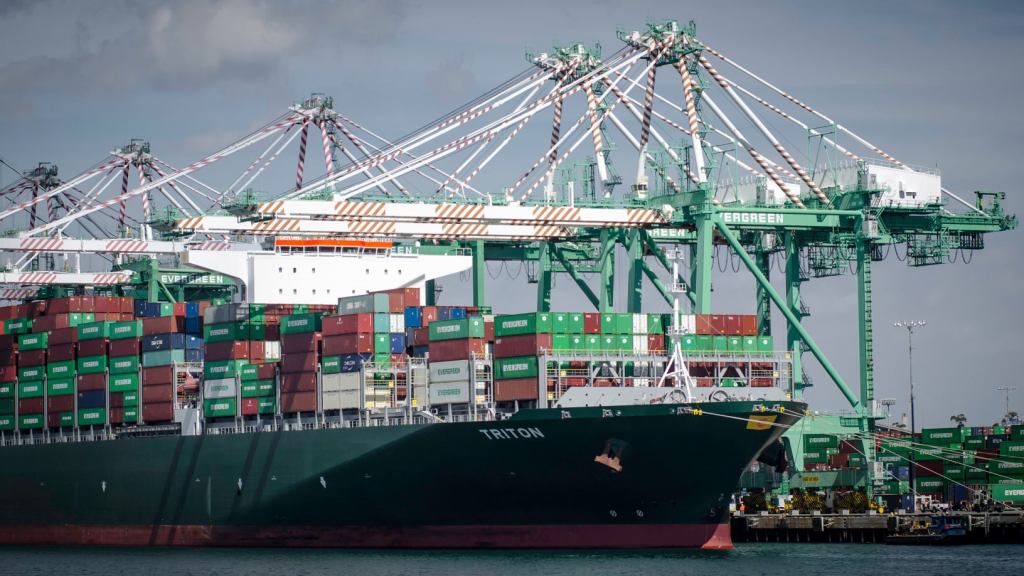
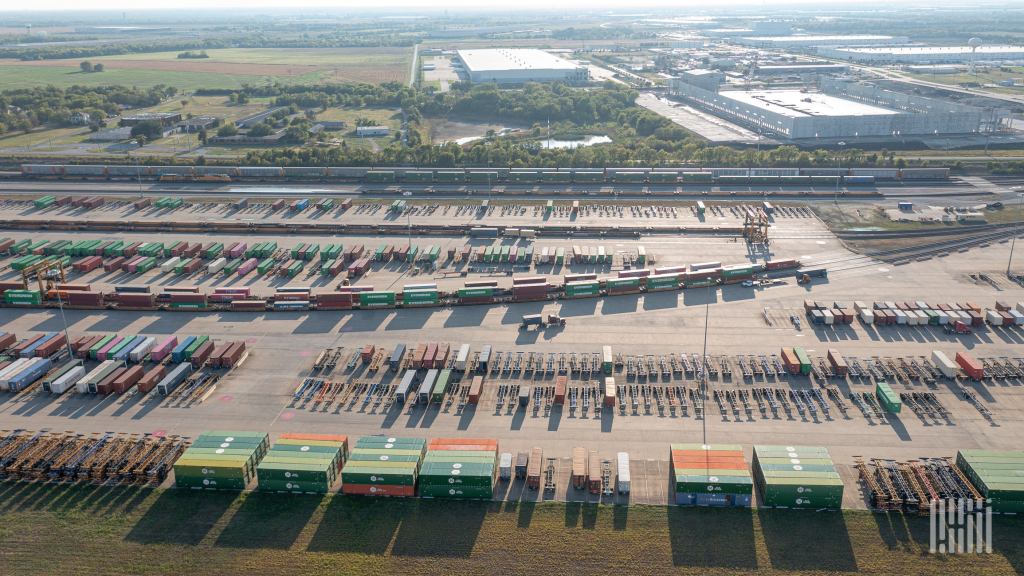
The Port of Los Angeles’ January import numbers highlight that the inventory glut of 2022 and early 2023 is largely in the rearview mirror. The port experienced the second-best January on record, surpassed only by January 2022, which was fueled by pandemic-related spending.

The port handled 855,652 total TEUs during January, eclipsing last year’s mark by 18%. The growth compared to pre-COVID levels is minimal, with the port handling only 0.4% more TEUs during the month than it did in January 2019.

While the Port of Los Angeles experienced the second-highest-volume January from a total TEU perspective, loaded imports had the best January on record. The Port of Los Angeles handled 441,763 TEUs during the month, up 19% year over year. The previous strongest January was in 2021, when the port handled 437,609 loaded TEUs.

In a media briefing Wednesday afternoon, Gene Seroka, executive director of the Port of Los Angeles, highlighted two factors that contributed to the growth in imports: replenishing inventories at a faster clip ahead of the Lunar New Year holiday, which began Saturday, and consumer spending.

The inventory replenishment rationale is much more of a driver as retail sales figures released by the U.S. Census Bureau on Thursday morning dropped by 0.8% month over month. Sales were 0.6% higher than they were last year, but the retail sales metrics aren’t adjusted for inflation. The decline isn’t as severe as when isolating consumer goods by removing spending on motor vehicles and parts as well as spending at gas stations. By that metric, sales were down 0.5% m/m but still 2.2% higher y/y.

The Logistics Managers’ Index in February highlighted the growth in inventory levels after months of contraction. 

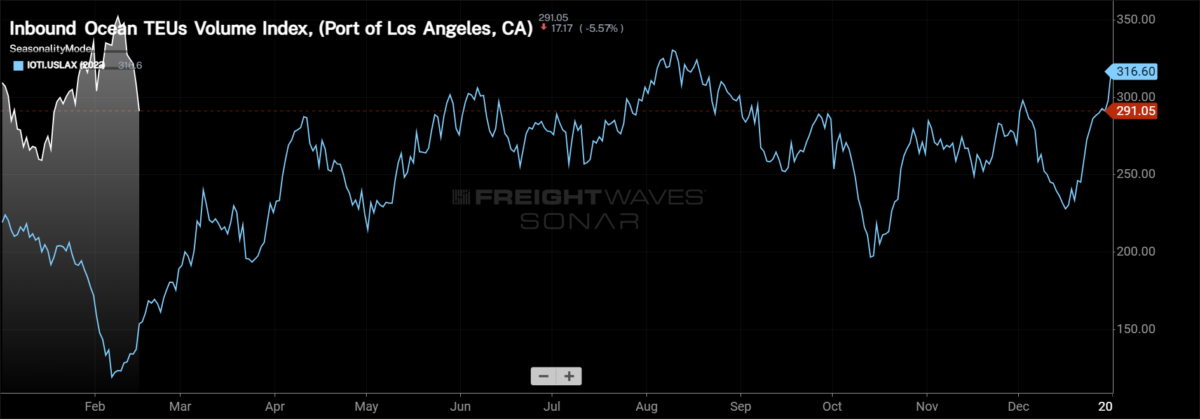
FreightWaves SONAR: Inbound Ocean TEUs Volume Index for the Port of Los Angeles, 2024 (white) and 2023 (blue)

The pull-ahead for the Lunar New Year will help boost import volumes at the Port of Los Angeles in February as well. The February import figures will likely show larger growth y/y than January due to the timing of the Lunar New Year, and March will see the impacts of the Lunar New Year, which could still show growth y/y. 

The Inbound Ocean TEUs Volume Index for the port shows the y/y growth in TEUs as they are leaving various ports around the globe despite the Lunar New Year holiday being firmly underway. The question that remains is, what will the rebound from the holiday look like?

Another tailwind for the port is the situation in the Panama Canal. There were more scheduled slots through the drought-stricken canal in January, but it didn’t result in more transits. These impacts will likely be a tailwind for the port throughout the dry season in Panama, which extends into May.

The strongest growth at the Port of Los Angeles came in the form of loaded exports. The port handled 126,554 loaded export TEUs, the highest number of outbound loaded containers since November 2020. Loaded exports were up 23% y/y in January.

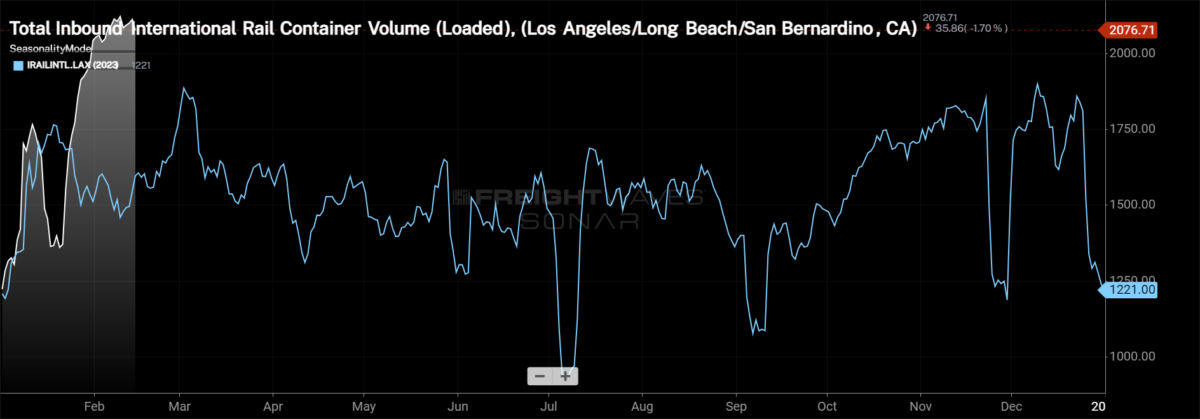
FreightWaves SONAR: Total Inbound International Rail Container Volume (Loaded) for the Los Angeles market: 2024 (white) and 2023 (blue)

Loaded international intermodal container volumes for the Los Angeles market, which has both the Port of Los Angeles and the Port of Long Beach within its boundaries, held up y/y for much of January but was also strong in the back half of December, which helped boost loaded exports in January.

The growth in inbound loaded international intermodal container volumes into the Los Angeles market in February will likely help boost loaded export volumes in the coming months. 

The Port of Los Angeles has capitalized on factors impacting global trade, and the impending labor negotiations between the International Longshoremen’s Association union and the East Coast ports could help generate a longer tailwind for the port at the heart of the U.S.’s freight economy.

The secret ingredient for near century of transportation success

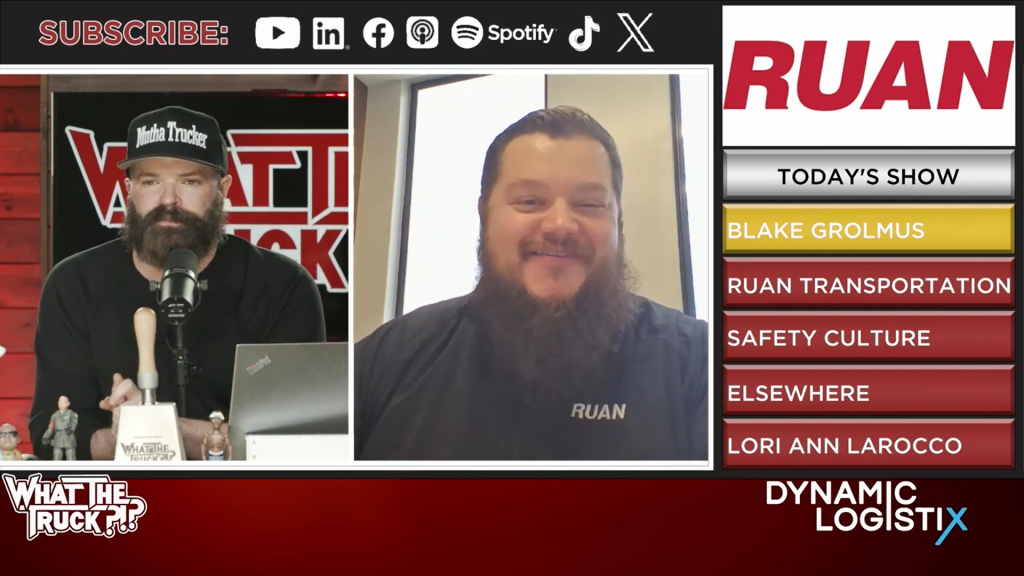
Ruan Transportation, WTT 2024

Transportation and logistics provider Ruan Transportation Management Systems is taking its decades-long commitment to safety into the future with driver-focused technology.

Based in Des Moines, Iowa, the family-owned company was started in 1932 by its first driver, John Ruan. Now on the cusp of its 100th anniversary, Ruan has grown into a 4,000 plus truck fleet offering Dedicated Contract Transportation, Managed Transportation, Value-Added Warehousing, and Brokerage Support Services across the supply chain.

Blake Grolmus, vice president of safety at Ruan, said the company set the tone for a future entrenched in safety. Fast forward to today and two of Ruan’s five Guiding Principles spotlight a “people first” and “safety focused” mindset — both of which should walk in tandem together throughout daily operations.

Ruan thoroughly vets new hires to ensure they inherently prioritize safety, then equips them with uniforms, protective gear and robust training on driving and safety procedures through their Megasafe program. Employees even take a safety pledge when they join the Ruan family.

“All of our safety programs are designed with our people in mind so that every one of our drivers, every one of our warehouse associates, every technician in our shop — they all get back home to their loved ones at the end of the day in the same condition that they left the house in,” Grolmus said. “Maybe with just a little more dirt on their boots and a little more money in their pocket, but that’s really our goal.”

While culture and principles establish a foundation, Grolmus shared that technology plays a large role in executing modern safety landscapes. 

Ruan tractors offer automated features like collision avoidance and blind spot awareness to provide an extra layer of protection. And four years ago, the fleet rolled out smart drive cameras, both inward and outward facing, to achieve broader visibility into road risks. 

The footage allows managers an unprecedented opportunity to “see the game film” — the opportunity to see the challenges that drivers are up against on the roadways each and every day and coach them accordingly. Drivers can also document delivery site hurdles in real-time via the cameras to resolve access problems.

Ultimately, the goal is using the reams of safety data captured to enhance training, exonerate drivers, boost recognition and optimize routes, Grolmus emphasized.

Exceptional service means providing customers with access to safe, skilled drivers focused on representing client brands with care and expertise. Ruan invites customers right into the safety conversation through ride-alongs and safety forum participation.

By reducing crashes and hazards on the road, safety directly translates to consistency, cost savings and polished public reputations. 

“Having that strong focus on safety is inevitably going to lead to lower costs and expenses,” Grolmus said.

As Ruan celebrates 92 years delivering goods this year, it is clear that safety remains not just a priority, but a way of life. The transportation and logistics trailblazer continues to demonstrate how team commitment paired with the right tools can equip drivers to manage even the most dangerous work environment day in and day out.

With legacy and innovation walking hand in hand into the future, Ruan is protecting people first while ensuring the customer always comes out ahead — a win-win for all.

Trump criticizes Biden on East Palestine response ahead of Ohio trip

Former President Donald Trump is lashing out at President Joe Biden ahead of Biden’s scheduled trip to East Palestine, Ohio, this week, saying the current president waited too long to visit the site of the February 2023 train derailment.

“Biden should have gone there a long time ago — for him to go now is an insult to those who live and work in East Palestine, and the Great State of Ohio, itself. I can’t believe anyone wants him there? I know he doesn’t want to be there …,” Trump said late Wednesday in a post on Truth Social.

Biden’s trip, which came at the invitation of East Palestine Mayor Trent Conaway, comes a year after a Norfolk Southern train derailed in East Palestine — a town of about 5,000 residents — on Feb. 3, 2023.

The derailment included 11 tank cars carrying hazardous materials that subsequently ignited, fueling fires that damaged an additional 12 rail cars that did not derail, according to the National Transportation Safety Board. First responders implemented a 1-mile evacuation zone surrounding the derailment site, affecting up to 2,000 residents. There were no fatalities or serious injuries reported.

This aerial view shows the aftermath of the 2023 Norfolk Southern derailment in East Palestine, Ohio. (Photo: NTSB)

Earlier this month, the NTSB announced that on June 25 it will release its final findings on the cause of the derailment.

In September, Biden issued an executive order directing that Norfolk Southern address any long-term effects on the community, according to the White House.

During his visit, Biden plans to meet with residents affected by the toxic spill, as well as discuss federal support to the community, according to administration officials, adding he will “hold Norfolk Southern accountable.”

Trump visited the site within weeks of the incident and criticized the federal response, calling it a “betrayal.”

“It was such a great honor to be with the people of East Palestine immediately after the tragic event took place,” he said in his post Wednesday. “I got to know so many of the people, in particular the wonderful Mayor, Trent Conaway.”

Utah trucking group owners convicted in FedEx Ground fraud scheme

Two owners of a Utah trucking group were recently convicted for their roles in an elaborate, 10-year pay-to-play fraud scheme that siphoned more than $108 million from FedEx Ground.

On Feb. 2, a federal jury in the U.S. District Court for the District of Utah convicted Yevgeny Felix Tuchinsky, 63, and Konstantin Mikhaylovich Tomlin, 54, both of Salt Lake County, Utah, of wire fraud and honest services fraud conspiracy. The two owned and operated several trucking companies consolidated under Salt Lake Trucking Group (SLTG), according to a statement released by the U.S. attorney’s office. 

“Instead of competing fairly against other CSPs [contract service providers] for FedEx business, SLTG bribed FedEx employees to obtain more miles and more money from FedEx,” according to the statement.

The investigation revealed that Tuchinsky and Tomlin on behalf of SLTG paid nearly $320,000 in bribes to FXG employees who manipulated FXG’s process for awarding new runs. During the approximately 10-year conspiracy from 2009-2019, SLTG received about $108 million in FXG revenue.

“Before they delivered packages, these men and their teammates delivered cash bribes,” said Stephen Dent, assistant United States attorney, in a statement. “Before their trucks pulled away from the hub to go on a run, they lied and they bribed to even get that run.”

Federal prosecutors alleged that Tuchinsky personally gained $7 million and Tomlin gained over $4 million from the scheme. 

Tuchninsky and Tomlin are scheduled to be sentenced on May 20.

In April 2021, Hubert Ivan Ugarte, 52, of Draper, Utah, pleaded guilty to fraud and money laundering in the same FedEx Ground pay-to-play scheme in exchange for lucrative contracts, and to defrauding the PPP loan program.

FXG is a subsidiary of Memphis, Tennessee-based shipping and logistics giant FedEx Corp. (NYSE: FDX).

Do you have a news tip to share? Send me an email or message me @cage_writer on X, formerly Twitter. Your name will not be used without your permission.

Ohio trucking owner pleads guilty to wire fraud

Penske Logistics slashes over 200 truck driver and warehouse jobs

Texas trucking company files for bankruptcy days before wrongful death trial

Ex-Slync CEO Chris Kirchner guilty of wire fraud, money laundering

FMC upholds ruling upending current chassis pool system

Long-standing practices for feeding chassis into intermodal markets have been dealt another blow in legal proceedings before the Federal Maritime Commission.

In a 4-1 vote Tuesday, the FMC upheld an administrative law judge’s (ALJ) ruling from just over a year ago that the current system of major oceangoing carriers designating exclusive chassis providers for port-to-port moves, also known as merchant hauling, violates federal law. 

The case was brought in 2020 by the Intermodal Motor Carriers Conference (IMCC), an arm of the American Trucking Associations. The defendant is the Ocean Carrier Equipment Management Association (OCEMA). It is a U.S.-based group of 12 major ocean carriers, and the intermodal movement of freight is its sole activity.

Specifically, IMCC said the chassis pool system violated 46 U.S. Code § 41102, a part of the U.S. code that deals with ocean shipping.

Among other provisions, that law says “a common carrier, marine terminal operator, or ocean transportation intermediary may not fail to establish, observe, and enforce just and reasonable regulations and practices relating to or connected with receiving, handling, storing, or delivering property.”

OCEMA operates the chassis pools that were the subject of the IMCC action. In a 73-page ruling, the four FMC commissioners made clear that they agreed with the ALJ who first ruled against the practice.

“[OCEMA’s] practice of designating a chassis provider for merchant haulage moves deprives motor carriers of service and denies them the opportunity to negotiate rates and terms of service,” the commissioners wrote. “Interfering with motor carriers’ ability to choose among chassis providers affects basic interests that promote economic efficiency.”

In the original complaint from August 2020, the IMCC said the Consolidated Chassis Management Pool  (CCMP) agreement dated back to 2006 and was filed that year with the FMC. The IMCC said it was “ostensibly designed to permit motor carriers the freedom of chassis choice, i.e., the right of a motor carrier to choose a chassis from a gray pool owned by an independent Intermodal Equipment Provider, and to be billed by that IEP.”

The IEPs include such chassis providers as Direct Chassislink Inc.

“In reality, and notwithstanding that OCEMA members do not themselves own chassis, OCEMA members control the operation of chassis pools at ports and intermodal terminals nationwide through the rules and practices they adopt for pool operation, their contracts with equipment providers, and their own rules and practices governing how the cargo containers that they own may be interchanged,” IMCC said of the CCMP agreement. “As a consequence of these unlawful practices, ocean carrier respondents have caused motor carriers, their shipping and receiving customers, and ultimately the consuming public, to be overcharged in an amount that IMCC estimates to be as much as $1.8 billion during the three years prior to the filing of this Complaint.”

The ALJ’s decision focused solely on practices in four port areas: Savannah, Georgia; Los Angeles/Long Beach, California; and inland terminals in Memphis, Tennesse, and Chicago. The ruling by the full FMC moves the issue for other ports back to the ALJ.

The FMC decision summarized the arguments put forth by OCEMA. “Without the challenged restrictions, [OCEMA] contends there is no practical means of ensuring a sufficient supply of chassis at ports and inland facilities around the country,” the FMC writes. Citing a study, OCEMA said the current system leads the IEPs to “commit to make their assets available at particular locations in exchange for the assurance that they will not be underutilized and that assurance comes primarily from IEP’s contracts with container lines.”

Without that assurance, OCEMA argues — according to the FMC summary — “there is a risk that IEPs would find their equipment [is] underutilized and this would endanger the ability of the container lines to ensure a chassis supply sufficient to handle cargo.”

Whether there is financial impact from the chassis pool system is not relevant to the FMC decision, the agency said. “[OCEMA’s] arguments that [IMCC] failed to prove financial harm or actual loss are legally immaterial,” the agency said.

In a statement hailing the FMC decision, IMCC Executive Director Jonathan Eisen said the FMC “has now confirmed that the actions of these ocean carriers are a clear violation of federal law and must stop.”

“IMCC and ATA have been fighting this conduct by foreign-owned ocean carriers for more than a decade, so this ruling has been a long time coming,” he added.

More articles by John Kingston

IANA panel: Intermodal chassis squeeze easing but it’s far from over

Duties on Chinese chassis really big win for US manufacturers

Intermodal summit: Domestic chassis manufacturers took on Chinese imports and won

Daily Infographic: Amazon’s profit rebounds as cost-cutting measures pay off


To view more FreightWaves infographics, click here

Investment bank praises Triumph Financial but cuts its stock price rating

Financial services analysts at Piper Sandler think Triumph Financial has a strong future over the next two years, but they aren’t too hot on the stock right now.

In a report that could be read as more of an endorsement of the strategy of the trucking-focused bank, analysts Frank Schiraldi and Justin Crowley on Monday cut their rating on Triumph Financial (NASDAQ: TFIN) to Underweight from Neutral. 

The reasons for their move are both somewhat complimentary to Triumph: The bank’s strategy is sound and “should see significant bottom-line growth over the next 24 months,” but at about 47 times Piper Sandler’s estimated 2024 earnings for Triumph, the stock price has gotten excessive.

On Wednesday, Triumph Financial closed at $77.55 per share. Increases in the past 52 weeks and over the past three months are not particularly high, according to data provided by Barchart; the stock is up 10.9% in the past three months and 21.4% in the past year.

Piper Sandler’s report was somewhat similar to that written by Wells Fargo at the end of 2022: Triumph Financial has a solid story to tell, its future is bright, but the payoff for it is long term, not immediate. (Triumph Financial does not pay a common stock dividend.)

“[TriumphPay] continues to roll along, investors have shaken off credit to date, and the stock has taken off,” Piper Sandler wrote in its analysis. “But even assuming a freight recovery and great success in monetizing T-Pay, shares are already trading at 21x our exit EPS run rate in 2025. In the nearer term, investments in payments and the freight recession will keep the bottom-line somewhat under wraps, and so shares are now trading 47x our modeled 2024 EPS.”

TriumphPay did become EBITDA-positive in the fourth quarter of 2023, the first time it has done so. While Triumph Financial’s legacy business is as a factoring company, TriumphPay is seen as the engine of its future growth.

TriumphPay started as a rapid payment service before undertaking the giant leap the company is banking its future on: the system known simply as “the network,” mostly serving brokers, which processes invoices and makes payments in an “open loop” system that became possible through its 2021 acquisition of HubTran. CEO Aaron Graft once defined a conforming transaction on the network as “where both the payor and the payee are integrated into the network such that structured data and remittance information may pass between parties digitally, which eliminates inefficiencies in the presentment, audit and payment of invoices.”

Piper Sandler is a believer in Triumph Financial’s future and was positive on some of the trends in its fourth-quarter earnings. It acknowledged the surprise positive EBITDA, which was ahead of Triumph Financial’s estimates as well as that of Piper Sandler, which said it didn’t think that milestone would be reached until the middle of this year.

Expenses at TriumphPay also came in for a compliment. Triumph management, according to the Piper Sandler report, had projected during the third quarter that fourth-quarter expenses would be on a level closer to second-quarter expenses, which had been “much higher” than in the third. But the analysts noted that fourth-quarter expenses were “modestly” higher compared to the third quarter and were 11% less than in the second quarter.

Key numbers are being reached

The report also noted the benchmarks achieved in user growth on the network: 17% sequentially for total volume but “fully conforming” volume up 45%. Fully conforming volume, which uses all the features of the network, is “more lucrative,” according to Piper Sandler. A strong pipeline predicted by Triumph Financial management was also cited by Piper Sandler as a positive. 

“A key will be converting network growth into fees, which based on commentary on the call now sounds set for more of a pick-up in 4Q24,” the investment bank said. “We now look for TFIN to achieve its target $100M in revenue rate by 4Q25.”

A new initiative in LoadPay

The Piper Sandler report discusses LoadPay, an initiative aimed at smaller truckers revealed during Triumph Financial’s fourth-quarter letter to shareholders. That letter is a unique missive penned by Graft that goes into extensive detail about Triumph Financial’s activities.

In Triumph Financial’s earnings call with analysts the day after the release of the letter, Graft described LoadPay it as “a natural extension of the payments network.”

“This wallet is targeted towards smaller truckers, which make up 95% of the entire trucking universe,” Graft said on the call. “And we believe that the total addressable market for LoadPay will be very large. We further believe that our unique positioning for distribution will set LoadPay apart from any others who’ve come before, and we hope and expect we will see widespread adoption.”

For now, Piper Sandler focused primarily on the costs of getting LoadPay up and running. “LoadPay, before it generates revenues, will add to the expense base in the near-term,” the analysts said. But the increase was described by Piper Sandler as “modest,” increasing expenses from $87 million in the fourth quarter to $90 million to $92 million in the first quarter.

The factoring business at Triumph recorded an average invoice size of $1,781 in the fourth quarter, a $9 increase from the prior quarter. If there is a recovery in freight markets later this year, Piper Sandler said, it expects the average invoice size could increase by about $200 per invoice.

The mixture of long-range optimism set against short-term weakness that is inherent in the Piper Sandler report sounded similar to what Graft said in the recent earnings call with analysts.

“We are not distracted by one or two or even three years of headwinds if we are seeing progress on the long-term vision,” Graft said, according to a transcript. “There is no question in my mind we are seeing progress on the long-term vision. 2023 was not a great year for earnings, but it was a great year for Triumph Financial. We are far better as a company and far further on our journey than we were when we began the year. The plan is the same for 2024.”

More articles by John Kingston

Ryder continues shift toward less reliance on leasing, talks up Cardinal

TriumphPay pulls in biggest audit and payment network customer so far: Worldwide Express

TriumphPay’s EBITDA loss narrows, volume increases, factoring invoices stay flat

Ryder continues shift toward less reliance on leasing, talks up Cardinal

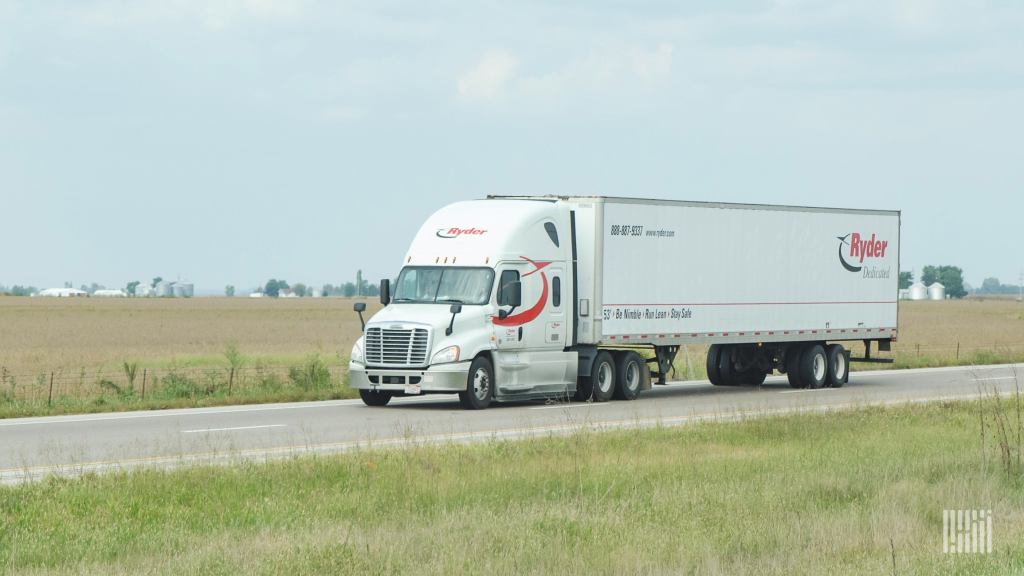
Ryder System’s fourth quarter saw the continued rise of its Supply Chain Solutions (SCS) segment as a growing contributor to revenue and profitability, with used vehicle sales hurting the performance of its signature Fleet Management Solutions (FMS) vehicle leasing division. 

In prepared remarks released with the earnings, CEO Robert Sanchez, who has been leading the push to have FMS account for a declining percentage of the Ryder business while SCS and Dedicated Transportation Solutions (DTS) rise, said the company has been operating in a “challenging” freight market, but “the transformative actions we’ve taken to de-risk the model, enhance returns and drive profitable growth have meaningfully improved business model resilience.”

SCS provides contract logistics services while DTS provides dedicated transportation services. DTS recently grew significantly bigger with the acquisition of Cardinal Logistics.

In the fourth quarter of 2023, SCS operating revenue of $972 million came in at 76% of the FMS operating revenue total of $1.27 billion. A year earlier, the SCS figure was 70.5% of what FMS produced.

On the profitability front, SCS and FMS went in significantly different directions quarter to quarter.

In the fourth quarter of 2023, FMS earnings before taxes as a percent of total revenue declined to 9.1% from 16% a year earlier. As a percent of operating revenue, it dropped to 10.6% from 19.4%. On an outright basis, EBT at FMS dropped to $134 million from $256 million. 

At SCS, EBT rose to $57 million from $42 million a year earlier. Other measurements of profitability such as EBT as a percent of total revenue were higher, rising to 4.4% from 3.4%, while as a percent of operating revenue SCS climbed to 5.8% from 4.8%.

Hit by the fall in used truck prices

Meanwhile, used vehicle sales at Ryder (NYSE: R) weighed on the performance of FMS. 

The vast difference in used vehicle markets between 2022 and 2023 was stark in the Ryder data. In the fourth quarter of 2023, the average price Ryder received for a tractor was down 39% from the previous year. In the fourth quarter of 2022, when the freight market’s downturn was advancing but not yet at a low point, the year-on-year decline for tractors was 6%.

For the full year, the decline in used tractor prices received by Ryder was 37% from 2022. But in 2022, Ryder saw an increase in used tractor prices of 43% from 2021.

Used vehicle inventory increased to 8,000 vehicles at the end of the quarter. Ryder said that figure is in line with the target of 7,000 to 9,000 vehicles for sale.

The challenging freight market referred to by Sanchez led to a earnings per share from continuing operations — a GAAP measurement — of $2.74 compared to $4.06 a year earlier. On a non-GAAP basis, the decline was narrower, down to $2.95 from $3.89, “reflecting weaker market conditions in used vehicle sales and rental, partially offset by improved SCS results.”

The consensus pre-earnings estimate on the non-GAAP figure was $2.74, according to SeekingAlpha.

For the full year, Ryder posted non-GAAP EPS from continuing operations of $12.95.

Wall Street reaction to the earnings was not positive. Although Ryder has been regularly recording 52-week highs in recent months, at about 2:10 p.m. Eastern time Wednesday, the stock was down $7.80, or 6.58%, to $110.71. Its intraday low was $107.85.

In providing its first guidance for 2024, the company didn’t see earnings improving that much this year. Its projection is non-GAAP EPS of $11.50-$12.50. 

Ryder also foresees an increase in operating revenue of approximately 13%, but that would include Cardinal Logistics. Full-year revenue for Ryder in 2023 was $11.78 billion, and 13% of that would be about $1.5 billion. Elsewhere during the call, Sanchez put Cardinal’s revenue at about $1 billion.

Company’s first talk about Cardinal acquisition

When the Cardinal Logistics acquisition was announced, it was unusual in that it already had been closed, and Ryder’s media relations department made a point to note that it was not taking additional questions about the purchase. It also said the acquisition would be discussed further on the Ryder conference call, and it was, with an emphasis on where Cardinal would fit with existing DTS operations.

In the fourth quarter, DTS reported flat EBT of $31 million. Total revenue was down just 3% to $443 million, while operating revenue, which would not reflect the volatile fuel segment of revenue, rose to $324 million from $320. EBT as a percent of total and operating revenue were little changed.

Sanchez said the DTS segment at Ryder had “demonstrated a resilient earnings profile … during the most recent freight downturn, as well as during prior cycles.” Earnings there had “held up well, benefiting from favorable driver market conditions and reduced turnover cost as well as our initiatives.”

It also has the advantage of a new customer pipeline directly from some of Ryder’s FMS customers, “which has been the largest source of new sales activity for DTS for some time.”

Sanchez moved from that recap of DTS to Cardinal, saying the acquired company’s “national footprint and complementary contractual services provides us with the opportunity to build scale and density in our dedicated transportation network.” Cardinal, inside of DTS, “will gain greater economies of scale and we’ll have even more flexibility to optimize resources across our network.”

Integration of the acquisition, which closed Feb. 1, is underway, Sanchez said. Revenue gains from the purchase are expected to be about $1 billion in total and $800 million in operating revenue, with fuel and subcontracted transportation making up the difference.

But not all of Cardinal will be under DTS. Sanchez said about 15% of the company’s operating revenue is generated by Cardinal’s brokerage, contract logistics and last-mile services; that will be under Ryder’s SCS segment. Fleet maintenance for the Cardinal acquisition will be shifted to FMS.

Sanchez said the Cardinal acquisition will be “marginally accretive” to earnings in 2024 and more “meaningfully accretive” next year. 

During the earnings call with analysts, Sanchez talked about the “balanced growth strategy,” as Ryder has termed its plan to have FMS provide a smaller base of the company’s business by growing the other two legs.

He cited numbers from 2018, a strong freight year, when Ryder had a comparable EPS of $5.95 and return on equity of 13%. But in 2023, a weak freight year, the comparable numbers were $12.95 and 19%, with SCS and DTS supplying a bigger part of the company’s operations last year than in a strong 2018.

“Through organic growth, strategic acquisitions and innovative technology, we have shifted our revenue mix toward Supply Chain and Dedicated, with 56% of 2023 revenue coming from these asset-light businesses compared to 44% in 2018,” Sanchez said.

The CEO was eager enough to talk about the change in the business that even as the earnings call’s moderator signaled that no more questions from analysts were forthcoming, Sanchez didn’t just say goodbye like most CEOs; he wanted to get his key point in one final time.

A transformed Ryder, he said, means that “you’re going to have the ups and downs of rental and used vehicle sales.” But shifting more toward longer-term business like that found in SCS and DTS means “that contractual earnings number is going to continue to grow and we certainly are focused on continuing to grow that number.”

More articles by John Kingston

As lower used truck prices loom, Ryder sees a drop in ’23 profitability from last year

Ryder’s debt rating upgraded by S&P

Ryder loyalty program payoff: Reduced used vehicle prices

CSX worker dies after being struck by moving equipment

An investigation is underway after a CSX worker was killed on the job Tuesday in Roanoke Rapids, North Carolina. 

The incident happened around 1:30 p.m. on CSX’s Northend Subdivision, according to the Roanoke Rapids Police Department. Details have not been released, but the National Transportation Safety Board said the employee was killed by moving equipment. A team is headed to the scene to investigate.

The victim has not been publicly named, but the Police Department said in a statement that the family has been notified, adding no further information would be shared at the request of the family.

In a statement to WRAL News, the railroad said: “CSX confirms that a track maintenance employee was fatally injured while performing his duties in Roanoke Rapids, NC. Our thoughts and deepest condolences go out to his family and friends. We are doing everything we can to support them at this time. The incident is under investigation.”

It is the second fatality involving rolling equipment in a week. 

On Feb. 7, 55-year-old Norfolk Southern engineer Chris Wilson died after several uncontrolled train cars crashed into his locomotive, causing him to be ejected. The incident remains under investigation.

This week, the Federal Railroad Administration issued a safety bulletin, warning rail workers about the dangers of rolling equipment.

Border bridges blocked as rail workers seek back pay, benefits

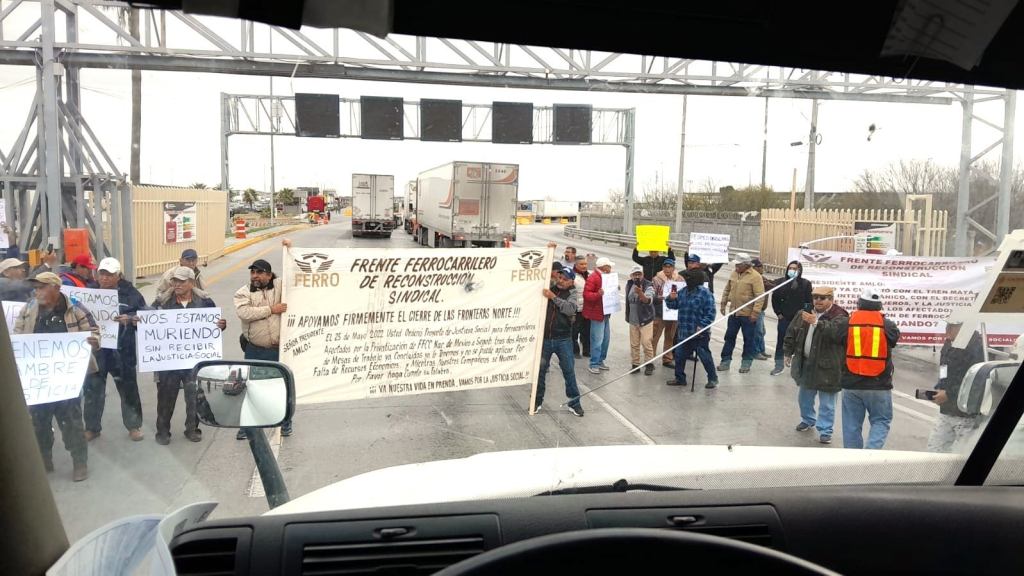
Former Mexican rail workers held protests and blockades at U.S.-Mexico border crossings in Arizona and Texas on Wednesday, seeking benefits, severance pay and more communication from the federal government. 

“There is a protest by retired railroad workers taking place on the Mexico side of World Trade Bridge that is currently impeding all north and south bound commercial truck traffic,” stated an email from U.S. Customs and Border Protection to the trade community. “Colombia Solidarity Bridge is open and traffic can be diverted to that location or to the other 7 ports of entry.”

The protests and blockades occurred on the Mexico side of the World Trade Bridge connecting Laredo, Texas, with Nuevo Laredo, Mexico; the Ysleta-Zaragoza International Bridge connecting El Paso, Texas, with Cuidad Juarez; and the Mariposa port of entry connecting Nogales, Arizona, and Nogales, Mexico.

The blockades by former rail workers stem from Mexico’s privatization of its state-run railroad in 1997.

When the privatization process started in 1996, the state-run National Railroads of Mexico (FNM) company had around 43,000 employees, according to a 2001 study titled “The Privatization of Mexican Railroads.” By 1998, more than 23,000 workers had been rehired by the private investors that bought the railroads.

About 3,000 FNM workers opted for retirement, while 16,700 workers either resigned or were laid off. Many of the retired or laid-off workers said they have not received benefits or severance payments stemming from the privatization.

According to the Railway Union Reconstruction Front (FERRO) union, some workers are owed thousands of dollars in benefits and severance payments. In 2022, Mexican President Andres Manuel Lopez Obrador signed a decree for the former railroad workers for back pay and benefits.

“We do not know if the president of Mexico is aware of this situation and if he is, there is agreement on his part, but since we have no way of knowing nor an answer regarding the application of the [decree], what we have left is to express ourselves publicly in protest of the mistreatment that we have been subjected to,” Eduardo Canales Aguiar, president of FERRO, said, according to MSN

Members of FERRO also held protests and blockades in front of the president’s administration building in Mexico City, along with several other locations throughout the country.

According to some social media posts, the blockade at the World Trade Bridge in Laredo ended around 1 p.m. EST. It’s unclear whether the blockades are still ongoing at crossings in El Paso and Nogales.


As of 2 p.m. Wednesday, the cargo truck wait time at the World Trade Bridge was 10 minutes, while the wait time at the Ysleta-Zaragoza Bridge was 35 minutes. The wait time in Nogales was 25 minutes.

More articles by Noi Mahoney

329 layoffs hit freight-related firms in Texas

Goodyear Tire ordered to pay $4M in back pay to Mexican workers

FBI alleges Mexican cartel, Canadian truckers part of drug ring