Spare part delays keep Lufthansa Cargo A321 freighters grounded

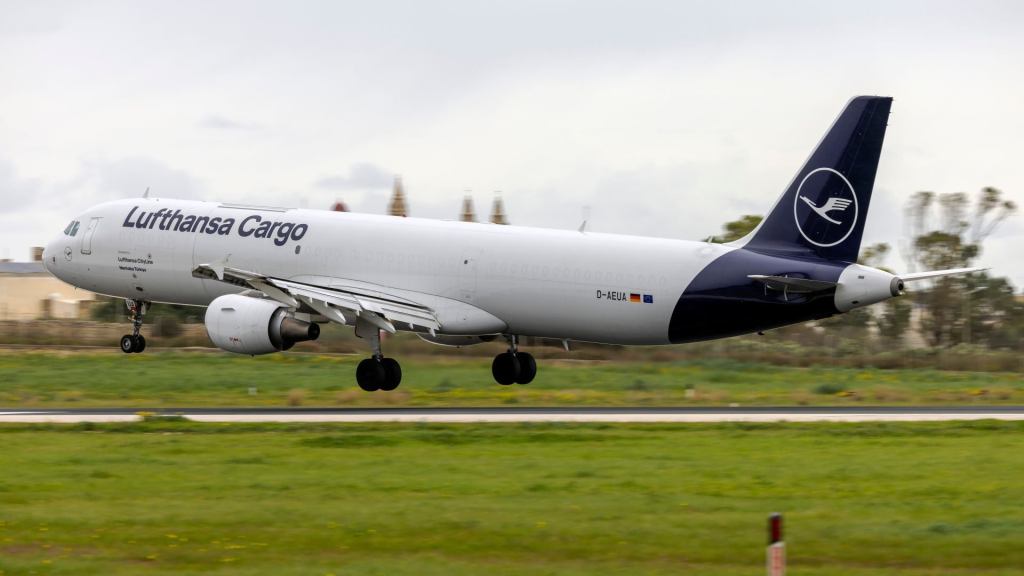
A blue-tailed Lufthansa Cargo plane touches down on runway.

Two Lufthansa Cargo narrowbody freighters remain sidelined for a third week because of technical problems discovered after the aircraft entered a maintenance hangar to repair small cracks in rear floor boards, FreightWaves has learned.

Lufthansa repaired the cracks within a couple days of their discovery in mid-January, but inspectors subsequently discovered other technical issues with the planes, spokeswoman Katharina Stegmann wrote in an email. She did not provide specific details about the necessary fixes.  

“At the moment, we are still waiting for spare parts for which reason the aircraft are not operating at the moment. Both aircraft will be repaired as soon as possible. As things stand at the moment, there will only be minimal short-term cancellations of individual frequencies in the cargo flight schedule,” Stegmann said.

The cargo subsidiary of Deutsche Lufthansa AG (DXE.LHA) in November accepted its fourth Airbus A321 converted freighter, which is deployed in the new short- and medium-haul network that stretches from Northern Europe to North Africa. Two planes are currently operating, but aircraft tracking site Flightradar24 shows that the other two have not flown since Jan. 18 and Jan. 20.

It’s not unusual for airlines to extend planned maintenance layovers because it’s an opportunity to correct other problems noticed during regular operation without having to take the aircraft out of service again.

The spare parts are taking longer to arrive than normal because of ongoing supply chain constraints — labor shortages, scarcity of raw materials, inflated costs for materials and labor, and extensive lead times — that have plagued manufacturers, maintenance organizations and airlines around the world since the COVID crisis.

“Everyone involved is working at full speed to ensure that the aircraft can be put back into service as quickly as possible,” said Stegmann.

Elbe Flugzeugwerke GmbH, the aircraft maintenance company owned by Airbus and an engineering partner, last month said the cracked shear plates detected in the rear floor structure on Jan. 9 during a routine check were unrelated to its work converting the former passenger planes to carry main-deck cargo.

“Our aircraft are safe, there is currently no indication that the damage is related to the passenger-to-freighter modification,” said EFW Chief Operating Officer Jordi Boto in a statement. “The detailed loads analyses have meanwhile shown that the A321 freighter certified mechanical loads are similar, or even lower, compared to the passenger aircraft results.”

There is no specific action required for operators, EFW said, adding that such damage is not unusual for mid-age A321 aircraft. The leased planes are 12 and 15 years old, which is young for conversion to freighter configuration.

Airbus said the cracks were related to corrosion, according to Aviation Week.

Lufthansa Cargo launched its regional cargo network for same-day e-commerce customers two years ago with a single A321 converted freighter capable of transporting 14 pallets on the main deck. The latest freighter enabled the airline to add Amman, Jordan, and Stockholm to its winter schedule that began on Oct. 29.

An A321 cargo jet connects Lufthansa’s central cargo hub in Frankfurt, Germany, to Amman once a week. Stockholm, a key export location for pharmaceutical and temperature-sensitive goods, has freighter service three times per week. In late November, Lufthansa Cargo added Stavanger, Norway, to its short- and medium-haul network. Stavanger has been part of the airline’s long-haul network, which utilizes Boeing 777 freighters, but is now served once a week by A321s operating to Frankfurt via Copenhagen, Denmark.

When the A321 fleet is fully restored, Lufthansa Cargo will again serve 18 destinations in the regional network on more than 32 weekly flights. 

Lufthansa Cargo currently operates 16 Boeing 777 freighters — 11 under its own brand and five for DHL Express joint venture Aerologic. It is scheduled to receive two more 777s from Boeing this winter.

Meanwhile, a one-day strike by ground workers against Lufthansa at airports in Germany has impacted the majority of passenger and freighter operations. The Loadstar reports that shippers should expect delays.

Click here for more FreightWaves/American Shipper stories by Eric Kulisch.

Sign up for the weekly American Shipper Air newsletter here

Lufthansa Cargo adds cities to new intra-European freighter network
FMCSA calls out sham towing fees charged to truckers

Truck being towed

WASHINGTON — A proposed rule aimed at cracking down on junk fees charged to consumers has caught the attention of the Federal Motor Carrier Safety Administration.

The proposed rule, issued by the Federal Trade Commission last year, would, among other things, allow the FTC to seek civil penalties against fraudsters and more readily obtain financial remedies for consumers who are harmed.

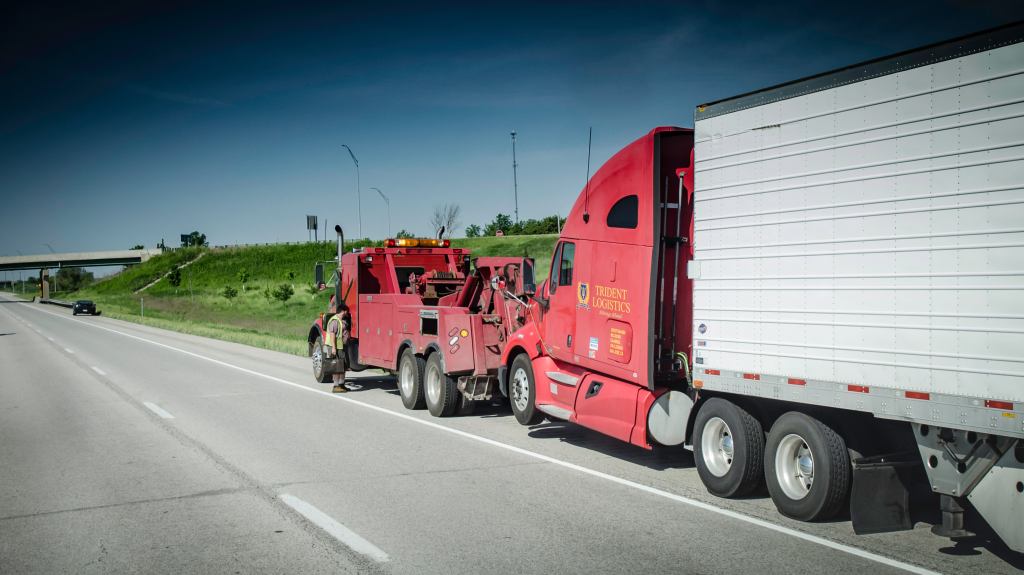
FMCSA weighed in on the proposal by calling out unscrupulous towing companies that overcharge truck drivers who call for assistance for a variety of reasons, including when they are involved in a crash.

“Predatory towing negatively impacts consumers, including commercial motor vehicle drivers and trucking companies,” said FMCSA Acting Deputy Administrator Sue Lawless. “It is detrimental to the overall health of the trucking industry, and it’s time to end excessive rates, surcharges and other unfair fees associated with predatory towing.”

In comments submitted to the FTC on Wednesday, Lawless cites several potentially unfair or deceptive fee practices used by predatory towers. They include hiding fees until the job is completed, charging for unnecessary or worthless services, and imposing an excessive number of fees for excessive amounts – all of which can add up to thousands of dollars, she said.

Once towed, truck owners and operators “are in a very vulnerable position and highly susceptible to predation,” Lawless wrote. “Predatory towing companies can and do use their possession of the vehicle as leverage to price gouge and otherwise prey upon [drivers] who are in no position to push back.”

Such practices, she asserted, “fall within the purview of the proposed regulation “which would greatly benefit truckers if finalized.”

A study published by the American Transportation Research Institute (ATRI) in November found that excessive rates and unwarranted additional service charges were the two most common forms of predatory towing, experienced by 82.7% and 81.8% of surveyed motor carriers, respectively.

ATRI also found that 29.8% of invoices were found to include either excessive rates or excessive additional charges. Roughly half of these cases had excessive rates for equipment, labor or storage, and the other half had excessive miscellaneous or administrative charges.

In supporting prohibitions or restrictions on excessive fee practices, FMCSA urged FTC to focus on consumers “who have little to no ability to avoid, negotiate, decline, anticipate, or limit the number or cost of the fees, or consumers who are vulnerable, in distress, or otherwise limited in choice by their circumstances.”

The agency suggested that a final rule treat each illegal junk fee as a separate violation, and that it expressly prohibit companies from charging or collecting fees “that are not appropriately disclosed, are not included in the total price, and/or cannot be fully calculated upfront.”

In addition, because truck drivers often drive in multiple states, FMCSA requested that the FTC “provide guidance on how [the proposed regulation] would affect different state and local laws governing fees in the towing industry, either in the final rule or in subsequent interpretive guidance.”

Click for more FreightWaves articles by John Gallagher.

Imports of avocados, beer from Mexico score big on Super Bowl Sunday

As more than 110 million people settle in Sunday night to watch Kansas City and San Francisco battle in Super Bowl LVIII, few will think about how their favorite snacks and party foods made it into their living rooms — or about the sheer volume of food.

The latest consumer spending data from the National Retail Federation said the U.S. will spend a record $17.3 billion on the Super Bowl this year, up 5% from last year.

Over 12 billion chicken wings, 50 million cases of beer, 28 million pounds of chips and 54 million avocados will be consumed on Super Bowl Sunday, which equals more than 30,000 truckloads, according to third-party logistics provider Compass Logistics.

“Before every big event in the United States, there is a big supply chain supporting the accessibility of goods,” according to a recent Compass Logistics blog post. “Timely delivery is a critical aspect of Super Bowl food coordination. During busy seasons, supply chain providers cannot leave any room for errors. They must prepare for any hazard or problem … truck driver shortages, weather conditions, equipment delays.”

Whether the Chiefs or 49ers win the game, imports of avocados have already scored big for the Super Bowl. Historically, the Super Bowl accounts for an estimated 20% of annual avocado sales around the big game in early February, according to the U.S. Department of Agriculture (USDA).

“Consumer consumption for avocados that are used to make guacamole significantly increases during Super Bowl Sunday,” according to a recent report from the USDA. “When it comes to increased sales, avocados are the real Super Bowl champion.”

Mexico supplies about 81% of the avocados eaten in the U.S. In 2023, the total value of U.S. imports of avocados from Mexico was about $2.5 billion, according to the USDA. 

Last year, over 6,000 truckloads of avocados were imported to the U.S. in the weeks prior to the Super Bowl. More than 90% of avocado imports from Mexico cross into the U.S. through Texas ports of entry in Laredo and Pharr.

More than 90% of avocado imports from Mexico cross into the U.S. through Texas ports of entry in Laredo and Pharr. (Photo: Jim Allen/FreightWaves)

Mexican beer is another top U.S. import leading up to the Super Bowl.

Mexico exports about $5 billion worth of beer annually to the U.S. Most of the imported beer from Mexico enters the U.S. at the port of entry in Eagle Pass, Texas, accounting for more than $3.5 billion annually.

In mid-2023, Mexico-made Modelo Especial lager overtook Bud Light as the top seller in the U.S. beer market, according to Nielsen IQ data reported by The Associated Press.

Grupo Modelo, the Mexico City-based brewer of Model Especial, also produces beers such as Corona, Corona Extra, Corona light, Victoria and Pacifico.

According to grocery delivery service Instacart’s “Snacktime Report: The Big Game Cravings,” Modelo Especial and Corona Extra are two of the 10 most popular beers on Super Bowl Sunday.

More articles by Noi Mahoney

Goodyear Tire ordered to pay $4M in back pay to Mexican workers

FBI alleges Mexican cartel, Canadian truckers part of drug ring

4 things to know about the ‘Take Our Border Back’ convoy

Tanker transits plunge 20% in Red Sea: Lloyd’s List

New data from Lloyd’s List Intelligence shows an acceleration of tankers diverting away from the Red Sea. Since Jan. 12, when the first of three U.S.-led military strikes began on Houthi land targets, more than 106 tankers have changed routes to avoid the area.

Lloyd’s List is tracking the rapid drop in transits of tankers and bulk vessels through the Gulf of Aden and the Red Sea. Lloyd’s List Intelligence vessel tracking data recorded a 40% week-on-week (w/w) drop in crude tankers transiting the Bab el-Mandeb strait the week ending Feb. 4. The average daily number of active vessels in the Red Sea last week was 212, down from about 229 the week prior and from 373 last year.

Red Sea tanker transits plunged 20%, as more than 100 tankers diverted to travel around the Cape of Good Hope since initial military strikes on Houthis. But according to new data from Vortexa, the number of crude tankers rerouting appears to be accelerating. The data reflects cargo-carrying vessels of 10,000 deadweight tonnage or more. The pre-Houthi attack average was taken for the period Nov. 6 to Dec. 3, 2023.

The transit exodus in the Red Sea is reflected in Suez Canal transits, which are down 10% w/w with 218 vessels traveling through the canal. That’s 54% below the average and 51% lower compared to the same period last year.

Looking at the key points of this trade route, transits through the Bab el-Mandeb strait fell 11% w/w to 235 passings. Before the Houthi attacks, the average number of passings was 542.

Bulk carriers were down 18% w/w. Crude oil tankers fell by almost 40%.

For the trade route around the Cape of Good Hope, transits were up 7% to 628 compared to the prior week and 65% year over year, when only 381 were traversing this water route.

Neil Roberts, secretary of the Joint War Committee and the head of marine for the Lloyd’s Market Association, said the military efforts have yet to control the Houthi situation. He described it as cracking an “asymmetric nut.”

The spillover of the tanker diversions is now impacting Russia. According to Vortex data, diversions of Russian oil flows to India and China are now being seen. Greek-owned tankers are shipping fuel oil from Black Sea ports and sailing around the Cape of Good Hope.  

Russian oil has also been mistakenly targeted by the Houthis due to the Houthis’ having old vessel data.

“Even Tankers carrying Russian oil are not immune to attacks as Houthis may be accessing information that is old and outdated,” said Andy Lipow, president of Lipow Oil Associates. “The Marlin Luanda is just the latest example. In this case the tanker was carrying a cargo of Russian origin naphtha for Trafigura bound for Singapore.”

Reroutings and insurance

In spite of the attacks on commercial shipping in the Red Sea, Roberts said at a press conference of the International Union of Marine Insurance that the war risk insurance arrangements for vessels transiting the Red Sea are “currently sustainable.” Roberts said there is currently no need to extend the high-risk area designation covering parts of the key waterway.

According to U.S. defense officials, there have been 41 attacks since Nov. 19.

“There are echoes of the tanker war … . It’s not the same. It’s not parallel, but there are echoes,” Roberts said. “You have a group that is seeking to achieve a political aim in a country in which they have no direct involvement by targeting commercial shipping.”

“Although a number of ships have been hit, there has not yet been a catastrophic explosion or a sinking. Either we have been very lucky or restraint is being exercised in what is being loaded in armaments. That’s an unknown,” Roberts added.

Uber Freight’s revenue and EBITDA still weak

There was little positive in the Uber Freight portion of Uber Technologies’ fourth-quarter earnings as its revenue and bottom line continue to languish. 

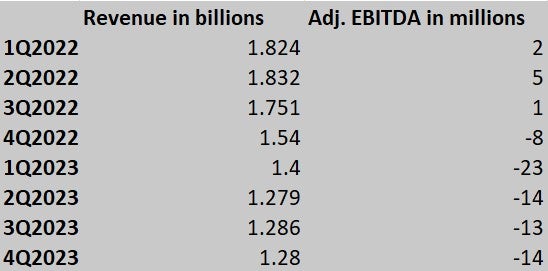
Earnings before interest, taxes, depreciation and amortization at the digital brokerage and TMS provider remained negative at minus $14 million and now hasn’t seen a positive number for six quarters. The last time there was black ink in Uber Freight’s EBITDA was the third quarter of 2022, when it eked out a $1 million positive EBITDA. The subsequent five quarters were negative $8 million, $23 million, $14 million, $13 million and now $14 million, respectively. 

Even worse, revenue at Uber Freight fell slightly on a sequential basis and remains stuck near where it came in for the final three quarters of last year, well below the numbers first reported starting in 2022 after Uber Freight closed on its acquisition of Transplace in the fourth quarter of 2021.

Revenue of $1.28 billion was only slightly higher than the recent low of $1.279 billion posted in the second quarter of 2023. The sequential decline was small, coming off third-quarter revenue of $1.286 billion.

Fourth-quarter revenue was 16.8% less than the fourth quarter of 2022.

The latest results close out 2023, during which Uber Freight opened the year with revenue of $1.4 billion but then watched it decline for the rest of the year.

It’s not easy to benchmark Uber Freight performance against that of peers. Earnings from RXO (NYSE: RXO) don’t come out until Thursday, and that 3PL increasingly considers itself a digital broker. 

But so, to a degree, does C.H. Robinson (NASDAQ: CHRW), and the brokerage revenue falloff over the course of the year at that company was relatively close to what happened at Uber Freight.

C.H. Robinson’s earnings were considered extremely weak. Its stock is down about 13% since the earnings release Thursday.

The North American Surface Transportation segment at C.H. Robinson, which is where the company’s brokerage activities sit, posted revenue in the first quarter of 2023 of $3.3 billion. In the fourth quarter, that was down to $3 billion, a decline of just over 9%.

At Uber Freight, the slide from first-quarter revenue of $1.4 billion down to $1.28 billion at the end of the year was an 8.6% drop. 

Fourth-quarter 2022 revenue at C.H. Robinson’s NAST group was $3.56 billion, and the drop to $3 billion was 15.7%. That is slightly less than the 16.8% revenue decline posted at Uber Freight between the fourth quarter of 2022 and the final quarter of 2023.

Uber Freight was not mentioned on the fourth-quarter earnings call of the parent company (NYSE: UBER). Uber Technologies’ quarterly earnings were considered positive, and its stock hit a 52-week high Wednesday.

But the prepared statement released with Uber Freight’s earnings highlighted several developments over the quarter, including its revised TMS.

Uber Freight President Lior Ron led a public rollout of the new TMS in October. In the earnings statement, the company said it had onboarded “several” new customers to the TMS. 

More articles by John Kingston

New Jersey hikes truck insurance minimum to $1.5M, higher than most states

Love’s: Restraint in new travel centers/truck parking in ’24 but larger growth plans

14-year-old case that brought ABC test to New Jersey was just settled

FMCSA to study sexual assault in trucking

Trucks at night at truck stop

WASHINGTON — Federal regulators are taking the next step toward creating regulations aimed at protecting women and minority truck drivers from sexual assault and harassment.

In a request for information (RFI) scheduled to be published on Thursday, FMCSA outlined plans for a study to quantify the frequency and severity of sexual assault and sexual harassment (SASH) across the trucking industry.

“For example, FMCSA seeks information on how best to treat categories of gender, sexual orientation, and ethnicity in the study, as well as best practices in designing questions that use the latest standards for SASH research and address the breadth and life cycles of careers in the industry,” the agency stated.

“FMCSA will use the results of this study to understand any potential regulatory or policy measures needed to improve driver safety and mitigate SASH, work with industry partners on outreach and other efforts to improve driver safety through SASH prevention, and support the participation of women in the CMV industry.”

The agency wants to build on a November 2022 study it sponsored that evaluated harassment of women and minority men truckers, with nonminority men serving as a control group. The study found that women truck drivers are particularly vulnerable to sex-related crimes and are more likely to experience harassment from other truck drivers or from driver-trainers.

It also found that while women report incidents more than men, harassment tends to go unreported due to fear of retaliation.

That study, however, came under immediate fire from FMCSA’s Women of Trucking Advisory Board (WOTAB), which was set up in 2022 to advise the agency on ways to improve job quality for women. Panel members said the study fell short in several areas, including sample design and categories of gender, sexual orientation and ethnicity.

“WOTAB noted in particular that it is important to understand SASH with additional depth and breadth to ensure there is an awareness of the magnitude of SASH across the industry,” FMCSA acknowledged in the RFI.

To help design the study, FMCSA is asking the public for answers to a list of questions, including:

  • What type of study design will best characterize the nature and scope of sexual assault and sexual harassment within the trucking industry that can be used to develop appropriate countermeasures?
  • What are best practices or methods for capturing gender identity information?
  • What are best practices to consider when asking demographic questions about sexual orientation and ethnicity?
  • Who should be included in the study?
  • What are the optimum methods to capture the breadth of SASH?
  • What categories of questions should FMCSA include that will ensure a comprehensive approach to the issue?

Click for more FreightWaves articles by John Gallagher.

Did the spot market see its shadow? – WTT

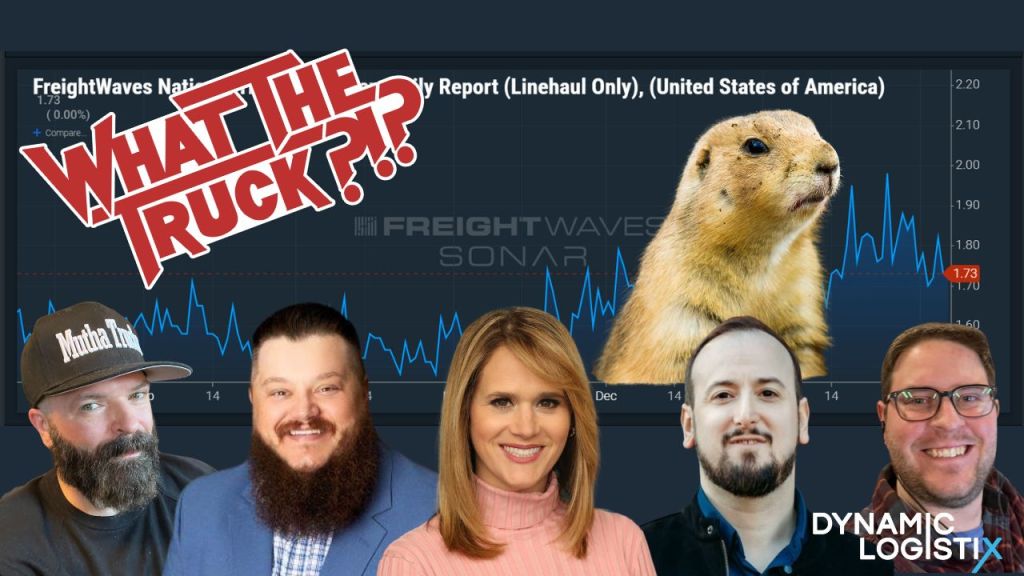
On episode 679 of WHAT THE TRUCK?!?, Dooner is joined by FreightWaves’ Thomas Wasson to break down the latest data in SONAR and answer the question, did the spot market see its shadow? Plus, the freight brokerage burn-off and do felons make great freight brokers?

CNBC’s Lori Ann LaRocco has just released her new book, “Embracing Your Past to Empower Your Future.” It’s all about the darkness of slavery and segregation and highlighting the perseverance of the human spirit. 

According to a new report by Truckstop, freight fraud shot up 130% in 2023. We’ll meet QuikSkope co-founder Mike Fullam, whose company aims to stop this problem that costs the brokers, carriers and shippers $800 million a year.

It’s all about safety when Ruan Logistics’ Blake Grolmus drops by to talk about how the company’s culture is providing a winning formula for drivers.

Plus, the horrors of roadside assistance; Tesla Semi vs Donner Pass; Shipper of Choice Award voting opens; and more.

Watch on YouTube

Visit our sponsor

Subscribe to the WTT newsletter

Apple Podcasts

Spotify

More FreightWaves Podcasts

NTSB to release findings on East Palestine derailment this summer

Federal investigators plan to release the cause of last year’s Norfolk Southern train derailment in East Palestine, Ohio, this summer.

On Wednesday, the National Transportation Safety Board announced it will hold its final board meeting on the incident at 9:30 a.m. ET on June 25 at East Palestine High School.

During the meeting, the NTSB will vote on the “final findings, probable cause and recommendations. The board will also vote on any changes to the draft final report,” according to a news release.

NTSB Chairwoman Jennifer Homendy will also be in East Palestine that week to host two community meetings aimed at providing an opportunity for the public to ask questions.

“The NTSB is returning to East Palestine for our final board meeting for the same reasons we went last summer: Because the communities most affected by this tragedy deserve to hear our findings in-person and in real-time,” Homendy said in the news release.

The meeting will be streamed here

How we got here

The incident began on Feb. 3, 2023, when a Norfolk Southern train derailed in East Palestine, a town of about 5,000 residents.

The derailment included 11 tank cars carrying hazardous materials that subsequently ignited, fueling fires that damaged an additional 12 rail cars that did not derail, according to the NTSB. First responders implemented a 1-mile evacuation zone surrounding the derailment site, affecting up to 2,000 residents.

As of Feb. 2, the Environmental Protection Agency said cleanup efforts of the hazardous materials were still ongoing, with Norfolk Southern working at the scene. The EPA estimates work could be done this summer.

In its preliminary report, the NTSB said an overheated wheel bearing on a freight car is believed to have caused the derailment. 

Read more:

Will Congress pass any rail safety bills in 2024?

NTSB examines communication gaps at East Palestine train derailment hearing

Norfolk Southern fulfills promise to join federal safety program C3RS

Robinson unwraps truckload appointment scheduling software

Freight broker and logistics provider C.H. Robinson Worldwide Inc. on Wednesday took the public wraps off software that enables truckload appointment scheduling without any human intervention.

The software automates a historically manual task that is executed about 1 billion times a year, Eden Prairie, Minnesota-based Robinson (NASDAQ: CHRW) said in announcing the program. With so-called touchless appointments, a load can be electronically scheduled at the time it is picked up and scheduled again for the time and place of delivery. Robinson’s technology uses AI to analyze transit-time data from millions of shipments to determine the optimal appointment, the company said.

The software, which today does touchless appointments for 2,545 customers at more than 25,000 facilities, actually began gaining traction in September 2022. The company wanted to ensure that the software helped meet its internal productivity goals before publicly announcing its availability.

Touchless appointments, considered one of the last frontiers of logistics technology, are seen as offering myriad benefits to the trucking supply chain. Shippers save time they might otherwise spend to manually handle appointment requests. Touchless appointments allow brokers to expedite load availability to their carrier networks, giving carriers better access to freight while saving shippers money. In addition, the faster a load is offered and booked, the more likely a shipper can avoid paying a premium for a carrier to drive out of its way.

In a Robinson customer survey earlier this year, shippers said that more efficient appointment scheduling is their second-biggest IT priority this year, behind the quest to achieve real-time shipment visibility.

“It’s far more efficient for technology to find an appointment slot that’s open, that works for both the loading dock and the carrier, and gets the freight where it needs to be on time,” said Michael Castagentto, Robinson’s president of North American Surface Transportation, the company’s largest unit.

Robinson’s announcement comes two days after Uber Freight said it has taken the first steps toward activating an API technical standard produced by the Scheduling Standards Consortium industry group. The scheduling standard arose from the idea that fragmented processes in appointment scheduling hinder the efforts of FreightTech companies seeking operational efficiency.

Uber Freight told FreightWaves that it has incorporated those standards into its proprietary transportation management system, allowing for automated scheduling across 1,500 facilities and distribution centers for 10 large consumer packaged goods companies.

XPO’s shares jump 18% on big Q4

A white XPO truck pulling a white LTL trailer

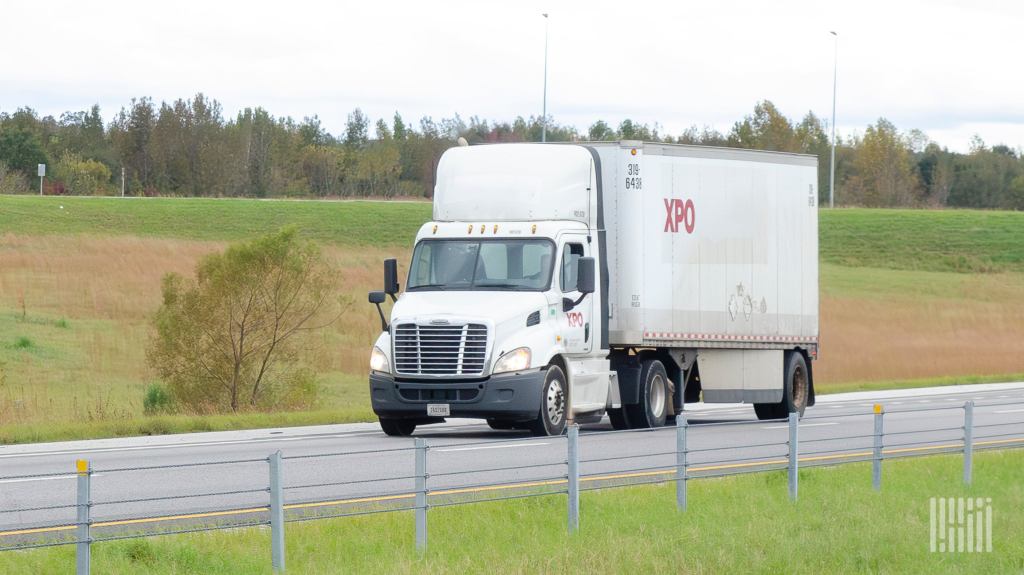
XPO was “firing on all cylinders” during the fourth quarter. The better-than-expected report sent shares sharply higher on Wednesday.

The less-than-truckload carrier reported fourth-quarter adjusted earnings per share of 77 cents, which was 15 cents better than the consensus estimate but 21 cents lower year over year (y/y). The adjusted number excluded transaction, litigation and restructuring costs.

XPO’s (NYSE: XPO) LTL segment reported a 9% y/y increase in revenue to $1.19 billion. Tonnage per day was up 2% and revenue per hundredweight, or yield, increased more than 10% excluding fuel surcharges. Looking forward to full-year 2024, management said it expects tonnage to continue to increase by a low-single-digit percentage, with yields growing by mid- to high-single digits, and possibly higher.

Indications from XPO’s customers suggest demand will be flat to up in the first half of 2024, with “even more optimism for the back half,” CEO Mario Harik said on a Wednesday call with analysts. He also noted a robust pricing opportunity in front of them.

XPO believes it can increase pricing by a midteens percentage over time given the success of recent service improvements as well as future initiatives. The company reported a record-low claims ratio of 0.3% in the fourth quarter and said its on-time performance was 300 basis points better y/y. XPO had a claims ratio of 1.2% just two years ago.

Improved service is expected to produce 700 bps to 800 bps of the overall price improvement. An increase in accessorials and premium services revenue, from roughly 10% of total revenue currently to more than 15%, is expected to yield 500 bps of price improvement. Harik said the company is still in the “early innings” of a service overhaul.

XPO is also expanding its local sales channel, which serves small shippers with fewer shipments per week, but those shipments produce higher yields and margins. The sales force serving that market grew by 20% last year and will be 30% larger in total by the middle of the year. The effort is expected to account for 200 bps to 300 bps of the growth plan.

Shipment growth with local customers was 12% higher y/y during 2023.

Table: XPO’s key performance indicators

During the fourth quarter, tonnage was up 2.5% y/y in October, down 0.5% in November and 3.6% higher in December. The growth in tonnage was the combination of a 6% increase in shipments partially offset by a 3% decline in weight per shipment. The lower shipment weights positively impacted yields.

Pricing on contract renewals was 9% higher y/y for a second straight quarter.

Tonnage in January was off 1.1% y/y with inclement weather being a detractor. However, tonnage and shipments increased from December to January by an undisclosed amount, outperforming normal seasonality.

The LTL segment recorded an 86.5% adjusted operating ratio, which was 380 bps better y/y. The OR was 30 bps worse than the third quarter but better than management’s guidance of roughly 210 bps of deterioration.

Purchased transportation expenses as a percentage of revenue were down 270 bps y/y. The company is now outsourcing less than 20% of its linehaul miles compared to roughly 25% two years ago. It plans to execute more linehaul miles internally going forward.

Also, head count was up just 1.7% y/y compared to a 5.7% increase in shipment counts.

The OR is expected to outperform the average change rate of 40 bps of deterioration from the fourth to the first quarter. For the full year, the OR is expected to improve 150 bps to 250 bps.

XPO recently acquired 28 terminals valued at $870 million from bankrupt Yellow’s estate. It’s a total of 3,000 new doors, roughly 1,000 of which will replace existing doors in XPO’s network.

Roughly half of the new sites won’t require hiring as they will be used for relocating existing operations into larger facilities. In other markets, XPO will be adding a second or third terminal. However, it plans to split head count in those areas initially, layering in incremental staff as needed over time.

Improved terminal efficiencies from the expansions are expected to outweigh incremental costs. The acquired locations are expected to have little impact on the unit’s OR this year even with higher depreciation and amortization expense. The sites are forecast to be accretive to EPS in 2025, offsetting a 45-cent drag from higher interest expense.  

Management said recently opened service centers were accretive within 30 to 60 days.

XPO’s European transportation segment recorded a 2% y/y revenue increase to $753 million and an adjusted earnings before interest, taxes, depreciation and amortization margin of 4.7%, which was 50 bps lower y/y.

Shares of XPO were up 17.7% at 12:30 p.m. EST on Wednesday compared to the S&P 500, which was up 0.7%.

More FreightWaves articles by Todd Maiden