No logistics, no football

people gathered around a desk of computers. Check Call news and analysis for 3pls and brokers

Welcome to Check Call, our corner of the internet for all things 3PL, freight broker and supply chain. Check Call the podcast comes out every Tuesday at 12:30 p.m. EDT. Catch up on previous episodes here. If this was forwarded to you, sign up for Check Call the newsletter here.

In this edition: The Super Bowl and logistics, capacity begins to tighten and big jumps in the final-mile space.

X

In honor of the Super Bowl coming up this weekend in Las Vegas, let’s take a look at the logistics behind getting the biggest football game of the year off the ground. The 2020 Super Bowl rematch is in Sin City, which has been the host of some significant events this year, most notably the F1 race that made headlines in more than one way with some major snafus and hiccups for the best-laid plans.

Hopefully the same doesn’t happen with the Super Bowl, being played at Allegian Stadium at the end of the Las Vegas Strip. The stadium holds about 65,000, making it the fourth-smallest NFL stadium. That fact might be why the cheapest ticket into the big game is over $5,000.

Then there is the halftime show, which is a feat in and of itself. The stage has to be set up in the minute the first half of the game ends. The stage is wheeled out to the field with audio equipment and everything the performers need. All the equipment arrives days before the event in 200-350 trucks.

Months of preparations and well-planned rehearsals and the logistics of getting an entire team and equipment to the stadium is a massive accomplishment, but what about the fans? 

The Super Bowl is the second-biggest eating day of the year after Thanksgiving, and once again it’s a bad time to be poultry. Roughly 1.45 billion chicken wings are consumed during the Super Bowl. Wings aren’t alone.

Here’s the math on how many 40,000-pound loaded trucks it would take to get Americans’ favorite game day snacks to the fan’s homes, not accounting for packaging or air in the bags (looking at you chips):

  • Chicken wings – 36,250 (1.45 billion pounds total).
  • Potato chips – 280 (11.2 million pounds).
  • Avocados – 3,485 (139.4 million pounds).
  • Popcorn – 95 (3.8 million pounds).
  • Nuts – 75 (3 million pounds).
  • Beer – 68,589 (325.5 million gallons).
  • Bacon – 312 (12.5 million pounds).
  • Ribs – 250 (10 million pounds).
  • Tortilla Chips – 205 (8.2 million pounds).
  • Cheese – 2,200 (88 million pounds).

    That’s just for the fans at home – not counting the ones in the stadium. Either way you spin it, that’s a lot of freight to move in a short period of time. Had to be a nice bump for a few weeks to an otherwise bleak and quiet January freight market.

    May the odds be ever in your favor this weekend, whether you root for the Chiefs, the 49ers, the halftime show or a national anthem under two minutes.

    SONAR TRAC Market Dashboard

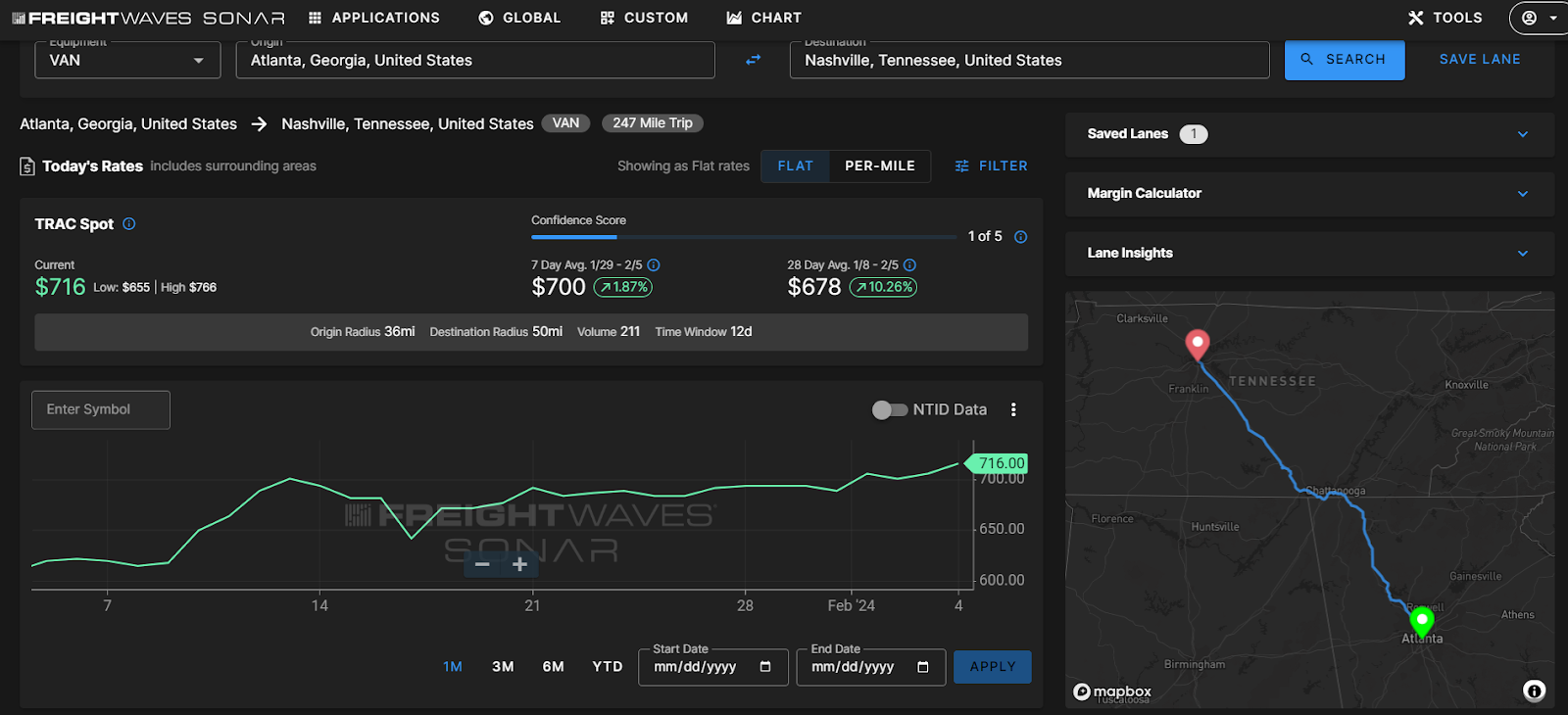
    TRAC Tuesday. This week’s TRAC lane is from Atlanta to Nashville, Tennessee. This lane is on the up and up ever so slightly as February gets underway. An all-in rate of about $700, before margin, should secure this 247-mile trip with little issue. Capacity is tightening a little in Atlanta as both outbound tender volumes and outbound tender rejections are on the rise. The market to watch for rate volatility is going to be Nashville as outbound tender rejection rates have increased 502 basis points week over week from 5.36% to 8.91%. That should put strain on capacity, making spot rates rise and taking outbound tender lead times with them. Something to watch for those covering loads out of Nashville.

    (GIF: Tenor)

    Who’s with whom? Onward ho! The phrase signals new adventures and uncharted territory, something that Onward, a final-mile logistics company, is experiencing with the acquisition of HOW Logistics Group, a smaller 3PL that also specializes in the final mile. It appears that Onward has acquired HOW for the network and scalability of the company. Onward is currently striving to be the answer to the underutilized capacity of box truck fleets. 

    Steve Nelson, CEO of HOW Logistics Group, said in a news release: “For years the last mile, white glove, big and bulky vertical has struggled with understanding capacity, coverage and the true nature of partnership with the most important part of this being the final mile agent. Onward’s dynamic platform and marketplace brings together the opportunity to educate both the agent and forwarder on each other’s KPIs and align them under a single platform all striving towards a single north star.”

    A trend of technology development and process improvement that has been a constant in the dry van world for years has rippled out to the other specialty spaces in hopes to bring the same streamlined efficiency to other arenas as well. That only serves to benefit the entire supply chain.

    The more you know

    How have Red Sea attacks by Yemen’s Houthi fighters affected companies?

    3PLs Penske Logistics, Kenco lay off combined 300

    Loop announces new reverse logistics offerings to transform operations and boost retail margins

    Borderlands: Mexico’s truckers plan nationwide strike against cargo theft

    Uber Freight begins piloting the Scheduling Standards Consortium’s protocols 
    Global Crossing Airlines changes CEO, cargo direction

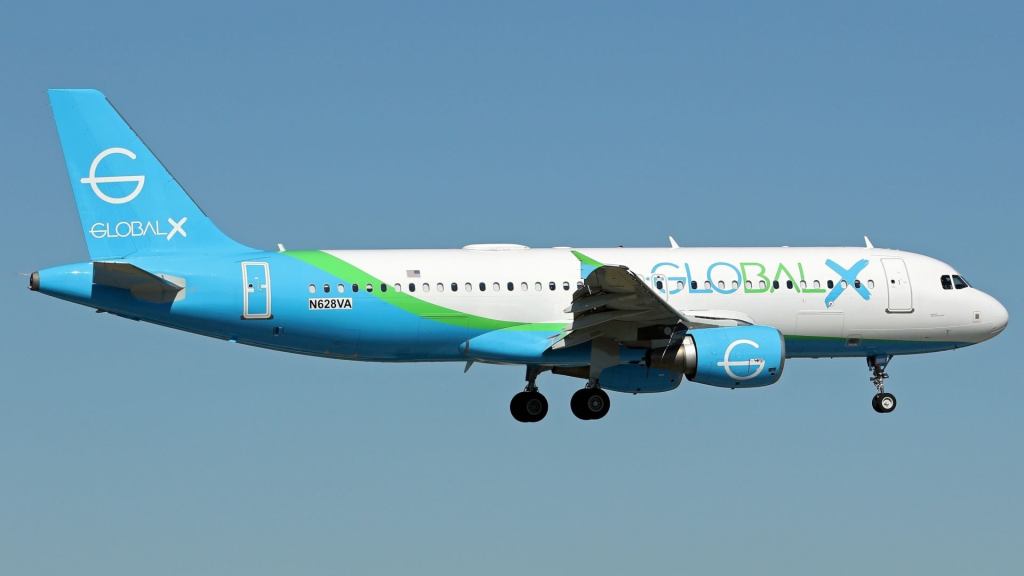
    A Global Crossing Airlines passenger jet, with light blue and green trim approaches airport on a clear day.

    Miami-based startup Global Crossing Airlines will temporarily cap growth in its new freighter fleet so it can focus limited resources on the more lucrative passenger charter business, a process that began Monday with the removal of founder Edward Wegel as CEO and chairman.

    Global Crossing (GlobalX) began freighter operations last summer and now has three Airbus A321 cargo jets in service. The used aircraft were converted from passenger configuration to carry containers on the main deck, with two more deliveries around the corner. After that, according to the new leadership, the company will pause fleet expansion.

    Ryan Goepel, who was elevated to president in addition to maintaining his position as chief financial officer, told FreightWaves the airline is taking a more measured approach toward cargo because the market is soft and rental demand for its passenger service is soaring.

    “The path to profitability and the path of least resistance right now is passenger. The faster we get in passenger aircraft the stronger our balance sheet is, and it gives us time to develop the freight business,” he said.

    Global Crossing Airlines (OTCQB: JETMF) said Chris Jamroz, the former CEO and chairman of Ascent Global Logistics until it was sold in December, is the new executive chairman. Ascent Global Logistics was one of the airline’s early investors.

    Jamroz is a serial logistics entrepreneur and turnaround specialist who heads less-than-truckload carrier Roadrunner Freight. He previously led STG Logistics, Emergent Cold, Garda Cash Logistics and on-demand freighter operator USA Jetlines. He also holds a significant investment position in GlobalX.

    A small company trying to scale up two distinct airline operations at the same time faces reputational and financial harm if it can’t deliver the service customers expect, a risk Jamroz separately said he didn’t want to take.

    “I see a tremendous risk of execution. I’m not ruling out returning to grow the cargo business in two years time, or so. But for now, I really want all the energy around bringing in as many aircraft as we can on the passenger side because we really cannot keep up with the demand. And that is where we have  developed a core competency of deploying revenue-earning aircraft in a very fast and effective way,” he said.

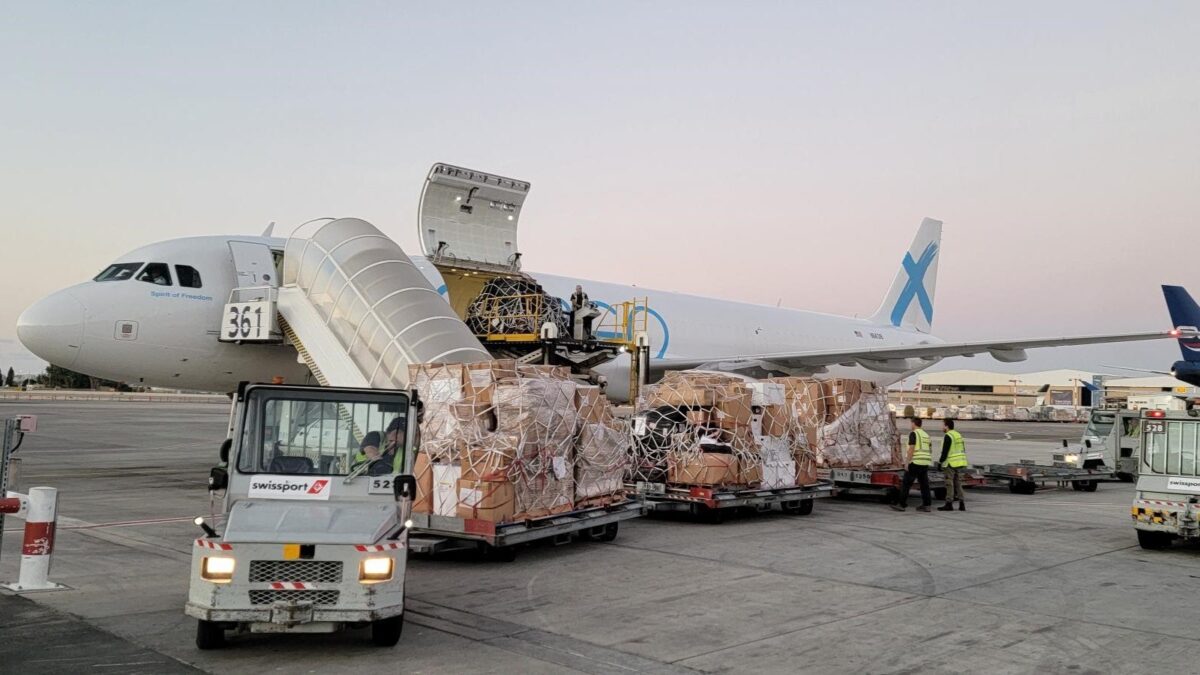
    An Airbus A321 freighter operated by Global Crossing Airlines is unloaded in October at Tel Aviv airport in Israel soon after the Hamas attack. (Photo: GlobalX)

    GlobalX entered revenue service two years ago with A320-family passenger jets and now has 11 aircraft providing charter flights for cruise lines, casinos, professional and college sports teams, government agencies, tour operators, and resort destinations, as well as supplemental capacity for other airlines. Its planes have flown stagehands and entourages for Bad Bunny, Foo Fighters, Lady Gaga and Harry Styles concert tours. 

    The new leadership pointed to several factors that are fueling interest in their passenger aircraft, including the upcoming college basketball playoffs, known as March Madness; European airlines’ need for extra jetliners for the busy summer season; and the contamination of powdered metal in Pratt & Whitney geared turbofan engines that will result in airlines grounding hundreds of narrowbody aircraft for lengthy inspection and repair.

    Executives credited Wegel for GlobalX’s success so far but said his vision of quickly expanding in multiple arenas — large Airbus A330 freighters, an operating subsidiary in Colombia, certification for long-haul flights over water and electric flying taxis — had spread the company too thin.

    “It works as long as you have unlimited resources and unlimited capacity of people that do stuff, but in reality people can only do so much at once,” Goepel said.

    Goepel is GlobalX’s first employee and has served as CFO since February 2020. He worked hand in hand with Wegel to build the company, taking a lead role in securing capital, acquiring aircraft and developing a marketing strategy.  

    GlobalX said it has mounted a search for a new CEO.

    Cargo rethink

    Management as recently as last fall was touting its intention to have 15 A321 converted freighters by 2026 at a time when other cargo operators were retrenching because of a recession in freight transportation that saw airfreight volumes fall for nearly 18 months, with rates tumbling up to 50%. The goal now is not to have too much capacity during a down cycle.

    The two aircraft wrapping up the retrofit process were originally scheduled to arrive in December. Supply chain and labor issues have slowed work at conversion facilities the past two years, but that is less of a problem for GlobalX under the new measured approach.

    Flight-tracking sites show two GlobalX freighters have not been active for several months and a third last flew more than three weeks ago.

    GlobalX has preliminary agreements to lease five more freighters this year, but the company is not obligated to do the conversions. Goepel said the airline may consider taking A321s previously designated for cargo and operate them in the passenger fleet for a period of time before sending them to an airframe overhaul specialist.

    Monday was also the first day on the job for Arthur Brown, GlobalX’s new vice president of cargo sales, Goepel said. The position has been filled on an interim basis since last spring by David Dow, vice president of charter sales, whose experience is in passenger airlines. Brown previously led charter and postal affairs at Miami-based Amerijet, which recently lost a major portion of its U.S. Postal Service contract. He joined Amerijet from Delta Air Lines’ cargo division in April 2022.

    Wegel is a veteran airline executive and entrepreneur who previously relaunched Eastern Air Lines. He will continue to serve on the GlobalX board of directors. 

    “It has been a great privilege for me to have helped build GlobalX over the last four years. As I step down from day-to-day operations, I look forward to working with the board in the future to provide strategic advice and industry knowledge, and help continue the growth and development of the airline,” Wegel said.

    GlobalX is the fourth North American cargo airline that has changed CEOs in the past three months. Amerijet’s private equity owner pushed out Tim Strauss in early October and replaced him with Joe Mozzali, who was hired as CFO earlier in the year. Air Transport Services Group in November terminated Rich Corrado and replaced him with former CEO and board member Joe Hete. Both moves were made because of questionable investment decisions and financial underperformance. Canadian carrier Cargojet recently carried out a planned succession under which founder Ajay Virmani stepped down as CEO, with his responsibilities now shared by two of his longtime lieutenants. 

    Click here for more FreightWaves/American Shipper articles by Eric Kulisch.

    Contact reporter: ekulisch@www.freightwaves.com 

    GlobalX Airlines defies cargo trend with fleet strategy

    Cargojet founder Virmani passes torch to co-CEOs

    Weather, tonnage declines offset by cost reductions in ArcBest’s Q4 

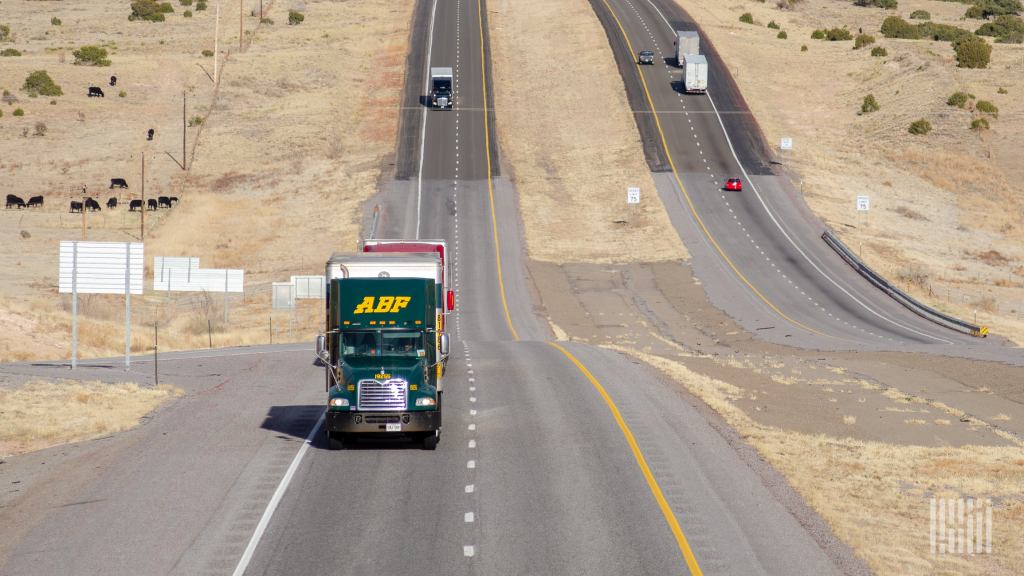
    A green ABF tractor pulling a trailer on a New Mexico highway

    ArcBest saw continued volume pressure in the fourth quarter as it transitions its less-than-truckload business away from transactional shipments to loads from its core customers following Yellow’s shutdown. The mix change has been a headwind to revenue but supportive of margins.

    ArcBest (NASDAQ: ARCB) reported adjusted earnings per share of $2.47 on Tuesday ahead of the market open, which was 26 cents better than the consensus estimate and 5 cents higher year over year (y/y). The number excluded some nonrecurring items like costs from a freight handling pilot, acquisition-related expenses and settlement charges from a worker classification lawsuit.

    The company leaned more heavily on a dynamic pricing model amid sagging industrial demand last year. The tech-based strategy identifies available network capacity on a daily basis and prices those lanes to attract incremental shipments through spot transactions.

    However, Yellow’s departure took out roughly 7% of the industry’s capacity (closer to 9% share before its customers began seeking other carrier options early last summer). Its shutdown has allowed carriers to capture more higher-margin freight from core customers.

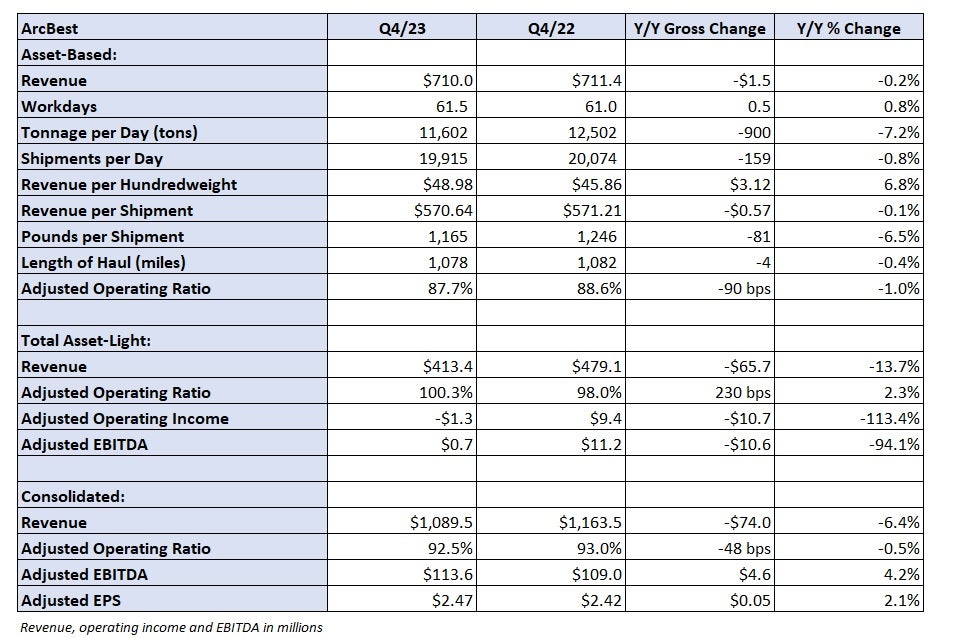
    During the fourth quarter, ArcBest reported that tonnage per day in its asset-based segment, which includes less-than-truckload operations, fell 7.2% y/y as shipments were off 0.8% and weight per shipment was down 6.5%. By month, tonnage was down 4% y/y in October, 9.6% in November and 8.3% in December.

    In January, ArcBest’s tonnage declined 18%, but the company said inclement weather was more impactful this year than in the past. The carrier had 130 terminal closures during the month compared to a 10-year average of 57. It normally sees 174 closures in total during the first quarter.

    When stacking the change rates from the past two years, January tonnage was down 16.4%, a modest improvement from a 17.7% decline in December. The slight improvement in the face of more severe weather trends may indicate that the worst of the declines have passed. Shipments per day were roughly 19,000 in both months.

    Shipments and tonnage from its core customers were up 8% and 6% y/y, respectively, in January.

    The freight transition helped push revenue per hundredweight, or yield, 6.8% higher including fuel surcharges during the quarter. The metric was nearly 4% higher sequentially from the third quarter. The company said yields on LTL-rated shipments increased by double-digit percentages excluding fuel.

    ArcBest will continue to pursue a long-term growth strategy, but it isn’t taking the big capacity leap like some peers. The company said it has roughly 15% to 20% latent capacity in the network and plans to add 347 doors in 2024 after adding 299 last year. It recently acquired four terminals with 77 doors for $38 million from Yellow’s estate. ArcBest has increased door count by 9% since 2021.

    Between the new sites and operating efficiencies gained from the mix shift back to core accounts, the goal is to achieve a mid-single-digit annual growth rate moving forward. The current real estate plan can accommodate 25% growth longer term, the company said.

    Saia (NASDAQ: SAIA) said last week it was more than doubling capital expenditures in 2024 after recently inking deals to acquire 28 terminals from Yellow’s estate. Those sites were acquired for $244 million, which is just half of what the carrier plans to spend on real estate projects this year. In total, the company expects to expand its door count by 12% to 14% this year. It has 20% excess capacity currently.

    Old Dominion Freight Line (NASDAQ: ODFL) reported it has 30% available door space in the network. It plans just four or five additions this year but will leverage $2 billion in real estate investments over the past decade to onboard more shipments.

    During 2023, ArcBest participated in 90% more LTL bids and its win rate increased by 150%. Yield was down 2.2% y/y during the year, but included a roughly 15% reduction in diesel prices as well as the shift in mix.

    “I’m really pleased with the strength of our core business, the opportunities that we’re seeing in terms of bids and our win rates,” said Judy McReynolds, chairman, president and CEO, on a Tuesday call with analysts. “That’s helpful as we think about the rest of 2024.”

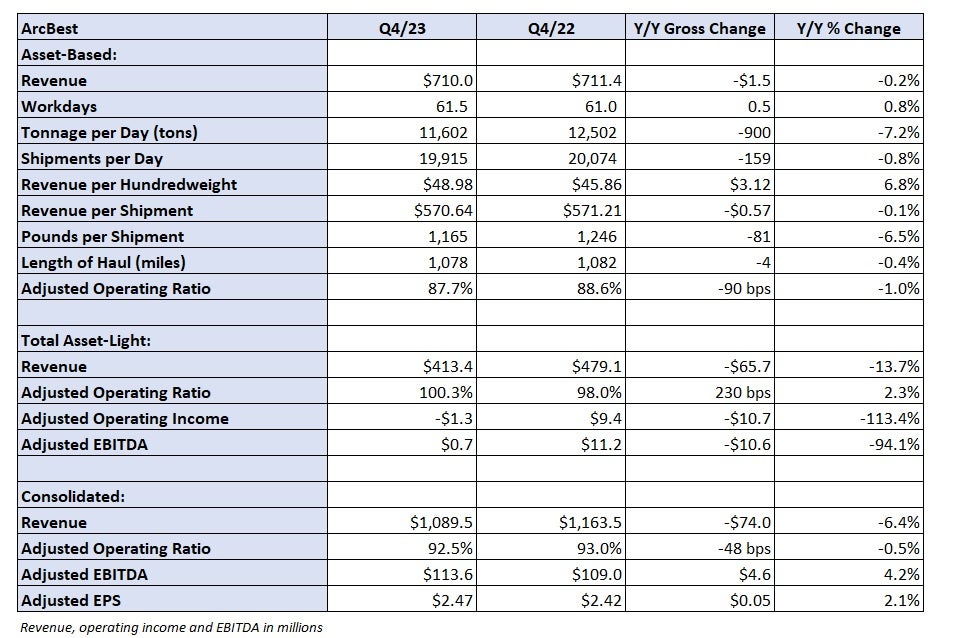
    Table: ArcBest’s key performance indicators

    Q4 by the numbers

    Consolidated revenue of $1.09 billion was 6.4% lower y/y.

    The asset-based segment reported $710 million in revenue, which was down 0.2% y/y. The declines in tonnage were largely offset by higher yields. Pricing on contract renewals and deferred agreements increased 5.6% y/y on average in the quarter.

    The asset-based unit recorded an 87.7% adjusted operating ratio, which was 90 basis points better y/y and 110 bps better than in the third quarter. The sequential improvement was driven by a variety of cost initiatives and in line with management’s expectations (100 bps to 200 bps of improvement) compared to normal sequential deterioration of 100 bps to 300 bps.

    Rents and purchased transportation expenses were down 370 bps as a percentage of revenue. The salaries, wages and benefits line was up 330 bps largely due to a new labor contract with its union workforce.

    Asset-based revenue per day was 7% lower in January given the large, weather-induced tonnage decline, which was only partially offset by a 13% increase in yield. Daily shipments and weight per shipment were both down 9% in the month.

    The asset-light unit, which includes truck brokerage, reported a 13.7% y/y revenue decline to $414 million. Daily shipments increased 12.4% y/y, but revenue per load was off, in the mid-20% range. The unit reported an adjusted operating loss of $1.3 million.

    January revenue in the segment was down 15% y/y, with an 11% increase in shipments being offset by a 23% decline in revenue per load.

    The company expects net capital expenditures of $325 million to $375 million in 2024 compared to $245 million last year. The new capex budget includes $155 million in rolling stock and $130 million in real estate projects. The company will also invest in technology and upgrade dock equipment.

    Shares of ARCB were up 9.8% Tuesday at 1:35 p.m. EST compared to the S&P 500, which was up 0.1%.

    More FreightWaves articles by Todd Maiden

    Goodyear Tire plant ordered to pay $4M in back pay to Mexican workers

    More than 1,300 workers and former employees at a Goodyear Tire & Rubber factory in Mexico will receive $4.2 million in back pay as part of a labor rights mediation plan, U.S. authorities said.

    The mediation announced by the Department of Labor on Monday was the result of an investigation under the U.S.-Mexico-Canada-Agreement’s (USMCA) rapid response labor mechanism of the Goodyear Tire facility in the central Mexican city of San Luis Potosi. The USMCA is a trade pact signed by the three countries in 2020.

    As part of the plan, the U.S. and Mexican governments negotiated to help workers at the factory who were receiving lower wages and benefits than they were legally owed.

    Goodyear has also taken several actions to address denials of basic labor rights, such as a failure by the company to apply a sectorwide worker’s agreements and to allow workers to elect new union representation, officials said.

    “I first learned about the case in 2019 when U.S. Rep. Rosa DeLauro [D-Conn.] called attention to the challenges workers faced trying to organize at the facility,” Thea Lee, U.S. deputy undersecretary for international labor affairs, said in a news release. “We look forward to seeing the union-management relationship mature and deepen at Goodyear San Luis Potosi — and throughout Mexico’s rubber industry as the sector-wide agreement is implemented throughout the country.”

    In May 2023, the Office of the United States Trade Representative (USTR) asked the Mexican government to investigate claims that labor rights were being denied at the Goodyear plant.

    The USTR petition alleged that Goodyear was obstructing workers’ freedom of association and right to collective bargaining at the plant by not recognizing workers’ vote to form an independent union in April 2023.

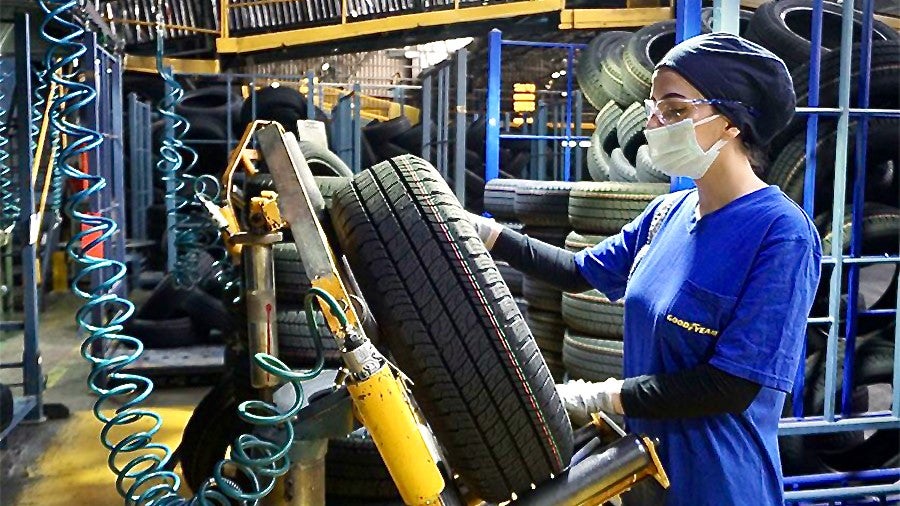
    The $550 million Goodyear factory in San Luis Potosi opened in 2017 and produces about 10 million tires a year for customers across North America. The factory employs 1,150 union-eligible workers.

    Since the facility’s opening, the union representing workers there had been affiliated with the Confederation of Mexican Workers (CTM), one of Mexico’s largest labor organizations. 

    CTM has been accused by labor critics of keeping worker wages low for decades across various sectors in Mexico, according to The Associated Press. The union reportedly signed a collective bargaining agreement with Goodyear for worker salaries of $22 a day in San Luis Potosi.

    Goodyear allegedly fired 50 employees at the plant in 2019 who had sought to go on strike, according to U.S. officials.

    In 2019, several officials, including U.S. Sen. Sherrod Brown, D-Ohio, sent a letter to Goodyear urging them to improve pay and working conditions at the plant and reinstate the workers who had been fired.

    “I urge Goodyear to take immediate, concrete steps to improve the pay and working conditions of its employees at the San Luis Potosi plant,” Brown wrote in the letter. “American workers should not have to compete against overseas workers who make $2 an hour and are denied their basic rights to organize and collectively bargain.” 

    Akron, Ohio-based Goodyear is one of the world’s largest tire companies. It has 57 manufacturing facilities in 23 countries and employs about 74,000 people worldwide.

    More articles by Noi Mahoney

    FBI alleges Mexican cartel, Canadian truckers part of drug ring

    4 things to know about the ‘Take Our Border Back’ convoy

    Mexico’s truckers plan nationwide strike against cargo theft

    Transportation prices grow for first time in 19 months, survey says

    A white tractor pulling a white reefer trailer

    Transportation prices flipped to expansion for the first time in 19 months as retailers increase inventories, a Tuesday supply chain report said.

    The Logistics Managers’ Index (LMI) was up 5 percentage points to 55.6 in January with all eight components of the index signaling growth. The LMI is a diffusion index in which a reading above 50 indicates expansion while one below 50 signals contraction.

    This index has been in expansion territory for five of the past six months.

    “This growth is driven by an increase in the restocking of inventories — especially for retailers — after a busy holiday season as Americans are clearly feeling better about the overall economy,” the report said.

    An inflection in transportation prices was likely the biggest takeaway from the report.

    Transportation capacity (54.5) was still growing in the month but at a rate that was 8.8 points lower than in December. Transportation utilization (55) was up slightly, and after 18 months of contraction, transportation prices (55.8) jumped 12.7 points, firmly into growth territory.

    “We need to see a longer period of growth to call an official end to the freight recession,” the report continued. “However, when taken together, January’s report does offer evidence that the logistics industry could be moving back into a period of growth after the long downturn that started in 2022.”

    Transportation utilization was weaker in the back half of January at a neutral reading of 50 after starting the month at 61. The report said if the subindex falls back into contraction territory, meaning utilization rates on transportation equipment are falling, that “would put a damper on a potential freight recovery.”

    However, it said transportation prices growing ahead of capacity is a sign of a changing cycle.

    “It is worth noting that Transportation Prices and Transportation Capacity inverted this month, with the former now growing slightly faster than the latter. Every time there has been an inversion between these two metrics over the 7.5 years of this index it has signaled a shift in the market,” the report said.

    The growth rate in prices occurred in the month even as diesel prices fell by a little more than 15% y/y.

    Another positive catalyst for the transportation industry could come in the form of interest rate cuts as some analysts are predicting. Lower rates would likely result in more activity at upstream firms, like manufacturers and wholesalers, resulting in more “larger, bulkier shipments,” the report said.

    Asked to predict these metrics one year out, respondents signaled a reading of slight growth for capacity (50.9) and more meaningful growth in utilization (61.9) and prices (73.7).

    The indication for inventory levels (52.8) showed expansion for the first time in three months and was 8.5 points higher than in December. The report said many companies have redeployed just-in-time merchandise strategies versus the just-in-case approach that was prevalent during the height of the pandemic as companies looked to avoid running out of certain items.

    Downstream companies (62.8), like retailers, were restocking at a brisk pace in January when compared to upstream respondents (47.1) that reported declines. An overhang of semiconductors was called out as a reason upstream companies were cutting stock levels.

    Upstream providers don’t expect the trend to hold, though. The group returned a 68.1 reading on inventory levels one year from now while downstream companies returned a neutral response of 50.

    Inventory costs (66.8) were up 11 points from December, in large part due to the growth in merchandise levels. Also, the comparison was less formidable as the subindex registered its lowest-ever monthly reading in December.

    The warehousing metrics were all down but within 1.5 points of December readings.

    Warehousing capacity (54.1) continued to expand modestly, with utilization (58.7) tapering from pandemic highs and prices (64.2) continuing to grow but at a slower pace.

    Logistics real estate operator Prologis (NYSE: PLD) recently said occupancy will likely slip modestly in the first half of 2024 before climbing again in the back half. Occupancy across its portfolio was 97.1% in the fourth quarter, and it expects the full-year number to range from 96.5% to 97.5%. Prologis said annual rents will grow by 4% to 6% over the next three years but will only be slightly positive this year.

    Respondents said the LMI will stand at 62.8 one year from now, which was 3.9 points higher than the reading a month ago and higher than the index’s average.

    The LMI is a collaboration among Arizona State University, Colorado State University, Florida Atlantic University, Rutgers University and the University of Nevada, Reno, conducted in conjunction with the Council of Supply Chain Management Professionals.

    More FreightWaves articles by Todd Maiden

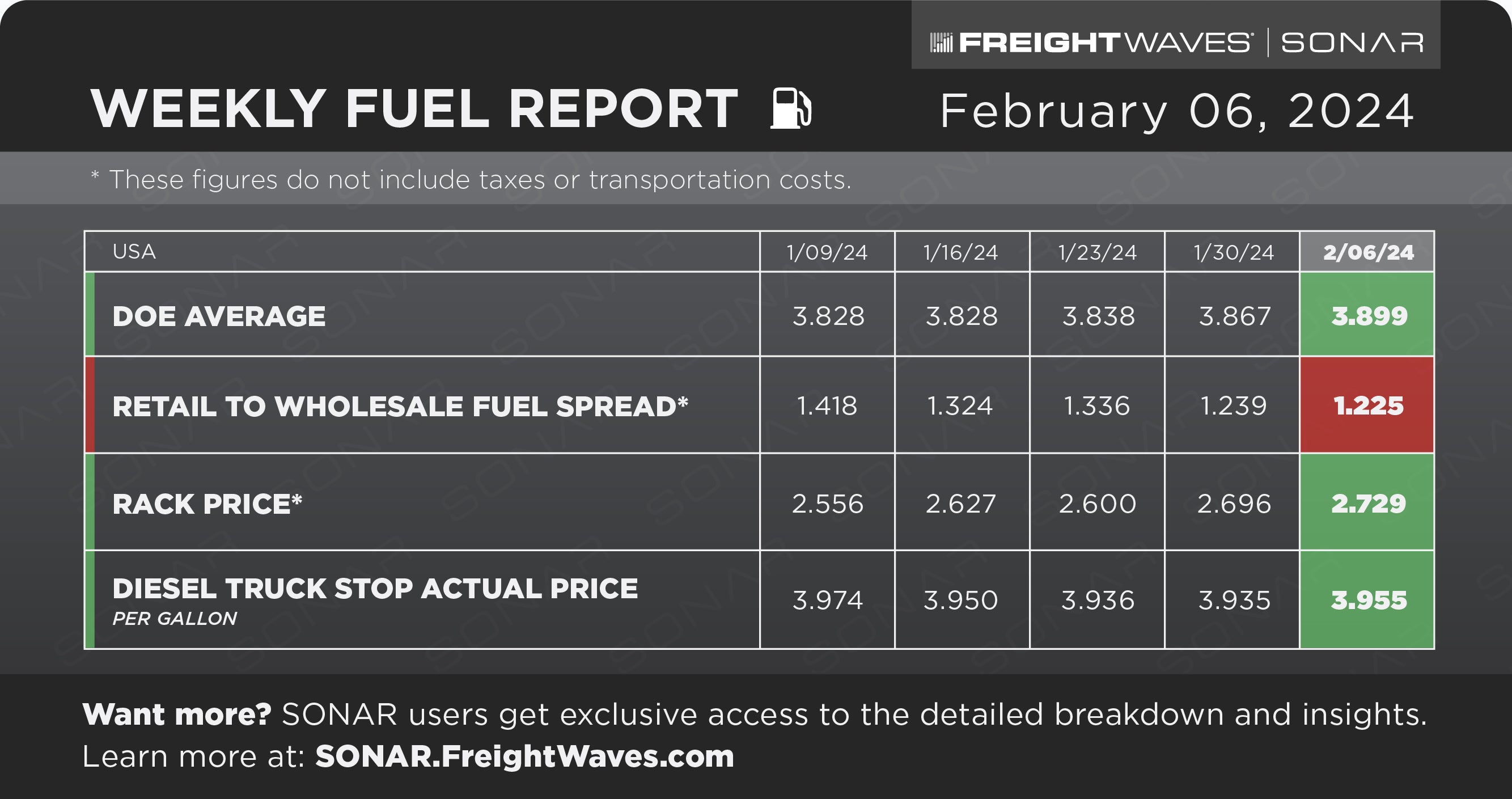
    Weekly Fuel Report: February 06, 2024


    Learn more at SONAR.FreightWaves.com

    OTR Solutions acquires back-office automation platform Epay Manager

    Transportation fintech provider OTR Solutions announced Tuesday it has acquired back-office automation solution Epay Manager. The terms were not disclosed.

    The acquisition signifies a strategic decision propelled by Epay Manager’s audit-proof invoicing system, a feature that OTR highlights as setting it apart from other carrier payment management tools. By integrating Epay Manager’s capabilities into its logistics-focused fintech products, OTR says it is building on its commitment to delivering value-enhancing solutions to the transportation and logistics sector.

    Epay Manager is currently integrated into TMS platforms including McLeod, Aljex, DAT Keypoint, Oracle, Tai Software and others.

    OTR aims to capitalize on Epay Manager’s longstanding TMS relationships, which include brokerage connections within Epay’s network, as it expands its financial solutions for carrier and broker clients. This broadened market presence boosts OTR’s standing in the transportation fintech industry and fosters synergies between its carrier-oriented services and Epay Manager’s broker-centric solutions.

    “What is truly unique about the Epay platform is that it has been hardened by decades of customer feedback and iteration, the result of which is a robust, scalable, and highly efficient product that provides tangible cost savings and new revenue opportunities for freight brokers,” Clayton Griffin, OTR Solutions EVP and chief strategy officer said in a news release.

    Over the past few years, OTR has focused many of its technology efforts on providing a suite of tools for carriers to help manage their businesses’ back offices. 

    OTR Solutions rebranded in 2022 to reflect the company’s commitment to supporting small carriers and fostering collaboration within the transportation ecosystem. Since then, it has launched several products for its carrier market, including Bolt, a direct-to-debit payment product, as well as a driver safety rating scorecard and a fuel finder integrated with the mobile app. This feature allowed carriers to locate optimal fuel discounts with the OTR Fuel Card along their designated routes, further enhancing their operational efficiency and cost savings.

    At the time, it also unveiled Elevate, an offering providing carriers a platform for branded website domains and customizable websites.

    Most recently, in August 2023, OTR launched OTR Clutch, the first banking solution built specifically for carriers.

    Tuesday’s acquisition will allow OTR to facilitate improvements in invoicing from its brokerage clients.

    “With this new offering, freight brokers will not only boost operational efficiency but will also foster more positive, collaborative relationships with carriers. … At OTR, we recognize the pivotal role of robust carrier relationships in accessing capacity, and the acquisition of Epay Manager gives brokers opportunities to cultivate these connections,” said Grace Maher, OTR Solutions’ chief operating officer.


    Uber Freight begins piloting the Scheduling Standards Consortium’s protocols
    GoodShip releases procurement scenario builder solution

    Vizion partners with Dun & Bradstreet on risk management offering

    Red Sea trouble threatens US freight recovery

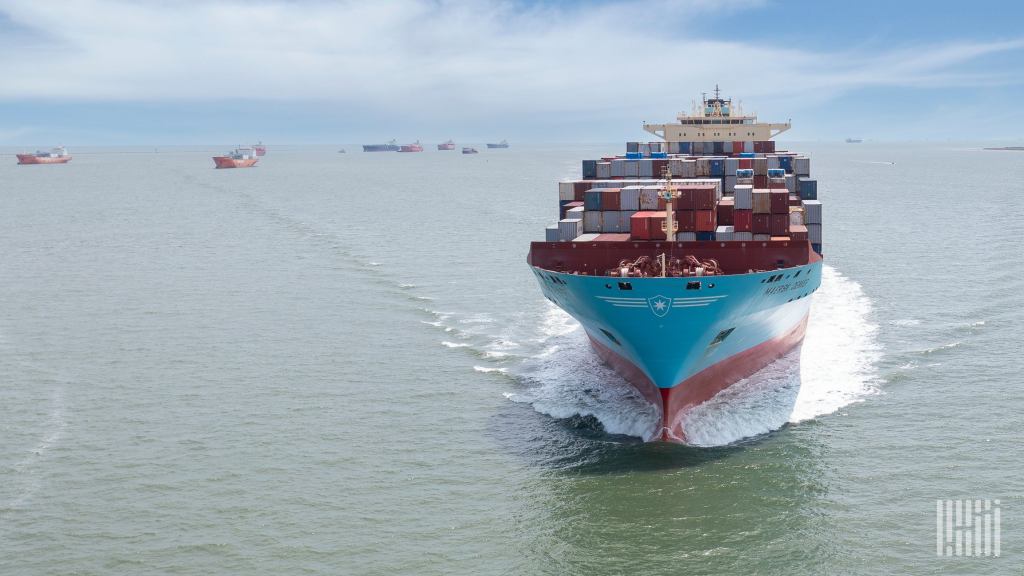
    A Maersk container ship cruises outside Galveston, Texas, with other container ships seen in the background.

    Federal Reserve Chair Jerome Powell said Sunday his committee is unlikely to consider cutting the federal funds rate at its next meeting in March. The implication from his remarks in a “60 Minutes” interview was that the board would not entertain the idea until the following meeting in May.

    “We want to see more evidence that inflation is moving sustainably down to 2%,” Powell said. “We have some confidence in that. Our confidence is rising. We just want some more confidence before we take that very important step of beginning to cut interest rates.”

    For months, analysts have been warning of the inflationary effects of turmoil in the Red Sea, where the Houthis, a Yemeni rebel group, have sought to shut down shipping in protest of the Israel-Hamas war. The corridor is pivotal in global trade due to its role in facilitating the flow of goods, including oil and various commodities, between Asia, Europe and the Americas. 

    Despite security measures undertaken by the U.S. and its allies, it’s uncertain whether these efforts will halt Houthi attacks altogether. Some vessels continue to navigate the Red Sea with armed guards on board as a precaution​​.

    In the U.S. these inflationary pressures make interest rate cuts, which would help to spur freight demand, less likely. Should those conditions persist, the cumulative effect of reduced business activity, alongside curtailed consumer expenditure, could edge the economy toward recession.

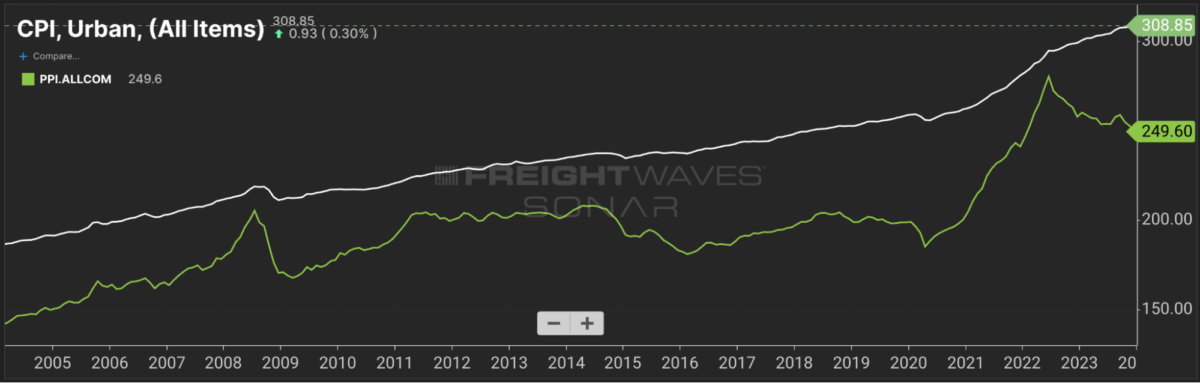
    FreightWaves SONAR: The rate of growth for the Consumer Price Index has slowed since the Federal Reserve began raising interest rates in March 2022. Meanwhile, the Producer Price Index has declined in absolute terms.

    In January, J.P. Morgan Global Market Strategist Jordan Jackson wrote: “Core goods inflation, which has been disinflating all last year, and [is] in outright deflation on a 3- and 6-month annualized basis, could reverse higher, complicating the Fed’s objective of controlling inflation down to 2%.”

    This, of course, is always the Fed’s precarious balancing act, navigating between inflation control and fostering an environment conducive to sustained economic expansion. So far in this crisis, Powell’s actions have largely been proved right.

    But the risk of holding interest rates too high for too long is that the U.S. consumer could finally start to buckle. That would reduce freight demand in the second half of the year, right when carriers should be regaining pricing power. It could push the long-sought freight recovery further into the future.

    Assessing the delays

    The Red Sea disruptions have elongated shipping transit times from seven to 20 days, with an average probably closer to 10. This rerouting, largely circumventing the traditional Suez Canal route in favor of detours around Africa, has inflated shipping rates considerably over last year’s figures, hitting specific routes like East Asia to Northern Europe the hardest. Something like 12% of all global trade was moving through the Red Sea before the attacks.

    Container vessels have borne the brunt of these changes, with up to 90% rerouted, leading to a potential 20% to 25% dip in global container capacity. A swath of global companies have voiced concerns over these challenges, signaling potential delays and the exploration of alternative logistics solutions.

    Retailers and manufacturers are likely to transfer the burden onto consumers. Particularly vulnerable sectors include consumer goods, apparel and chemicals. Major retailers like Walmart, H&M and Target, which rely heavily on the Suez Canal for transporting goods from Asia, are expected to be impacted.

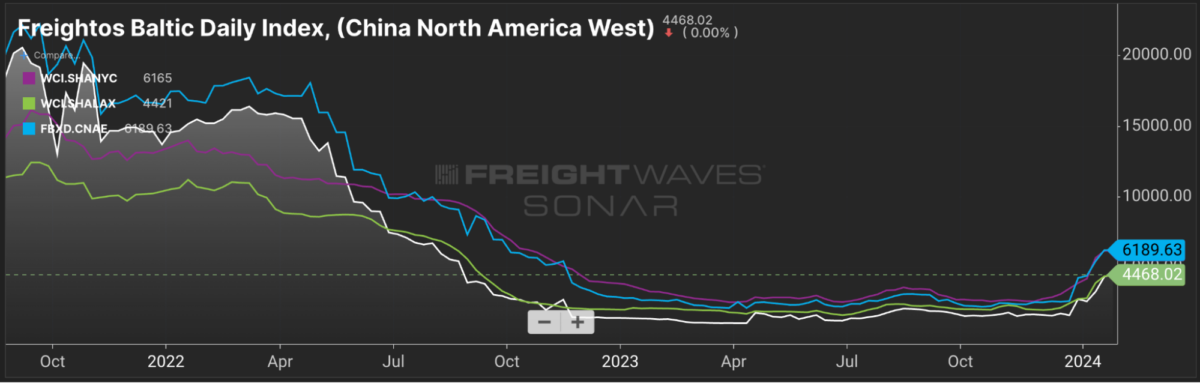
    FreightWaves SONAR: Container spot rates to the U.S. are a far cry from the heights seen during COVID. But they’ve also settled at levels not seen since 2022.

    Consider a specific example of how doubling the shipping cost of a container from $2,000 to $4,000 could ripple through to U.S. consumers. (For reference, that doubling is less drastic than how container spot rates to the U.S. have trended over the past two months.) Assume the container is filled with electronics, a common import from Asia to the U.S.

    The direct cost to ship this container of electronics has doubled. This increase must be absorbed by the supply chain somewhere.

    An importer in the U.S. pays the shipping fee. With the cost to bring in a container now $4,000 instead of $2,000, the importer’s expenses have sharply increased. If the container holds 1,000 units of a product, this change alone adds $2 more cost per unit.

    To maintain margins, both wholesalers and retailers are likely to mark up their prices. If the added cost is $2 at the import level, by the time it reaches retail, this increase could be magnified to $4 or $5 per unit.

    For a consumer, this means that an electronic item that might have cost $100 before the shipping rate increase could now cost $104 or $105. While this seems a small increase on a single item, it’s worth considering the cumulative impact across all affected goods.

    As numerous containers and a wide variety of goods are affected by these increased shipping costs, that effect can significantly contribute to inflation. Consumers might start to see across-the-board increases in prices for imported goods, from electronics to clothing and beyond.

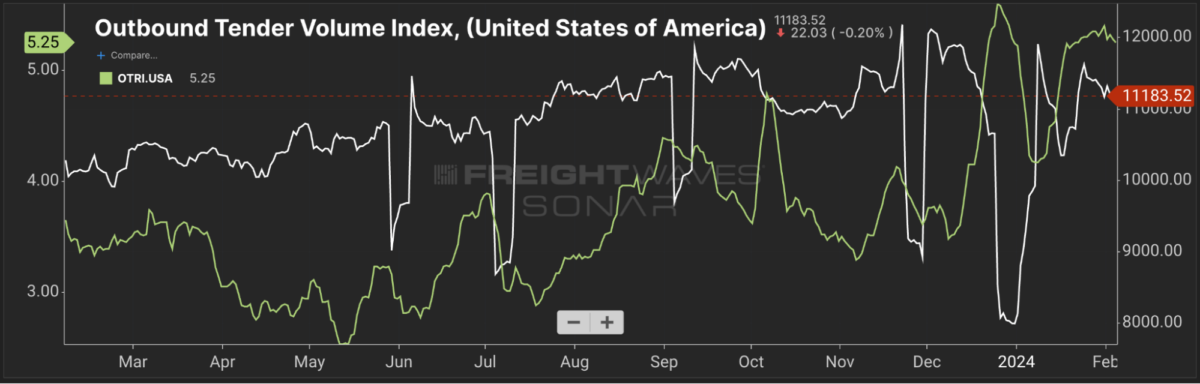
    FreightWaves SONAR: Truckload volumes have remained sturdy. More importantly, the tender rejection index is continuing to rise and now sits above 5% — a signal of capacity right-sizing with demand.

    It should be noted that other analysts, like those at Goldman Sachs, suggest that the impact on inflation will remain muted, with a possible y/y inflation increase of 0.2%. They argue that the current situation is different from the pandemic, when shipping and inflation both jumped significantly.

    After all, consumption and production readings have defied recession predictions over the past two years.

    Emissions-rigging fine takes huge bite from Cummins’ Q4 earnings

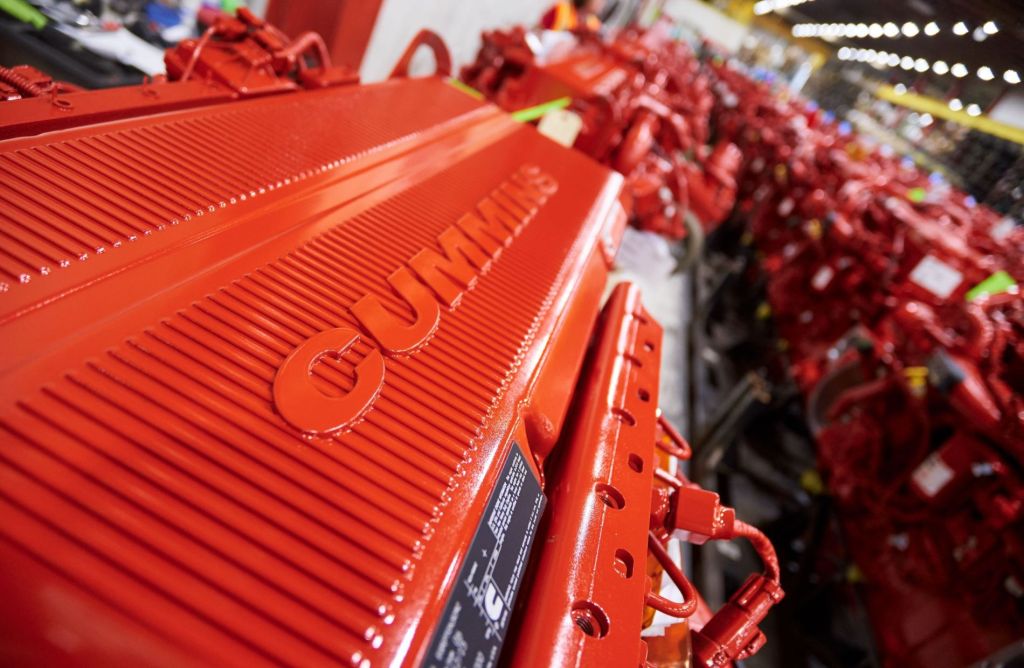
    2021 file photo of Cummins engines

    An emissions-rigging settlement wiped nearly $14 per share from fourth-quarter profits at Cummins Inc. The engine maker pointed to softer results this year as the North American truck equipment market cools.

    Without the second-largest fine ever assessed for federal Clean Air Act violations, Cummins reported record results for all of 2023.

    Cummins on Tuesday reported a net $1.4 billion loss in the quarter after setting aside $2.04 billion, or $13.76 per fully diluted share. The company admitted no wrongdoing in the use of emissions-defeating software in about 1 million Ram pickup trucks. In Q4 2022, Cummins reported net earnings of $631 million, or $4.43.

    A 4 1/2-year-old investigation wrapped up in December with a strong admonishment of the company by U.S. Attorney General Merrick Garland. The $1.675 billion civil fine was the largest ever assessed. It ranked second only to a $2.8 billion criminal fine against Volkswagen AG in 2017.

    One-time charges for separations and spinoff

    The Columbus, Indiana-based company also took a $42 million, or 22-cent, charge related to voluntary retirement and separation programs, and $33 million, or 17 cents, related to the spinoff of its filtration business now called Atmus. Cummins plans to sell the 80% of Atmus stock it owns.

    The Q4 earnings loss of $878 million before interest, taxes, depreciation and amortization equated to a negative 10.3% of sales. Year-ago EBITDA was $1.1 billion or 14.2% of sales. Q4 revenue of $8.5 billion finished 10% ahead of the same period in 2022.

    Operating cash flow for 2023 was a record $4 billion, compared to $2 billion in 2022. Q4 cash flow of $1.5 billion was $642 million higher than the same period last year. 

    “Excluding the impacts related to the agreement to resolve U.S. regulatory claims, 2023 was a record year for EBITDA, net income and EPS for Cummins,” Jennifer Rumsey, chair and CEO, said in a statement.

    Investors liked the underlying numbers. Cummins (NYSE: CMI) shares closed at $251.54 on Tuesday, up 4.33%.

    Cummins guided to a softer 2024. It projects revenues to fall 2% to 5% from the full-year 2023 total of $34.1 billion. The company projects EBITDA ranging between 14.4% and 15.4% of sales this year.

    ‘Demand will slow particularly in North America heavy-duty truck market’

    “In 2024, we anticipate that demand will slow particularly in the North America heavy-duty truck market, partially offset by strength in other key markets, and have already taken some actions to reduce cost,” Rumsey said in her statement. She later told analysts the company expects the slowdown toward the end of the second quarter into the second half of the year.

    “The backlog of trucks has been slowly edging down,” CFO Mark Smith said on the call. “The thing that gives us the broader concern is the spot rates and the health of the truck fleet operators. The [OEM] backlog and the orders still continue at quite decent levels. It’s what’s happening to the underlying economics of freight activity.”

    Cummins remains patient as it invests in new zero-emissions technologies housed in its Accelera by Cummins unit. Formerly known as New Power, Accelera sales rose 8% to $81 million in Q4. The addition of the Siemens Commercial Vehicle business acquired in Q4 2022 helped. Rumsey told analysts on a conference call that Accelera has a $500 million backlog of hydrogen-producing electrolyzer orders. Cummins expects full-year 2024 Accelera sales of $450 million to $500 million compared to $354 million in 2023.

    The cost of investing in electrolyzers and developing of electric powertrains and fuel cells resulted in a $121 million EBITDA loss in Q4.

    “We will continue investment in new technologies and products in 2024,” Rumsey said. “That [electrolyzer] production rate is going to begin to grow. Then you’ll see margin performance… [as] we deliver that backlog out into the market.”

    Cummins, Paccar Inc. and Daimler Truck announced a joint venture in September to jointly invest $2 billion to $3 billion to make lithium-iron phosphate batteries for electric trucks. In January, they announced a greenfield plant in northern Mississippi expected to create about 2,000 new jobs.

    Editor’s note: Updates with closing stock price.

    Cummins will pay $1.675B fine for engine emissions violations

    Cummins will pay California $175M over emissions-rigged engines

    Daimler Truck, Cummins and Paccar partner to make battery cells in US

    Click for more FreightWaves articles by Alan Adler.

    Cost control helps ArcBest beat Q4 expectations

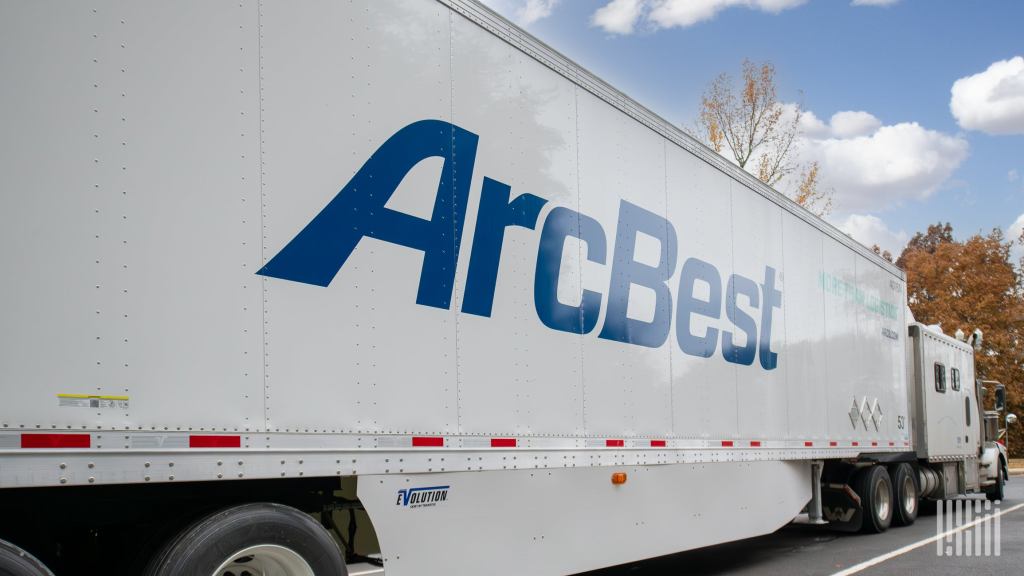
    A white sleeper cab with an ArcBest trailer parked at a truck stop

    Transportation and logistics provider ArcBest beat fourth-quarter expectations on Tuesday.

    ArcBest (NASDAQ: ARCB) reported adjusted earnings per share of $2.47, 26 cents ahead of the consensus estimate and 5 cents higher year over year (y/y). The number excluded a few one-offs like costs from a freight handling pilot, acquisition-related items and settlement expenses from a worker classification lawsuit.

    The asset-based segment, which includes less-than-truckload operations, reported $710 million in revenue, which was down 0.2% y/y. Tonnage per day was down 7.2% as shipments were off 0.8% and weight per shipment fell 6.5%.

    Click for full report – “Weather, tonnage declines offset by cost reductions in ArcBest’s Q4”

    Revenue per hundredweight, or yield, increased 6.8% including fuel surcharges. The metric was nearly 4% higher than the third quarter. Yields on LTL shipments were up by double-digit percentages excluding fuel. The company credited a revenue mix favoring core customers as the reason for the improvement.

    Pricing on contract renewals and deferred agreements increased 5.6% y/y on average in the quarter.

    The unit recorded an 87.7% adjusted operating ratio, which was 90 basis points better y/y and 110 bps better than in the third quarter. The sequential improvement was driven by a variety of cost initiatives and in line with management’s expectations (100 bps to 200 bps of improvement) compared to normal sequential deterioration of 100 to 300 bps.

    Asset-based revenue per day was 7% lower y/y in January as tonnage fell 18%, which was partially offset by a 13% increase in yield. Both daily shipments and weight per shipment were off by 9% in the month. The company said a price increase on transactional shipments led to lower volumes. However, shipments and tonnage at core accounts were up 8% and 6% y/y, respectively, during the month.

    The asset-light unit, which includes truck brokerage, saw revenue decline 13.7% y/y to $414 million. Total daily shipments increased 12.4% y/y, but a mid-20% decline in revenue per load pulled the top line lower. The unit reported an adjusted operating loss of $1.3 million in the quarter.

    In January, revenue in the segment was down 15% y/y as an 11% increase in shipments was offset by a 23% decline in revenue per load.

    The company expects net capital expenditures of $325 million to $375 million in 2024 compared to $245 million last year. The new capex budget includes $155 million in rolling stock and $130 million in real estate projects. The company will also invest in technology and upgrade dock equipment.

    ArcBest will host a call on Tuesday at 9:30 a.m. EST to discuss fourth-quarter results.

    Click for full report – “Weather, tonnage declines offset by cost reductions in ArcBest’s Q4”

    Table: ArcBest’s key performance indicators

    More FreightWaves articles by Todd Maiden