Do truckers need valets?

Welcome to the WHAT THE TRUCK?!? Newsletter brought to you by Dynamic Logistix. In this issue, do truckers need valets?; FreightTech Crocs; rise of Zyn shipments; and more.

Driver, do you need a valet service to back in?
Reddit

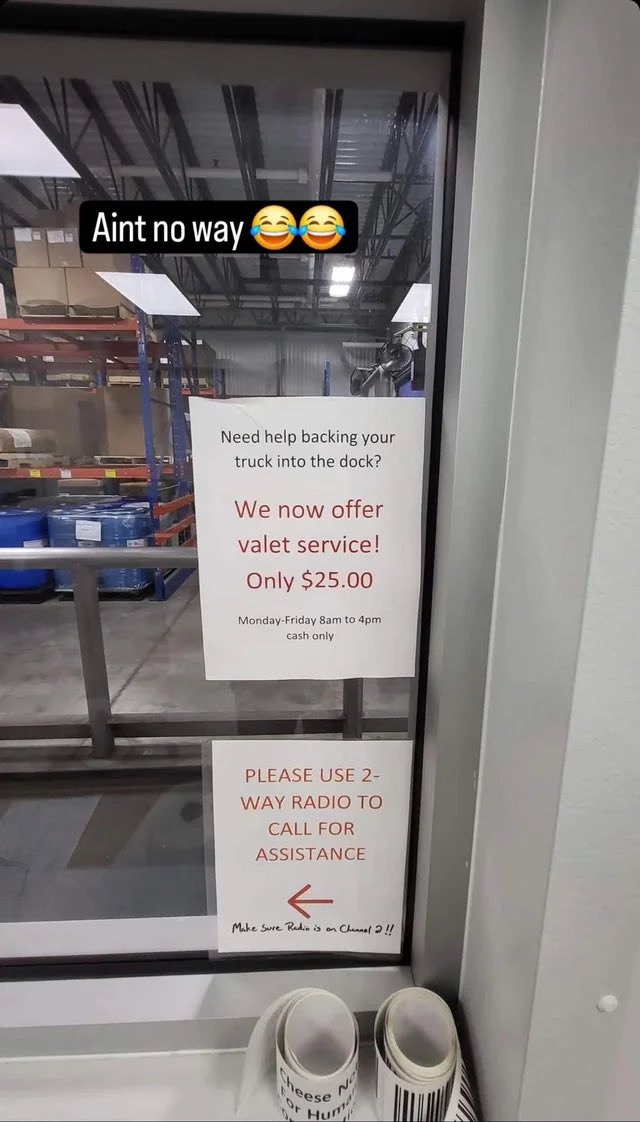
School of hard docks — Redditor unftp-0 recently posted about the dock he came across that offers a valet backing service. Seems unlikely in the macho realm of trucking that one would elect to use such a service. After all, the cut to your pride could go deep. 

Veteran trucker Ed Mapes thinks this is indicative of poor CDL testing standards. He says, “No if they can not back up a truck or even any vehicle remove their drivers license. They do not belong on any road driving.”

He wasn’t the only one who saw a problem with it. Nancy Mackenzie said, “Isn’t this like a doctor needing help taking a pulse?”

Others wondered if this would violate your insurance policy. RealJohnGaltFLA tweeted, “Can’t wait to see the insurance company’s reaction to this one.”
X

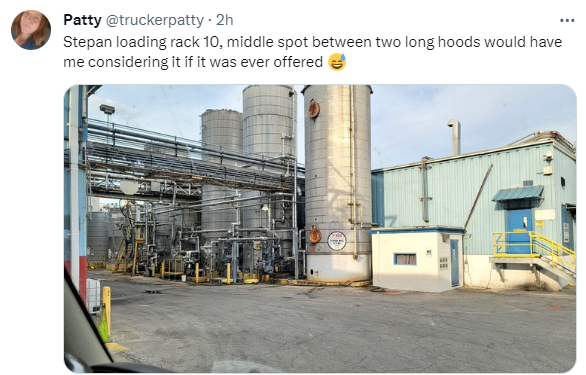
Counterpoint — While there were some haters of this practice, a surprising number of truckers said they’ve been to docks where they’d welcome such a service.

“I did once, in the caves in Kansas but the company paid for it, I just didn’t feel like it, unhooked and went back to bed” — RebelTrucker on X

Redditor musicalmadness1 feels the frustration. He posted, “If it’s a super annoying dock I can see this. I just got in a place in Linwood, NY which was a b***h and a half on a two lane road with traffic being usual NY traffic.”

In fact, some of the best drivers I know admitted that they’ve been to at least a few docks that were designed for straight trucks where getting an angle to back in can be a massive PITA.
X

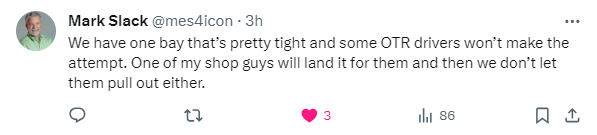
It isn’t just the truckers either. A number of locations have said they offered this service, as they’re aware of their own lack of parking infrastructure and making such a service available can make life easier on both sides.

X

New LOB — Entrepreneurs like the team at Truck N’ Hustle just see dollar signs. If it’s a service and people use it and need it, why not make a buck?

What do you all think? Does a backing valet make sense at challenging docks, or does a driver using one mean they need their CDL revoked? Sound off in my email.

One man’s Zyn spending is another man’s OTVI increase

X

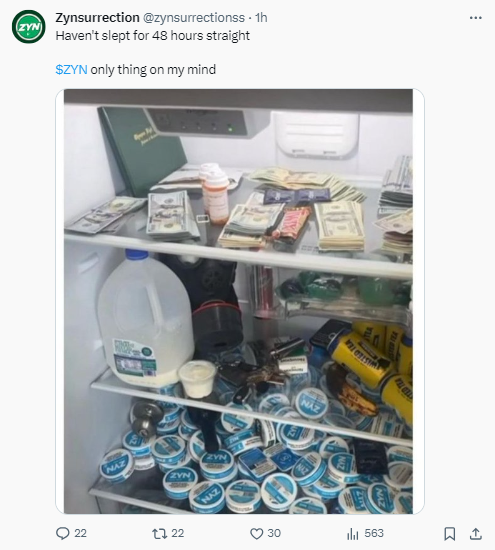
Zynsurrection — Last week when Senate Majority Leader Chuck Schumer called for a crackdown on Zyn, the freight brokerage world was shook. Some even blamed Rachel Premack’s article “The Disturbing Truth Behind The Zyn Memes” for calling attention to its rising popularity.

X

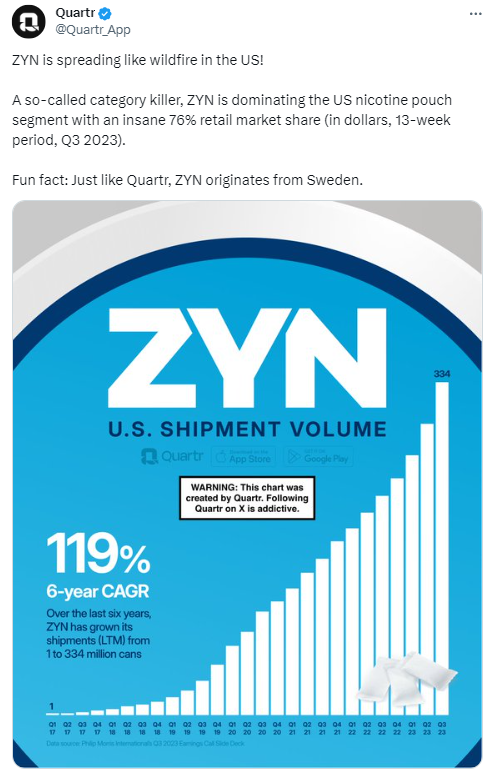
Zyn sells oral nicotine pouches that have exploded in popularity over the past couple of years. While they may be a new concept here, snus and other Zyn-like products have been popular in Sweden for decades. Many attribute Sweden’s having the lowest smoking rates in Europe to use of the products. Now that trend is blowing up here in the States where, according to Quartr, Zyn has grown shipments from one can in 2017 to 334 million cans in 2023.


SONAR
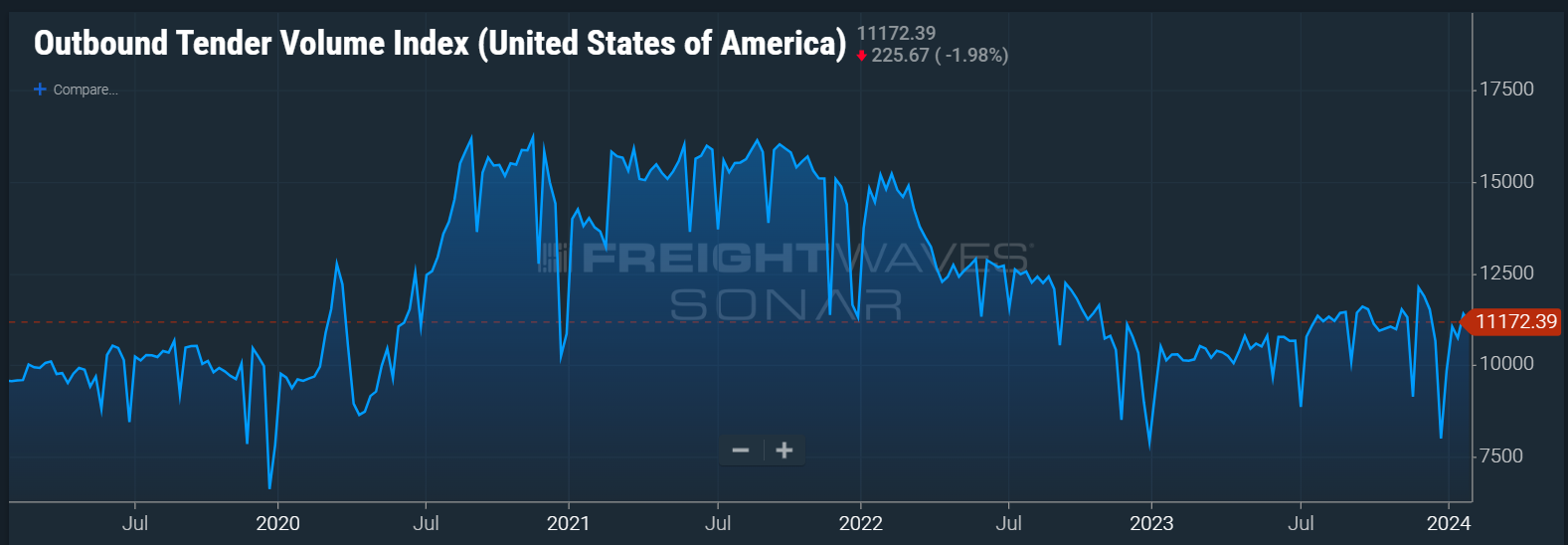

Is it hitting? — Unfortunately, even an explosion in Zyn shipments hasn’t helped push up Outbound Tender Volumes to pandemic levels, but they are above where they were a year ago. While Zyn itself may not pull us out of a freight recesszyn, every load counts 
 and those Zyn shipments are adding up.

FreightTech Crocs

LinkedIn

Jibbitz — Crocs aren’t just for super truckers anymore. The team over at project44 took a visit over to Crocs headquarters this week and got their very own p44 Jibbitz.

What are Jibbitz? They’re the little pieces of bling you can stick into the various holes on the company’s ubiquitous casual footwear. If you got kids, check their Crocs. They’re probably rocking at least a few of them.

Why’s this a big deal? — Up until now, your Jibbitz options were limited to various kid-themed IPs like Pokemon and Spider-Man. While those are cool and all, adults may feel like they won’t be taken seriously during a business meeting while wearing cartoons on their feet. 

One can only hope freight logo Jibbitz become a trend. Can you imagine being able to attend a meeting in the pure comfort of Crocs while also representing your company’s insignia? This is a reality the freight community and Crocs should strive for.

P.S., if anyone from Crocs is reading this: I’d love some WTT Jibbitz.

The rest of the noise

X

WTT Friday

Tracking your supply chain with satellites — This Friday on WHAT THE TRUCK?!?, I’m joined by Skylo CEO and founder Parthsarathi Trivedi. Skylo is the leading direct-to-device satellite connectivity service provider, and we’ll find out how their service is bringing visibility and tracking to freight and fleets.

Does insurtech have a big liability problem? Adam Barnett, chief underwriting officer at HDVI, talks about the past year being the worst on record for liability losses. We’ll find out what this means for the future of truck insurance and your fleet.

Freightee’s is a brand new trucking apparel company. We’ll meet their founder, Jared Gilmer, to learn about why he started the business, what designs the people are buying and if the Coyote curve applies to fashion.

Plus, latest news, weirdness and trends.

Catch new shows live at noon EST Mondays, Wednesdays and Fridays on FreightWaves LinkedIn, Facebook, X or YouTube or on demand by looking up WHAT THE TRUCK?!? on your favorite podcast player.

Now on demand

UPS cuts 12,000 workers; SoCal port report; an AI-powered dispatch tool
X


Expert predicts growth in cargo theft, fraud, violence and pilferage

X

Thanks for reading and feel free to forward this to a friend.


Tweet @ Dooner

Email me

Subscribe to the newsletter

Subscribe to the show

Apple Podcasts

Spotify

YouTube

TikTok

Twitter

Or simply look up WHAT THE TRUCK?!? on your favorite podcast player. 

Don’t be a stranger,

Dooner
Landstar says 2 more quarters before recovery

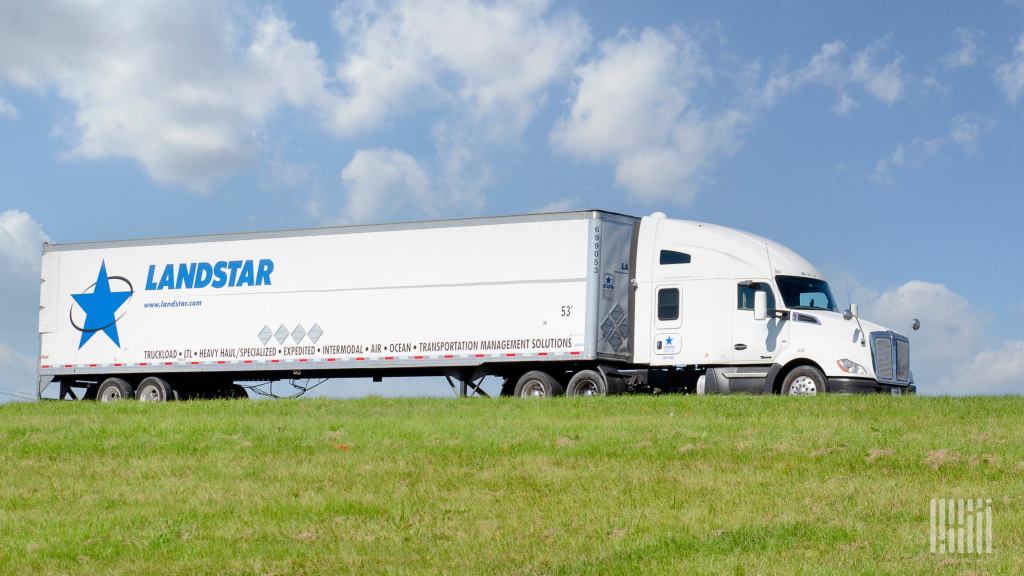
A white tractor pulling a Landstar trailer

Broker Landstar System is still pointing to “midyear” as the likely inflection point to the prolonged freight recession. Management from the company said most cycles last between six and eight quarters, noting that the fourth quarter was the sixth straight of revenue declines.

Landstar (NASDAQ: LSTR) reported fourth-quarter earnings per share of $1.62 Wednesday after the market closed. The result was in line with the consensus estimate but 98 cents lower year over year (y/y). The recent period included one fewer operating week than last year, presenting a headwind to y/y comparisons.

Revenue fell 28% y/y to $1.2 billion, which was worse than management’s guidance. The company generated $65 million in revenue during the extra week last year.

Total loads hauled by trucks declined 22% y/y and revenue per load was down 10%. Management said the sequential decline in trends seen during January was in line with normal seasonality.

Chart: Landstar’s key performance indicators

Truckload capacity has been slow to leave the industry. Trucks provided by Landstar’s business capacity owners (BCOs), which are owner-operators who haul almost exclusively for the company, were down 13% y/y and 4% lower sequentially. Management said 20% of the BCOs terminated cited an inability to pay for repairs as the reason for not running currently.

The company said the recently departed BCOs, which normally can hold on longer during downturns, will return once rates improve.

“I don’t think it’s anything that’s systemic going forward,” said Joe Beacom, chief safety and operations officer, on a Thursday call with analysts. “Small carriers across the landscape are leaving the market in rapid fashion. We’re not immune to that.”

Asked if brokerage spreads need to improve to keep more BCOs in the network, outgoing President and CEO Jim Gattoni said, “I’ve been here for 27 years and the pricing on truck generally catches up to the cost inflation in a year or two.”

He said the spreads with carriers were the widest they had ever been on the platform a year ago, indicating the market was loose and carriers were taking what they could get. That gap has been closing since and carriers are now pressuring Landstar for more rate, which Gattoni said indicates some market tightening.

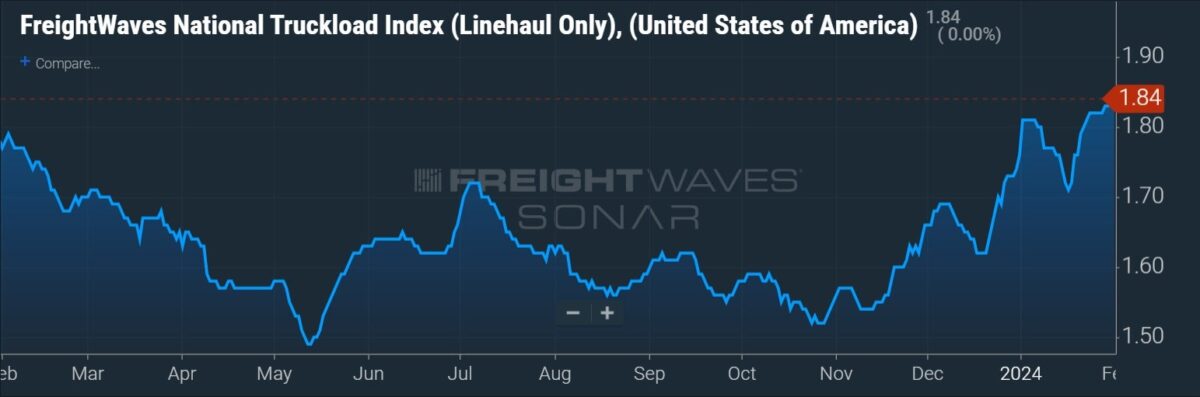
Chart: (SONAR: NTIL.USA). The National Truckload Index (linehaul only – NTIL) is based on an average of booked spot dry van loads from 250,000 lanes. The NTIL is a seven-day moving average of linehaul spot rates excluding fuel. A recent cold snap has pushed spot rates higher. To learn more about FreightWaves SONAR, click here.

Landstar expects revenue for the first quarter to be in a range of $1.1 billion to $1.15 billion, a 22% y/y decline at the midpoint. Loads hauled by truck are expected to decline between 14% and 16% with revenue per load down by 8% to 10%. The company is calling for first-quarter EPS of $1.25 to $1.35, well short of the $1.63 estimate at the time of the print.

A reset of the variable compensation program and expenses tied to the CEO transition will be a 12-cent drag on the first quarter. The company said a modest revenue mix shift away from BCOs could be a margin headwind in the period as well. Insurance costs have surged too. Landstar’s annual renewal for liability coverage has increased to more than $30 million from approximately $8 million in 2019.

Variable contribution, or revenue less purchased transportation and commissions, fell 24% y/y to $178 million. The contribution margin improved 80 basis points to 14.8% as purchased transportation expenses as a percentage of revenue declined modestly and BCOs accounted for a larger portion of the revenue mix.

The company generated $394 million in cash flow from operations in 2023, a 37% y/y decline.

Gattoni is retiring from Landstar on Thursday. His successor, Frank Lonegro, CFO at Beacon (NASDAQ: BECN), will take the helm on Friday.

Shares of LSTR were down 0.9% Thursday at 3:03 p.m. EST compared to the S&P 500, which was up 1.1%.

More FreightWaves articles by Todd Maiden

Much has been done to improve rail safety in wake of East Palestine

By Drue Pearce

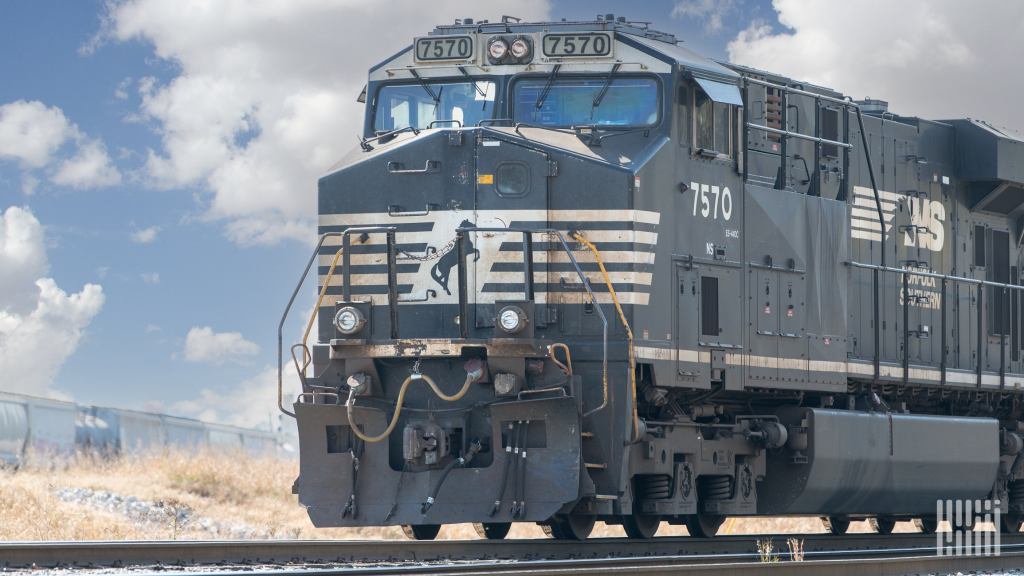
A year has now passed since a Norfolk Southern train derailed in East Palestine, Ohio. While the accident prompted increased scrutiny and calls for accountability, it also brought to light the strides that have been made in prioritizing safety across the sector.

Our American economy depends on moving goods across the country quickly, efficiently and safely. Government and industry have a responsibility to work cooperatively and in collaboration to make safety their highest priority. During my time as deputy administrator of the Pipeline and Hazardous Materials Safety Administration (PHMSA), I saw firsthand how a culture of safety drives every decision.

While increasing safety should always be an ongoing goal, much of the reaction to the East Palestine derailment was driven by political grandstanding. It is natural for politicians to respond to an accident by wanting to “do something,” but the response must be focused on things that will actually increase rail safety.

Industry, to its credit, isn’t waiting around for Congress or federal regulators. They are continuing to invest in new technology and training for workers and first responders to prevent a repeat of what happened in East Palestine last year.

As I noted in a piece I wrote last May, no matter how much we prioritize safety, accidents happen. My expansive elected experience in Alaska and my administrative experience at both the Department of the Interior and at PHMSA taught me that we need to continuously learn from events and use that information to consistently improve safety practices.

The National Transportation Safety Board thoroughly investigated the accident in East Palestine, and a report is forthcoming. It will contain recommendations that will be closely considered by both the Federal Railroad Administration and PHMSA.

A rail safety bill introduced last year has yet to be debated by the full Senate. House Transportation Committee leadership plans to wait for the NTSB recommendations before crafting legislation. The FRA and PHMSA are both at the early stages of regulatory rulemaking.  

Unfortunately, governing by reaction often leads to overstepping and “Christmas tree”-type legislation, carrying mandates that are not directly related to either the incident or to safety. Both the legislation enacted by the Ohio Legislature last year and the bill introduced in the U.S. Senate include provisions that would not have impacted the East Palestine accident, nor do they demonstrably increase the safety of hazardous material transportation. And state-by-state requirements are not conducive to the safe, quick and efficient transportation of hazardous cargo by any means of transportation, resulting in increased expenditures of funds that would be better spent on safety-enhancing technology.

The railroad industry, and its shippers, continue to point out that the past decade has been the safest in rail history and that rail is, without question, a safer mode of transportation for hazardous materials. 

As a result of the East Palestine incident, railroads have increased the frequency of detectors to identify bearing defects, resulting in a direct safety boost. They set a new standard to stop trains when bearing temperatures exceed a lowered limit. They have trained an increased number of first responders nationwide and are supporting those first responders with increased access to the AskRail app, which provides immediate access to accurate data about what type of hazardous materials a rail car is carrying.  

And just this week, the FRA announced that Norfolk Southern is joining a pilot program of the Confidential Close Call Reporting System, which will allow its employees to confidentially report unsafe events. This program is a proven safety enhancer.

As Congress continues its response, I continue to hope that members base their decision-making on real data as opposed to emotion or political grandstanding. They should listen to the NTSB and U.S. Department of Transportation agencies, look at the root causes, and move forward with reason. And both government and industry should adopt robust safety management programs, a proven step to enhancing safety by embracing everyone in the chain from supplier to customer, from regulator to operator, because in all things, we are only as good as our weakest link.

About the author

Drue Pearce served as deputy administrator of the Pipeline Hazardous Materials Safety Administration at the U.S Department of Transportation, as a senior adviser to U.S. Department of the Interior Secretaries Gale Norton and Dirk Kempthorne, and as the federal coordinator at the Office of Federal Coordinator for Alaska Natural Gas Transportation Projects. She also served twice as the Alaska State Senate president. She is currently the director of government affairs at Holland and Hart.

Vroom laying off 515 workers in Texas, part of nationwide restructuring

Online used vehicle dealer Vroom announced it is laying off 515 workers in the Houston area and closing two facilities permanently, according to recent filings with the Texas Workforce Commission.

The layoffs in Texas are part of the Houston-based company’s restructuring efforts announced last week. Vroom said it is discontinuing its e-commerce operations and winding down its online used vehicle dealership business, resulting in the layoffs of 800 employees across the country.

“We intended to raise additional capital to fund our operations and support the extension of our vehicle floorplan facility beyond its current expiration date of March 31,” CEO Thomas Shortt  said in a news release. “Despite significant efforts to do so, we ultimately were unable to raise the necessary capital in the current market. Obviously, we are very disappointed with this outcome.”

As part of the restructuring, Vroom is closing two facilities in the Houston area and eliminating 232 jobs. The company also announced it was cutting 283 workers at a facility in Stafford, which will remain open. Stafford is about 19 miles southwest of Houston.

One of the locations being shut down is Vroom’s Texas Direct Auto storefront also located in Stafford, while the other facility being closed is a distribution center in the same area.

Vroom (Nasdaq: VRM), which peaked at a valuation of over $8 billion in August 2020, has recently seen its market cap fall to about $75 million.

The company is suspending transactions through Vroom.com and halting purchases of additional used vehicles and will sell its current used vehicle inventory through wholesale channels, according to Securities and Exchange Commission filings.

Officials for Vroom said they will shift resources to its other lines of businesses, including United Auto Credit Corp., an automotive finance company; and CarStory, an AI-powered analytics and digital services provider.

More articles by Noi Mahoney

FBI alleges Mexican cartel, Canadian truckers part of drug ring

4 things to know about the ‘Take Our Border Back’ convoy

Gulf Coast ports see mixed year-over-year results in freight volume

Two new indices, quick rates and more featured in latest release from SONAR

Welcome to the new year! While the world around us slowed down to enjoy the holidays, the SONAR team was hard at work building a foundation for the biggest year yet in product delivery. The data engine behind the source of truth for supply chain news and information is growing, evolving and becoming more actionable so that your teams can be effective in the rapidly changing freight world.

Announcing our NEW Quick Rates tool

Operational users tend to have many tabs and systems open at one time — switching between all of them can be frustrating and often slow down the flow of their day. SONAR rates are integrated in many TMS systems via API, but we’ve now launched an outside tool that can live in a simple pop-up window so that anyone can grab the industry’s most accurate and up-to-date market rate faster than ever before.

The TRAC rate is built based on actual booking data. Rates are gathered at the time of booking. It is the largest consortium of its size and is quickly growing. If you are interested in joining our consortium, reach out to bd@www.freightwaves.com.

And while we’re at it, a couple of new indices

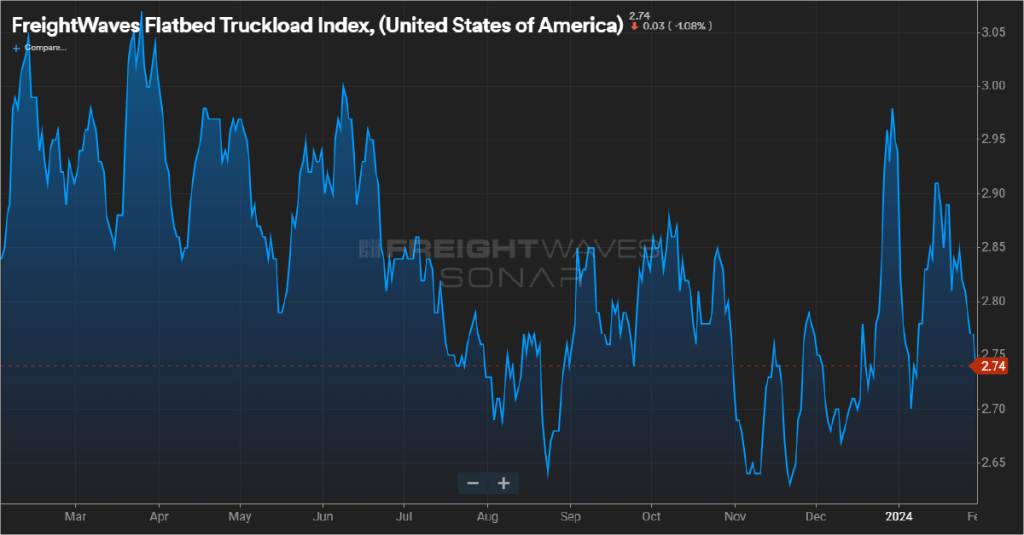
One of the most recognized and trusted tickers we have is the NTI (National Truckload Index). That data is only based on the dry van average. We have now launched similar indices for both reefer (RTI) and flatbed (FTI). Similar to the NTI, these can be viewed at the national level. While market rates can give a ground-level perspective, this data gives users a better understanding of the broader mode-specific market from a 30,000-foot view.

Speed is the name of the game

Ever since load boards entered the web space back in 1994, they have been the key provider of rate data for brokers and shippers alike. That is 30 tremendous years of freight matching performance in the supply chain world. But while these companies — along with TMS providers, technology companies and more — offer rates, it is not their core competency. SONAR holds more than $200 billion in domestic truckload data, more than $1 trillion in ocean data and countless additional billions of dollars in air, rail and energy data to act as the source of truth in logistics. But all of that is meaningless if you can’t access it. That’s why we’ve spent countless hours making these processes take seconds. All of our 300,000 unique deliverables are available via API or in simple, easy-to-use interfaces. We’re not finished expanding, and we want to partner with you to paint a more transparent future.

And on that note

It is now easier than ever before to share data with SONAR. A new receiving API empowers companies to become involved, which unlocks premium discounts and key benefits like rate supplier benchmarking, prescriptive actions and more. This year is expected to see tremendous growth and potential volatility in freight markets. There is no better time to partner with the largest data hub in the transportation world than now, and we’ve just made the process much faster and easier for you to get involved.

We’re building a LOT more

The future’s so bright, we’re wearing shades over at SONAR. Leading transportation organizations are finding new ways to increase efficiency and optimize pricing. As we continue to grow, we’re creating new, dynamic methodologies, exploring new modes and geographies, and building a supercharged engine that can deliver unprecedented results. Find out more at sonar.www.freightwaves.com. Let’s make 2024 the best year yet in freight.

How brokers can avoid cargo coverage ‘gotcha’ situations

A white commercial truck sits on its side after a crash with a police car parked behind it.

Insurance has been a hot topic across the trucking industry over the past several years. Most often, however, insurance talks revolve around motor carriers and truck drivers. Freight brokers have largely been left out of the conversation.

Broker liability is often a gray area. In fact, multiple related cases have recently caught the attention of the Supreme Court. While the question of liability is seldom cut and dried, brokers and 3PLs are often held responsible for lost or damaged cargo. In some cases, responsibility can also extend to more issues, like bodily injury and death. 

This ambiguous landscape makes it even more crucial for 3PLs to understand what their cargo insurance does — and does not — cover. All too often, brokers encounter unpleasant surprises in the form of coverage gaps and restrictions when filing insurance claims.

Some of the most common coverage restrictions involve reefer breakdown and theft. This can be problematic, as these are some of the same issues that tend to be very expensive for brokers and 3PLs to address.

To avoid those surprises, brokers should be sure to read their insurance quotes carefully, paying special attention to any endorsements. 

“People like to think of endorsements as only adding coverage, but endorsements can be used to restrict coverage as well,” Reliance Partners Executive Vice President of Sales Jessie Merritt said. “If those types of endorsements are on your quote or on your policy, ask your agent if you can buy the coverage back.”

It is also important for brokers to be aware of the type of insurance coverage they are purchasing in the first place.

While contingent coverage is one of the most common 3PL insurance products, it also tends to cause a lot of frustration. With this type of coverage, the broker’s policy does not come into play until the trucking company’s insurance provider denies the claim first. This creates bottlenecks and delays for all parties.

“Buy the coverage that will work best for your company. Contingent cargo isn’t going to respond until you get a denial from the motor carrier’s insurance company. Most brokers don’t want to make the shipper wait that long to be made whole,” Merritt said.

Primary cargo insurance is often a more attractive option for brokers and 3PLs hoping to protect themselves and offer shippers the quickest path to reimbursement.

Brokers can pick and choose among a variety of insurance products to add extra layers of security to their operations.

“Buying real cargo coverage rather than contingent coverage offers a lot more protection,” Merritt said. “Cargo legal liability will typically respond to claims in which the broker is legally liable for the cargo either contractually or by written agreement. Shippers interest is a great option and is designed to make the shipper whole for a broad range of cargo losses.”

No matter what type of coverage a broker chooses, Merritt advises against overlooking other areas of liability, including cybersecurity and directors and officers coverage.

Many brokers would benefit from updating their insurance products. Fortunately, Reliance is well equipped to help these companies better understand their coverage options. 

Click here to learn more about Reliance Partners. 

Schneider looking for TL market to shake 600-day downturn

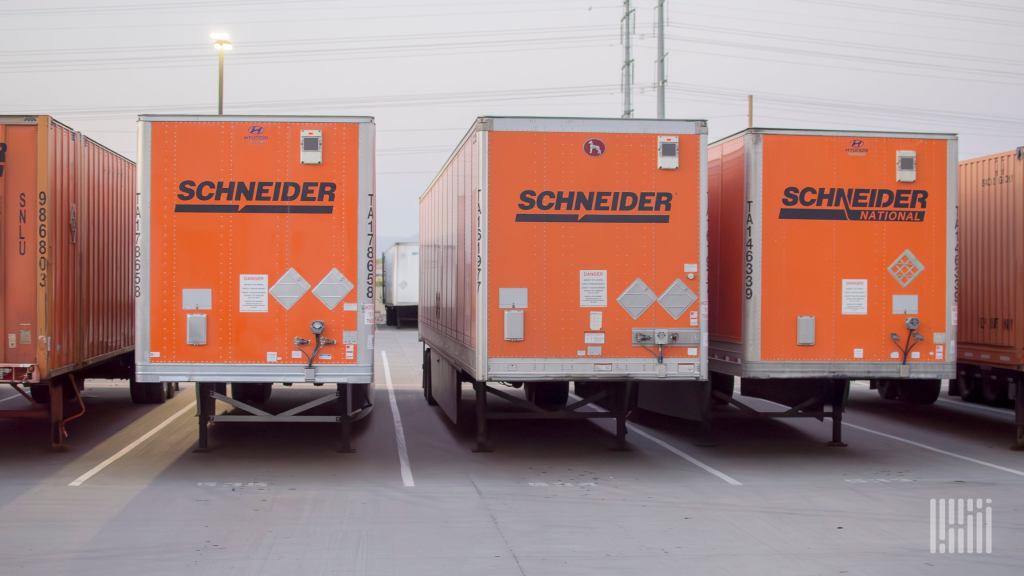
Multiple parked orange Schneider trucks

Schneider National missed fourth-quarter expectations on Thursday, and its full-year 2024 outlook also came in lower than analysts’ forecasts. The company said it anticipates the truckload market turning, but like many others, believes that won’t happen until the back half of the year.

The company’s internal TL freight index has been below neutral for more than 600 days. The data set shows a normal cycle averages 577 days.

“We believe we’re very long into this cycle. 
 We do believe things will turn to an extent and we’ll get back into some level of restocking, that’s been stubbornly slow, and capacity continues at a slow and steady pace to exit the marketplace,” said President and CEO Mark Rourke on a call with analysts.

Schneider (NYSE: SNDR) reported fourth-quarter adjusted earnings per share of 16 cents, 4 cents below the consensus estimate and 48 cents lower year over year (y/y). The quarter was dragged down by adverse claims developments stemming from two accidents, which were partially offset by a lower tax rate. The items equaled 4 cents per share. It also lost money on the disposal of equipment compared to gains booked in the prior-year period.

The adjusted EPS number excluded 1 cent from acquisition-related amortization expense.  

The full-year 2024 outlook calls for adjusted EPS of $1.15 to $1.30, which was lower than the $1.38 consensus estimate at the time of the print and the $1.37 reported in 2023. The headwinds to the new year include higher insurance and claims expenses, a higher tax rate and a $30 million reduction in gains from equipment sales. The company also booked 9 cents in EPS from gains on equity investments last year and the new guidance includes none.

Tapping more heavily into the cross-border intermodal market given its new relationship with Canadian Pacific Kansas City (NYSE: CP), a variety of productivity initiatives aimed at improving the number of times each piece of equipment gets turned and a minimal investment requirement to accommodate growth were mentioned as some of the positive catalysts for 2024.

Also, management said recent conversations with customers around bid season suggest that many are approaching discussions with the understanding that rates negotiated in the near term may not hold through the year as the market is expected to tighten.

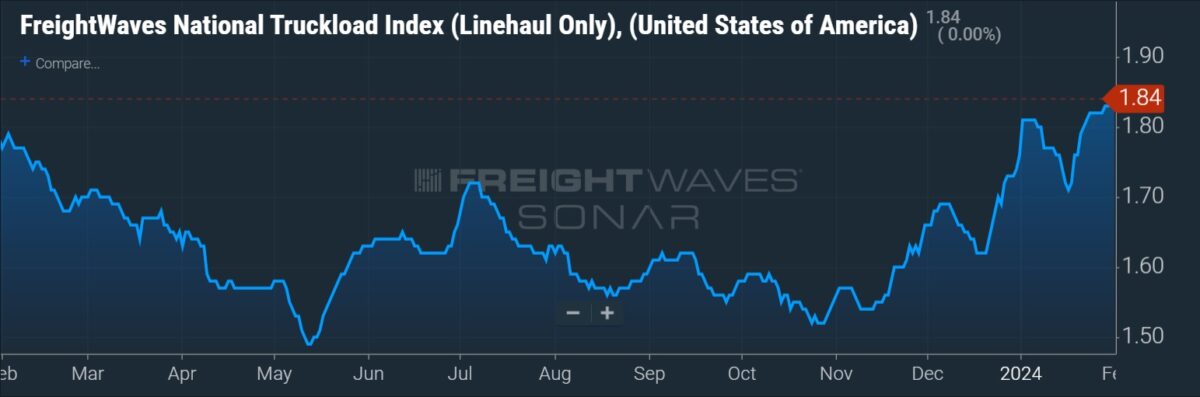
Chart: (SONAR: NTIL.USA). The National Truckload Index (linehaul only – NTIL) is based on an average of booked spot dry van loads from 250,000 lanes. The NTIL is a seven-day moving average of linehaul spot rates excluding fuel. A recent cold snap has pushed spot rates higher. To learn more about FreightWaves SONAR, click here.

Q4 by the numbers

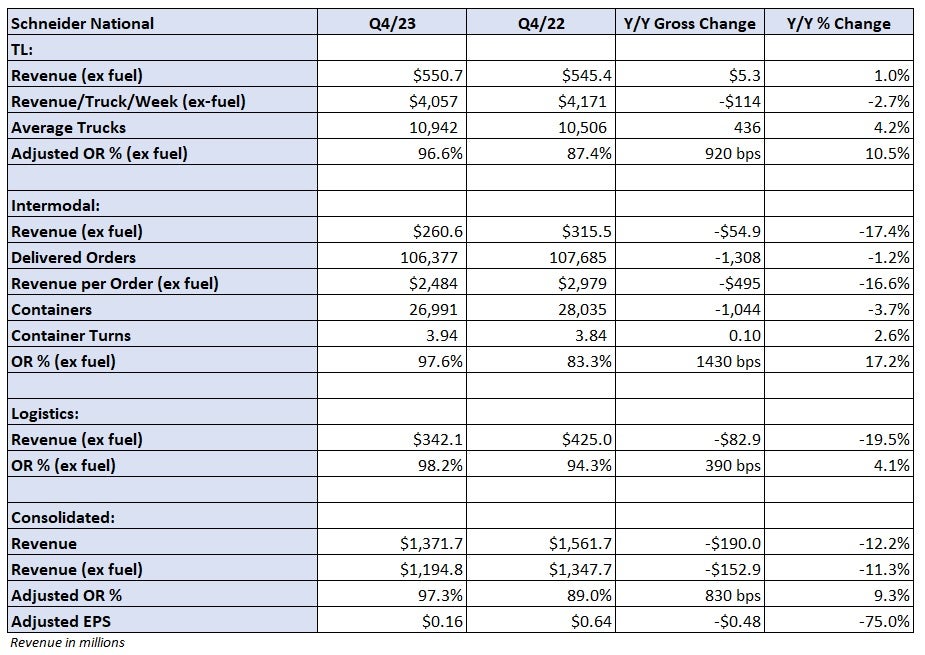
Table: Schneider’s key performance indicators

Truckload revenue was up 1% y/y to $551 million excluding fuel surcharges. Revenue per truck per week fell 3%, the combination of lower pricing in its one-way fleet and steady results in its contract-based dedicated unit. The top-line result also included the August acquisition of M&M Transport Services, which added roughly 500 trucks to Schneider’s dedicated fleet.

Schneider continues to add to its dedicated offering, both organically and through acquisition, while reducing its dependence on one-way, over-the-road trucking. The dedicated fleet was up 11% y/y to more than 6,600 units in the quarter, with the one-way fleet down 5% to 4,300 trucks.

The TL segment recorded a 96.6% adjusted operating ratio, which was 920 basis points worse y/y and 120 bps worse than the third quarter. Higher claims costs and a net loss on the sale of equipment, versus a gain a year ago, were the primary headwinds.

The consolidated income statement showed cost inflation on most lines, led by salaries, wages and benefits expenses, which were up 400 bps as a percentage of revenue. Operating supplies, depreciation and amortization, and insurance and claims expenses were all up by more than 100 bps.

Intermodal revenue fell 17% y/y excluding fuel to $261 million as loads fell 1% and revenue per load dropped 17%. The company had approximately 15% of its container fleet laid up in the quarter due to tepid demand and recent container additions. That trend was also seen by J.B. Hunt (NASDAQ: JBHT), which had 11% of its containers idle during the period.

Both intermodal volumes and yields increased 1% sequentially for Schneider from the third quarter, with management noting volume growth in December.

Intermodal posted a 97.6% adjusted OR, which was 1,430 bps worse y/y and 180 bps worse than the third quarter. The division may see an outsize performance in the next upcycle as incremental costs won’t be required to facilitate growth given recent investments in the business.

Logistics revenue (excluding fuel) was down 20% y/y to $342 million due to lower volumes and revenue per load. The unit reported a 98.2% adjusted OR, which was off 390 bps y/y.

Shares of SNDR were down 3.9% Thursday at 1:03 p.m. EST compared to the S&P 500, which was up 0.8%.

More FreightWaves articles by Todd Maiden

Railroad’s share bounce should leave intermodal shippers wary

Before getting into news, two announcements: 

Stockouters, I want to see you in Atlanta! 

My subscribers can access tickets to FreightWaves’ Future of Supply Chain at a reduced rate here. The event takes place June 4-5 at the Georgia International Convention Center. Click here for what to expect.  

Also, The Stockout show, which I co-host with Grace Sharkey, moves to a new time each week — now Mondays at 10 a.m. ET. I still aim to send out a newsletter each week.  

You can check out the most recent The Stockout show here or catch up on past episodes here

Rail investor and shipper interests at odds

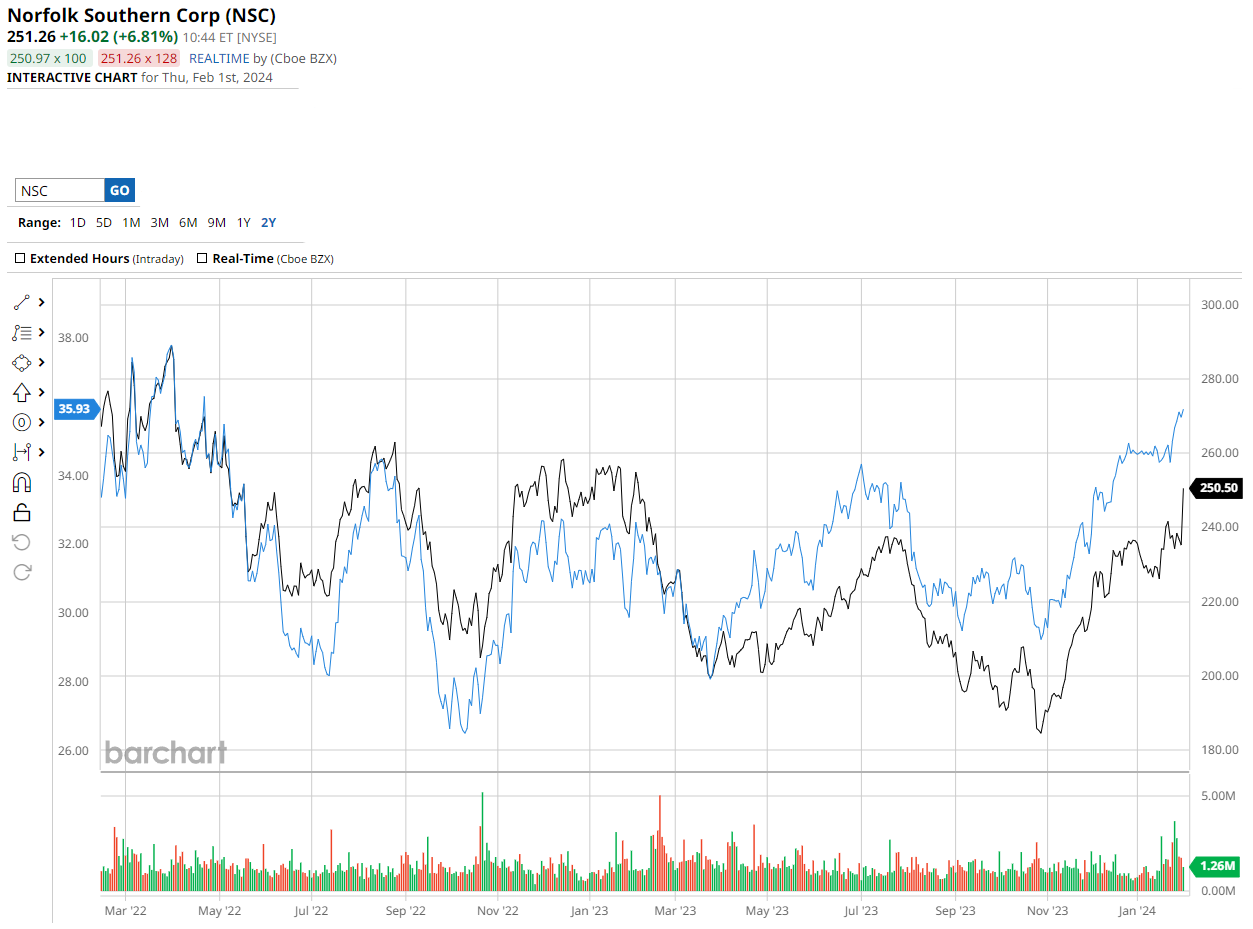
CSX shares (blue) have outperformed Norfolk Southern shares (black) in the past year with one-year total returns of 15.5% and 4%, respectively. Chart: Barchart.com Inc.

Class I railroad management teams insist that maximizing shareholder returns is not at odds with delivering strong service levels to shippers. They also attempt to get investors and analysts to not focus so heavily on operating ratio. But the line of questioning on Norfolk Southern’s earnings call (which John Kingston wrote up here) and the news of activist activity in the company leave me with little doubt that the “Cult of the OR” (as independent analyst Tony Hatch puts it) is alive and well. 

As is typical, shareholders liked the announcement that an activist is involved. (NS shares were up 7% on Thursday.) But this newsletter looks at logistics from the perspective of shippers, and they should be wary. In recent quarters, rail service levels have improved from dismal levels during much of the pandemic. Lately, I stopped hearing intermodal shippers tell me that they were pulling their containers out of rail terminals and trucking them and instead started hearing the opposite — that they were using intermodal more heavily.

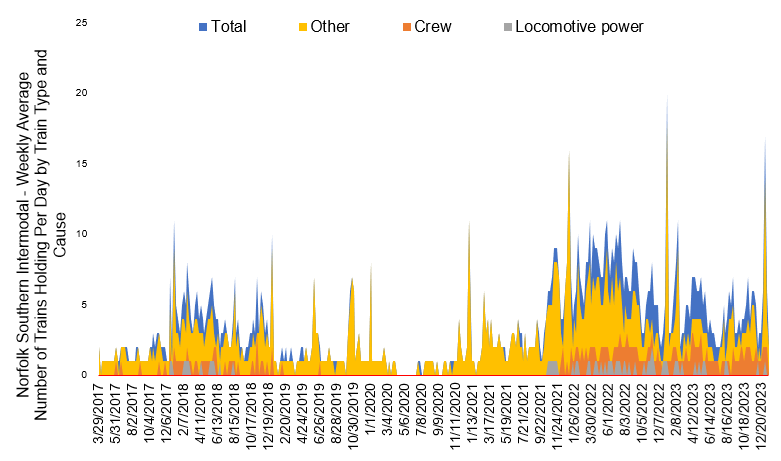
I believe for a railroad to provide strong service levels, it needs to have more than the bare minimum of personnel and resources in place and not be so quick to furlough workers when volumes dip. Maybe don’t build the church for Easter Sunday, but at least build it for a slightly above-average Sunday. The temptation may be for Norfolk Southern’s management to cut expenses aggressively to appease the activists (reportedly, there are more than one with a meaningful position in NS), even if that means cutting into the bone or being unable to handle a surge in demand when one arises. 

Any deterioration in intermodal service would negatively impact not only shippers but domestic intermodal companies, such as J.B. Hunt and Hub Group, which might lose volume. On Thursday, share prices of those two domestic intermodal providers were both down 2%, which may reflect service concerns but may also reflect read-throughs from C.H. Robinson’s earnings (which John Kingston described here).

The number of intermodal trains held on Norfolk Southern has declined from 2022 levels before a recent weather-related spike. Chart: US Surface Transportation Board and FreightWaves.

Retail data is the new gold to be sold to, or shared with, suppliers

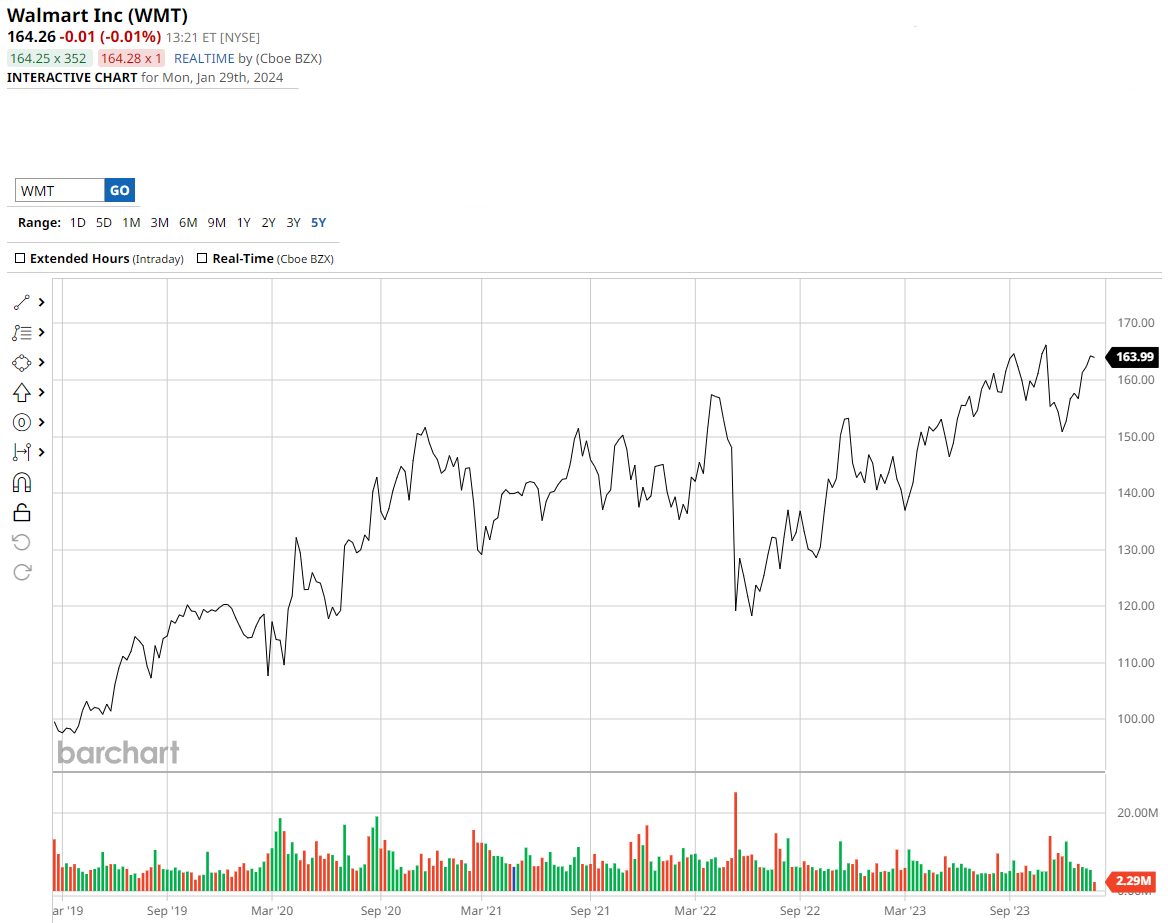
(Graph: Barchart.com Inc.)

Retailers have gotten more sophisticated about collecting and utilizing data and have turned selling access to that data into a new fast-growing and high-margin revenue stream. Enhancing data capabilities was perhaps the ultimate rationale for the pending Kroger-Albertsons merger; upon completion, it will have data on more than 100 million U.S. households. Last week, Retail Touchpoints described how Walmart is leveraging its massive data collection, which amounts to 150 million transactions per week. Use cases for that data go beyond assisting suppliers in running ads and promotions to targeted consumers. Other use cases pertain to online selection management and inventory management. Some consumers opt in to providing feedback on their own behavior, which helps the retailer put stories around the data. In addition to selling the data to suppliers, Walmart provides a base level of data to suppliers at no cost, with an eye toward efficiency improvements that benefit both retailer and supplier.

See this topic discussed on Monday’s The Stockout show here.

The alcoholic beverage industry has a Gen Z problem

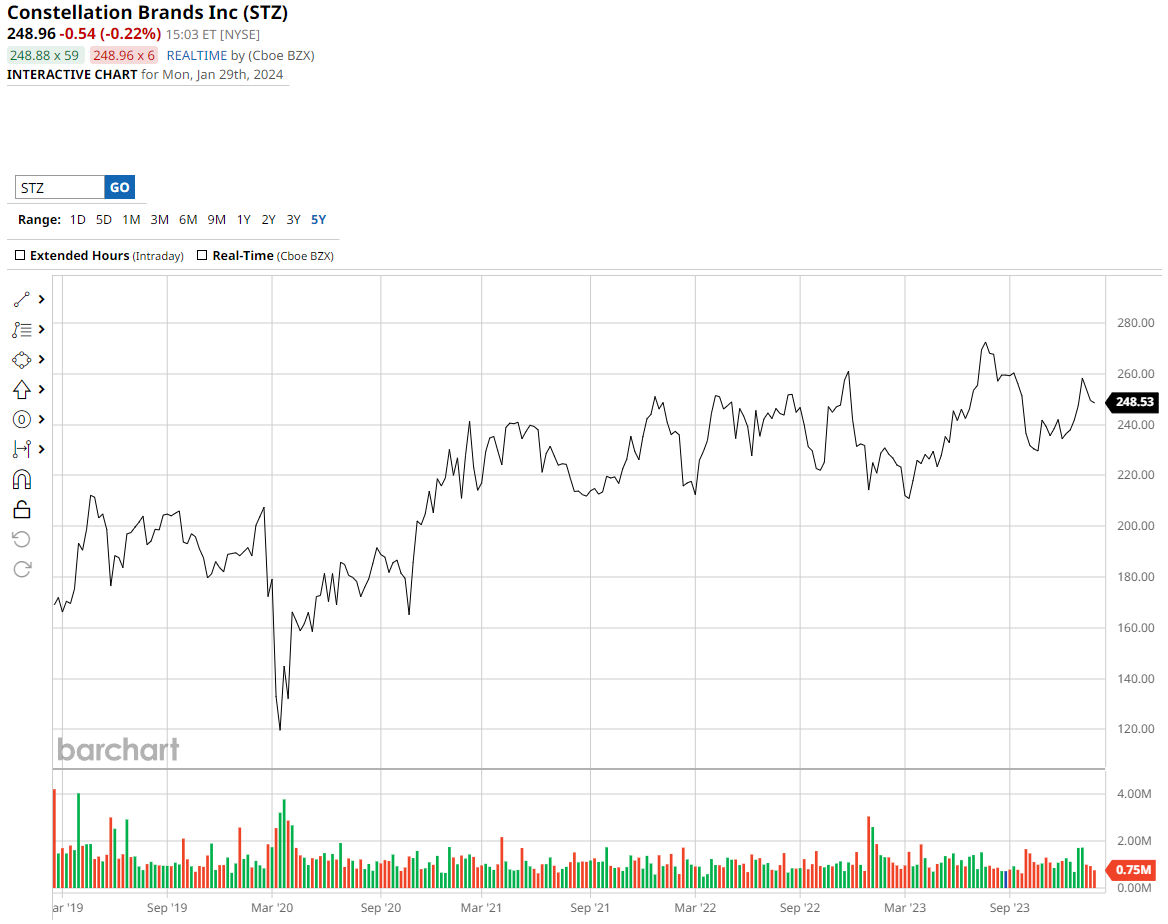
(Graph: Barchart.com Inc.)
While you wouldn’t know it from recent results from Constellation Brands, which owns Modelo and Corona, there are looming demographic challenges for beverage makers, beverage distributors and carriers that rely on that volume. In recent years, beer has been a declining category, with case shipments in 2023 at the lowest since 1999, and recent survey data suggests that decline may be intensifying. Consider these statistics highlighted in a recent Food Dive article: According to Mintel, only half of 21-24-year-olds reported drinking alcohol, and 40% of alcohol drinkers in that age group limited their consumption. And, the average consumer drinks three alcoholic beverages each week, down from four this time last year. The reasons for this are numerous, including feedback from fitness trackers and the legalization of competing indulgences. In response, alcoholic beverage makers are diversifying aggressively into soft drinks, nonalcoholic versions of existing products, and emerging categories like ready-mix cocktails and THC-infused soda (not your grandfather’s Pepsi). Beverage diversification is also a major trend in the opposite direction, with soft drink brands getting into alcoholic beverages — Monster and Hard Mountain Dew being two examples. With stats like those published by Mintel, one has to wonder whether the market for alcoholic options is already oversaturated.

To subscribe to The Stockout, FreightWaves’ CPG and retail newsletter, click here.

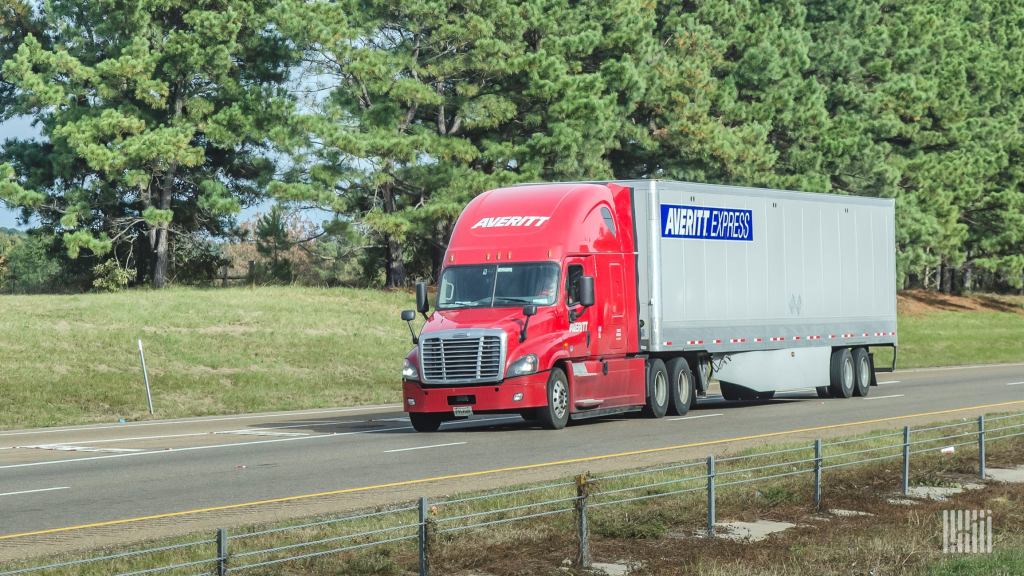
Averitt expands Nashville-area distribution, fulfillment operation

Averitt Express has moved into a new distribution and fulfillment center near Nashville as part of the company’s expansion and enhancement of three key facilities in the Middle Tennessee area.

The less-than-truckload carrier’s distribution and fulfillment center in Lebanon, Tennessee, features 280,000 square feet of enclosed freight storage space aimed at equipping Averitt for regional deliveries and nationwide transport, according to a news release. Lebanon is located about 30 miles east of Nashville.

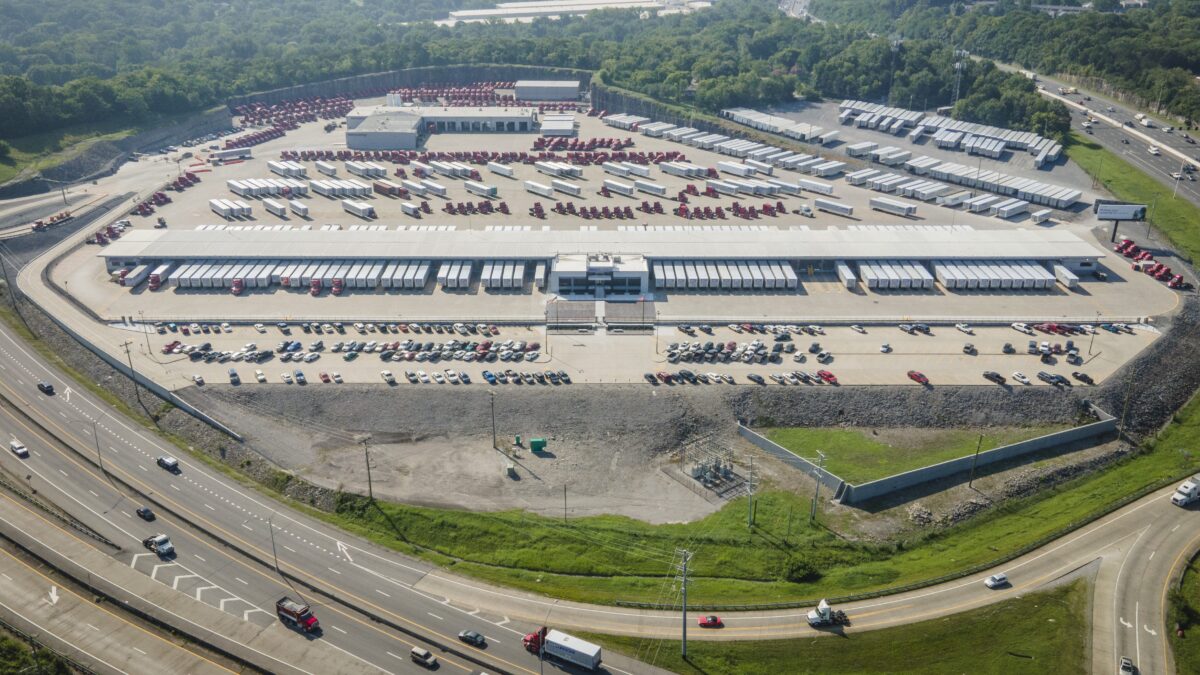
Averitt’s distribution and fulfillment operation in Lebanon, Tennessee, is located off Interstate 840. (Photo: Averitt Express)

Averitt also recently completed renovations of its Nashville-area service center, which now spans 42 acres and includes 510 truck parking spaces and 162 dock doors. The facility accommodates 190 drivers and over 300 associates.

Upgrades to the Nashville service center include renovations to office and dock space, new restrooms and new truck drive-through wash bays and upgraded fuel bays.

Additionally, Averitt has moved its On Tour Logistics (OTL) operation into a 90,000-square-foot warehouse, which previously housed the company’s distribution and fulfillment operation in Lebanon.

Averitt’s OTL operation caters to the logistics needs of different events and entertainment enterprises by providing secure, specialized storage and transportation for artists’ gear and production equipment.

“Our commitment to our facilities is a direct investment, not just in our own network, but also in our customers’ success,” Joe Paul Tackett, director of Averitt’s Nashville service center, said in a statement.

Cookeville, Tennessee-based Averitt Express has more than 5,700 tractors and 13,000 trailers, with 85 locations across the country. Averitt’s team consists of more than 8,000 associates, according to its website.

More articles by Noi Mahoney

FBI alleges Mexican cartel, Canadian truckers part of drug ring

4 things to know about the ‘Take Our Border Back’ convoy

Gulf Coast ports see mixed year-over-year results in freight volume

Ryder buys Cardinal Logistics, significantly growing its dedicated business 

Editor’s note: The article and headline have been revised to clarify Ryder’s DTS full-year revenues.

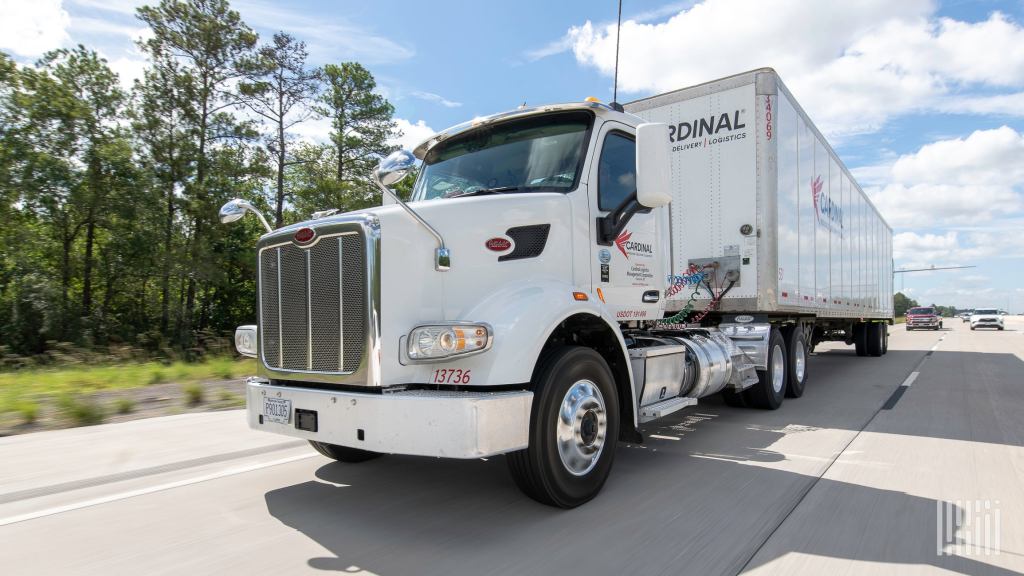
Ryder System is dramatically growing its dedicated transportation services operations with the acquisition of Cardinal Logistics.

The investment firm of H.I.G. Capital was the seller in the deal. A price was not disclosed and Ryder said it would not answer further questions about the transaction, which has closed. However, it did say the deal would be discussed on the company’s earnings call on Feb. 14. No price was disclosed.

In the third quarter of 2023, Dedicated Transportation Solutions (DTS) at Ryder (NYSE: R) had total revenue of $448 million, down from $455 million a year earlier. Full-year revenue in 2022 for DTS was $1.786 billion. By comparison, the Transport Topics list of the Top 100 For Hire carriers has Cardinal Logistics with 2022 revenue of about $1.1 billion. 

DTS reported a total fleet count of 11,100 units in the third quarter, with 5,200 power units at the close of the three months. 

It wasn’t immediately clear that all of Cardinal’s business and assets were going to be placed in DTS. In its prepared statement, Ryder said it would “fully integrate Cardinal operations, facilities and equipment into its dedicated transportation, fleet management and supply chain businesses.”

Those three divisions make up all of Ryder, with fleet management coming in at $1.5 billion in revenue in the third quarter. That percentage has been dropping, and that is part of Ryder’s plans.  

Supply Chain Solutions, a provider of logistics services, had revenue of $1.2 billion in Q3. DTS had  $448 million in revenue.

But even though the news release referred to Cardinal activities impacting all three segments of Ryder, the company statement said “the Cardinal acquisition will further advance Ryder’s strategy to accelerate profitable growth in its dedicated business.”  

The statement also said the acquisition will be accretive to Ryder’s earnings by 2025 “after achieving synergies and completing integration efforts.”

In its 10-K filing last year, Ryder said: “Through our DTS business, we combine equipment, maintenance, professional drivers, administrative services and additional services, including routing and scheduling, fleet sizing, safety, regulatory compliance, risk management, and technology and communication systems support to provide customers with a dedicated transportation solution that is designed to increase their competitive position, improve risk management and integrate their transportation needs with their overall supply chain.”

DTS had 209 customer accounts at the end of 2022, according to the filing.

The 10-K report also said most of the DTS activities are short-haul, so its drivers are home each night. It also said DTS assets utilize the maintenance facilities of Ryder’s Fleet Management Solutions sector. But it also said DTS can work in conjunction with SCS, possibly explaining the reference in the release about the Cardinal Logistics acquisition impacting all three segments of Ryder. 

Cardinal was founded by Tom Hostetler and Vin McLoughlin in 1997. Hostetler is CEO; McLoughlin is chairman. Both started their logistics career at Ryder in the 1980s and early 1990s. The statement described Cardinal’s activities as primarily being focused on “consumer packaged goods, omnichannel, grocery, building products, automotive, and industrial verticals.” 

“We chose Ryder to continue our legacy because of the company culture,” Hostetler said in the statement. “We experienced firsthand Ryder’s people-first, customer-centric culture, and that had an impact on us as we built our own company.”

More articles by John Kingston

Ryder’s debt rating upgraded by S&P

Ryder loyalty program payoff: Reduced used vehicle prices

Ryder’s nonleasing activities grow revenue, but FMS provides profits