Project44 v. FourKites: The FreightTech case that questions Illinois defamation law

The defamation battle between Chicago’s two big supply chain visibility players — project44 and FourKites — continued Wednesday as the case moved from the 1st Judicial District Appellate Court of Illinois to the Illinois Supreme Court for a review of the state’s laws.

The dispute originates from emails sent in May 2019 and involves accusations of ties to intimidation, financial impropriety and organized crime.

On May 19, 2019, an email from “Ken Adams” at kenadams8558@gmail.com raised concerns about accounting improprieties at project44. The email sent to Jim Baum and Kevin Diestel — both project44 board members — and purportedly from a former employee, alleged connections to a “Chicago Mafia” and highlighted rampant accounting improprieties. It also linked the issues to the departure of project44’s chief financial officer; referenced a canceled Estes contract; and warned of brewing discontent, predicting a potential scandal akin to the fraudulent blood-testing company Theranos.

On May 27, 2019, a second email from “Jason Short” at jshort5584@gmail.com criticized project44’s technology. Addressed to new Chief Revenue Officer Tim Bertrand, it warned against selling subpar products. 

Project44 denied all claims made in the emails, and in April 2020, the company filed a suit against FourKites for defamation and civil conspiracy.

During pre-suit discovery with Google, project44 discovered that the same individual accessed both the Ken Adams and Jason Short accounts using two IP addresses. The emails, sent a week apart and referencing Theranos, hinted at their connection. One of the IP addresses accessing Jason Short’s account belonged to FourKites India, identifying Sriram Nagaswamy and Rashi Jain as directors of FourKites India.

Additionally, the Ken Adams account’s subscriber information revealed the mobile number to be 847-644-3564, which is also listed as an official FourKites phone number in U.S. Securities and Exchange Commission documents. In a 2019 Crain’s Chicago post for a “Roundtable on Logistics,” this phone number is listed as FourKites’ founder and CEO Mathew Elenjickal’s direct number.

Illinois defamation statute

In Illinois, to succeed in a defamation claim, the plaintiff typically needs to establish three key elements: a false statement about the plaintiff; communication of this statement to a third party (referred to as publication); and a result of harm to the plaintiff’s reputation.

Illinois law also distinguishes between two forms of defamation: defamation per se and defamation per quod. 

“The Illinois Supreme Court considers five types of statements to be defamatory per se: (1) accusing a person of committing a crime, (2) accusing a person of being infected with a “loathsome communicable disease,” (3) accusing a person of lacking ability or integrity in the performance of job duties, (4) statements that otherwise prejudice a person in his profession or business, and (5) accusing a person of adultery or fornication. … A plaintiff does not need to plead or prove actual damage to his reputation to recover for a statement that is defamatory per se,” said third-generation supply chain professional Matthew Leffler, managing partner at Armchair Attorney. 

If a statement does not meet the criteria for defamation per se, it falls under defamation per quod, requiring plaintiffs to demonstrate actual damages. 

In 2020, FourKites sought dismissal of project44’s lawsuit, presenting two main arguments.

FourKites claimed that the emails didn’t meet the defamation standard for publication as they weren’t published to a third party, asserting that project44’s board members were part of the organization. 

Secondly, FourKites asserted that the claims in the emails lacked the statements needed to prove defamation per se.

FreightWaves contacted FourKites for a statement regarding the ongoing case, to which the company responded, “We do not provide comments on pending litigation.”

“The circuit court dismissed [our case], concluding that the communications, while otherwise actionable, were not ‘published’ as a matter of law because of whom the communications were sent to holding that the recipients were legally no different than the corporation itself,” Jennifer Coyne, general counsel for project44, told FreightWaves.


Project44 did appeal that decision to the Appellate Court of Illinois and, on Nov. 22, 2022, the court agreed with project44 and sent back the dismissal for further review by the Illinois Supreme Court to review the state’s defamation law.

“The appellate court reasoned that a corporation is not only concerned with its reputation to the outside world. Just as employees care about their reputation within the corporation, the corporation cares about its reputation among its own employees — be they high-ranking executives, lower-level workers, or non-employee directors,” Coyne said.

Supreme Court consideration

Deliberation on Wednesday revolved around the inquiry into whether the act of dispatching these emails could be deemed a form of publication, and secondly, whether there existed tangible harm to the plaintiff’s reputation.

In regards to concern of publication, FourKites argued the recipients of the emails were essentially the same as the company and thus there was no third-party publication. 

“The executive leadership team, specifically those with titles such as chief revenue officer and chief operations officer, holds the responsibility of making decisions that shape the company and influence its reputation. These individuals determine how the company is perceived, what values it prioritizes, and assess the impact on its reputation. Considering this, the individuals making such decisions should be regarded as representing the company in matters of reputational harm. Without this distinction, any unfavorable comment made to a corporation could potentially be used as grounds for a defamation claim,” said Scott Gilbert, representation for FourKites.

Project44’s argument to FourKite’s response mirrors the Appellate Court decision in favor of them.

“The Appellate Court more forcefully analogizes these publications to attempts of corporate sabotage, and to inject chaos into project44’s workplace and that’s exactly why they are now important to the consideration of the publication issue. … FourKites didn’t send them to the company. It sent them to three individuals and sought to drive a wedge between those individuals and the employer that they worked for,” said Douglas Albritton, who represents project44.

The judges questioned both sides about where to draw the line for who constitutes the company versus a third party for publication. Both sides argued about precedent, corporate law principles and policy considerations.

In regards to harm to reputation, FourKites’ main argument focuses on the time spent between the email being received and complaints being filed.

“Eleven months passed between when the emails were sent and when the complaint was filed. And in that time, [project44] cannot identify any actual reputational harm. And we highlighted that fact in our brief to this court, and [project44] made no response. … That silence is critical because [project44] has alleged defamation per se, being the damages should be presumed and need not be proven,” Gilbert said.

Project44 argues proof is not necessary under state law for defamation per se. 

“The core of this fight is whether two outside board members and [Bertrand] are considered ‘another person’ outside of the company itself. This is a novel case, which means there is not a strong precedent that determines the outcome. FourKites is arguing that the C-suite should be considered the same as the company. This would include board members and other executives. If the Illinois Supreme Court agrees with FourKites, then the lawsuit of defamation per se fails,” Leffler said.

Although, Leffler said, “For what it’s worth, I agree with [project44].”

Both companies now wait for the state Supreme Court to issue a ruling on the Appellate Court’s decision acknowledging project44’s case to sue for defamation per se.

“I think this case highlights a consistent pattern in which FourKites demonstrates a lack of integrity in handling information,” project44 founder and CEO Jett McCandless told FreightWaves. “I have full confidence in the judicial system that justice will be served.”


Supreme Court rejects review in broker liability case, leaving the issue unresolved

FreightTech experts: 2024 is the year for laggards to catch up

FourKites confirms 15% cut in global workforce, dismisses key exec

Free safety messages at the core of a new Drivewyze offering

Drivewyze, known primarily for its weigh station bypass technology but which has expanded in numerous other safety-related areas, is adding a free notification offering to its services.

Drivewyze Free rolled out earlier this month and provides real-time notifications on a wide range of road condition data to electronic logging devices, tablets, phones and other connected devices.  

The data for it will be a combination of temporary safety risks, like road construction projects, and more permanent safety threats, like high rollover areas or low bridges. All will be in Drivewyze Free, according to Drivewyze CEO Brian Heath.

“We have been talking to all our telematics partners and government agencies, who are pitching in to help on this one,” Heath told FreightWaves. “Giving those drivers some critical information where and when the need is really important can make a difference, and it’s proven to make a difference,” he said. 

Heath said Drivewyze Free will be focused strictly on safety. “We’re not selling hot dogs and we’re not telling people what the price of fuel is down the road,” he said.

As long as a person or company has a DOT number, they can receive the service, Heath said.

He added that the process is “not just taking static data and showing it to drivers.” He cited the example of existing services that might show a work zone at a particular location, “and good luck for that work zone actually being active when you need to know it. There’s just a whole bunch of really poor data that folks for years have been trying to put into applications.”

The key word for Drivewyze is “curate,” which it says it will do with the data before feeding it out to Drivewyze Free users. “So we’ve got to do the hard work up front to curate that information,” Heath said. 

Government agencies with data to share have traditionally made it available through 511 websites, not exactly an easily accessible platform for a driver on the road. But Heath said those agencies realize they have an important source of data that can contribute to safety. “They are realizing that some of that data is high enough quality that they can actually communicate to connected vehicles,” he said.

In announcing Drivewyze Free, the company said state departments of transportation that are participating in the program so far are New Jersey, New York, North Carolina, Georgia, Delaware, Connecticut, Ohio, Texas, Arkansas and Virginia. The Pennsylvania Turnpike also has signed up, as well as state law enforcement authorities in Colorado and Wyoming.

Heath said the process to launch Drivewyze Free — setting up the data feeds and growing confidence in the service — has taken “years,” but that it has picked up speed in recent months. 

When the data in Drivewyze Free is believed by its users, Heath said, other data coming off telematics systems shows that drivers will slow down as they approach areas where they’ve been told have significant safety risks. 

“And when one of these high-risk areas comes up, it just audibly and visually comes up to the driver,” Heath said. “And then it drops back into the background and they continue to consume whatever service they’re using.”

Martin Murtland, Drivewyze’s vice president of product, said one user of the service had largely eliminated low-bridge strikes since Drivewyze Free was implemented at the fleet. 

More articles by John Kingston

State of Freight takeaways: Impacts of the deep freeze; data looking up

Teamsters rack up late-2023 wins, stage significant strike in 2024

Truck transportation jobs trend higher while warehouses shed workers

Borderlands: Nearshoring forecast to boost US-Mexico trade in 2024

Borderlands is a weekly rundown of developments in the world of United States-Mexico cross-border trucking and trade. This week: Nearshoring forecast to boost US-Mexico trade in 2024; Texas receives $70M grant for hydrogen fuel stations; automotive manufacturer announces $400M factory in Mexico; and Texas logistics park receives $1.5M grant to expand services.

Nearshoring forecast to boost US-Mexico trade in 2024

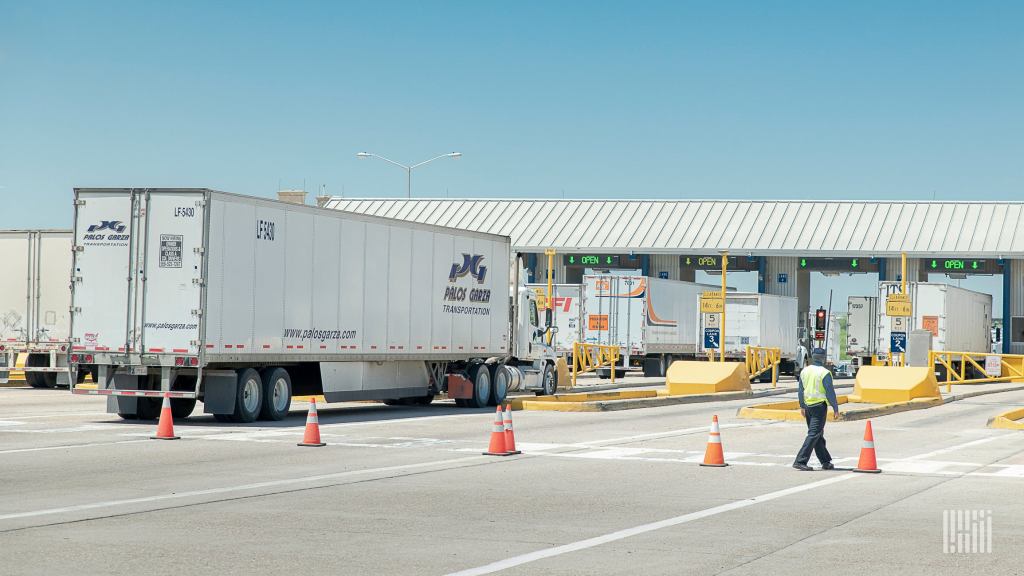
Cross-border operators expect 2024 to be a busy year, with more tractor-trailers passing between the United States and Mexico daily, carrying everything from cars and auto parts to electronics and fresh produce.

With shippers attempting to return to normal freight seasonality amid uncertain economic conditions, Mexico is positioned to take advantage of potential nearshoring opportunities, according to Sri Laxmana, vice president of Americas at freight broker and 3PL giant C.H. Robinson.

“Mexico is an important region for us for various reasons. We do feel that the macroeconomics and geopolitical landscape of the world is certainly changing,” Laxmana told FreightWaves. 

Almost 40% of shippers have already taken advantage of nearshoring or are considering it, according to C.H. Robinson’s 2023 shipper survey. Laxmana said he wasn’t surprised by the results.

“We certainly have seen volatility in manufacturing here and some locations around the world due to so many different things,” Laxmana said. “I think the idea about nearshoring started being formulated, because you certainly saw Mexico’s proximity to the United States.”

Laxmana has been with C.H. Robinson for 23 years. Prior to working on global forwarding for U.S., Canada and Latin America, Laxmana was vice president of global ocean services at the company.

“During that time we certainly have seen volatility in manufacturing here and some locations in the world,” Laxmana said.

Laxmana expects nearshoring to increase trade in 2024 due to conversations he has had with many customers about tapping into the strategy of locating manufacturing capacity in Mexico to be closer to the U.S. market.

Some of the factors causing the supply chains’ shift away from Asia to Mexico include mitigating risk, Laxmana said.

“I think everybody had the desire to amortize risk, and try to think creatively, whether you’re shipping into the U.S. West Coast, moving to the U.S. East Coast or thinking about manufacturing in a different location,” Laxmana said. “We’ve seen manufacturing move from China to Southeast Asia. We’ve seen manufacturing for specific verticals going to India, going to Pakistan, going to different locations. So coming back, I do feel Mexico has become this attractive destination, for various reasons.”

Laxmana said Mexico’s workforce and the numerous international trade agreements the country has signed with other nations — including the United States-Mexico-Canada-Agreement (USMCA) — are other considerations for shippers looking to shift production.

“The USMCA replaced the North American Free Trade Agreement, and now there’s some favorable conditions for business by reducing tariffs and smoother transactions across the border,” Laxmana said. “Then let’s talk about the skilled workforce. The fact remains, Mexico has a growing pool of skilled labor, particularly manufacturing and engineering. Mexico’s workforce is often praised for its adaptability, productivity and proficiency in English, as well. It certainly helps the broader connectivity to do what we’re looking for.”

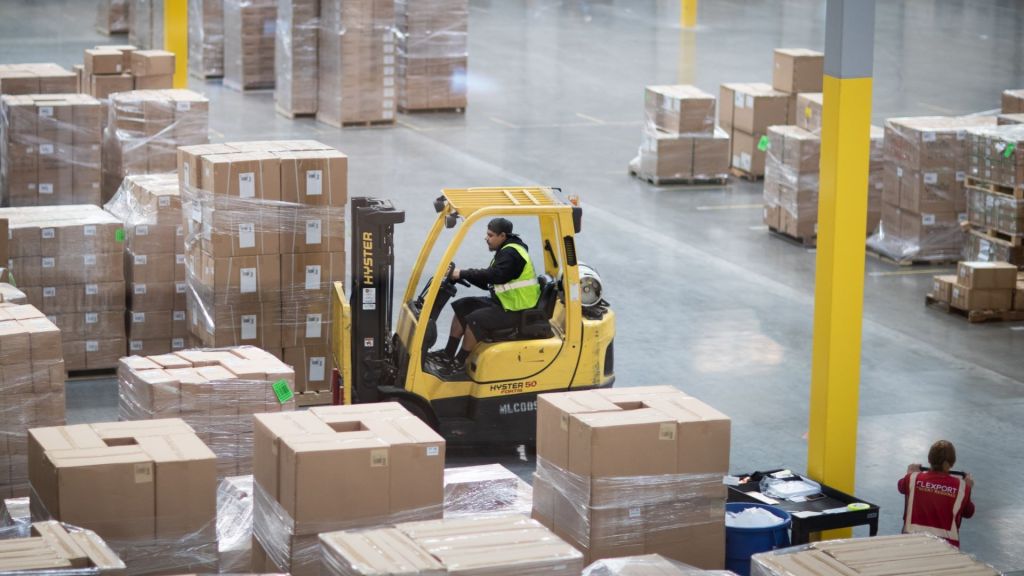
In September, C.H. Robinson opened a 400,000-square-foot distribution facility in Laredo, Texas, which has the capacity to handle as many as 350 shipments a day. (Photo: Jim Allen/FreightWaves)

Cross-border freight that is expected to see significant growth in 2024 starts with auto parts and vehicles, Laxmana said.

“Certainly the automotive industry goes without saying for growth,” Laxmana said. “If we look at some of the investments being made, you continue to see those very secondary original equipment manufacturers continue to invest. But growth really depends on some different factors — such as what is the availability for raw materials? If there’s no raw materials, then it’s very difficult to manufacture, so how do you get those raw materials there? I do feel other manufacturing industries are certainly following suit, but they have some different factors involved prior to making those decisions.”

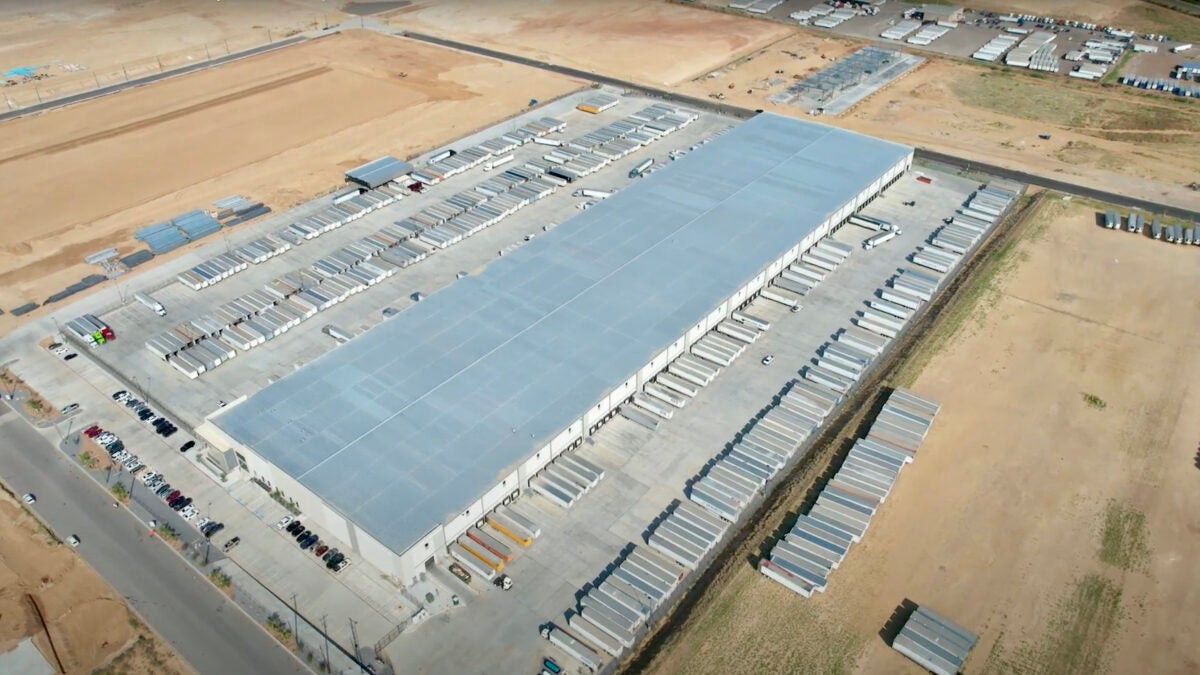
C.H. Robinson is betting big on the continued expansion of commerce between the U.S. and Mexico. In September, the company opened one of the largest distribution facilities on the Mexico border in Laredo, Texas.

The 400,000-square-foot cross-dock facility includes 154 dock doors and room for 700 trailers. C.H. Robinson’s distribution center aims to handle as many as 350 shipments a day.

“On average, we handle one in every 10 shipments down in Mexico, so we’ve got a good footprint, we’ve got a good solution,” Laxmana said. “We do feel [the Laredo distribution center] is primed for success.”

Texas receives $70M grant for hydrogen fuel stations

The state of Texas recently received a $70 million grant to build up to five hydrogen fueling stations for medium- and heavy-duty trucks in Dallas-Fort Worth, Houston, Austin and San Antonio, according to the Federal Highway Administration.

The grant to the North Central Texas Council of Governments from the federal government’s alternative transportation infrastructure program will build the stations at existing truck stops within the Interstate 10, 35 and 45 corridors. 

The project will help create a hydrogen corridor from Southern California to Texas.

“This funding will help ensure that electric vehicle chargers are accessible, reliable and convenient for American drivers, while creating jobs in charger manufacturing, installation and maintenance for American workers,” Transportation Secretary Pete Buttigieg said in a statement.

Automotive manufacturer announces $400M factory in Mexico

China-based Shanghai Unison Aluminium Products Co. recently began construction of its first automotive manufacturing facility in Mexico.

The $400 million factory in the city of San Luis Potosi will produce a range of products, including bumpers, front subframes, instrument panel frames, battery trays and other aluminum auto parts for electric vehicles.

The 1 million-square-foot factory is scheduled to go online by the end of the year, creating 3,000 jobs. Some of Shanghai Unison’s clients include Tesla, Volvo and BMW. The company was founded in 1994.

Texas logistics park receives $1.5M grant to expand services

The TexAmericas Center recently received a $1.5 million grant that will be used to expand its logistics capabilities, according to a news release.

The TexAmericas Center is a mixed-use industrial park in the northeast corner of Texas, about 20 miles west of Texarkana and 180 miles east of Dallas. The center is near Texas’ borders with Arkansas, Louisiana and Oklahoma.

“We’re thrilled to receive this funding and look forward to using it for enhancing the rail capabilities on our campuses,” TexAmericas Center CEO Scott Norton said in a statement. 

Texarkana is a major east-west and north-south rail center, with seven rail lines converging in the area and over 125 trains passing through daily. Union Pacific, Kansas City Southern, Texas Northeastern Railroad and Lone Star Rail Car Service currently serve TexAmericas and the surrounding area.

More articles by Noi Mahoney

Canadian authorities suspend two more trucking companies after crashes

Mexico top US trade partner in November, Laredo No. 1 gateway

GXO to shut down Memphis facility, lay off 211 workers

Rejection rates bounce higher after Arctic plunge

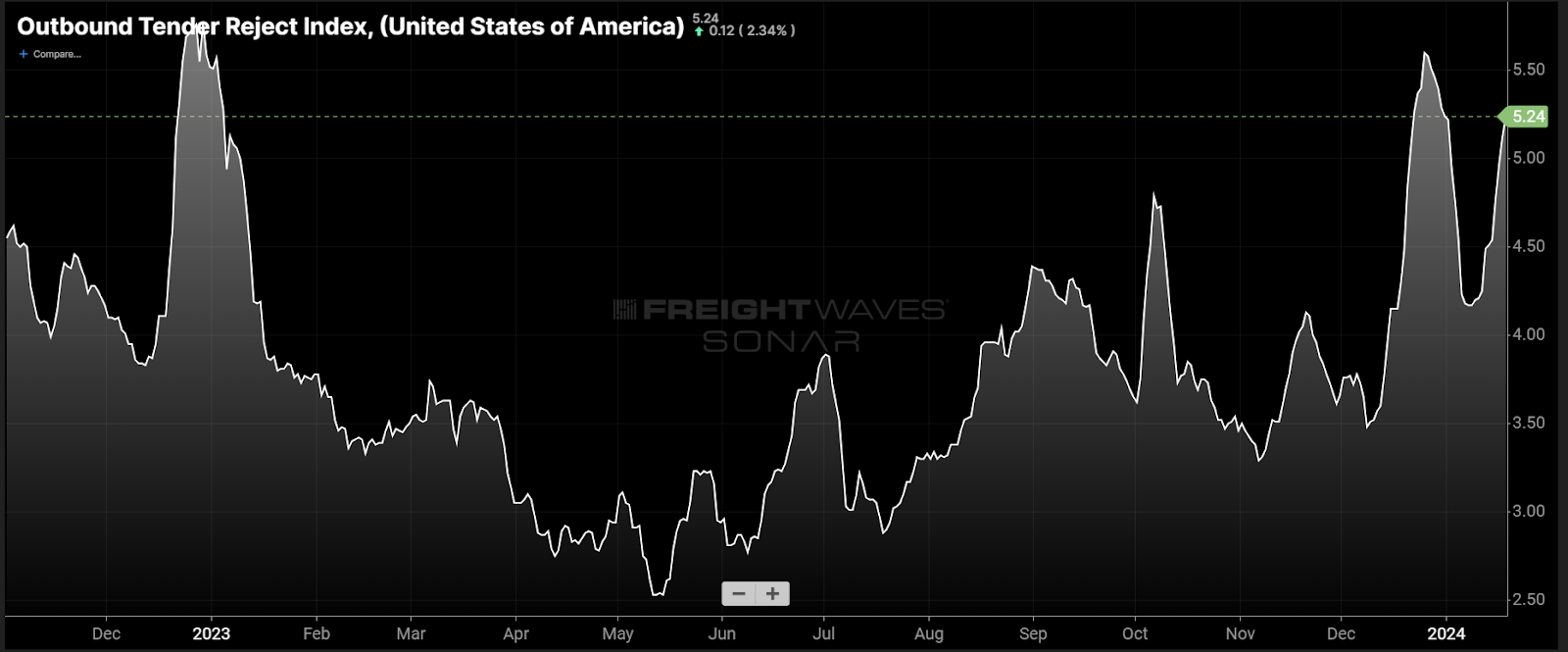
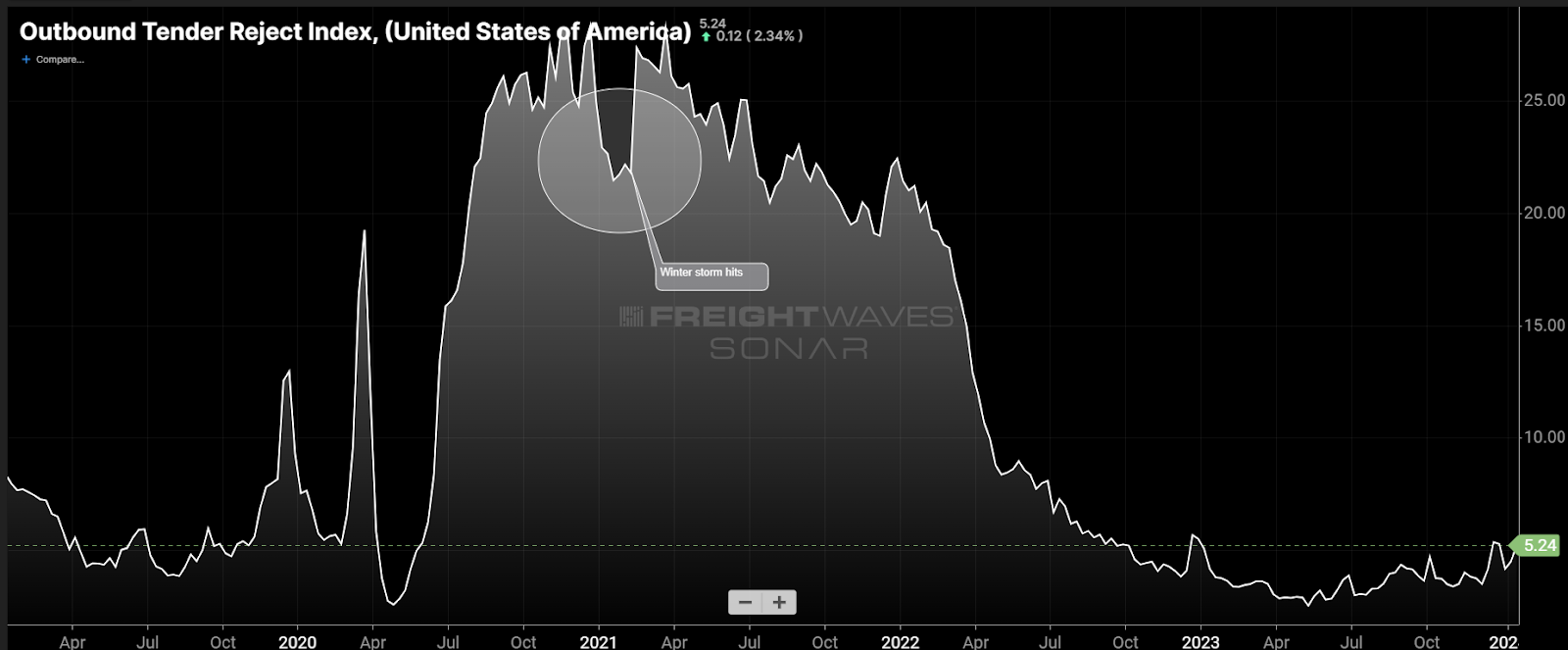
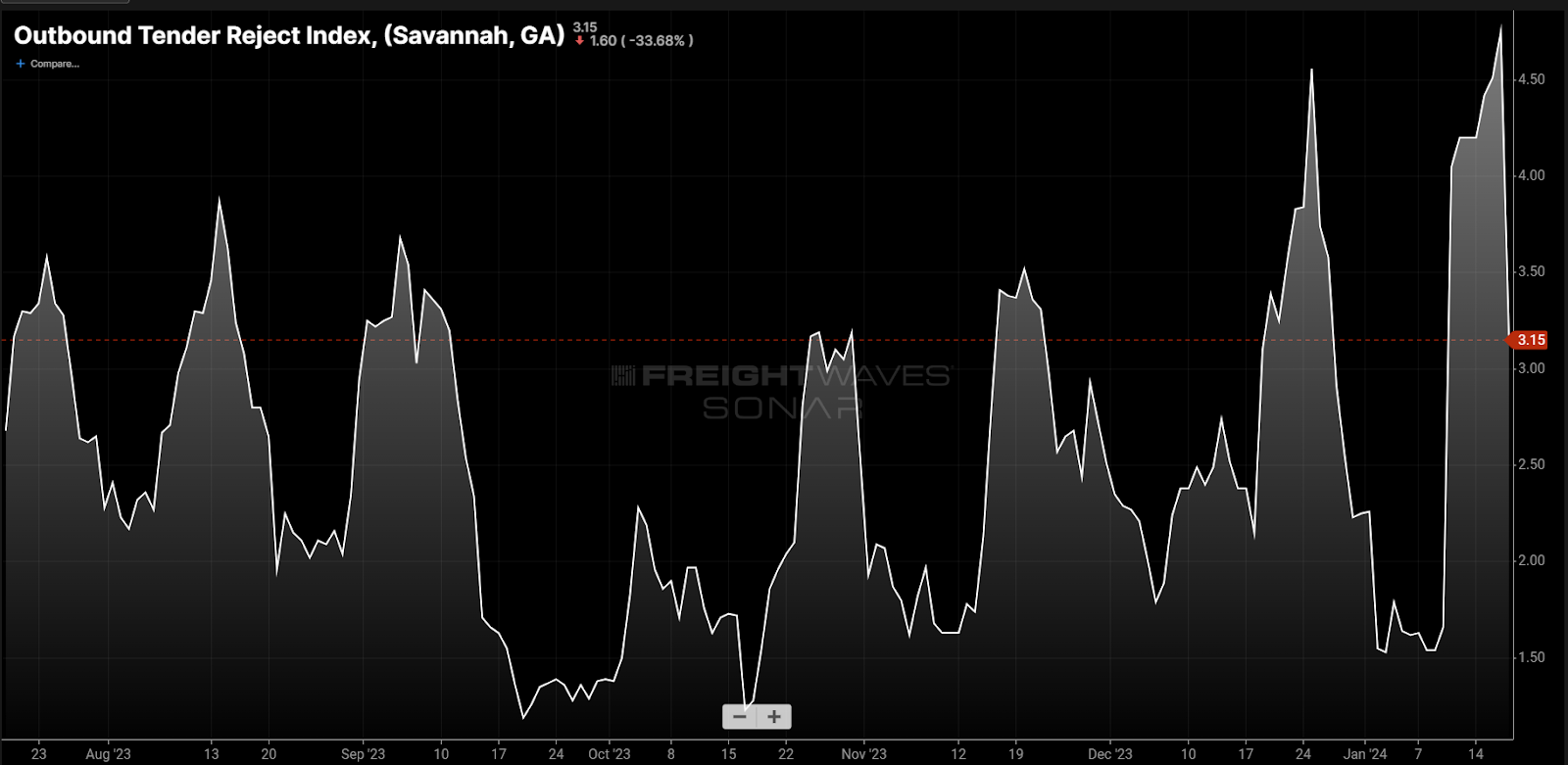
Chart of the Week: Outbound Tender Rejection Index – USA  SONAROTRI.USA

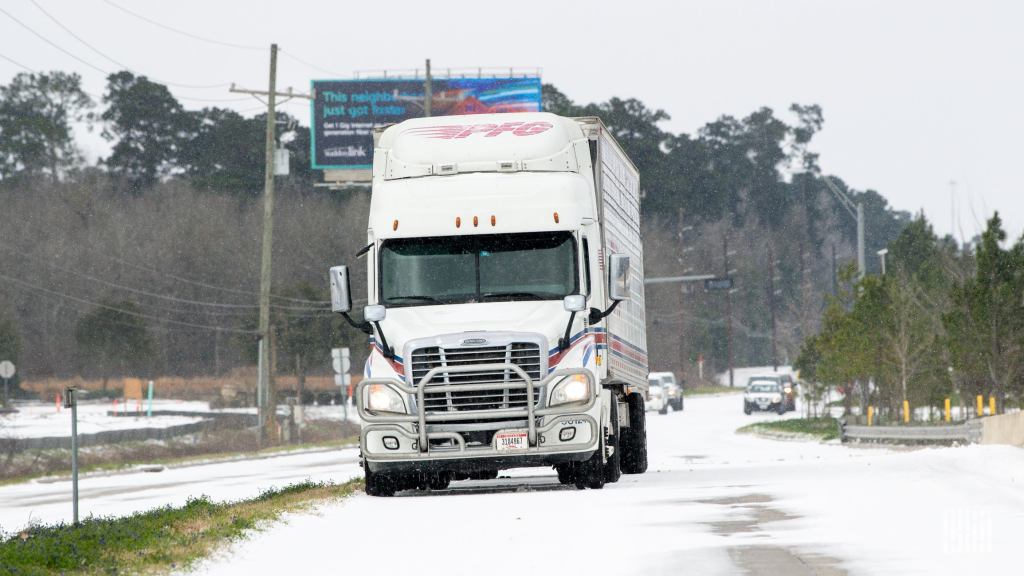
National tender rejection rates (OTRI) jumped back over 5% this week as winter weather impacted nearly every section of the U.S. 

While this probably does not indicate the domestic trucking market is entering a more sustained period of tightness, it is noteworthy that the market is responsive. This is only the third time since October 2022 that the national OTRI has eclipsed the 5% threshold and the first time it was not around the Christmas/New Year holiday week.

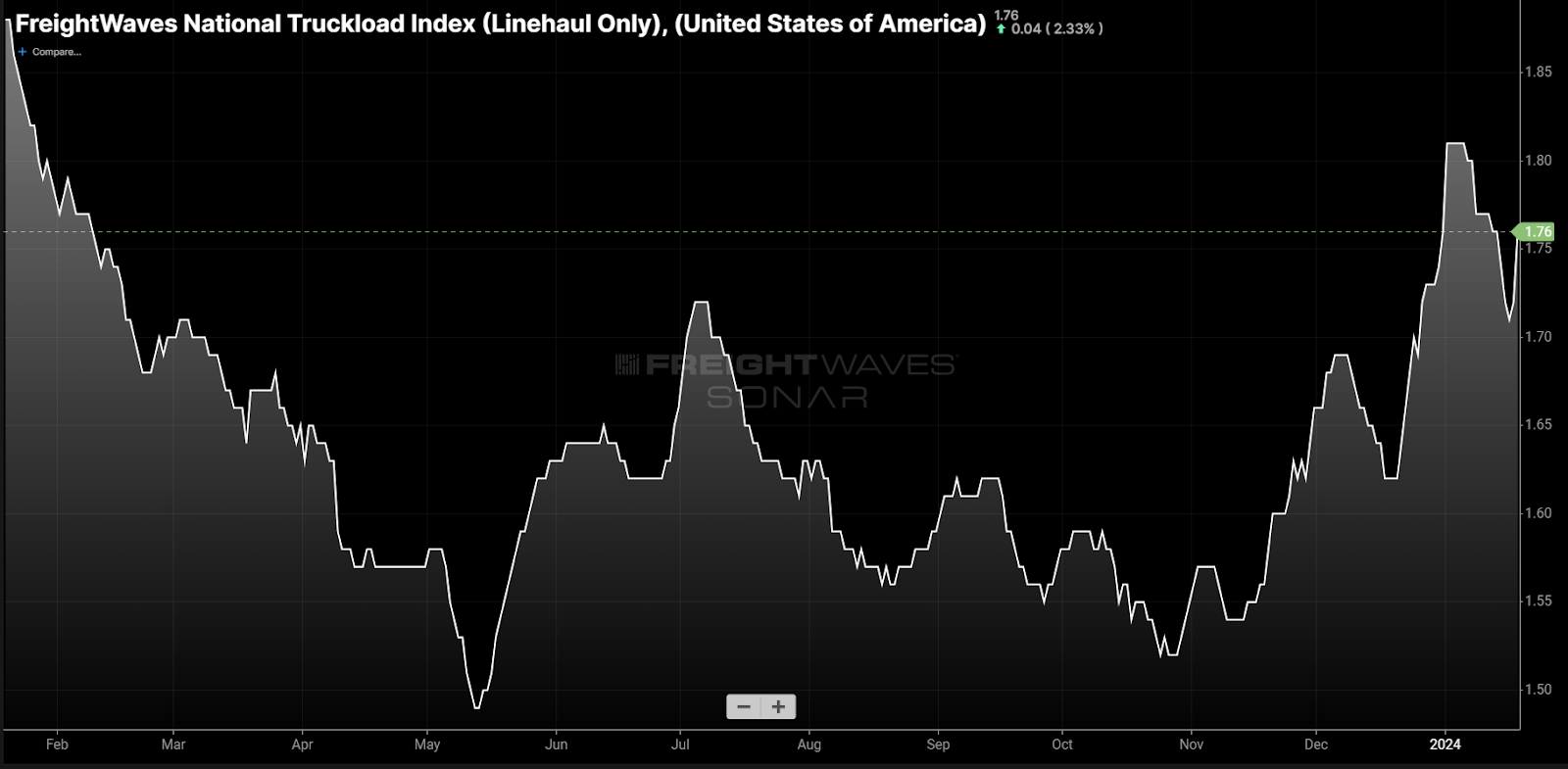
Spot rates (excluding fuel) also rose this past week, indicating carriers were able to charge more for ad hoc services. The National Truckload Index (Linehaul Only) bounced from $1.71 to $1.76 from Tuesday to Thursday.

Winter weather events are not new to trucking, but ones that create nationwide disruption are not terribly common. Most of the attention from weather in trucking goes to the tropical systems that hit in the warmer seasons. These have become less disruptive over the years as the Federal Emergency Management Agency has become more efficient in handling its response and landfalling storms have hit fewer large population centers.

Winter weather events can be more disruptive than their warmer counterparts. A recent example of this was the polar front that crippled the energy grid in Texas in February 2021.

An unusually strong Arctic front pushed all the way to the Gulf Coast, coating roads in ice and creating massive power outages that lasted nearly a week in areas that are not accustomed to this type of weather.

The domestic freight market was in the initial stages of stabilizing when the storm hit, and while this was not 100% applicable to the storm itself, the coincidence of tender rejection rates spiking as the storm hit is undeniable.

Besides safety issues and making travel more difficult, winter systems create scheduling problems and backlogs. Shipping and receiving operations shut down when workers are unable to get to their facilities. Trucks have to either wait or travel in challenging conditions to another pickup or to drop their trailers.

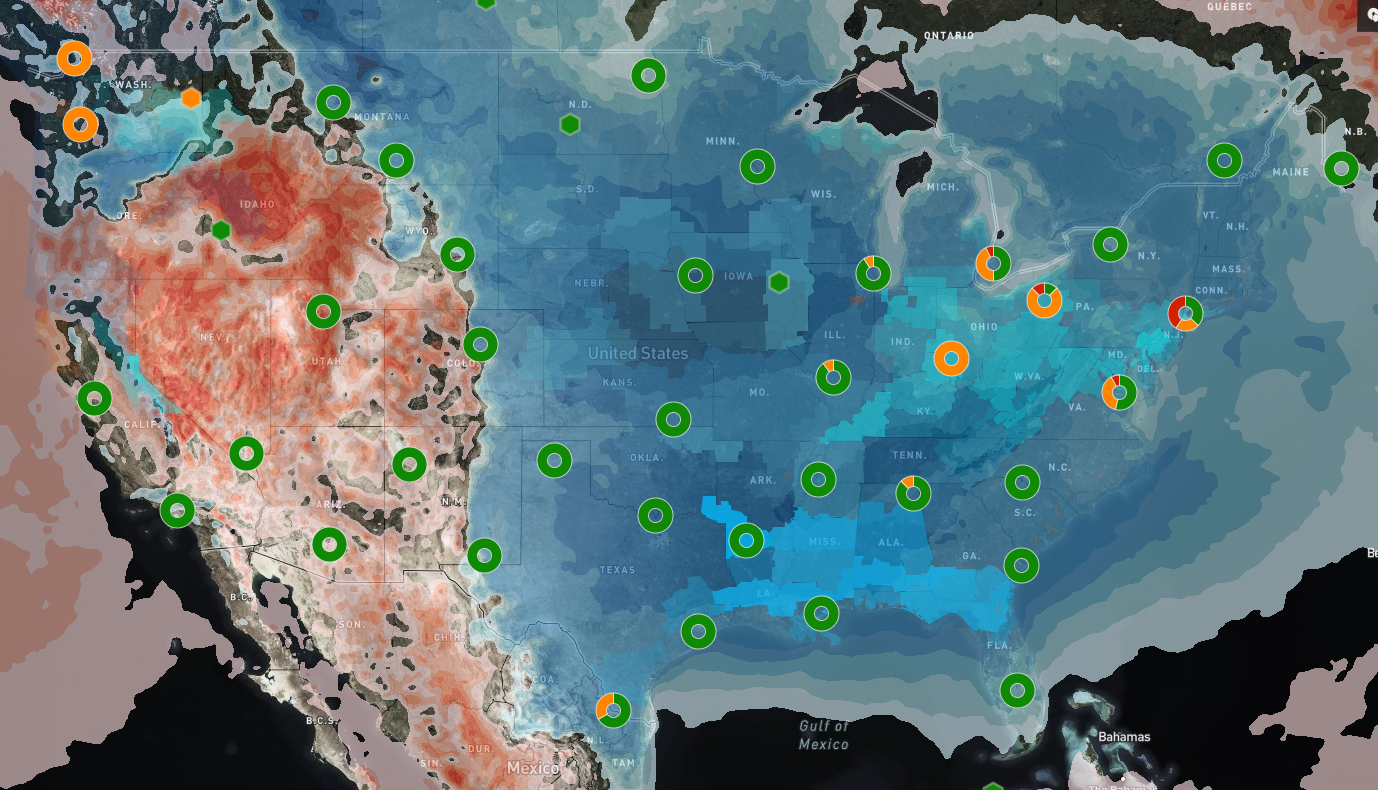
Looking at the SONAR Critical Events map showing temperature anomalies — how far above or below average the high temps are for Jan. 19 — all of the Eastern half of the U.S. was showing highs below average. The orange and red circles indicate the highest-risk areas of impact from the weather.

This pattern has been relatively persistent to start the year. A consistent train of systems dropping snow and ice has been hitting the Pacific Northwest, extreme cold hit a large portion of the Midwest, and significant wintry precipitation has hit the South.

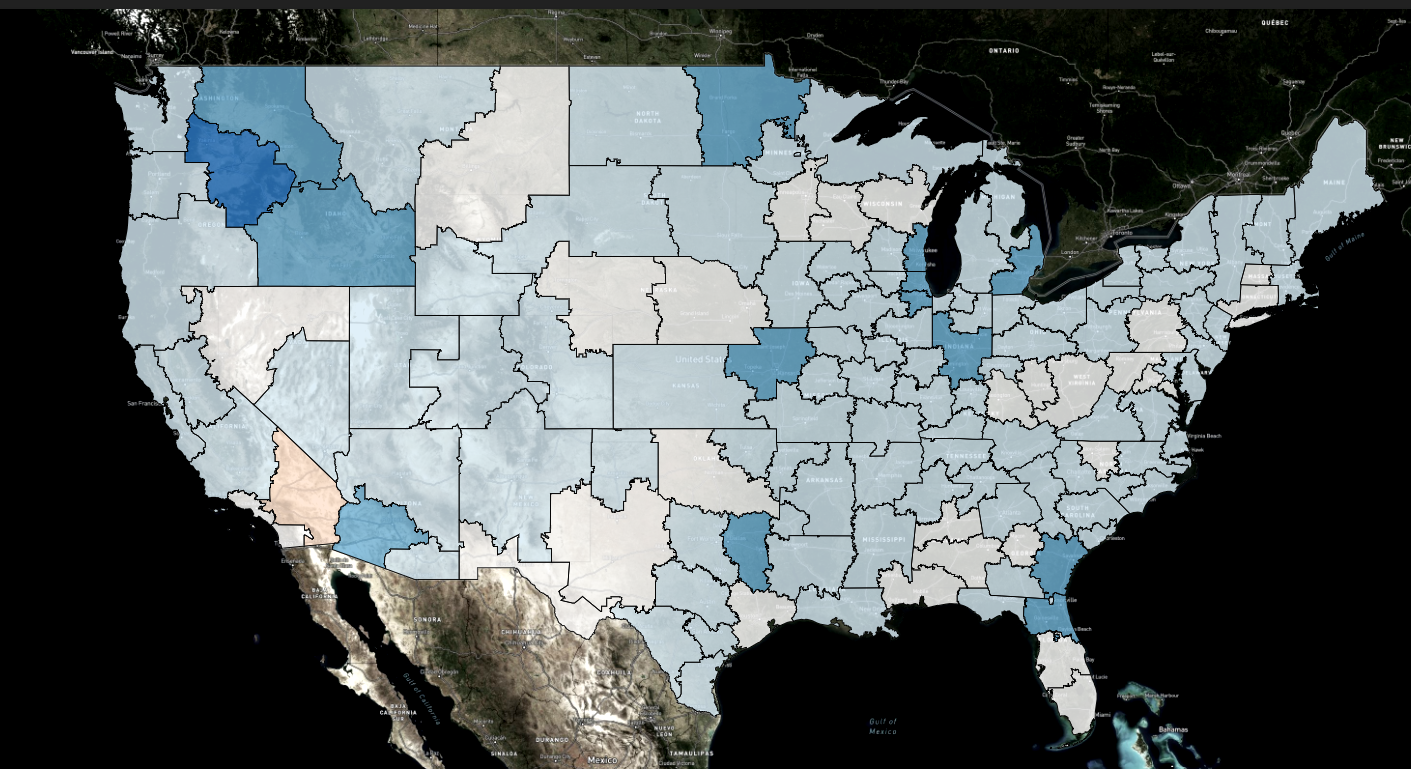
Looking at a map of the Weighted Rejection Index on Wednesday, which combines relative demand with weekly change in tender rejection rates, darker shades of blue indicate where the most significant increases in tender rejection rates have occurred. Note that they are not isolated to any one region.

Carrier networks have obviously been impacted as markets like Savannah, Georgia, that have not had snow or ice are showing relatively strong holiday level rejection rate increases. Note they are falling back quickly toward the end of the week. 

Higher temperatures are in the forecast for the Eastern half of the country next week, which should help rejection rates fall. Rejection and spot rates do not normally jump like this in January. This could be an early indication of a more volatile market in 2024, or at least one that has increased sensitivity as capacity continues to erode.

About the Chart of the Week

The FreightWaves Chart of the Week is a chart selection from SONAR that provides an interesting data point to describe the state of the freight markets. A chart is chosen from thousands of potential charts on SONAR to help participants visualize the freight market in real time. Each week a Market Expert will post a chart, along with commentary, live on the front page. After that, the Chart of the Week will be archived on FreightWaves.com for future reference.

SONAR aggregates data from hundreds of sources, presenting the data in charts and maps and providing commentary on what freight market experts want to know about the industry in real time.

The FreightWaves data science and product teams are releasing new datasets each week and enhancing the client experience.

To request a SONAR demo, click here.

No signs of panic as Nikola gets 2nd Nasdaq delisting warning

Nikola Tre fuel cell electric truck

Nikola Corp.’s languishing share price prompted the Nasdaq to threaten the electric truck maker with delisting its stock for the second time in eight months. But don’t look for the company to panic.

The quickest way to remove the threat is a reverse stock split, in which a company issues one new share for a multiple of outstanding shares, usually one for 20 or more. But without positive news driving such an action, Nasdaq scrutiny could continue.

“It doesn’t really change anything, except [it creates] the higher share price,” Nikola CEO Steve Girsky said in a December interview with FreightWaves. [A reverse split] hasn’t come up at the board. It doesn’t mean it won’t come up. When we look at the top five things we’re working on, that’s not one of them.”

180 days to get share price up

Nikola has 180 days, or until July 17, to get its share price above $1 for 10 consecutive trading sessions. Failing that, it could petition for an extension before any action would be taken. The Nasdaq issues delisting warnings when a stock trades below its $1 threshold for 30 consecutive days. Nikola has traded below $1 every session since Dec. 5. It closed Friday at 65 cents.

The Nasdaq started the clock on a Nikola delisting in May. But the share price recovered from a low of 54 cents on June 5 to $3.40 on Aug. 4, meeting the listing requirement.

“Stocks are connected to companies like rubber bands,” Girsky said. “Sometimes they get ahead, sometimes they get behind. We can only control what we control, which is the performance of the company and satisfying our customers.”

Reverse splits can hasten a business demise

A host of transportation startups have used the tactic to artificially bolster their share prices. Sometimes, it backfires and contributes to business failure.

Autonomous trucking developer Embark Trucks, electric truck developer Lightning eMotors and battery maker Proterra Inc. executed reverse splits. Embark sold its flagging business in May; Proterra filed for bankruptcy protection in August; and Lightning went into receivership in December. 

Nikola’s shares have fallen 76% in the last year, partly because it increased its number of authorized shares to 1.6 billion from 800 million. With few other avenues to raise money for scaling its fuel cell electric and hydrogen dispensing business, Nikola has used the new shares to raise money while existing stockholders saw their shares diluted in value.

Green shoots of business?

The company reported wholesaling 35 of its $450,000 hydrogen-powered fuel cell trucks in the fourth quarter. Another seven are in customer testing. 

IMC, the nation’s largest drayage fleet, which hauls containers from ports to warehouses, has placed a $22 million order for 50 Nikola fuel-cell trucks for use in California, Arizona and Nevada, according to the website Hydrogen Insight.

Nikola has not said when it will release Q4 earnings, which will include its cash position.

Equity sales and borrowing have bolstered Nikola cash position. But it still has a notice of going concern — hinting that the business could go under — that was filed with its Securities and Exchange Commission 10-K report last February.

“We’re not managing to get rid of a going concern,” Girsky said. “We’re managing to improve the cash profile of our business, satisfying our customers and getting trucks in the field.”

Early Nikola fuel cell truck buyer confident about hydrogen

Exclusive: Nikola CEO upbeat despite myriad challenges

Nikola gets delisting warning from Nasdaq

Click for more FreightWaves articles by Alan Adler.

Flexport raises $260M from Shopify

Digital-oriented freight forwarder Flexport has raised $260 million from e-commerce provider Shopify after a tumultuous year, giving the supply chain solutions provider a boost of confidence. 

Founder and CEO Ryan Petersen announced on Friday night via X, formerly known as Twitter, that Shopify (NYSE: SHOP) provided $260 million “on an uncapped convertible note.” He noted in a series of posts that Flexport’s fortress balance sheet is one of the company’s most strategic assets for the future. 

In his post Friday, Petersen thanked Shopify CEO Tobi Lutke, saying, “Thank you @tobi and your entire team for this tremendous vote of confidence in our business and partnership. … This is an important milestone along our journey to build an end-to-end logistics technology platform to make global commerce so easy that there will be more of it.”

The move comes after Flexport acquired Shopify’s logistics arm last year, expanding the company into e-commerce fulfillment and last-mile delivery. As part of the deal, Shopify received a 13% equity stake in Flexport and a seat on the board.  

In 2022, Shopify, which enables merchants to build online storefronts and leverage other services, invested an undisclosed amount in Flexport as part of a nearly $1 billion funding raise that valued it at $8 billion. The two companies have worked closely together since then. In February 2023, Flexport created a tool that helps sellers on the Shopify e-commerce platform manage and track inbound ocean shipments.

Additionally in October, Flexport underwent a 20% drop in workforce as it attempted to circumvent financial losses. The move cost about 600 employees in total. 

This is a developing story. 

The sad but important story of Lincoln’s train funeral procession

FreightWaves Classics is sponsored by Old Dominion Freight Line — Helping the World Keep Promises. Learn more here.

On April 15, 1865, President Abraham Lincoln was infamously assassinated. Six days later, his body began its journey to Springfield, Illinois, from Washington to be buried. He was transported by train over a route that mimicked an important trip during the president’s life — his inaugural journey.

About 300 people traveled on the funeral route in the train, including the president’s eldest living son, Robert. But also onboard was a coffin containing the body of Willie, Lincoln’s other son who died at 11 years old from typhoid fever. The boy’s body was exhumed from a cemetery in Washington to be reburied with his father. The destination of Springfield was for the president and his son to be buried in the former’s hometown.

First lady Mary Todd Lincoln sat out the journey, consumed by grief, according to reports at the time.

The steam-powered train was named The Lincoln Special, while the car itself that carried Lincoln’s coffin was named the United States. The train’s primary purpose would end up being this funeral procession, but its original purpose was for presidential travel. The idea of the train, built in 1863, was similar to the concept that is Air Force One today. The train was even equipped with 16 wheels for a smoother ride and was lavishly decorated.

Lincoln would never end up using the train while he was alive.

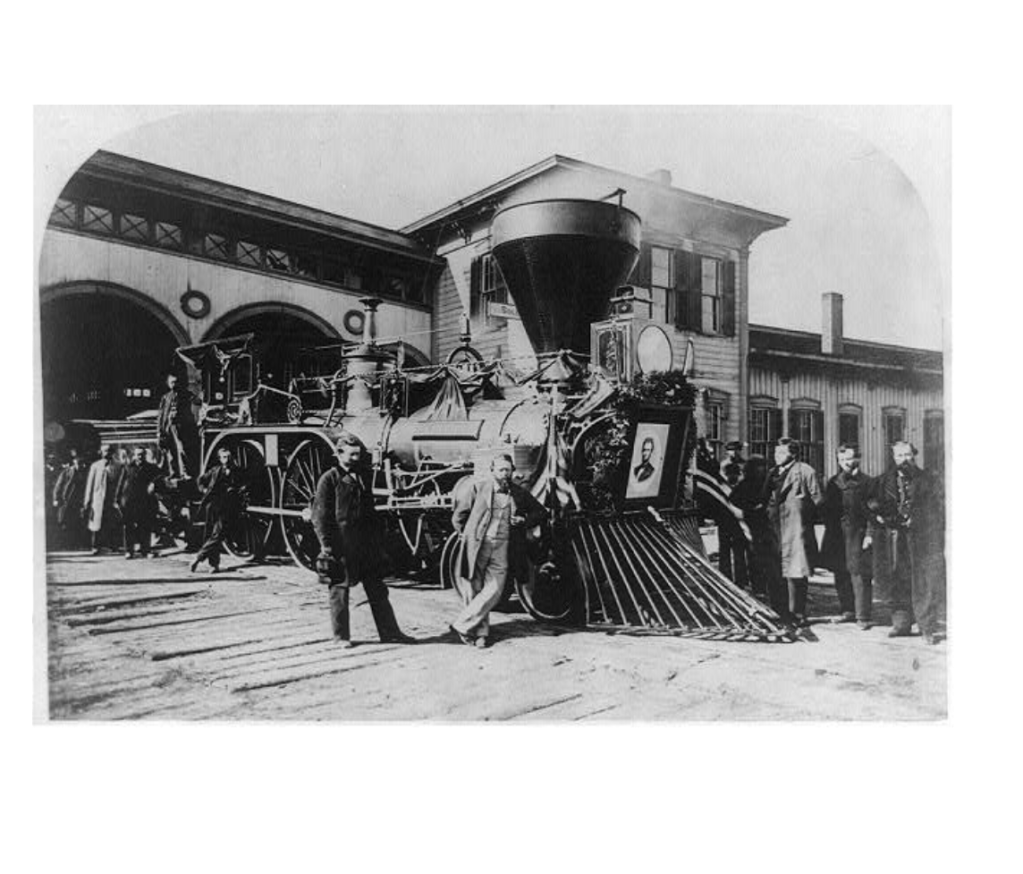
The train cars were draped with black bunting. (Photo: Library of Congress)

Both the railroad industry and the Lincoln administration were key forces in the 1830s, making the funeral procession of Lincoln’s body on a train greatly fitting as well as impactful. Not only did these two come to prominence during the same period, but Lincoln also often advocated for the use of rail early on in his political career, beginning with his push for new train lines as a young legislator. Later on but before his presidency, Lincoln also served as an attorney for numerous railroads, according to National Geographic.

Additionally, he traveled by train often throughout his presidency. The funeral procession followed his inaugural route on purpose, but it also crossed some paths that were used by slaves as they attempted to escape to the North, National Geographic noted. Soldiers during the Civil War often took the same route during its Maryland and Pennsylvania leg. Some of this leg still exists today, while most of the rest of the journey is lost to time.

Throughout the funeral procession route, American citizens gathered to mourn the loss of their president. There were nine cars total, each with black blunting draped over. They were also accompanied by a car for the hearse, which was retrofitted into what would have been Lincoln’s primary room, and horses.

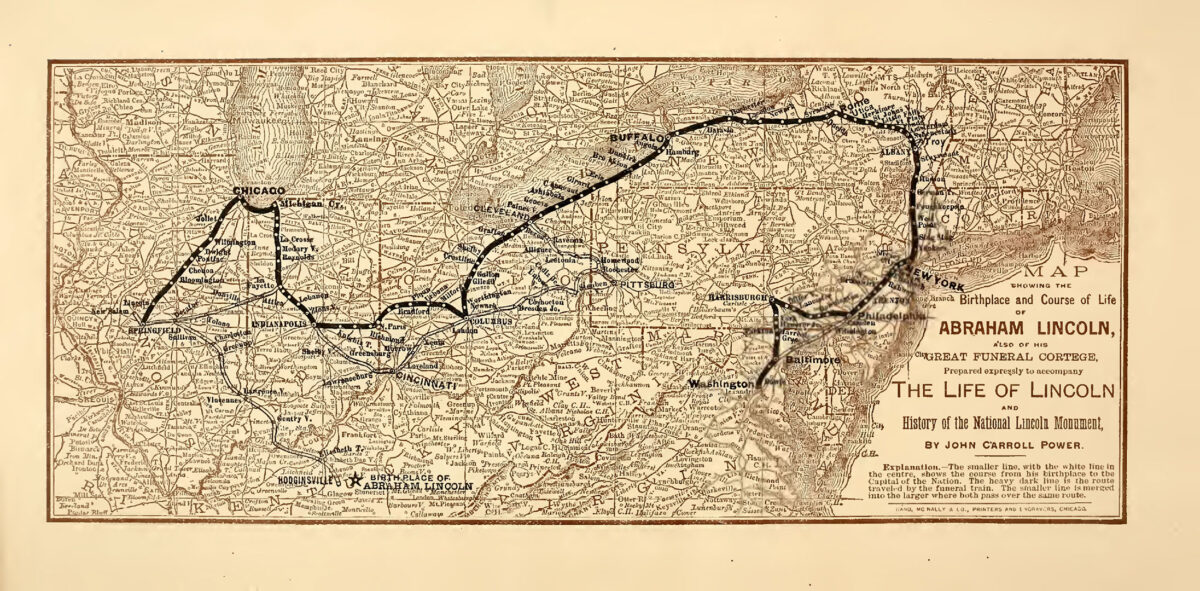
A map of the funeral procession of President Abraham Lincoln. (Photo: Ford’s Theater)

“At every cross-roads the glare of innumerable torches illuminated the whole population from age to infancy kneeling on the ground, and their clergymen leading in prayers and hymns,” said one passenger on the train procession. Lincoln’s body would travel through 180 cities in seven states.

Some of the 300 people on board were funeral procession personnel and an embalmer to care for the two bodies throughout the ride.

The U.S. government sold the train to Union Pacific and transported it to Omaha, Nebraska, where it was used for numerous purposes and was stored at the Union Pacific grounds, according to the state of Nebraska.

But after numerous changes in ownership and uses, the train was lost to a grass fire near Minneapolis in 1911.

More than 150 years after Lincoln’s death, Arizona chemistry teacher and train enthusiast Wayne Wesolowski grappled with an obsession about a mystery surrounding the train. He wanted to know what the color of the “United States” car had been.

Newspaper articles from the time of the funeral reported conflicting facts, some stating that the car was a chocolate brown and others saying it was a claret red. And of course there were no color photographs during this time. Plus, because of the fire, there was no way to tell for sure anymore.

Scholars whose expertise focused on the president were unable to determine the car’s true original color. But when historians tried making a replica of the train, Wesolowski, who consulted on the project, reached out to a Minnesota man who had a window of the train in his possession.

After years of Wesolowski begging, the owner of the window finally relented and lent a piece of trim out for analysis to determine its true paint color after years of degradation, according to a USA Today article about the discovery. The man who owned the window preferred to remain anonymous. Through the color-matching process of Munsell Color System, conservator Nancy Odegaard from Arizona State Museum determined that the color was maroon: 16 parts black and four parts red.

The replica of the train debuted in 2015 and toured the Midwest for the 150th anniversary of Lincoln’s assassination.

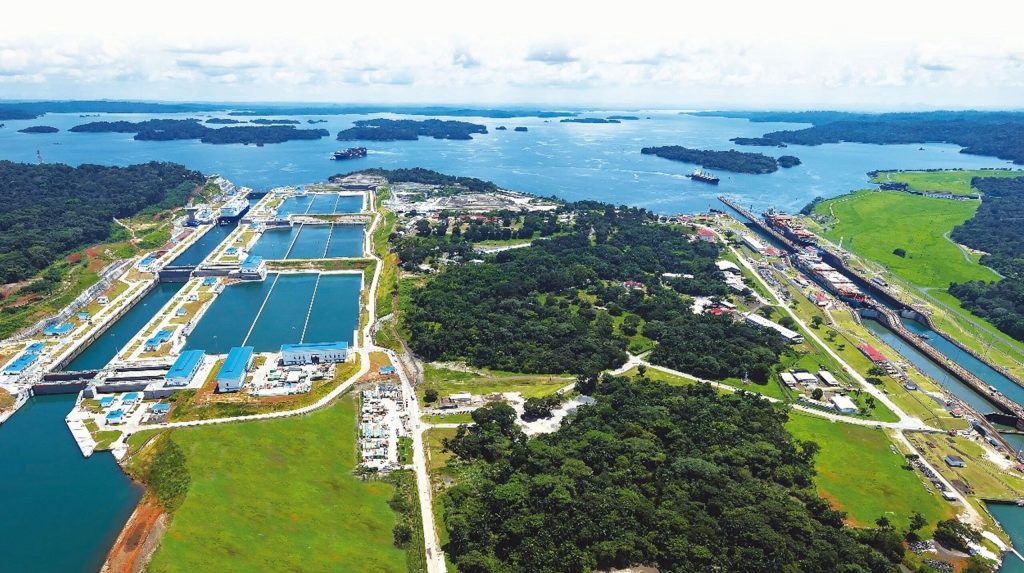
Panama Canal transits sink to new drought-driven low in December

a photo of Panama Canal

The Panama Canal has faded from the headlines amid all the focus on the Red Sea. But fallout to global supply chains from Panama’s drought is far from over. The country has entered its dry season, which extends until May.

Transits declined yet again in December as reservations were further restricted, according to newly released data from the Panama Canal Authority (ACP).

On a positive note, the pace of the decline has slowed and more rain than expected in November allowed the ACP to increase reservation slots this month.

There were 746 ship transits in December, including transits through both the older Panamax locks and the larger Neopanamax locks that debuted in 2016.

December transits fell 4.7% versus November, a much lower rate of decline than in November, when transits plunged 21.9% versus October.

To put the latest numbers in historical perspective, December’s transits were 27.5% below transits in December 2015, before the Neopanamax locks went into service. The Neopanamax locks took almost a decade to build and cost over $5 billion.

Neopanamax locks: Another big fall for LPG

Transits via the Neopanamax locks dropped 5.9% in December versus November, compared to the 27.8% slide in November versus October.

Liquefied petroleum gas (LPG) shipping was the primary culprit. LPG transits via the Neopanamax locks fell 17.9% in December versus November, on top of a 34.1% drop in November versus October.

High-capacity LPG carriers known as very large gas carriers (VLGCs) began using the Panama Canal for voyages between the U.S. Gulf and Asia after the debut of the Neopanamax locks (VLGCs can’t fit in the Panamax locks).

Panama’s drought restrictions initially forced VLGCs to switch to the Suez Canal. The Houthi attacks have now pushed VLGCs around Africa’s Cape of Good Hope.

The highest-volume user of the Neopanamax locks — container shipping — also pulled back in December, but to a lesser extent. Container ship transits through the Neopanamax locks edged down 2.3% month-on-month, following a 19.5% decline in November versus October.

chart of Panama Canal transit data
(Chart: FreightWaves. Data: Numbers derived by FreightWaves from ACP’s monthly release of cumulative fiscal year transits.)

Panamax locks: Dry bulk transits drive drop

Transits via the Panamax locks fell 4.3% in December versus November, compared to a 19.3% sequential fall in November.

Dry bulk shipping was the primary driver of declines yet again last month, with a 31% sequential drop in transits in December following a 47% sequential collapse in November.

The fourth quarter marks the peak of U.S. exports of soybeans to Asia, with those volumes bolstered by continued exports of corn and wheat.

Agribulk cargoes are carried aboard Panamax-size or smaller vessels due to terminal restrictions in both the U.S. Gulf and Asia.

Panamaxes laden with U.S. farm exports shifted from Panama to the Suez Canal route in the fourth quarter of 2023. These ships have continued to ply this route despite attacks in the Red Sea, although diversions to the Cape of Good Hope are now starting to pick up, following attacks on two U.S.-owned bulkers in the past week.

Average daily transits plunge year on year

The ACP also compiles data on average daily transits. These numbers show that drought impacts to the Neopanamax locks only began in November, whereas fallout at the Panamax locks transits began last May.

The daily average further deteriorated at both locks in December, with large year-on-year declines.

There were an average of 6.71 transits per day via the Neopanamax locks in December, 28% below the average in December 2022.

chart of Panama Canal transit data
(Chart: FreightWaves based on ACP’s monthly canal operations summaries.)

The Panamax locks handled an average of 17.42 transits per day last month, down 37% year on year.

(Chart: FreightWaves based on ACP’s monthly canal operations summaries.)

Reservation slots increased in January

In November, the ACP announced emergency restrictions on transit reservations to conserve water. It eased those restrictions beginning this month in light of better-than-expected water levels.

Daily reservations were initially scheduled to drop from 22 in December to 20 this month and 18 in February (13 Panamax, five Neopanamax).

Instead, the ACP increased transit slots to 24 starting this month (17 Panamax, seven Neopanamax). This may lead to a sequential improvement in transit numbers in January versus December, arresting the slide.

That said, the improved reservation schedule remains heavily constrained versus the ACP’s pre-drought “normal.” The current daily reservations are still 33% below the usual 36 daily transits, with available Panamax slots down 35% and Neopanamax reservations down 30%.

Panama Canal’s remaining liner services

The current situation at the Panama Canal for container shipping was discussed in a presentation by freight forwarder Flexport on Thursday.

“There are still Panama Canal services,” noted Nathan Strang, Flexport’s director of ocean freight for the U.S. Southwest. “However, those are going to be subject to canal surcharges and reduced capacity, so access to those services is limited.”

According to Kyle Beaulieu, Flexport’s head of trans-Pacific, “Panama has opened up a little bit more than expected and has allowed a few more transits in January. So, some carriers have pivoted to route via Panama on a ship-by-ship basis. Most notably, THE Alliance [Hapag-Lloyd, ONE, HMM, Yang Ming] has done this with some vessels on its EC1, EC2 and EC6 services.”

Remaining Panama Canal services offer importers a shorter transit time to the U.S. East Coast than Cape of Good Hope services. But there’s a complication: Most container ships are only using the canal on the fronthaul leg.

Connor Helm, Flexport’s manager of ocean procurement, explained: “The large majority of the vessels, on their return leg, are actually continuing around the Cape of Good Hope. This makes sense, because there’s such a small allotment of vessels that can go through the Panama Canal. Why waste a transit on a vessel that has largely empty equipment or lower-paying export goods?

“So, you may avoid some disruption on your fronthaul but if you’re expecting to load on the same vessel on the next voyage, it is likely to be delayed going around the Cape of Good Hope.”

Click for more articles by Greg Miller 

How this ruling is impacting 4,000 warehouses in SoCal and your freight – WTT

On episode 671 of WHAT THE TRUCK?!?, Dooner is talking to Amazon’s top plush seller, Molson Hart, about the state of e-commerce, challenges of selling on Amazon and life lessons in retail.

Zero Rig’s Ollie Danner and EV Fleet Semi Corp.’s Jake Guerra talk about what WAIRE means for 4,000 warehouses in California and your freight. We’ll also learn about the state of EVs as we kick off the year, and CARB regulations clamp down on drivers.

Reliance Partner’s Jackson Alexander tells us everything we need to know about truck insurance renewals. 

Plus, takeaways from the State of Freight; the dangers of following your GPS; fallout bunkers; cargo theft in Memphis; and more.

Watch on YouTube

Subscribe to the WTT newsletter

Apple Podcasts

Spotify

More FreightWaves Podcasts

J.B. Hunt highlights improved intermodal volume but also rate pressure

J.B. Hunt kicks off earnings season

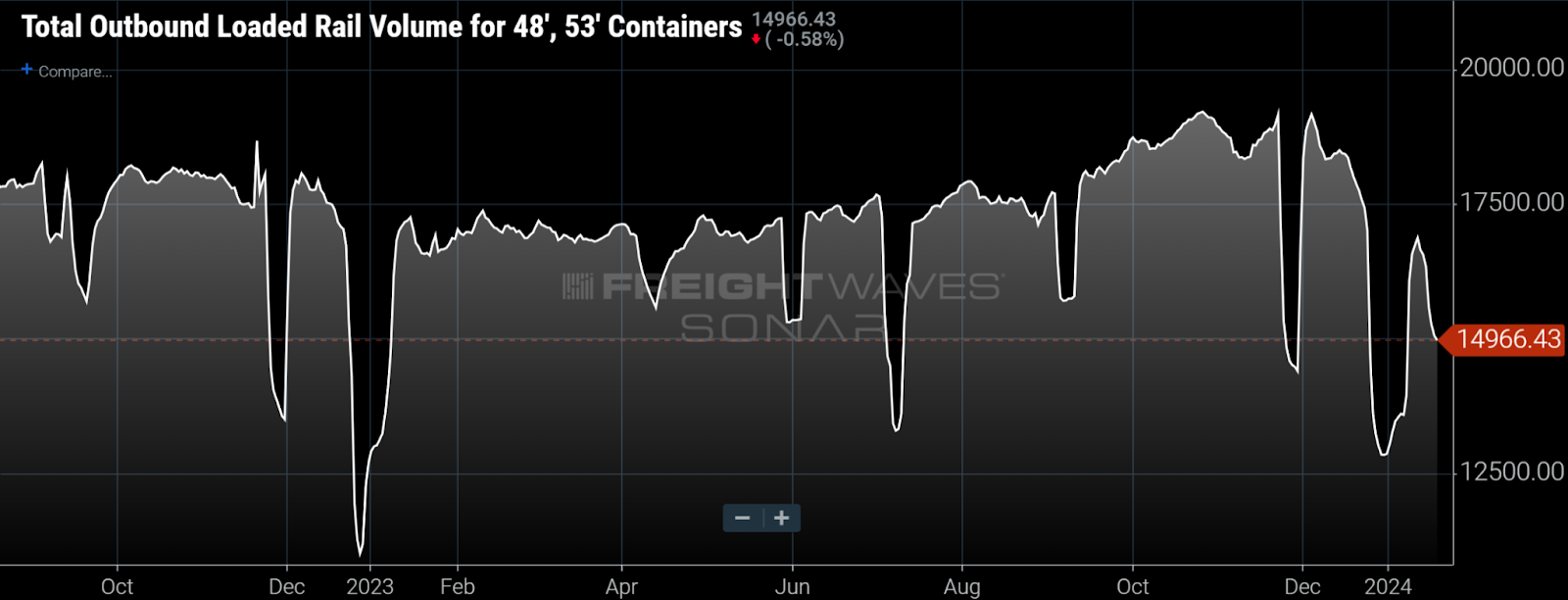
On Thursday’s analyst call (see Todd Maiden’s earnings writeup here), J.B. Hunt highlighted both improved intermodal volume and pressure on intermodal rates. Intermodal volume exceeded most industry participants’ expectations for a lack of peak season in the fourth quarter of last year. The carrier’s intermodal volumes were up 6.5% year over year in the fourth quarter, which implies market share gain when compared to the 5% y/y increase in loaded containerized domestic intermodal volume in SONAR (ORAILDOML.USA ticker). 

Loaded domestic intermodal volume rose throughout 2023, peaking in the fourth quarter. 

Comparing J.B. Hunt’s Q4 intermodal volume growth to SONAR data shows that the carrier outperformed the market by about 150 basis points in each of the past three months. J.B. Hunt intermodal volume increased 6% in October (versus up 4.4% for industrywide loaded domestic intermodal container volume in SONAR), up 6% in November (versus up 4.6% in SONAR) and up 8% in December (versus up 6.7% in SONAR). In the first 18 days of 2024, SONAR shows loaded domestic intermodal volume down 1.2% y/y, reflecting adverse weather.

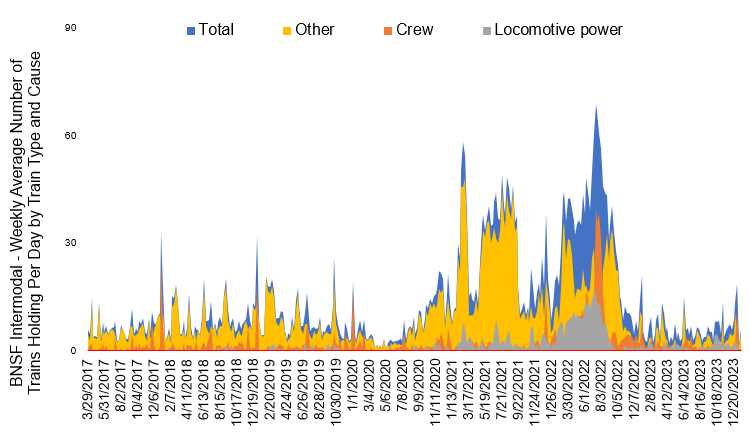
A metric for service, intermodal train holdings per day improved on BNSF, J.B. Hunt’s Western Class I rail partner, last year from disruptions experienced in 2020-2023. (Chart: U.S. Surface Transportation Board and FreightWaves)

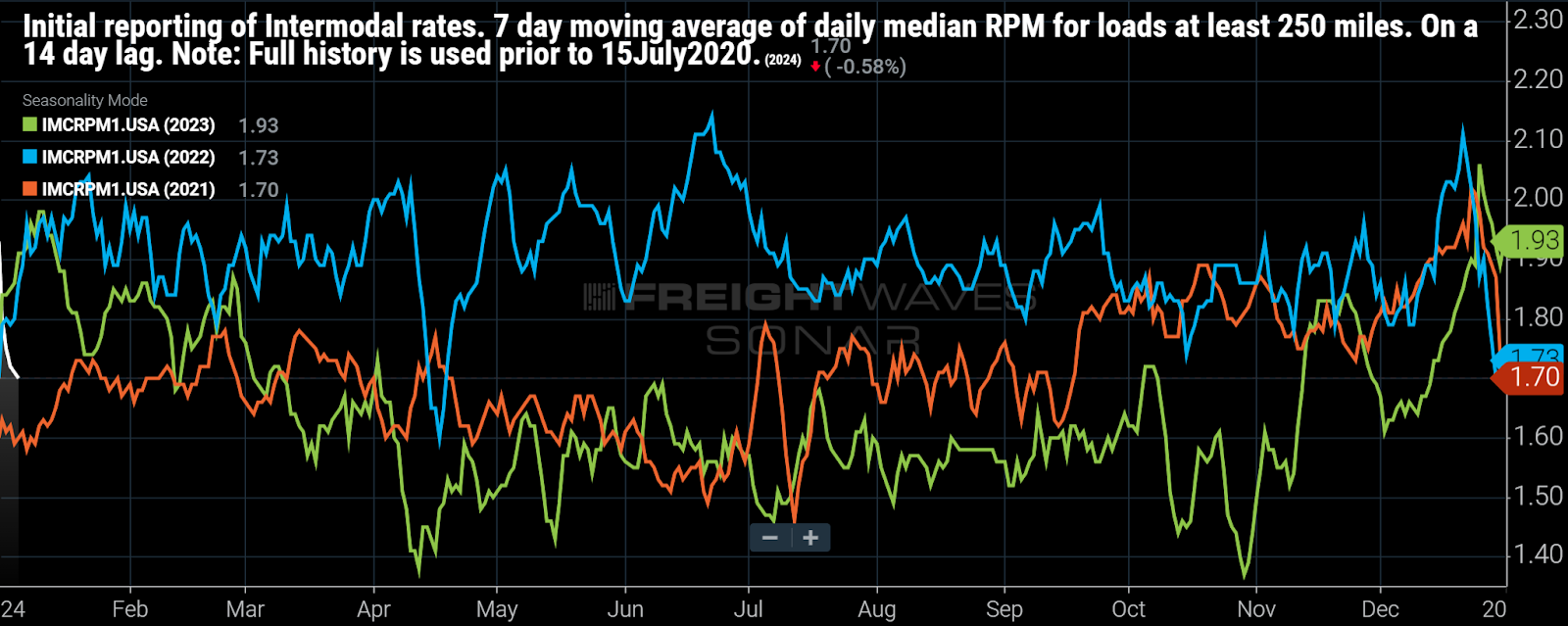
The company mentioned several times that it believes the improving volume is a leading indicator of market conditions and the rate pressure is a lagging indicator. The company’s revenue per load declined 12.8% in the fourth quarter (a metric that includes fuel, mix and changes in rates). That’s directionally consistent with the most comparable metric in SONAR, which shows a 9.7% decline in average intermodal rates per mile in the fourth quarter (chart below) — that number, however, excludes fuel surcharges. It appears, both from J.B. Hunt’s comments on Thursday and from discussion we had with shippers, that bids conducted during the fourth quarter resulted in significantly lower rates that will result in lower revenue-per-load and revenue-per-mile metrics during the first half of 2024.

Following bids conducted in H2 2023, average intermodal rates per mile started 2024 (white line above at left of chart) below the prior two years.

Potential Kroger-Albertsons close date pushed back

A major grocery merger is now expected to close by August, pushing back the initial close date of “early 2024.” According to Axios, the Federal Trade Commission is not expected to weigh in on whether the Kroger-Albertsons deal is anticompetitive until sometime in February. In December, the grocers informed the FTC that they believed they had met all the requirements for the merger following the announcement that 413 stores will be divested to C&S Wholesale. The state of Washington’s attorney general filed a lawsuit to block the merger, citing an expectation that merging the two chains will be to the advantage of nonunion retailers, such as Walmart and Amazon, which will ultimately hurt workers. A group of liberal lawmakers wrote to the FTC opposing the transaction.

The FTC has three options: (1) close its investigation, which would allow the deal to proceed, (2) ask for specific requirements before approving the deal, or (3) take legal action in federal court to block the deal.

For CPG companies, the merger would mean greater customer concentration, with the combined company representing 10% of sales or more for many CPGs. In addition, the combined grocer could become more aggressive in growing its private-label brands by promoting its bestselling private labels across grocery chains.

Retailers look to AI to assist in supply chain management

This article from SymphonyAI following the National Retail Federation (NRF) meeting outlines how retailers are looking to make productive use of AI. Demand and inventory forecasting are some of the use cases that have retailers most excited. The idea is that AI can incorporate a broader universe of data sets, considering more variables, to potentially improve demand forecasts for higher-in stock rates, fewer instances of over-ordering, and protection against potentially disruptive events.
FreightWaves’ John Kingston also wrote up takeaways from NRF (article here), which included an apt quote from Helen Davis, senior vice president and head of North America operations at Kraft Heinz, describing the benefit of AI to supply chains. AI processes at Kraft Heinz will look to create “data flows and a self-driving supply chain that can automatically reset itself when there are disruptions.”

To subscribe to The Stockout, FreightWaves’ CPG and retail newsletter, click here.