Lessons on reaching trucking’s next generation — Taking the Hire Road

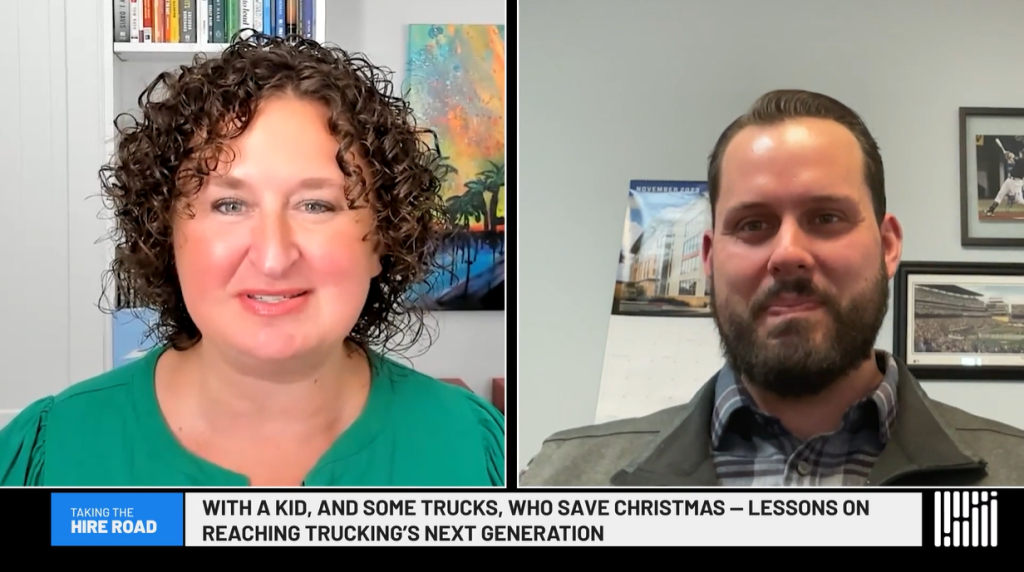
On this week’s episode of Taking the Hire Road, guest host Leah Shaver, president and CEO of the National Transportation Institute, is joined by Anthony Book, VP of sales and marketing at Long Haul Trucking

While serving as the director of sales and marketing might imply a customer-facing role, Book devotes much of his attention to leading driver recruitment and retention programs at his company. 

At Long Haul Trucking, “we always say that we have two sets of clients: We have our drivers and we have our customers that pay us to haul their freight,” Book related.

“You need to keep both parties happy if you want to find success.”

Accordingly, Book and his colleagues have redoubled their efforts around internal marketing, which can range from employee advocacy to promoting the company’s mission to its drivers.

To sustain a company culture that puts employees first, that vision has to start from the top. “It starts with our CEO and CFO, who lead our management team, and we all have shared values about what we want Long Haul to stand for,” Book said. 

“It really comes down to being a driver-first company.”

Of course, it doesn’t hurt that many within Long Haul’s management team have firsthand experience with the responsibilities of the job.

“Our CEO and our VP of fleet — both former drivers — do a wonderful job of empathizing with our drivers when they talk about the ups and downs of our industry,” Book noted.

Yet talk is cheap if it is not reinforced with action. “We have a constant focus to ensure we are doing everything we can,” Book stressed, “to keep pushing every single day to bring in as much work for our drivers as possible.”

Work is only one aspect of Long Haul’s driver-first mission, however. 

“We take so much pride in giving our drivers the time at home that they need,” Book stated, “giving them that work-life balance that’s so important to our drivers.

“All of these personal and very important factors to having a long-term successful driving career,” he continued, “add up to our drivers wanting to be with us for many, many years.”

This unwavering focus on drivers’ health and quality of life, if anything, is the secret sauce to driver retention.

But retention is half the battle. Recruiting the younger generations to the industry has proved a struggle, despite overlap with their core values and the possibilities offered by trucking.

In his time on social media, Book has found that young people increasingly prioritize freelance gigs that allow them to travel the country. “They might live out of their van, they might even live out of their car.

“I always wonder to myself: Why don’t you just live out of a beautiful semi?

“You can work on the roads and wake up in a different town every day. There’s a real spirit of adventure that comes with trucking,” Book mused. “Maybe this next generation will find their desire for that adventure.”

Click here to learn more about Long Haul Trucking.

More from Taking The Hire Road:

Lessons from across the pond

Show up for yourself to show up for others

Leveraging associations and networking in tough economy

Are startup investors getting past the FOMU cycle?

The same driverless technology that Kodiak Robotics plans to put on highways in late 2024 has application to the military, which sees leveraging commercially developed innovation as smarter than creating everything itself.

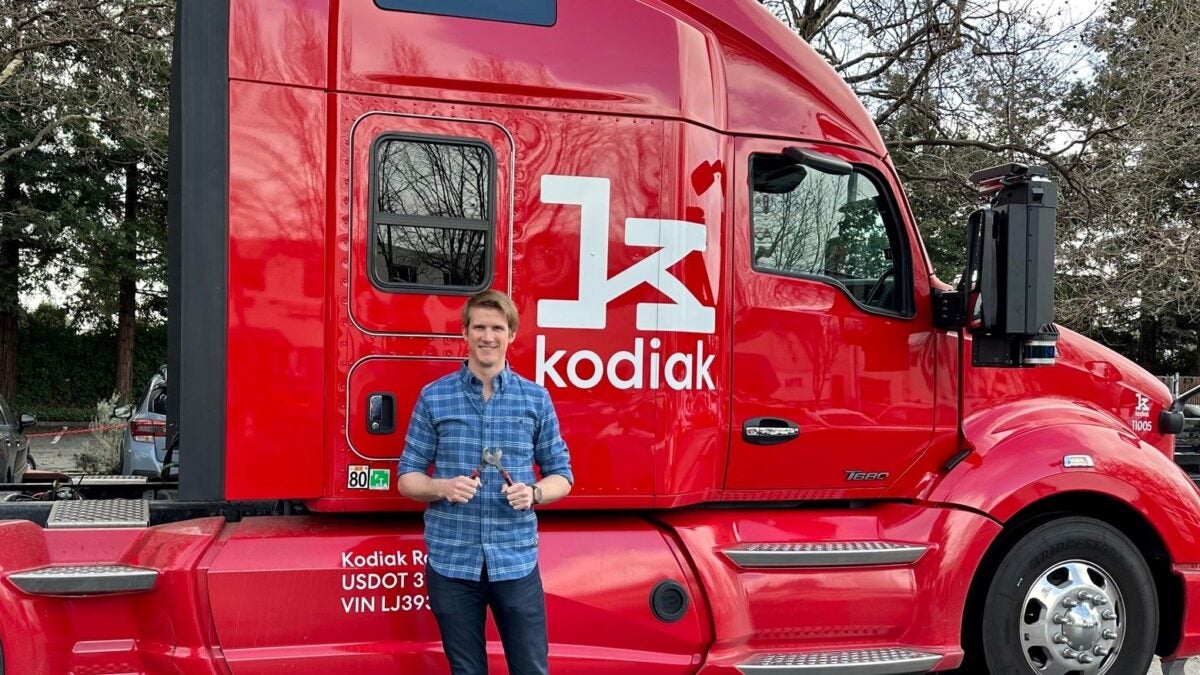
Following Kodiak’s reveal of its Ford F-150-based prototype autonomous vehicle for the U.S. Army on Monday, Kodiak founder and CEO Don Burnette and I discussed dual-use technology, the recent comings and goings in the autonomous trucking space and a thawing of investor resistance to startups.

TRUCK TECH: Kodiak is embracing the dual-use approach to autonomy in a way that appears to differentiate you from most highway autonomy competitors.

BURNETTE: It’s not every day that any company, much less a startup, has the secretary of defense come out and talk to us and take a look at our technology and really vouch for what’s happening. I think what that shows is the importance of dual use, the importance of software and AI in the future of government programs more broadly.

U.S. Secretary of Defense Lloyd Austin visited Kodiak in Mountain View, California, to check out its autonomous technology in which the Army is investing up to $50 million. (Photo: Kodiak Robotics)

Finding applications of technology that can apply to a military use case simultaneously with a civilian and commercial use case is the future, because that’s where the efficiency is. That’s where the iteration is, that’s where the learnings are. With AI, it’s different. We’re not building boxes of metal anymore. That’s the old way. Now, data is king, users are king, and in order for the government to take advantage of that, they have to leverage dual use.

TRUCK TECH: The Ford F-150 pickup prototype brings light-duty vehicles into the picture. You added teleoperations capability to Level 4 autonomy. Was that required?

BURNETTE: It’s important for government applications that we be able to transition from teleoperation to autonomous and back. Everybody recognizes that autonomy is not going to get you everywhere all the time. It’s just not a realistic expectation in the short or medium term. Maybe in the long term, it’s a different story. But humans are going to remain in the loop.

Teleop is much more conducive to low-speed environments and environments that have good cellular reception or Wi-Fi, or some kind of wireless communication availability. The jury is still out on whether or not this technology is poised to disrupt the commercial space.

TRUCK TECH: Three autonomous trucking developers — Embark Trucks, Waymo Via and, most recently, TuSimple’s U.S. operations — have left the field this year. What do you make of this?

BURNETTE: It’s a challenging environment. You not only have to have the right business strategy, you have to have the right technology, the right partners. It’s hard for the media and folks who are not intimately insiders in this industry to understand differentiation and what it actually takes to make this a reality.

Slowly but surely you’re going to start to see companies who have the right approach pull ahead and ultimately survive. It’s not like there’s any specific reason one or any other company doesn’t succeed.

TRUCK TECH: A shakeout clearly has occurred. But we’re also seeing new players like Waabi Innovation and Stack AV arriving.

BURNETTE: There will always be new players. This market is massive. The opportunity is large. I was telling the team the other day [that] even if Kodiak were the only company to survive in this space, there would be no such thing as winning because there will always be new companies starting projects. 

I wouldn’t be surprised if more companies in 2024 and 2025 entered the stage. It’s going to be a continuous influx of folks trying to differentiate themselves within the market. But that’s true of every market [and] every industry. Self-driving is no different. It just happens to be one that nobody has quite cracked yet.

Don Burnette, founder and CEO of Kodiak Robotics, sees the investment community warming to startups after a period of FOMU — fear of messing up. (Photo: Alan Adler/FreightWaves)

TRUCK TECH: Because Kodiak is privately held, I always ask you for a financial update. Your last announced capital raise was in 2021. Any update?

BURNETTE: You’re always thinking about future capital needs and we are no different from any other company. We’re not profitable. We’re definitely going to be looking to the markets to raise more capital.

TRUCK TECH: Is the picture for such fundraising getting better?

BURNETTE: The conversations are certainly turning more positive. The whole community is starting to ease up. And this is a momentum-driven business. When investors think other investors are poised to jump, that kind of creates a little bit of a springboard effect.

TRUCK TECH: A fear of missing out effect?

BURNETTE: For a couple of years now, we’ve been in a FOMU cycle, [or] fear of messing up. And that can only last for so long. I’m definitely starting to hear the murmurs of things turning around, and I think it’s great. It’s a perfect time. 


Hyzon Motors talks hydrogen and fuel cells at COP 28

Hyzon Motors CEO Parker Meeks spoke on two panels during the United Nations Climate Change Conference, referred to as COP 28, in the United Arab Emirates this week. In an email exchange, Meeks told me what the fuel cell developer hoped to accomplish and whether it was achieved.

TRUCK TECH: What was Hyzon’s key message at COP 28 and how did you feel it was received?

MEEKS: Hyzon’s key message at COP 28 was that hydrogen fuel cell technology is ready to deploy today, that demand for FCEVs [fuel cell electric vehicles] is increasing thanks to new and expanding subsidy schemes and customers’ disappointing experiences with BEVs [battery electric vehicles]. Hyzon’s technology is on the road, doing real work just like its diesel counterpart, with sustainable and competitive cost profiles. I believe our message was heard loud and clear by leaders both inside and outside of the industry.

TRUCK TECH: COP 28 got a lot of media play around Big Oil wanting to keep petroleum in the mix. Methane also got some attention. How was the hydrogen message received in the panels in which you participated?

MEEKS: We’ve been having very productive conversations around the role of hydrogen in heavy-duty applications. There is clearly a need and desire among companies and leaders to find ways to quickly and responsibly decarbonize our hard-to-abate sectors and use cases. There is an emerging consensus that hydrogen has a significant place in the mix of decarbonizing solutions particularly in harder-to-abate use cases like trucking.

It was important to us to prove that hydrogen is an answer to these complex problems. Hyzon received very positive feedback on the panels we participated in, and we successfully demonstrated that hydrogen fuel-cell technology is a viable alternative to traditional fossil fuels for vehicles and other sources of power to operate efficiently and emission-free.

TRUCK TECH: Hyzon’s global ambitions made COP 28 a good event for you. Did interest in fuel cells for transportation and your new entry into stationary power attract many potential customer discussions?

MEEKS: Going into COP 28, our primary goal was to highlight the strength of hydrogen, and more specifically, hydrogen fuel cell technology as an answer to many of the concerns of climate change. I believe we accomplished that goal. There is clearly an increasing interest in putting hydrogen to work in trucks and other heavy-duty use cases.

Equally important, there is a sobering acceptance that partners across the ecosystem — such as fuel and financing — need to work together to do things differently and make change happen faster to make this happen faster. COP 28 provided a backdrop for us to bring these parties together and advance productive conversations.

Hyzon Motors CEO Parker Meeks spoke on two panels at the United Nations Climate Conference known as COP 28. (Photo: Hyzon Motors)

Briefly noted:

Torc Robotics is the latest autonomous trucking developer to offer its driver-monitored autonomous services to Uber Freight

Ford’s commercial division Ford Pro and national energy company Xcel Energy are collaborating to install 30,000 fleet-focused electric vehicle charging ports by 2030.

Hyliion Holdings will talk about the specifics of its Karno generator technology next Tuesday in a fireside chat as it seeks customers to adopt the system for stationary charging.

Electric vehicle startup Mullen Automotive is taking orders for a Class 1 cargo van that resembles the defunct offering from the bankrupt Electric Last Mile Solutions startup. Mullen purchased ELMS assets for $105 million in November 2022.

Ryder System Inc. has signed its first two customers to multiyear electric vehicle contracts under the RyderElectric+ turnkey fleet solution. 

Ryder has signed its first two customers for multiyear electric vehicle contracts. (Photo: Ryder System Inc.)

Truck Tech episode No. 44: Industry aligns to slow California’s zero-emissions roll

Jim Mullen, executive director of the Clean Freight Coalition, explained the group’s lobbying and education efforts to slow California’s aggressive rules for zero emission trucks.

That’s it for this week. Thanks for reading (and watching). Click here to get Truck Tech via email on Fridays. And catch the latest in major events and hear from the top players on Truck Tech at 3 p.m. Wednesdays on the FreightWaves YouTube channel. We value your feedback. Please write aadler@www.freightwaves.com with comments and story suggestions.

Top 10 Tracks Through Time episodes of 2023

Tracks Through Time

FreightWaves Classics is sponsored by Old Dominion Freight Line — Helping the World Keep Promises. Learn more here.

As 2023 comes to a close, so does the inaugural year of the Tracks Through Time podcast.

The podcast is an audiovisual version of the history-focused FreightWaves Classics column, spotlighting interesting and lesser-known stories in history. We’ve had so much fun bringing you these stories all year and can’t wait to share more in 2024! 

To close out the year, we’ve compiled a list of the most loved episodes of 2023. Here is the list in no particular order. 

Deadliest US bridge collapse has mysterious folklore

The Silver Bridge collapse is popular in relation to unique folklore but it also completely changed how we look at safety regulations for bridges. Hear the story of the collapse and the folklore surrounding it. Then get an inside look at the story with West Virginia DOT’s Tracy W. Brown, a state bridge engineer.

The tragic crash of a US Navy airship

In 1933, a total of 75 U.S. Navy members lost their lives when airship USS Akron crashed and sank in the Atlantic Ocean off the coast of New Jersey. Brielle Jaekel is joined by Naval History and Heritage Command’s Caroline Johnson, who tells us the story of the fateful incident.

How 1 girl stopped a railroad disaster and saved 200 lives

Kate Shelley became a hero at 17 years old when she went through extreme measures to save a passenger train from certain disaster in 1881. 

The Suez Canal crisis of 1956: A pivotal moment in shipping history

A crisis over the Suez Canal put Egypt at odds against France, Britain and Israel. The story has surprising twists and unexpected secret motives. Find out how this shaped the future of shipping routes and globalization.

The supply chain of bathtub gin and bootlegging

Prohibition might have made the production and sale of alcohol in the United States illegal, but that doesn’t mean Americans put down the bottle. The supply chain for alcoholic beverages flourished during the ban but in a completely different way.

Lost cargo: The mystery of Flight 19

In December 1945, five U.S. Navy Avenger bombers took off from Fort Lauderdale, Florida, on a routine mission known as Flight 19. Their mission was simple: navigate to various points in the Atlantic Ocean and then return to base. However, this seemingly routine exercise turned into one of the most baffling mysteries in aviation history.

Lessons from the inferno: The Texas City disaster

In 1947, tragedy struck the port in Texas City, Texas, when a French ship carrying highly flammable fertilizer caught fire and caused devastation to the port town. But the lessons learned from the incident likely saved lives in the years following.

Truck driver’s vanishing act: The Devin Williams story

In this compelling episode, we examine the perplexing 1995 disappearance of truck driver Devin Williams. In the deep woods of Arizona’s Tonto National Forest on Memorial Day weekend, Williams’ 10-ton semi-truck careened through the woods, narrowly missing unsuspecting campers, and then vanished without a trace. 

How Macy’s Thanksgiving Day Parade logistics worked for almost 100 years

The Macy’s Thanksgiving Day Parade has gotten bigger and bigger every year since 1924, but how can such a big logistics program be pulled off year after year? This episode dives into how it works throughout the years.

Find out how the Rockefeller Christmas tree is transported year after year

Did you know there’s one company that always handles delivering the tree for Christmas to Rockefeller Plaza in New York? Find out about the history of its logistics and the process of picking the tree in this episode.

FreightWaves Classics articles look at various aspects of the transportation industry’s history. Subscribe to our newsletter!

Have a topic you want us to cover? Email bjaekel@www.freightwaves.com.

The growing significance of big and bulky in retail supply chains, logistics

By Bart De Muynck

The views expressed here are solely those of the author and do not necessarily represent the views of FreightWaves or its affiliates.

November saw the largest ever Black Friday sale, exposing the psychological mind frame of consumers. Adobe Analytics reported a record $9.8 billion in Black Friday online sales, up 7.5% from 2022, not accounting for inflation. And for Cyber Monday, the numbers were even stronger with consumers spending $12.4 billion, a 9.6% increase from 2022. It is a positive sign for the health of the retail industry because most retailers make the bulk of their profits for the year during the holiday shopping season. 

Within retail, the demand for big and bulky items is experiencing a notable surge, and this trend is reshaping the dynamics of the industry. Once considered a logistical challenge, retailers are now embracing the unique opportunities presented by oversized products, recognizing their potential for increased revenue and improved customer satisfaction.

The rise of e-commerce has been a catalyst for the prominence of big and bulky in retail. Consumers increasingly prefer the convenience of shopping online, including for large items like furniture, appliances and home fitness equipment. Retailers are adapting by optimizing their last-mile logistics to accommodate the delivery of oversized products directly to consumers’ doorsteps. Innovations in last-mile delivery management solutions like FarEye and last-mile networks like Frayt, combined with partnerships with specialized carriers like PickUp, are helping retailers overcome the challenges associated with transporting and delivering large items.

As consumers seek more personalized and unique shopping experiences, retailers are expanding their product offerings to include a diverse range of big and bulky items. This shift is evident in sectors such as home furnishings, fitness equipment and outdoor living products. The ability to provide an extensive selection of large items allows retailers to attract a broader customer base and cater to varied preferences, contributing to increased sales opportunities.

Recognizing that delivering big and bulky items requires a more personalized approach, retailers are offering flexible delivery options. Logistics platforms like FarEye offer route optimization, appointment scheduling, white-glove delivery services and the ability for customers to choose specific time windows for delivery. Providing customers with control over the delivery process enhances the overall shopping experience and fosters customer loyalty.

But it isn’t all good news. Holiday spending data, no matter how good or bad, doesn’t represent the state of the entire U.S. economy. We expect a fairly modest growth of 1% to 3% in 2024. As retailers are competing for that growth, it makes having the right technology to improve the customer experience while making the fulfillment processes more efficient so much more important.

Technology plays a crucial role in enhancing the customer experience for big and bulky retail. augmented reality and virtual reality technologies allow consumers to visualize how oversized items will fit into their living spaces before making a purchase. This not only reduces the likelihood of returns but also adds a layer of convenience and confidence to the online shopping experience for large products. Newer last-mile delivery management solutions allow retailers to handle the complex fulfillment of big and bulky. Solutions offered by companies like FarEye can handle these complexities by providing advanced optimization while also considering returns and even looking into sustainability. 

The environmental impact of packaging and shipping large items is a growing concern for both retailers and consumers. To address this, the retail industry is embracing sustainable packaging practices and eco-friendly shipping options. Retailers are exploring innovative packaging materials that are both protective and environmentally responsible. Additionally, the optimization of delivery routes and the use of electric or hybrid delivery vehicles contribute to more sustainable big and bulky retail operations.

Supply chain visibility is a critical aspect of managing big and bulky items effectively. Retailers are investing in advanced technologies such as radio frequency identification tracking, GPS systems and real-time analytics to monitor the movement of oversized products throughout the supply chain. Collaborative platforms that connect retailers, manufacturers and logistics providers are becoming increasingly popular, facilitating seamless communication and coordination to ensure timely and accurate deliveries.

The trends surrounding big and bulky items in retail underscore a shift in consumer preferences and the industry’s commitment to meeting evolving demands. The importance of optimizing logistics, embracing technology and implementing sustainable practices cannot be overstated. As retailers continue to adapt to these trends, the big and bulky category is poised to become a strategic growth area, offering new possibilities for revenue generation and customer satisfaction in the dynamic world of retail.

Look for more articles from me every Friday on FreightWaves.com.

About the author

Bart De Muynck is an industry thought leader with over 30 years of supply chain and logistics experience. He has worked for major international companies, including EY, GE Capital, Penske Logistics and PepsiCo, as well as several tech companies. He also spent eight years as a vice president of research at Gartner and, most recently, served as chief industry officer at project44. He is a member of the Forbes Technology Council and CSCMP’s Executive Inner Circle.

Sentencings in Louisiana staged truck accident case delayed again

The doubleheader sentencing of two of the highest-profile men involved in the Louisiana staged truck accident scam has been delayed again.

Both Damian Lebeaud, heavily involved in on-the-ground planning and “slamming” targeted trucks, and Danny Keating, the one attorney involved in the scam who has been indicted, were to be sentenced Thursday in the U.S. District Court for the Eastern District of Louisiana. Lebaued’s sentencing had been delayed previously and had been moved to Thursday, coinciding with the Keating sentencing. 

But neither took place. The Keating sentencing has been continued until Feb. 1. LeBeaud’s sentencing is set for Feb. 22. Court documents do not indicate any reason for the delays.

The delays in the sentencings leave the scorecard in the Louisiana staged accident scam mostly the same: a variety of sentences handed down to mostly low-level operatives who were riding in the cars that staged collisions with trucks or in one case a bus in order to generate insurance payouts. Keating, the one indicted lawyer involved in the scheme, pleaded guilty back in June 2021. Lebeaud, the high-level planner, pleaded guilty in August 2020.

What has not happened are indictments against attorneys A, B, C, D and E, identified by those monikers in various indictments and sentencing reports. All were said to have been involved in the planning of the staged accidents. (Keating is identified by name in those reports as a result of his guilty plea.)

There also have not been any indictments of medical personnel the various documents suggest participated in unnecessary surgeries to help produce bigger payouts from insurance companies.

There is another unsettled part of the case. Soon after he was indicted in 2020, purported scam organizer Cornelius Garrison was gunned down in his home. No arrests have been made in that murder.

All of the indictments involve federal charges connected to mail fraud or wire fraud. None have gone to trial. The number of guilty pleas exceeds 40. 

The most recent indictments in the case came in August. After a long interim from the indictment prior to that, five individuals were charged. None were seen as leaders of the scam.

Since then, there have been two other sentencings. One was a stiff penalty: Roderick Hickman was sentenced in October to 42 months. That is the third-longest penalty assessed in the case. The insurance payouts from the March 2017 staged accident for which he was sentenced totaled $277,500 and he was ordered to pay about $5.7 million in restitution. 

Hickman’s sentence is believed to be the third longest, behind the husband and wife team of Anthony Robinson and Audrey Harris. They each got four years in a June 2021 sentencing. 

The other recent sentencing was for 18 months handed down in October to Joseph Brewton. He also was ordered to pay restitution of roughly $554,000. 

Sentences in the case have been as light as probation and as long as the Robinson-Harris pairing, with some sentencing ordering home confinement. 

More articles by John Kingston

BMO’s transportation sector data suggests trucking credit markets worsening

Petroleum hauler Patriot being sold to United at solid premium

Will Supreme Court resolve conflicting rulings on broker liability?

What if freight doesn’t rebound until December 2024?

Is it possible the logistics industry won’t see a substantial rebound until December 2024?

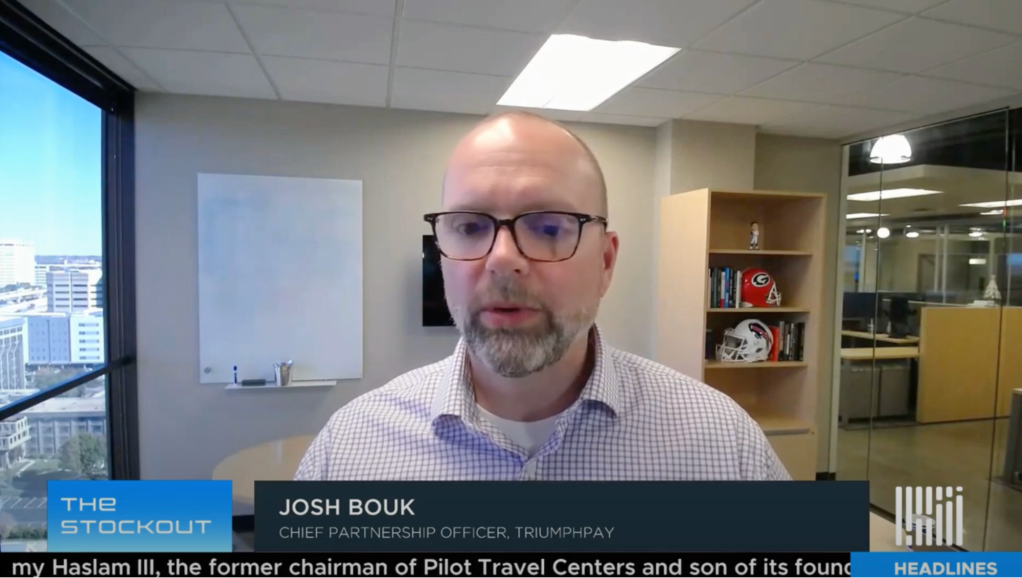
That was the idea posed by Josh Bouk, chief partnership officer at TriumphPay, on the Stockout Monday, during an interview with FreightWaves’ Mike Baudendistel and Grace Sharkey. The prediction stands out as a departure from more optimistic projections that expect a turnaround to come in the second or third quarters of 2024. 

TriumphPay plays a pivotal role in the logistics industry, functioning something like the “Visa of global logistics,” as Bouk put it. The company specializes in the frictionless settlement of logistics invoices, serving a wide array of shippers, brokers, third- and fourth-party logistics providers, carriers and factors. The company has visibility into nearly $50 billion in freight transactions and makes payments to more than 280,000 carriers each year.

This extensive visibility grants TriumphPay a unique perspective on the movement of goods, particularly in North America.

SONAR: OTRI.USA (white) and OTVI.USA (green).

Current market dynamics and TriumphPay’s role

Truckload spot rates have stagnated for much of 2023. Despite increased retail and consumer packaged goods sales, there hasn’t been a corresponding rise in rates. And regardless of rising tender volumes in recent months, rejection rates have seen only slight shifts. This suggests an industry still coping with unbalanced supply and demand dynamics.

The impact of these market conditions on the brokerage sector is significant. Bouk observed the variety of performance among brokers, with those focusing on sustainable profitability faring better. He underscores the importance of cost and margin management, especially in the next 12 months, implying a critical period for brokers before any notable increase in freight rates is seen.

Bouk also delved into the recent surge in online spending, particularly the record sales during Black Friday (up 7.5% over 2022). But he questioned the depth of these spending trends and their true impact on the trucking industry and overall economic health.

“Our money is on probably 12 months before we see material increases in freight rates,” Bouk said. “If you’re a broker, it’s going to continue to be time to stay the course, manage margins, do good work, take good business and then manage your costs.”

In this scenario, where supply and demand are only slowly coming into balance, TriumphPay plays a crucial role.

Beyond simply automating logistics invoice settlements, the company’s efforts in fraud prevention (partly via a partnership with Highway) can help secure transactions.

By balancing the financial needs of shippers and logistics service providers, TriumphPay is enabling shippers to optimize working capital while ensuring LSPs receive timely payments that are vital for their operations.

Unpacking the 12-month rebound prediction and its implications

As noted, Bouk’s prediction of a 12-month rebound stands out against the industry’s more optimistic forecasts. 

This extended timeline reflects a confluence of current market dynamics and trends, with trucking rates remaining stable and tender rejection rates showing only minor fluctuations despite increasing volumes. These indicators point to a market grappling with slower-than-expected capacity attrition.

For brokers, Bouk’s forecast sets the stage for a period of strategic navigation through market stagnation. His insights suggest that brokers, especially those who have maintained profitability via prudent policies, can weather this phase by focusing on margin management and reducing operational costs.

Shippers, particularly in retail and CPG sectors, are also adjusting their strategies in response to market conditions. Bouk noted a shift toward extending supplier terms and maximizing working capital as key tactics. These measures are critical for shippers to remain competitive and prepare for the eventual market rebound.

Throughout this next 12-month period, Bouk emphasized the importance of efficient capital management and investment strategies. TriumphPay aids industry players by automating payment processes, preventing fraud and offering supply chain finance solutions.

And the company has more on the way.

“We do have some other partnerships that are in the works that will allow us to provide an increased level of transparency and visibility in the industry, in certain areas of data,” Bouk said. “But those are coming soon and we’ll have more information on that in the new year.”

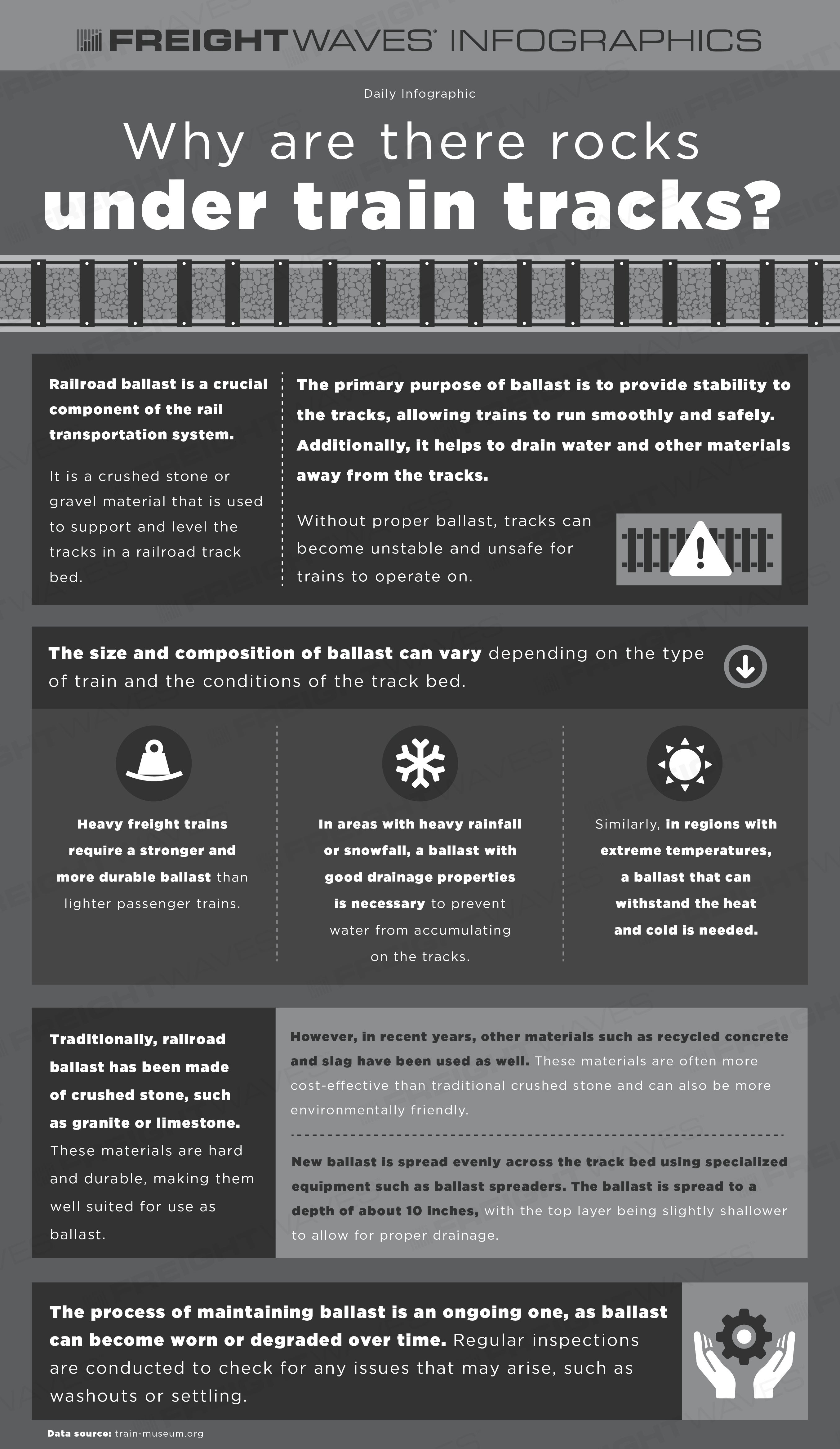
Daily Infographic: Why are there rocks under the tracks?


To view more FreightWaves infographics, click here

Postal contractor Matheson Trucking shuttering operations after 60 years

Postal Service contractor Matheson Trucking and wholly owned subsidiaries Matheson Flight Extenders (MFE) and Matheson Postal Services (MPS) of Sacramento are winding down operations after six decades in business.

Over the past five months, the Matheson entities have laid off nearly 3,500 workers, a source familiar with the situation told FreightWaves.

“It’s kind of sad to see that a 60-year-old company that made its bread and butter moving U.S. mail is closing its doors,” the source said.

According to the Federal Motor Carrier Safety Administration’s SAFER website, Matheson Postal Services has 191 power units and 325 truck drivers.  

The news comes after MFE, a mail processing, transportation and logistics contractor, filed its latest Worker Adjustment and Retraining Notification (WARN) Act notice on Monday with the Missouri Office of Workforce Development that it plans to close its Kansas City facility, eliminating 40 jobs. The company also filed a WARN notice on Dec. 1 that it is slashing 60 jobs at its facility near Denver International Airport and eliminating 92 jobs in Grapevine, Texas. The letters list Jan. 31 as the timeline for the closures.

Under the WARN Act, employers with more than 100 employees at a location must give authorities a 60-day advance notice of a planned closure and job layoffs.

MFE and Matheson Postal Services are wholly owned subsidiaries of Matheson Trucking. The family-owned entities, founded by Robert and Carole Matheson in 1962, filed for Chapter 11 bankruptcy in May 2022. MFE has been providing services to the Postal Service since December 1998.

In a Nov. 30 letter to employees, obtained by FreightWaves, Matheson confirmed the closures.

“The Matheson companies have experienced tremendous growth in the past 5 years both in revenue and its workforce. However, recent changes to our business and drastic losses in contracts have led us to Chapter 11, and ultimately this very difficult decision,” the letter states. 

As the company winds down operations, some employees will be asked to stay on longer to help with the closure, the letter states.

Asked about the Matheson entities ceasing operations, a spokesperson for the Postal Service declined to comment.

In early December, MFE closed two Surface Transfer Centers, which resulted in job cuts of 124 workers in Sacramento, California. An additional 257 workers were permanently laid off at its Long Beach, California, facility in November.

The U.S. Postal Service and MFE have been engaged in a financial dispute since MFE took over as the contractor for two Surface Transfer Centers in Atlanta and Brandywine, Maryland, in November 2021. At the time, MFE claimed the high-speed sorting equipment was not operational, around one-third of the loading docks weren’t functioning, and the former operator’s staff had not been fully trained and few were retained with MFE after the transfer, according to court documents. MFE closed those locations in October.

As the Postal Service was facing its holiday peak mail delivery season, court filings state that it began immediately directing normal peak volumes of mail to the facilities that MFE had just taken over but weren’t fully functional. The Maryland facility experienced a 4-mile-long train of tractor-trailers waiting to unload mail at the facility due to an alleged planning flaw by the Postal Service, MFE claimed in court documents.

“USPS demanded that MFE take immediate steps to address these problems and ensure timely delivery of mail. Among other things, at USPS’s direction, MFE incurred significant costs to repair the facilities to make them fully operational,” according to court filings. 

As a result of ongoing issues, MFE negotiated a $15 million payment advance from the Postal Service to address problems, including the need for temporary labor to sort the mail by hand since the mail sorting equipment wasn’t operational. According to the deal reached between MFE and the Postal Service, MFE was to start repaying $300,000 per month starting in July 2022 with a balloon payment at the end of the three-and-a-half-year agreement.

MFE claims it incurred nearly $24 million in reimbursable costs from the Postal Service associated with the Atlanta and Maryland mail sorting facilities but that it “balked” about reimbursing MFE for the “ramp up” costs to make the mail sites operational.

While mediation has been ongoing between the parties since May, MFE claimed in a September court filing that over the previous 90 days the Postal Service “continued to either terminate or transfer to competitors several of MFE and MPS contracts.”

In August, MFE also announced it was eliminating nearly 1,000 jobs and closing its sorting facilities in Chicopee, Massachusetts, Atlanta and Brandywine. 

Court filings state that in mid-August MFE received notice from the Postal Service that its “$20-plus million claim could not be completed without further documentation and no decision on the claim could be expected before March 2024.”

Do you have a news tip or story to share? Send me an email or message me @cage_writer on X, formerly known as Twitter. Your name will not be used without your permission.

Postal Service contractor to cut 450 jobs, close 2 facilities in California
Postal service contractor cutting 660 jobs

Cathay Pacific places order for 6 Airbus A350 freighters

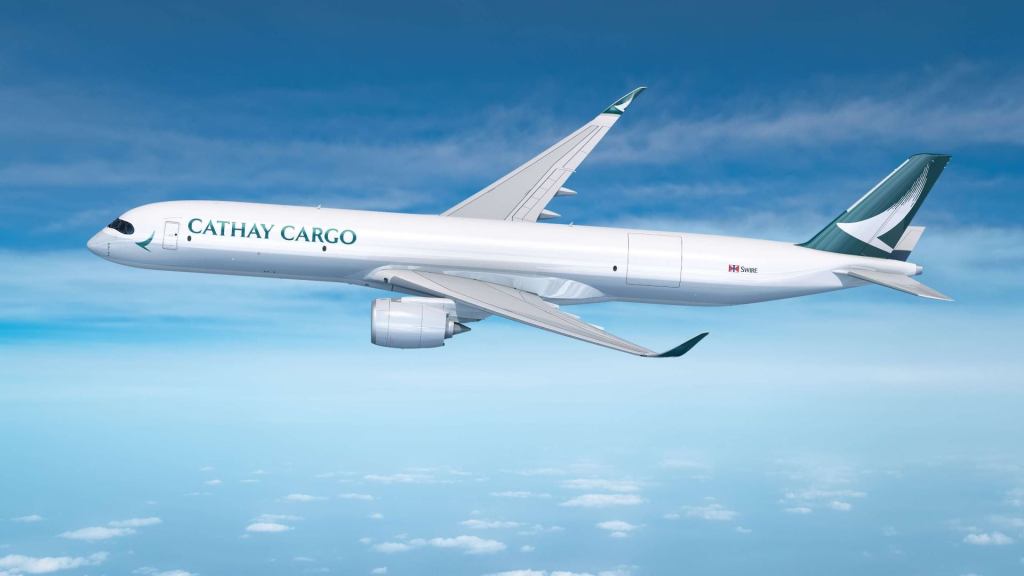
Teal-tailed Cathay Cargo jet flying above the clouds. Computer-generated image.

Cathay Pacific Airways announced Friday it has placed an order for six Airbus A350 freighter aircraft, providing the aerospace manufacturer a boost after a quiet year for purchases of cargo jets and getting the better of Boeing.

Airbus will begin deliveries of the large, long-haul freighter to Cathay Cargo in 2027. Hong Kong-based Cathay Pacific has options for 20 additional aircraft. The deal is worth $2.7 billion at list price, but airlines usually negotiate discounts with manufacturers.

Cathay Pacific’s freighter fleet is still relatively young and executives have previously said additional aircraft would be for growth  to meet future demand.

“These highly fuel-efficient, next-generation freighters will provide important additional cargo capacity, expand our global network and contribute to our sustainability leadership goals,” said Cathay Group CEO Ronald Lam.

Cathay Cargo has 20 Boeing 747 freighters, including 14 747-8s and six older 747-400s. It also manages cargo carried in the lower decks of Cathay’s passenger aircraft. It is the 13th largest cargo airline in the world by transported volume, and the 11th largest traditional freighter operator when express carriers FedEx and UPS are excluded, according to the International Air Transport Association. It fell eight spots in the rankings during the past year because of extended COVID travel restrictions in Hong Kong and China that only fully lifted at the end of 2022.

Cathay is already one of the largest operators of the A350, with a current fleet of 47 aircraft. The freighters will provide maintenance and training commonality with the passenger aircraft.

Cathay Pacific also operates a large number of Boeing 777 passenger jets in addition to the 747 freighters. And it has ordered 21 Boeing new-era 777-9 widebody passenger aircraft. But the airline passed over Boeing’s 777-8 freighter, the redesigned replacement for the current 777 freighter that must still be certified by U.S. regulators. Boeing plans to begin deliveries of the 777-8 freighter in 2027.

Airbus earlier this year said it expects to deliver the first A350 freighter, currently under development, in 2026. The Cathay Cargo order brings Airbus’ total orderbook for the new widebody jet to 41. Other customers include Qatar Airways, CMA CGM Air Cargo, Etihad Airways, Silkway West Airlines and Singapore Airlines. The last order prior to Cathay Cargo’s was by Air France/KLM in January.

Airlines and leasing companies have shied away from freighter investments this year because of prolonged weakness in the air cargo market, which has led to a sharp decline in cargo revenues. 

The A350F is designed to carry a payload of up to 122 tons and fly up to 4,700 nautical miles at significantly lower cost than existing cargo jets. Powered by Rolls-Royce Trent-XWB97 engines, the A350 is estimated to achieve a 40% reduction in fuel consumption and carbon emissions compared to the 747. Airbus claims it is 20% more efficient than Boeing’s new 777-8 freighter.

Over 70% of the airframe is made of advanced materials, resulting in a 50-ton lighter take-off weight than the Boeing competitor, according to Airbus. 

 Click here for more FreightWaves/American Shipper stories by Eric Kulisch.

Cathay Pacific cargo boosted by rehabilitation of passenger network

Container shipping outlook 2024: Rising risk of delays, disruptions

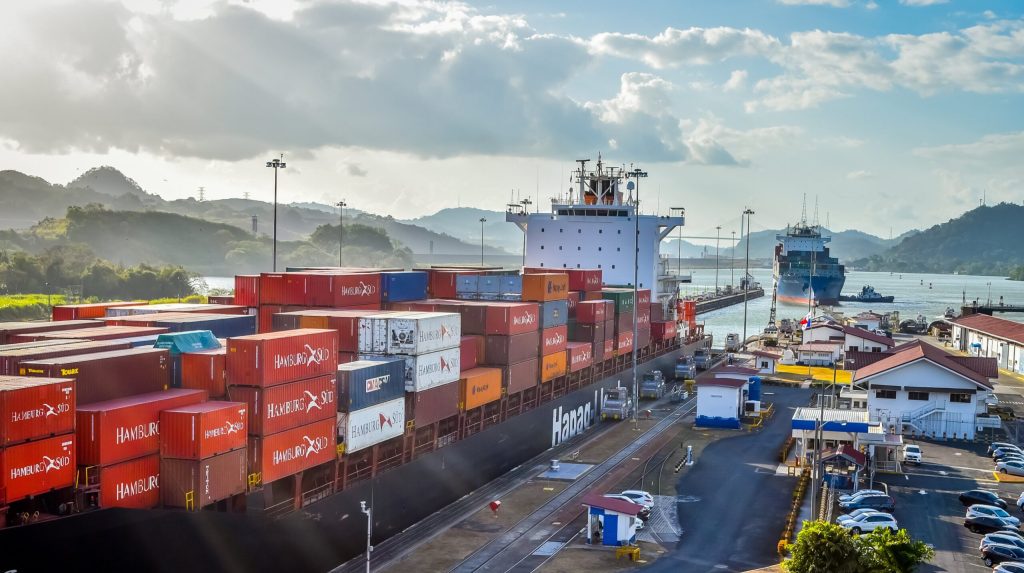
a photo of container shipping in Panama Canal

The supply chain crisis is long over, but America’s importers still have a lot to keep them up at night as they plan for 2024.  

Two key container shipping “chokepoints” — the Panama Canal and the Bab-el-Mandeb Strait in the Red Sea — are simultaneously under threat. Container-line financials are under severe pressure, forcing ever more vessel sailings to be canceled. The dockworkers union serving East and Gulf Coast ports is threatening to strike next October. While freight rates are low, concerns over delays in import shipments are high.  

For an overview of the disruption risks in the year ahead, and advice on how U.S. importers can mitigate those threats, FreightWaves spoke in-depth with Nerijus Poskus, global head of ocean procurement for freight forwarder and supply chain logistics platform Flexport.

This question-and-answer interview was edited for clarity and length.

Panama Canal fallout

FREIGHTWAVES: The Panama Canal crisis is getting worse. We’ve just seen two of the three global alliances abruptly shift their Asia-East Coast services from the Panama Canal to the Suez Canal. How does this impact U.S. importers in terms of transit time and cost?

POSKUS: It increases the pro-forma transit times by an average of roughly seven days, depending on the loading port. I emphasize “pro forma,” because if you look at actual transit times with expected delays through Panama, are there actually any delays going through the Suez instead?

There has historically been almost no difference in pricing between the Panama and Suez canals. Now, Panama Canal costs are going up a lot, which is why we see shipping lines announcing Panama Canal surcharges of roughly $300 per forty-foot equivalent unit.

So, some importers may actually prefer the Suez, even though it takes around seven days longer, because there’s no surcharge. This raises the question: Can the Panama Canal keep the market share [it hasn’t already lost]?

FREIGHTWAVES: Another possibility is that importers may opt to avert both canals and just shift back to West Coast ports.

POSKUS: I think 2024 is going to be a year of the West Coast gaining back market share, although I think it will be temporary. Longer term, I think the trend toward East and Gulf Coast ports will continue, because more consumers are on the East Coast, and because cargo is continuously shifting toward Southeast Asia, and especially, India. And India is best served, by far, by services to the East Coast.

But next year, it’s inevitable that some share will temporarily shift back to the West Coast.

It’s not just about the Panama Canal. With the Suez Canal, there have been attacks on ships in the Red Sea, and on top of that, we have the ILA contract expiring at the end of next September [The International Longshoremen’s Association contract for East and Gulf Coast dockworkers].

FREIGHTWAVES: The ILA has specifically warned that it will strike on Oct. 1, 2024, if its demands aren’t met. Are importers already worried?

POSKUS: Definitely. People are very aware of what may happen and the language of Mr. Daggett [ILA President Harold Daggett] has been pretty harsh. Even if a strike shuts down ports for a couple of days, it will be a big disruption.

Suez Canal or Cape of Good Hope?

FREIGHTWAVES: Regarding security issues for Suez transits, there have been attacks by Yemen’s Houthi militia targeting Israel-linked ships at the Bab-el-Mandeb Strait — and we’ve already seen spillover to non-Israeli ships, with an OOCL container vessel mistakenly attacked on Sunday.

Some container ships are already taking the long way around Africa’s Cape of Good Hope. It’s very easy to see how this could escalate and become a much more serious threat to shipping, which would force a lot more container vessels around the Cape. How might this escalation scenario play out for container shipping? This would affect not just trans-Pacific services rerouted from Panama through the Suez, but also the entire Asia-Europe trade.

POSKUS: Trans-Pacific imports going around Africa would add another 10 to 14 days versus the Suez route, which was already another seven days longer versus the Panama Canal. So, the first effect would be that carriers would have to have 30-40% more vessels [in trans-Pacific rotations] just to continue weekly services. There is a lot of new capacity coming online, but if carriers need 30-40% more vessels to serve the East Coast, then all of a sudden, there may be a capacity crunch. That’s definitely something to watch.

The West Coast has limitations too. You can’t just shift everything to the West Coast. The ports would be completely full, and all of a sudden, West Coast pricing would surge. Then, at some price point, importers would decide: I’m not paying that. I’d rather wait 20 days for a sailing via the Cape of Good Hope.

Risks from canceled sailings

FREIGHTWAVES: This scenario of the historic drought in Panama coinciding with an escalation in the Red Sea that forces most container ships to take the Cape route, causing freight rates to surge, is still very hypothetical. The overwhelming consensus is that freight rates are going to be weak throughout 2024, possibly through 2025. The consensus is that the concern for shippers next year is about service reliability, not high freight costs. Is that what you’re hearing from importers?

POSKUS: Yes, the worry is much more about delays and disruptions. Importers still think that overcapacity will result in low rates. I wouldn’t be so sure. I’m not predicting that rates are going up, but it’s not 100% [guaranteed] that rates are completely going to collapse next year. All it takes is one Black Swan event and we’re back to big rate increases.

FREIGHTWAVES: Let’s assume there isn’t one, and rates stay low through 2024 and 2025. Doesn’t that imply that there will be even more “blankings” [canceled sailings] and other service reductions by carriers to mitigate their variable operating costs, thus import schedule reliability gets worse. Isn’t that the price shippers will pay for cheap rates?

POSKUS: I would predict exactly that. With all the blank sailings, delays are already pretty bad and I suspect it may get worse in 2024. This is the reason you are seeing shipping lines like Zim [NYSE: ZIM] launch premium [expedited] services. I think more carriers will follow. Some would say: Are you out of your mind? Why would you launch an expensive premium service in a market like this? The reason is that importers are looking for stability and they’re willing to pay for it.

Spot versus contracts

FREIGHTWAVES: If you look at what happens during major downcycles in bulk commodity shipping charter markets, the downcycles drive business away from term contracts and toward the spot market. Tanker and bulker owners would rather take their chances in the spot market than lock in depressed charter rates. They don’t want to miss the opportunity of capturing a rebound in rates due to some unexpected change in the market.

Similarly, in the container shipping freight market, we saw Zim put 70% of its trans-Pacific business on spot this year, up from the usual 50%, because it refused to sign annual contracts at loss-making levels. Hapag-Lloyd’s CEO said his company would refuse to sign contracts that locked in annual losses. A DHL executive said during a presentation on Tuesday that he saw ocean carriers refusing to offer below-cost Asia-Europe contract rates during the current bid season.

Do you think container shipping will follow the pattern of bulk commodity shipping and trend more toward spot if this is, as expected, an extended downturn?

POSKUS: I believe it will be more of a mixed bag in container shipping. One reason is that fixed-rate contracts in container shipping are typically subject to peak season surcharges, so if the market does recover, carriers can increase rates, not to the level of the spot market, but closer to the spot market.

We do see carriers offering fixed contracts at rates above the spot market and importers unwilling to sign at those rates because that’s not where they see the market going. They see the market deteriorating further. It’s too early to say what will happen. Shipping lines might bring contract rates down a bit more because, if need be, they can implement some of those peak season surcharges.

The other issue is that a big portion of the market is already on spot. During COVID, nearly everything was in the spot market, and in 2023, there is still more on spot than there was pre-pandemic. A lot of shippers are expressing interest in fixed rates for 2024, because they now believe we’re at the point where rates are fair — but again, the shipping lines don’t think those rates are fair.

This is exactly why I believe some shipping lines are now more interested in index-linked contracts. It gives them some sort of stability while it gives importers peace of mind that if rates continue dropping, they’re going to get a good rate.

Mitigating 2024 risks

FREIGHTWAVES: So, to sum up, it sounds like the biggest focus next year for importers is on mitigating risks from service disruptions. We’ve got the Panama Canal situation. Attacks on ships in the Red Sea. The threat of a port strike at East and Gulf Coast ports. Then there’s the whole China situation and the U.S. presidential election and the possibility that the next president could be much more confrontational with China. What should U.S. importers be doing to mitigate all of these risks?

POSKUS: With China, it’s difficult to move away, because it accounts for such a big portion of U.S. imports. But I do see more volume shifting to Southeast Asia and India. Look at the new ONE [Ocean Network Express] service from India to the U.S. East Coast, which is not [in cooperation] with any other line. ONE is certain it can fill a whole ship every single week from India to the East Coast on top of what’s already running from India, which gives you a hint that the shift is happening and that at least some shipping lines expect the shift to accelerate.

[To mitigate disruption risks in general] importers should consider premium services. When you have all of these delays, premium services give you stability.

They should also consider putting a significant portion of volume on the spot market or index-linked contracts, because it gives you more optionality.

With index-linked contracts, if the shipping line thinks the market is “x” and you think it is “x minus 20%,” you don’t have to argue. The market will decide.

When disruptions happen and you’re on spot, you can change carriers, routes, whether you go to the West Coast, East Coast or Gulf Coast. You can shift to premium service when you need to, then back to regular service — although the risk is that if the market rises significantly, you will pay more.

If there are blank sailings or a ship shifts from the Suez to the Cape of Good Hope and the transit time is unfavorable to you, you can pivot. At the end of the day, if you pay a fair price, you will get the capacity.

Click for more articles by Greg Miller