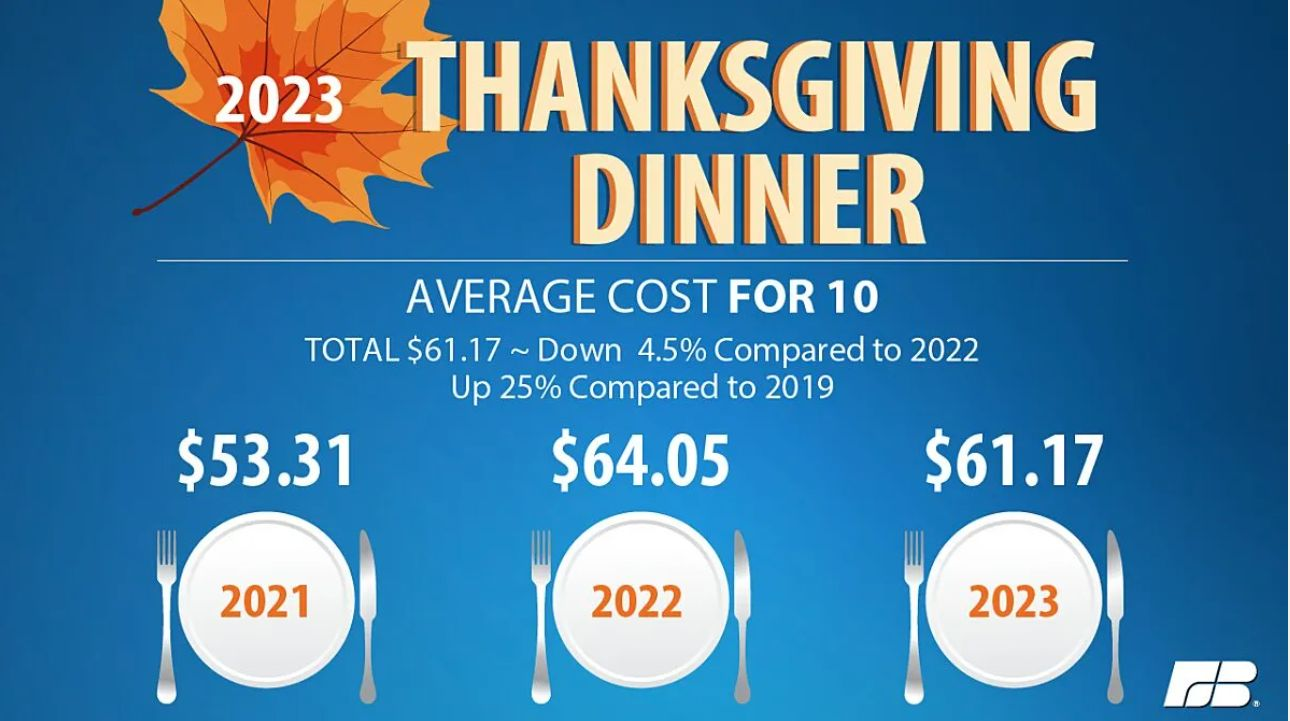
Daily Infographic: The logistics of turkey day

CORPUS CHRISTI, Texas — I spent a few days early this month at a truck driver training conference — and I enjoyed an unexpected opportunity to grapple with trucking’s deepest chasm!
The most fundamental disagreement in this fair industry, perhaps, is whether we are in the midst of a truck driver shortage. Trucking associations say fleets struggle to hire drivers, while researchers have repeatedly concluded that there is no evidence for a long-term labor shortage in trucking. Instead, these companies struggle with massive turnover rates.
The discourse around a truck driver shortage has larger implications than an intellectual spar. Lawmakers believe such a shortage exists. They have set aside taxpayer money at the local, state and federal levels to provide funding for truck driver training.
And there’s an entire association built around connecting schools with public cash: the National Association of Publicly-Funded Truck Driving Schools. It is also called NAPFTDS.

I wanted to meet the people involved in this group. So on Nov. 1, I headed to Corpus Christi, Texas, to attend the NAPFTDS Region Four meeting. Region Four is made up of Texas, Kansas, Oklahoma, Missouri, Louisiana and Arkansas.
I learned that these schools have an important role in bringing up the next cohort of truck drivers. But it’s unclear where the leaders of America’s $875 billion trucking industry should direct resources. Should they focus their attention on bringing in new drivers — or rethink how those drivers are treated once they’re employed? And should they try to get as many people as possible into schools — or keep classes small?
There are public safety reasons for figuring out how to boost driver retention. A federal study from 2017 showed that less experienced drivers are more likely to cause a serious accident. A truck driver with less than three years of experience, for example, is 47% more likely to cause an accident than one with more than three years on the road, according to the analysis.
Improving retention rather than increasing the potential number of drivers might seem to be the obvious answer to an outside observer. But under the current conditions of the trucking industry, fleets aren’t incentivized to do that. It’s just not as profitable — and trucking is ruled by what University of Pennsylvania sociologist Steve Viscelli calls “destructive competition.”
As a group of researchers led by Stephen Burks of the University of Minnesota Morris found in a 2023 paper, high turnover among truckload carriers is “likely structural.” They found that paying drivers more in an effort to reduce costly turnover was ultimately less profitable than paying drivers less and having higher turnover.
That likely means trucking will be caught in a toxic pattern of training, hiring, and losing people for the foreseeable future.
The American Trucking Associations, a lobbyist organization that represents trucking employers, estimated last year there was an industry shortage of 78,000 drivers. Associations in other countries report similar labor shortages.
Few outside the ATA’s membership appear to agree. Research suggests trucking fleets — especially large truckload carriers — struggle to keep their trucks running because of turnover. Large truckload fleets, for example, saw an annual turnover rate of around 94% from 1995 to 2017. That would mean, say, a trucking company that employs 1,000 drivers would have to rehire 940 drivers over the course of a year.
“As a whole, the market for truck drivers appears to work as well as any other blue-collar labor market, and while it tends to be ‘tight,’ it imposes no constraints on entry into (or exit from) the occupation,” concluded one March 2019 study published by the Bureau of Labor Statistics. “There is thus no reason to think that, given sufficient time, driver supply should fail to respond to price signals in the standard way.”
A humble beachside hotel in Corpus Christi hosted the meeting. I arrived at the hotel conference room around 7:30 a.m. on Nov. 2 ready to learn, and I sat down at a table with two gents from Missouri. Both of them are trainers at community colleges in the Show Me State, and both used to be truck drivers.
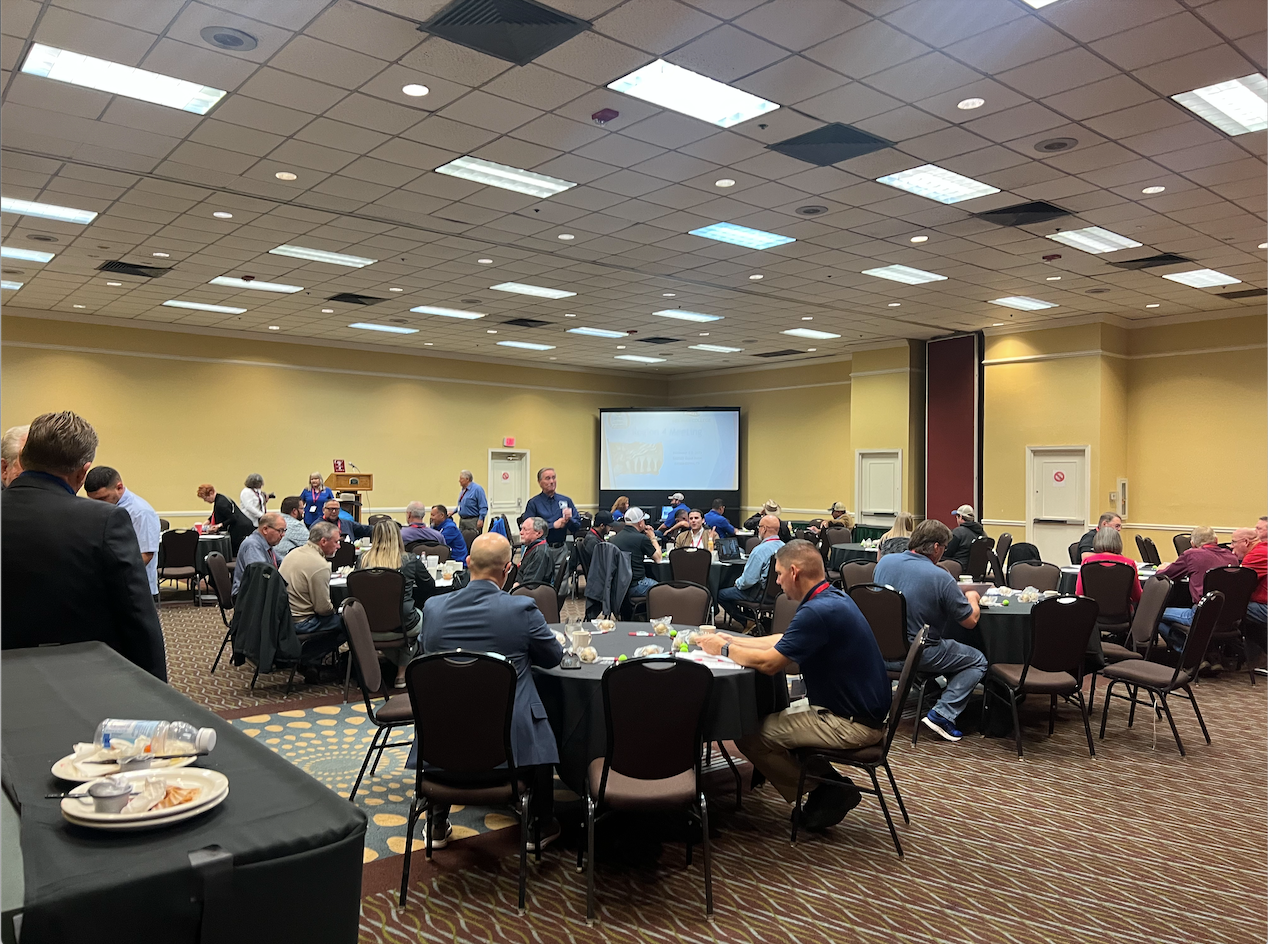
The trainers at the conference were almost all from community colleges. Their programs are typically four to eight weeks long. Tuition at such a school is around $4,000 to $6,000. Some students pay that off by agreeing to work at a certain trucking company after getting their licenses. Others find grants, take out loans or pay outright.
Matthew Albrecht, one of the Missourians, agreed to chat with me before the conference kicked off.
Albrecht was an over-the-road truck driver for 22 years before he became a trainer. He said he loved everything about being a truck driver, except for what it did to his body.
“After sitting behind a wheel for X amount of time, and if you don’t have really good posture to begin with, it takes a toll on your back after a while,” Albrecht said.
Some believe that the lifestyle issues around trucking force folks out of the industry and may be a reason for a shortage in the first place. It takes a special type of person to be out for weeks at a time and live out of a truck. People enjoy the open road but perhaps not everything else that the open road entails — looking for parking, a lack of healthy food options, showering at a truck stop and so on.
Still, Albrecht said he doesn’t believe there’s a shortage of drivers. Other former truck drivers I spoke to at the meeting said there’s no shortage, while basically all white-collar folks said there is a shortage.
“It’s more of a driver retention problem,” Albrecht said. “I think a lot of the companies are starting to figure that out as well. If they want to keep their drivers happy instead of this huge turnover that’s in the industry, they need to do something about pay, benefits and home time. Home time is huge.”
Albrecht said he would be out for four weeks at a time when he first started trucking, followed by three days at home. He told me companies could retain more drivers by switching to a relay system. Here’s how that works: Instead of one truck driver bringing goods from Houston to Minneapolis and another truck driving moving a load from Minneapolis to Houston, those drivers could meet halfway and swap trailers. In a 2022 FreightWaves article, several experts explained the merits and downsides of the relay system.
Such a system requires scale and planning, which isn’t always a given in the remarkably disaggregated trucking industry. However, it used to be more common prior to trucking deregulation in 1980, as there were fewer trucking companies and each had larger networks with regular routes.
Anyway, my conversation with Albrecht soon ended because the conference was starting at last!
I learned that the other big chunk of attendees at the meeting, outside of truck driver schools, were companies that hire recent driving school graduates.
The problem with hiring industry newbies, as these fleet employees would explain on various panels, is that they might quit trucking once they learn that they don’t like being away from home for weeks at a time or the health effects of trucking.
Other truck drivers quickly switch fleets when he or she learns another company might pay a few cents more per mile, as some fleet recruitment employees said on panels.
There’s some discrepancy on what a truck driver typically earns. According to Bureau of Labor Statistics data, heavy and tractor-trailer truck drivers earned a median annual salary of $49,920 in 2022. Data from the ATA found that average pay for truckload drivers was about $70,000, before benefits, in 2021.

Truck driver pay has increased in recent years. A 2022 study from the ATA said that truck driver compensation jumped by 19% from 2019 to 2021, while the National Transportation Institute found that truck driver wages have consistently grown each year since 2010.
Historically, though, truck driver pay is low. Trucking salaries have decreased by as much as 50% since deregulation, according to Wayne State University economics professor Michael Belzer. Widespread industry complaints about a driver shortage began soon after deregulation.
Folks I chatted with at the conference mentioned that truck driver pay is still far above the pay of many jobs that don’t require a fancy degree — especially in rural areas. Kelly Cikanek, a driver instructor based in Kansas, told me some of his students go from making $35,000 to $45,000 a year to landing driving gigs making up to $80,000.
I was able to chat about some of these themes with Martin Garsee, NAPFTDS executive director and director of transportation training at Houston Community College. Garsee told me he believes that there is a driver shortage.
“I think that there is a shortage because there are trucks that are sitting idle,” Garsee said. “Now what causes that shortage? We don’t know.”
And while naysayers might push back on the idea of public funding for truck driver training schools, Garsee said the schools in his association do need this cash. Many schools say they need more trucks and more concrete driving space to train more students. They also need modern rigs that reflect what students would be operating in the real world. Garsee mentioned a school in Milwaukee that can only train 200 students per year but has a waiting list of 700 to 800.
“In most places, the demand is still higher than what a public college can support,” Garsee said.
There’s only so much you can charge for truck driver training school too. Perhaps, say, a medical school could up its tuition in order to pay for more training facilities. But these schools can’t ask for massive payments from potential big rig drivers.
More money could improve truck driver training. Arguably, so would more time. Alana Semuels outlined in a 2022 Time magazine article the strangeness of truck driver certification. Barbers need 1,000 hours of training in most states to be certified, while passenger airlines require 1,500 hours. “To drive a 40,000-pound truck, though, there’s no minimum behind-the-wheel driving time required, no proof of ability to navigate through mountains, snow, or rain,” Semuels wrote. Just a medical exam, a paper test and a driving test.
To address that, several conference attendees pushed for the idea of apprenticeships in trucking. That would allow truck drivers to get paid and trained at the same time. Garsee noted that most trucking companies, however, likely wouldn’t hire a truck driver with no CDL at all; some sort of classroom education would still be necessary in an apprenticeship program.
Cikanek, the Kansas trainer, said there’s no way you can perfectly train a truck driver — not even in his program, which is impressively eight weeks long and has a ratio of one trainer for every three students.
“I tell my students at the end, ‘I’ve given you a lot of information, but I’ve given you the tip of the iceberg,’” Cikanek said. “‘You’re not going to be a truck driver for a couple more years.’”
Unfortunately, under the current maximalist turnover regime, it seems that many drivers will leave the industry before they’re fully formed.
By my second and last day at the conference, I was stressed. It seemed like there were more problems than solutions in trucking. And, ultimately, there was a fundamental split over what would improve the industry.
On one side, a group believed that more people becoming truck drivers would keep the supply chain humming. One panel discussion even brought up the practice of training prisoners on how to drive truck.
The other side pushed for better retention, pay and job conditions for drivers.
The folks at the NAPFTDS meeting still seemed upbeat and ready to untangle the issues. The conference, frankly, felt like a joyous family reunion rather than a work event.
A cheery fellow I met named Brent Lauber put some spring in my step before I left Corpus Christi. Lauber works at the Kelly Anderson Group, a company that provides training, recruitment and retention services for carriers. He said a truck driver shortage does exist, but that fleets should consider retention programs too.
“Companies a lot of times want to just recruit, recruit, recruit, but they forget about that retention piece,” Lauber said. “There’s so many things that companies can do that really doesn’t cost them anything.”
Lauber recommended, above all, that companies treat their drivers as valued employees. Lauber said the Kelly Anderson Group’s retention program decreases turnover by 30% to 60%, saving fleets the thousands of dollars it costs to recruit a new driver.
On their first day of work, for example, drivers should receive the sort of treatment that, well, any other new hire might expect. Calling drivers every few weeks to learn more about what they’re struggling with is also key.
“Contact that driver and say, ‘Hey, so-and-so will meet you at the front door Thursday morning,’” Lauber said. “When they come in, buy that driver a cup of coffee or have coffee there with them. Sit down with them and get to know the driver, get to know their family, get to know what they like and then take them around to the different departments … to make them feel welcome.”
While academics have found that high driver turnover is cheaper than paying drivers more or providing more predictable routes, perhaps fleet managers could consider a completely free option: Basic kindness.
Email rpremack@www.freightwaves.com with your viewpoint and please subscribe to the MODES newsletter for weekly updates.

FreightWaves Classics is sponsored by Old Dominion Freight Line — Helping the World Keep Promises. Learn more here.
FreightWaves explores the archives of American Shipper’s nearly 70-year-old collection of shipping and maritime publications to showcase interesting freight stories of long ago.
In this week’s edition from the November 1980 issue, FreightWaves looks at shocking anecdotes from an insurance underwriter in the maritime industry.
Hitchhiking corpses; crushed legs; missing, rifled, smashed, bent, stolen, contaminated, and burnt containers — they’re everyday facts of life for Through Transport Mutual Insurance Association Ltd. The Bermuda-based firm is one of the world’s largest specialist marine underwriters for the container industry, and those represent just some of the mishaps and misdeeds on which the firm paid $6.7 million worth of claims in 1979.
The increased loss payments, which were up from $2.9 million in 1978, were noted in the association’s annual report, released June 30.
The report noted that the increase in losses was due primarily to what it termed an increased volume of business written and a high incidence of heavy-weather damage claims arising during the 1978 year but paid during the 1979 year.
The necessary but humdrum statistics on claims paid out are of most interest to the association, of course, but they sometimes pale beside more interesting facts —the manner in which the losses occurred.
There were, naturally, the traditional losses for which marine underwriters have paid over the centuries — ships going aground and sinking and cargoes (containers in this case) being lost overboard when lashings securing them parted.
The advent of containerization in the world’s ocean trade has meant a variety of odd, and often bizarre, claims just as surely as it has increased the ease and efficiency of cargo handling.
Consider the case of a vagrant who hitched his last ride in a container being transported by motor freight from Houston to Oakland. Workers at the destination reported smoke coming from the container which was loaded with cotton bales. Firefighters quickly put out the fire, but when the container was unpacked, the body of a man and a bedroll were found among the bales. Authorities speculated that the stowaway died from asphyxiation, and since he had obviously entered the container without the owner’s permission, no claim was paid on his death.
The association, at any rate, wasn’t likely to be as fortunate in another case, involving the personal injury claim of a stevedore in Portland. The laborer suffered a crushed leg and an injured back when a heavy wooden crate he was attempting to unload from a container fell on him. His suit, for $800,000, contended that the crate was improperly packed at the point of loading, Hamburg.
Such cases, the report noted, are indicative of a trend, especially in the U.S., that has caused the association increasing concern. Such claims are especially distasteful since the owners of the containers themselves — the “members” insured by the association — are generally sued because of the negligence of employees of other concerns over whom they have no control.
In California, for instance, successful personal injury suits have been lodged against the owners of trailers in cases in which accidents had been caused by the negligence of the tractor drivers. The courts ruled that trailer owners were liable for a contribution to the awards since their trailers were integral parts of the “units” that caused the mishaps. That interpretation has not found favor in other states in the U.S. — yet. A similar suit has been filed against a member of the association in Texas. The suit was filed on behalf of motorists injured when their vehicle struck a trailer parked along the side of a road. It alleges that the trailer was improperly lighted. The haulage company whose tractor was towing the unit had limited liability insurance and has since gone out of business.
Still, such unusual cases are naturally the exception rather than the rule. The vast majority of claims arise from more “normal” losses. Contamination by toxic substances carried in containers is not particularly unusual, but it can result in monumental claims for personal injury. One such incident fortunately did not, but the potential was there.
A member’s driver, after delivering a container from Rotterdam to London, discovered traces of powder on the bed of the trailer after discharge. The powder, it developed, was from a drum of arsenic oxide, a highly toxic compound, which had burst during transit due to a weak seal. Two of the consignments from the trailer had already been delivered, and it took a major government-media-carrier operation involving closing of the terminal and warning of the public through radio and the print media to avert injuries.
Refrigerated cargo losses have given rise to numerous and often quite substantial claims, particularly in arid areas such as the Middle East. One of the major problems in Middle East ports, the association report says, is inefficient monitoring of the temperature of reefer units. Many refrigerated cargoes have little tolerance to variations in temperatures, and significant variations are often found in the containers.
The scope of the potential of such losses may be gauged by the fact that a single container may carry a shipment of meat valued at $80,000.
Naturally, thefts from containers continue to represent a major source of claims, and, more abnormally, “lost” or “misplaced” containers have also caused some headaches. In Saudi Arabia, for example, members of the association have reported the astounding total of 400 containers “lost” since 1976.
The association engaged an investigator to track down the missing containers. Within six weeks of the beginning of the search, 70 units had been located. One of the major problems in such cases, the report states, is that local shipping agents frequently do not adequately monitor the movement of their principals’ containers.
Theft has long been a fact of life for marine underwriters, but just as efforts to combat the crime have proceeded apace with modernization of cargo containment systems, so has the ingenuity of criminals in overcoming them. For instance, the use of “one-seal” devices has recently come into wide use. The metal barrels of the devices are stamped with the carrier’s logo and an identification number and cannot be removed from the container without severing the restraining pin, serving notice of tampering.
In one case, an ingenious thief short-circuited the system by successfully removing the seals on containers destined for Apapa, Nigeria. A shortage in the cargo in the container noted in Apapa led to an investigation.
Here are more articles from the archives of American Shipper.
FreightWaves Classics articles look at various aspects of the transportation industry’s history. Click here to subscribe to our newsletter!
Have a topic you want us to cover? Email bjaekel@www.freightwaves.com.

The Israel-Hamas war initially raised concerns about future fallout for shipping at two “chokepoints”: the Suez Canal and the Strait of Hormuz. War fallout for shipping has now begun, but at a different chokepoint: the Bab el-Mandeb Strait.
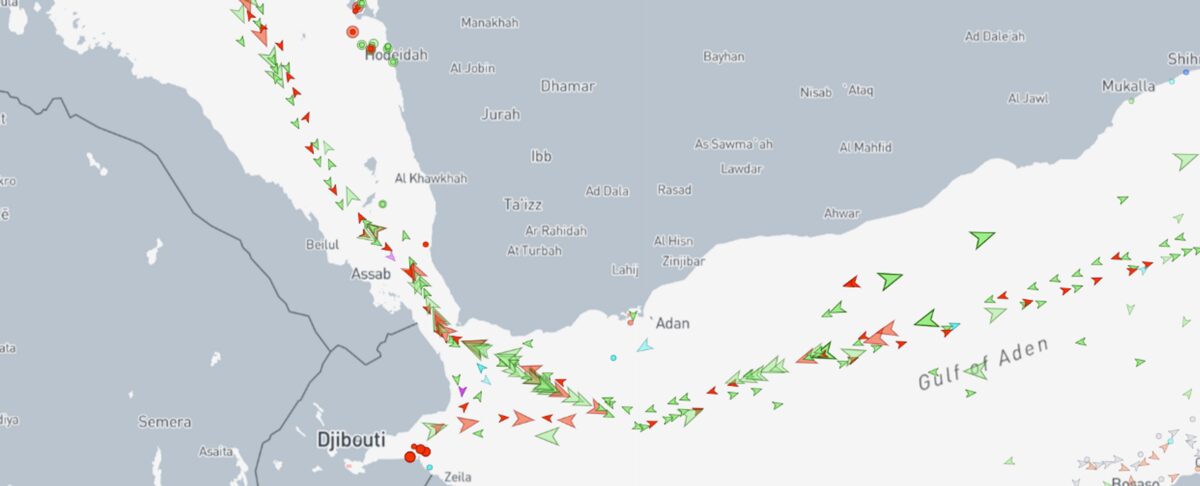
With a ship-tracking website like MarineTraffic, you can see — even with the free version — the names of vessels, where they are and their stated destination. On Tuesday, the destination declared for numerous vessels transiting the Bab el-Mandeb Strait, a 20-mile-wide waterway bordering Yemen that connects the Gulf of Aden to the Red Sea, read: “Armed Guard Onboard.”
Vessel operators appear to be using the destination declaration in their Automatic Identification System (AIS) to communicate with potential hijackers in Yemen who are using public ship-tracking websites. Their message: We have guns too.

The Houthi rebels in Yemen had previously warned that they would target Israeli-linked ships. They followed through with that threat on Sunday.
Houthis hijacked the pure car and truck carrier (PCTC) Galaxy Leader, a vessel with ownership ties to Israeli businessman Abraham “Rami” Ungar. The vessel was on charter to Japan’s NYK and had 25 crew aboard from Ukraine, Bulgaria, the Philippines and Mexico.
Tankertrackers.com used satellite imagery to find the current location of the vessel. As of Tuesday, it was at anchorage off the port of Salif in Hodeida, Yemen.
Houthi rebels have targeted shipping interests before. In July 2018, the Houthis attacked two laden very large crude carriers, the Ghawar and Arsan, operated by Saudi Arabia’s Bahri, in retaliation for Saudi Arabia’s military support of the Yemini government. The tankers suffered minor damage and Bahri temporarily halted crude tanker shipments via the Bab el-Mandeb Strait.
The method of attack on the Galaxy Leader was different. Paramilitary forces were dropped from a helicopter onto the vessel’s deck, a method commonly used by Iranians for ship seizures in the Strait of Hormuz. (See video of the hijacking posted by the Houthis here.)
“Seizing a merchant vessel via helicopter is an Iranian modus operandi,” said ship security group Ambrey on Monday.
The Israeli government alleged that the hijacking of the Galaxy Leader was done by the Houthi militia “with Iran guidance” and characterized it as “an Iranian attack against an international vessel.”
The threat off Yemen is explicitly against Israel-linked ships in retaliation for Israel’s war with Hamas. However, there is clear potential for collateral damage, as shown in the case of the Galaxy Leader, where the charterer and crew members were not Israeli.
The hijacking is “raising concerns of broader supply chain impacts from the war,” warned Judah Levine, head of research at Israel-headquartered Freightos (NASDAQ: CRGO).
According to Clarksons Securities analyst Frode Mørkedal, “The impacts on shipping include increased insurance premiums due to heightened piracy risks, route diversions leading to longer transit times, and heightened security measures like employing armed guards. Such factors are likely to increase overall expenses and can be reflected in increased freight rates.”
Ambrey advised all shipping security officers “to check whether their vessels were affiliated with Israel through flag, ownership or management in the past two years. Those who are either affiliated now or who were affiliated recently are advised to conduct a transit risk assessment and to consider ballistic protection measures.”
Israel is a small country but plays an outsized role in ship operations and ownership. Many vessels have an Israeli connection.
Ungar’s Ray Shipping has a fleet of PCTCs, crude carriers and dry bulk carriers. MarineTraffic reported Tuesday that two PCTCs diverted from routes that would have taken them near Yemen: the Hermes Leader and Glovis Star, both managed by Ray Shipping.
Israel’s Idan Ofer is one of the world’s largest shipowners; Forbes puts his net worth at $14 billion. Ofer’s shipping interests include Eastern Pacific, which has a fleet of over 200 bulkers, container ships, car carriers and crude tankers (including numerous container ships and car carriers chartered to France’s CMA CGM). Eastern Pacific also owns a stake in LNG shipping company Coolco (NYSE: CLCO).
In addition, Ofer owns a stake in Israel-based XT Shipping; a stake in Ace Tankers, which operates chemical tankers; and 21% of container liner operator Zim (NYSE: ZIM), through Kenon Holdings.
Idan Ofer’s brother, Eyal, heads London-based Zodiac Maritime. Zodiac employs a crew of over 2,500 seafarers and manages container ships, bulk carriers, PCTCs, liquefied petroleum gas (LPG) carriers and crude, products, and chemical tankers.
Zim is the most visible of the Israeli shipping companies and the most closely connected with the government. The government of Israel has a “golden share” or “special state share” in the company that ensures the government’s access to Zim’s fleet “in a time of emergency or for national security purposes.”
Zim operates a fleet of 129 container ships and 16 car carriers, plus 33 container ships on order (almost all of them leased, not owned). CEO Eli Glickman said during a Nov. 15 conference call that “despite war-related challenges, Zim’s operation and services everywhere, including to and from Israel, are continuing without interruptions.”
Nevertheless, Zim has long acknowledged the effect of geopolitical backlash in its securities filings, even before the war with Hamas. It conceded in its 2021 IPO prospectus that its “status as an Israeli company … has historically adversely affected our operations and our ability to compete effectively within certain trades.”
From a broader perspective, the Houthi attack creates yet another chokepoint-related issue for ship owners and operators. The global routing situation has become a minefield of geopolitical and weather-related challenges.
In the Black Sea, shipping faces ongoing risks from mines and Russian missile strikes. The bulk carrier KMAX Ruler was hit by a missile in the Ukrainian port of Odessa on Nov. 8, killing a Ukrainian pilot and injuring three Filipino crew members.
In Panama, drought conditions are heavily restricting the passage of vessels through the canal. Restrictions “are taking a severe toll on … operations,” said ocean carrier CMA CGM on Tuesday when announcing a new transit surcharge effective Jan. 1.
Many of the bulk carriers that previously loaded U.S. grain, LPG and liquefied natural gas and transited the Panama Canal are now taking an alternate route through the Suez Canal. Container lines have also said they are considering shifts to the Suez.
The more ships that take the Suez route, the more that will be forced to make the transit through the Bab el-Mandeb Strait.
Click for more articles by Greg Miller

This story originally appeared on flyingmag.com.
Look up in the sky: Is it a bird? Is it a plane? No, it’s a turbogenerator-hybrid electric vertical takeoff and landing aircraft — and it’s the first in the world to fly, according to manufacturer Elroy Air.
The aircraft type is a mouthful, so we’ll use Elroy’s abbreviation: hVTOL. The San Francisco Bay Area-based firm, best known for manufacturing the autonomous Chaparral cargo drone, on Sunday took the hVTOL on its maiden voyage, claiming it is the first aircraft of its kind to leave the ground.
The model that flew, the Chaparral C1, is a new variant of the manufacturer’s flagship drone. Like the original, the C1 flies autonomously with distributed electric propulsion. But the source of that power is a “turbogenerator-battery architecture” rather than a hybrid-electric powertrain.
The inaugural C1 flight took place out of Byron Airport (C83) in Contra Costa County, California, where Elroy conducts flight testing. Using its turbogenerator system and batteries, the hVTOL took off vertically like a helicopter and flew for just less than a minute before descending slowly onto a landing pad.

For its maiden voyage, the aircraft was flown remotely by a ground team, with a control pilot stationed on a nearby deck. And according to Elroy, Sunday’s flight was only the beginning — further testing will follow with the U.S. Air Force.
“This is an exhilarating day for our team and the industry as a whole,” said Elroy co-founder and CEO Dave Merrill. “This marks a major moment for the industry, as hybrid-electric aircraft enable the dual benefits of runway-independent safe redundant propulsion and long-range flight well in excess of battery power alone.”
What’s in the sky?
The Chaparral is built to load and unload a variety of preloaded cargo pods, each designed for different use cases, all by itself. It can fly as far as 300 square miles at a cruise speed of 125 knots, zipping around with 300 pounds of cargo.
Compared to other delivery drones, the Chaparral is massive: more than 19 feet long, with a 26-foot wingspan. However, the airframe can be reconfigured to fit inside a 40-foot shipping container or even the cargo hold of another aircraft. And despite its size, the aircraft’s redundant rotor design allows it to fly safely without a pilot, Elroy said.

As Merrill alluded to, the firm plans to use the aircraft to enable same-day shipping for customers such as FedEx, as well as resupply for the defense industry. Mark Esper, the 27th U.S. secretary of defense and a member of the Elroy board, provided light details on the latter.
“[Elroy’s] work to enable autonomous cargo delivery for the resupply of troops in the field will create a game-changing capability for supporting and sustaining the United States military and allied forces in future campaigns,” Esper said.
Recently, the company brought in aerospace engineer Zach Lovering — who brings plenty of electric vertical takeoff and landing (eVTOL) experience to the table — as vice president of engineering. Lovering was the architect behind the Vahana eVTOL program of Airbus’ Acubed, as well as several projects at Zee Aero (now Wisk Aero).
“This groundbreaking initial flight of the C1 will be followed by an ongoing envelope expansion campaign in coordination with the U.S. Air Force, in which we’ll advance the vehicle’s demonstrated flight capabilities through subsequent modes of airborne operations,” said Lovering. “These modes include expanded hover, system identification, transition and cruise flight.”
A new kind of propulsion
The idea to combine distributed electric propulsion with turbine-based power generation, which Elroy called a “best-of-both-worlds” solution, was first suggested by NASA researchers in 2008.
Elroy explained that it picked a turbogenerator-hybrid system rather than a full battery-electric propulsion system — which is common among eVTOL air taxis and cargo aircraft — because it gives the C1 greater energy density, and therefore range.
The architecture also allows it to fuel up in locations without electric aircraft chargers, which are scarce, because the generator runs on an unspecified kind of liquid gas. And with industry stakeholders battling over aircraft charging standards, the aircraft’s lack of reliance on chargers could pay dividends for Elroy, at least until standards are settled or infrastructure is expanded nationwide.
“The use of hybrid electric powertrains is not trivial — balancing battery and turbogenerator power output to respond to load demand requires power management systems that are properly governed to facilitate effective and efficient flight,” explained Ashish Bagai, principal at vertical flight enabler BuGi Aero.
While working as an associate research scientist at the University of Maryland’s A. James Clark School of Engineering, Bagai helped design and build the Sikorsky X2 Technology demonstrator, a coaxial helicopter model that flew 100 mph faster than production designs at the time. Elroy characterized him as an advanced rotorcraft expert.
“Such systems for true VTOL and vertical flight-capable aircraft are more complex and demanding than for fixed-wing systems because of the discrepancies in power requirements in different flight regimes,” Bagai added. “[Sunday’s flight] is a major step in the development of hVTOL flight — one that underscores the potential utility value of DEP concepts. It’s very encouraging.”
Like many emerging aircraft manufacturers, Elroy so far has done much of its flying through contracts with the Air Force. Defense applications will likely be some of the first to come to fruition for Chaparral. But that won’t be the only use case.
Since working with the Air Force Special Operations Command, Elroy has obtained three contracts — two small business innovation research awards and a tactical funding increase (TACFI) — through AFWERX, the department’s innovation arm.
Those partnerships have helped Elroy and the Department of Defense explore cheaper, uncrewed aircraft to use for potentially dangerous military resupply missions.
“AFWERX is excited to see the progress in hybrid electric powertrains for transformative vertical lift aircraft,” said Colonel Elliott Leigh, director of AFWERX and chief commercialization officer for the Air Force. “Hybrid flight marks a key technical milestone for the industry to increase VTOL range and payload while validating the investment strategies of both AFWERX Prime and the AFVentures TACFI program.”
But Elroy said the Chaparral is also in “high demand” among customers in the commercial and humanitarian logistics industries. The firm claims its order backlog — which comprises letters of intent, memoranda of understanding and a handful of firm deposits — translates to more than $3 billion in future revenues. In January, that figure was estimated at $2 billion. Its order book is estimated at just more than 1,000 aircraft, a number the company cited in an interview with Forbes.
FedEx is perhaps the company’s most notable partner. In 2022, the two firms agreed to test Chaparral by moving shipments between FedEx sortation centers, with an eye toward launching an autonomous aerial cargo network in the near future.
The partners did not mention any Chaparral deliveries. But on SMG Consulting’s Advanced Air Mobility (AAM) Reality Index, which tracks AAM aircraft orders, FedEx is listed as having placed a non-firm order for 250 aircraft. In response to an inquiry from FLYING, Elroy said it is not sharing order details at this time.
Elroy’s largest confirmed preorder comes from Mesa Airlines, which struck a deal for up to 150 Chaparrals. Another customer, London-based humanitarian aircraft operator AYR Logistics, said it plans to buy 100 aircraft over the next five years.
More recently, the company signed agreements with helicopter operators LCI and Bristow Group. In September, Bristow put down deposits for the early delivery of five aircraft in 2025, following a preorder for up to 100 Chaparrals last year. LCI, meanwhile, placed deposits on half of its 40 preorders in January.
While no deliveries have been made yet, the first are expected to happen in 2025.

Welcome to the WHAT THE TRUCK?!? Newsletter presented by Trauxit. In this issue, will truckers pull their horns for a grown man; Thanksgiving costs; reefers rise; and more.
Horn of plenty
Call and response — You know the drill: Give a trucker the old horn pump hand motion and wait for ’em to blow back. In fact, not a week goes by online that I don’t see at least a few drivers complaining about this lost art. Apparently, the kids just aren’t doing it as much these days.
Can grown-ass men fill the gap? I’ve got good news for you, pilgrim: Fist pump away as most drivers say they’d welcome the request.
I surveyed the driver community on X and here’s what they had to say:
Mark Fuzzy Outlaw — Sure unless he starts blowing kisses or something.
TankerDonkey — Any arm pump gets the air horn.
SwaggerFinMan — Absolutely man I’ve done it several times.
Li’l Trucker Wally — If you don’t, you suck.
SoCal Trucker — When you have a train horn, you give it to anyone who asks! 😬
Osogdeny — yeah! it brings out the kid in both of us.
Although most responses were very positive, there were a few naysayers:
Jason Sidorski — Nope I only do it for young children … laying on the air horn for no apparent reason could potentially cause an accident to the unsuspecting.
LTC Kilgore — No, kids only.
The cost of a Thanksgiving meal is how much?
Fake news — The Farm Bureau released its annual cost of a Thanksgiving meal report, claiming it only costs $61.17 to feed a family of 10. I don’t know about you, but my annual cost of a Thanksgiving meal report is my Publix receipt and that was well over two bills!
How does the Farm Bureau derive these costs? According to them, “Farm Bureau ‘volunteer shoppers’ checked prices Nov. 1-6, before most grocery store chains began featuring whole frozen turkeys at sharply lower prices.”
Well, I asked my volunteer shoppers, the logistics community, what they spent. Here’s what they had to say:
How much did your Thanksgiving meal cost? Email me for my survey!
Chart of the week
Scam alert
No phishing — FreightCaviar recently reported on a phishing scam that DAT users are experiencing. How it works is the bad actor will send you an email claiming that you’ve received a Carrier411 FreightGuard report and need to provide your credentials to DAT.
There’s just one problem: The website they’re asking you to go to is a phishing site that will then use your credentials to hack your account. This is a very common scam with sites like Facebook and a number of other services but now it has found its way to DAT.
Grace Sharkey reports, “According to load board Truckstop.com, marketplace fraud increased 400% from the fourth quarter of 2021 to the fourth quarter of 2022.”
How can you protect yourself? Look long and hard at the address they’re sending you to. Often the scam site URL will look very similar but the address extensions are wrong.
Have you been a victim of load board phishing? Email me.
WTT Wednesday
How truckers handle Thanksgiving and the shippers’ holiday handbook — On Wednesday’s episode of WHAT THE TRUCK?!?, Truck Parking Club’s Evan Shelley joins Dooner to co-host the show. They’ll talk about parking solutions for drivers during the holidays.
C3 Solutions’ Greg Braun breaks down the shipper handbook to managing expectations this holiday season.
Trucker Chris Thomas talks about how drivers handle Thanksgiving; what he’s seeing out on the road; staying accident free; and remaining positive.
FreightWaves’ Alan Adler has the scoop on more drama over at Nikola; Hyliion’s big workforce cut; and the latest on Hyzon.
FreightWaves’ Rachel Premack delivers the top stories on FreightWaves.com.
Plus, latest news and trends.
Catch new shows live at noon ET Mondays, Wednesdays and Fridays on FreightWaves LinkedIn, Facebook, X or YouTube or on demand by looking up WHAT THE TRUCK?!? on your favorite podcast player.
Now on demand
Amazing machines, bankruptcies mount and supply chain cyber risk
’Tis the season for no peak season, how truck sails work and the puppy king
Subscribe to the show
Or simply look up WHAT THE TRUCK?!? on your favorite podcast player.
All FreightWaves podcasts can also be found on one feed by looking up FreightCasts wherever you get your podcasts.
Don’t be a stranger,
Dooner

This monthly report analyzes the current state of the freight market based on critical insights from our SONAR platform. The themes for November are current freight market conditions and macroeconomic trends. All insights are provided by FreightWaves’ Craig Fuller, Founder and CEO, and Zach Strickland, Head of Freight Market Intelligence.
The report’s key topics include:
• How freight volumes are factors impacting the industry’s growth
• The evolving role of the freight brokers and what it means for the future of trucking
• Freight market weakness doesn’t equal a recession
• What steps can freight brokers take to mitigate risks
This recap is a takeaway from our monthly State of Freight webinar series that offers expert industry insights, previously made available only to subscribers of FreightWaves’ supply chain analytics and high-frequency data platform, SONAR.
To download the full white paper and access our latest insights, complete the form below.


Welcome to Check Call, our corner of the internet for all things 3PL, freight broker and supply chain. Check Call the podcast comes out every Tuesday at 12:30 p.m. EDT. Catch up on previous episodes here. If this was forwarded to you, sign up for Check Call the newsletter here.
In this edition: Fraud takes no breaks for the holidays, it takes a lot of semi-trucks to move Thanksgiving, and lots of businesses can profit from the parcel rate wars.

It’s the end of the year and with it comes a more laissez-faire approach to work — something that hackers and thieves are hoping to cash in on.
The most recent trick is a phishing email on behalf of what appears to be DAT, the loadboard we all have varying feelings about. The email looks like it’s a Carrier411 FreightGuard report that requests that the user respond to at onedatfreight.com. Seems legit right? Wrong. DAT’s actual website is one.dat.com.
Basically the scheme is to get your login information on the fake DAT website so that the person doing the phishing can then log in to your DAT account and broker loads that way under a false Motor Carrier number. At the risk of sounding like IT, check who emails are from and if you get something with a link on it, maybe don’t click the link and instead go to the website directly.
While fraud on load boards is at an all-time high, it will remain a team approach to prevent fraud from winning at the end of the day. Annabel Reeves said in a FreightWaves article, “If customers think they have received a phishing email impersonating DAT or believe their DAT credentials have been compromised they should reach out to their customer service department right away and report the bad actor. She also suggested they send a screenshot of the message to customer service and not forward the actual phishing email to them.”
Also important to note: DAT has enabled multifactor authentication for logins on its accounts.

It’s Thanksgiving this week and as we all prepare to eat our weight in food and fall asleep to the sounds of family members shouting at the football game, it raises the question: How many pounds of turkey are eaten? Let’s find out.
According to the National Turkey Federation, more than 46 million turkeys are eaten on Thanksgiving. The U.S. Department of Agriculture says the average turkey weighs 16-18 pounds at the store. So 46 million turkeys multiplied by 18 pounds is 828 million pounds of turkey each year that Americans consume on the holiday. That translates to about 20,700 semi-trucks loaded to 40,000 pounds apiece to get just the main dish on the Thanksgiving table.
If we branch out to the sides, which let’s be honest sometimes are better than the bird, it gets a little more insane. According to Ocean Spray, Americans consume 80 million pounds of cranberries plus 5 million gallons of jellied cranberry sauce, which breaks out to about 3,482 trucks loaded at 40,000 pounds. Sweet potato consumption, according to infoplease.com, comes to about 2.4 billion pounds or about 60,000 trucks. And what is Thanksgiving without the iconic pumpkin pie? About 1.5 billion pounds of pumpkin actually, which breaks down to 37,500 trucks.
All told, to get a portion of Thanksgiving delivered to grocery stores, it takes 121,682 trucks.

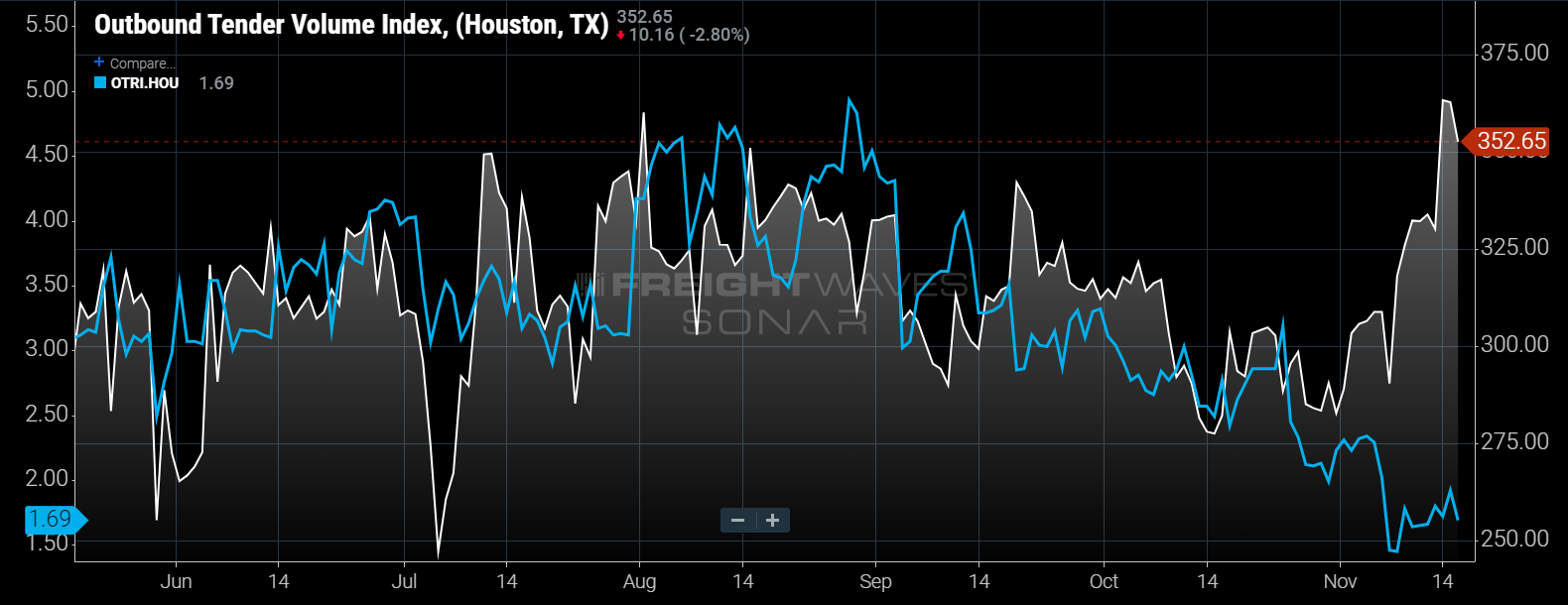
Market Check. The Houston market has experienced strong volume growth in November, including in the past week as volumes have grown by 8.19% week over week (w/w). Rejection rates largely haven’t reacted to the higher volumes as carriers are accepting over 98% of tendered freight. Tender rejection rates in Houston are down just 9 basis points in the past week, currently at 1.69%. Spot rates out of Houston are largely lower w/w, according to FreightWaves TRAC spot rates, including from Houston to Chicago, where the spot rate is down 2.4% at $1.66 per mile.

Who’s with whom? It seems only fitting that the last month of 2023 leads to a rate war between FedEx and UPS. Those who are brave enough to learn the ins and outs of parcel rates find themselves in a unique position as FedEx and UPS fight for business. Each carrier has been aggressively passing off deeply discounted rates for parcel freight in an effort to win back business. For UPS, the goal is to win back business that left from the union dispute fallout, while FedEx aims to win back any business that left for UPS after the fallout.
The best part? The discounts aren’t reserved for mega-shippers. Just about any size business can take advantage of the aggressive price drops. What a holiday miracle as shippers look to cut back on spending.
That said, in case your UPS and FedEx sales reps weren’t hounding you enough, imagine the savings that could be had should a broker or 3PL do some contract negotiations about this time to set itself up for a successful year. The customers with a bulk amount of parcel shipping would no doubt love to take advantage of some deep discounts for as long as possible.
Layoffs and bankruptcies pile up in logistics amid shocking downturn
Borderlands: ITS Logistics making big moves in Lone Star State
LMI showing transportation market flip is coming
CEO fails to pay employees, carriers after Elite Transit collapse
See you on the internet.
Mary
Join the community in freight and subscribe for more at www.freightwaves.com/subscribe.
Moderate strengthening of demand since August has buoyed the sagging air cargo market, but the seasonal surge in retail shipments for the holidays appears to be a third the normal level and more industry players are resetting expectations for a real recovery until the fall of 2024, or later.
Market intelligence provider Xeneta said airfreight volumes bumped up 2% in October from September and increased 2% year over year (y/y), but the sequential growth was subpar compared with peak seasons the previous five years. Midway through November, air cargo traffic remains barely ahead of last year’s disappointing fourth quarter, a compilation of surveys shows.
With consumer purchasing power stagnant amid nagging inflation and a cooling macroeconomic environment exacerbated by the new war between Israel and Hamas, a spending shift to services and experiences, few signs of significant retail restocking, and shippers favoring cheap ocean shipping, the freight sector now realizes air shipping probably won’t rally for at least another nine to 12 months.
Although airfreight volumes and rates have slowly leveled off since the double-digit declines to start the year and finally crossed over to growth, the annualized drop in cargo revenues during the third quarter reflects the uphill conditions faced by airlines and logistics providers.
Major U.S. and European airlines ranging from Air Canada to United Airlines, Air France-KLM and Lufthansa Group reported revenue declines of 25% to 40% for cargo during the three-month period, with the Lufthansa Cargo freighter unit barely breaking even. Korean Air’s cargo revenue fell 51%. Logistics behemoth Kuehne+Nagel said revenue for arranging air cargo moves dropped 46% y/y, while DSV said airfreight tonnage inched up from the second quarter but was down 14% versus the year-ago period.
“Most management teams to date have been tempering expectations for a better-than-expected peak season, and pushing out the timeline for freight recovery. Over the past several weeks, equities markets have largely reflected that sentiment, too,” said Bruce Chan, senior research analyst covering logistics at Stifel, in his monthly contribution to the Baltic Air Freight Index newsletter. “We continue to believe that demand will remain muted, capacity broadly abundant, and, while we may see some signs of episodic tightening from week-to-week or from lane-to-lane, the overall peak won’t offer much to write home about.”
The load factor, a measure of how full a passenger or freighter aircraft is, climbed to 59% in October but remained 2 points below last year’s level, according to Xeneta. Year to date, the fill rate is the lowest it’s been in five years, an indication of persistent weakness in the air cargo market.
The International Air Transport Association reinforced the sense of marginal growth with lagging numbers that showed a 1.9% increase in cargo traffic for September (Xeneta previously reported zero growth), the second month of y/y gains after a 19-month slide, despite global trade continuing to shrink.
For the full year to date, volumes are down about 8.5% versus 2022 and are 2% to 5% lower than January through October 2019, before COVID, according to various freight data firms.
Lackluster manufacturing reflects the widespread softening of global goods trade and lackluster transport demand, with the Purchasing Managers’ Index for new export orders still in contraction territory across major economies. And many retailers in earnings reports stated that spending on discretionary goods is slowing, with more household dollars being spent on essentials.
Worldwide tablet shipments, which predominantly move to market by air, posted a decline of 14.2% y/y in the third quarter, but that was up 18% from the previous quarter, according to preliminary data from the International Data Corp. Chromebook shipments also contracted for a y/y decline of 20.8%.
The recent upswing in air cargo demand, combined with slower growth in widebody passenger capacity as airlines shift to less intensive winter schedules, has led to improved shipping rates. Rising operating costs, such as jet fuel and labor, are also creating upward pricing pressure. The global average air cargo rate is about 23% lower, y/y, compared to 40% to 50% lower for much of 2023. Capacity is about 13% higher than a year ago.
Muted gains in global air cargo activity belie significant regional variation. Rates out of Asia, particularly south China, have accelerated since late summer as Chinese e-commerce marketplaces moved goods ahead of the Christmas season, according to logistics companies and price reporting agencies.
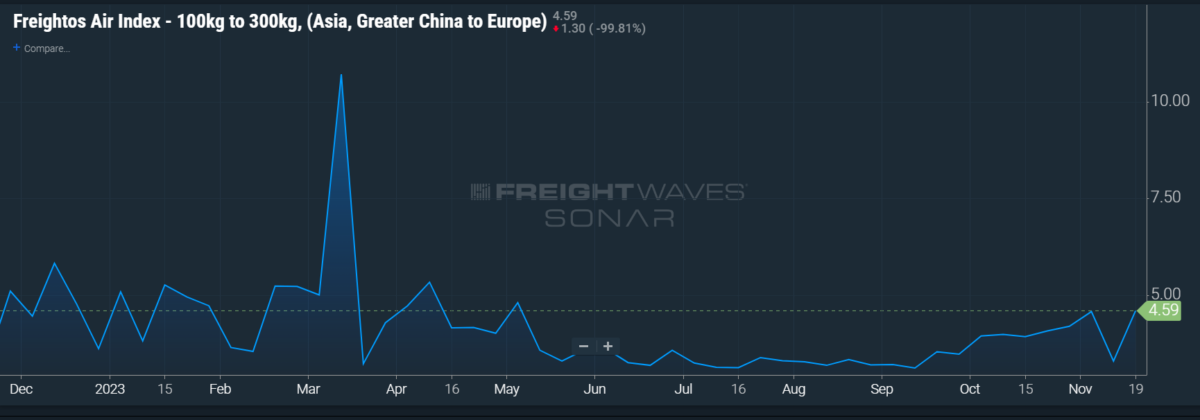
China-U.S. prices climbed 70% from early August to about $7.18/kg, according to the Freightos Air Index. In the past six weeks, Shanghai-North America rates increased 17%, pushing the year-to-date performance into positive territory for the first time. Rates on the Hong Kong-U.S. and Shanghai-U.S. lanes are now essentially at last year’s level. Two huge snow storms delayed operations at Alaska’s Anchorage airport this month, cutting cargo capacity and contributing to price inflation on trans-Pacific routes.
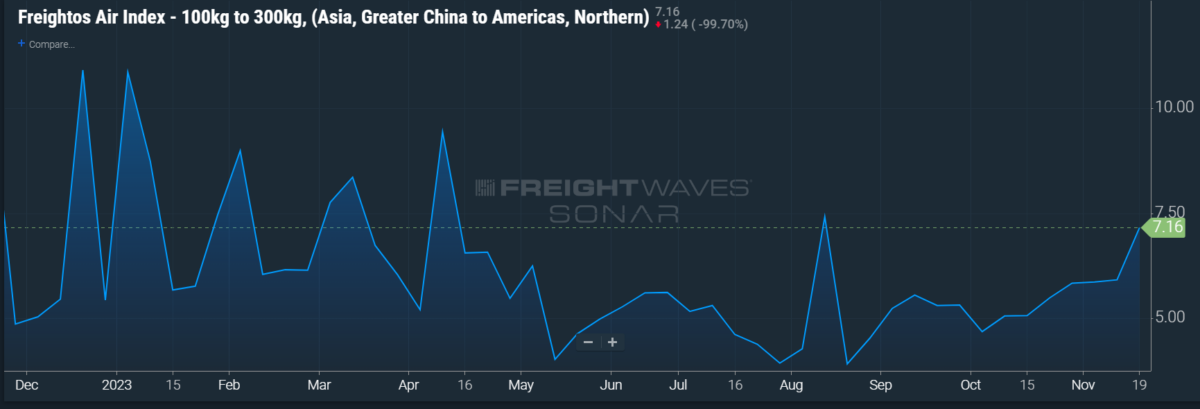
The Baltic Air Index, powered by TAC, shows rates from Hong Kong to North America increased about 13% since September, more than double the average sequential growth on those corridors over the last five years, excluding a drop in 2022.
Analysts note that the positive pricing has more to do with an easy comparison to last year at this time, when the market was tumbling from an incredible high, than from strong demand now. Last year at this time, demand was tumbling 12% from the highs of 2021. And some of October’s bump was attributed to the Golden Week holiday in China, as reopened factories pumped out more goods to make up for lost production time.
Meanwhile, rates on the China-Northern Europe trade lane recently fell 20%, back to their early September level, then rebounded 25% last week to $4.23/kg on more indications of demand improvement, especially from e-commerce shipments. Asia-Europe pricing is up more than 30% since mid-September.
The low-rate environment is spurring businesses to seek longer contracts by which they can lock in capacity at current pricing, while the freight forwarders they deal with are mostly seeking one-time shipping quotes from airlines on the spot market to get the lowest rate.
More evidence of underperformance this peak season comes from Morgan Stanely, which tracks domestic U.S. flight activity of parcel carriers. UPS and FedEx domestic flight counts increased in October from September, but less than normal. UPS flight utilization grew 4% versus 6% on average, slowing the y/y decline to 15% compared to 19% in September. FedEx flight activity increased 3% against an average seasonal gain of 7%. That was an improvement from the 9% sequential contraction in September and put the y/y decline at 6% versus minus 11% a month earlier.
UPS said in its third-quarter report that customers continued to shift volumes out of air to the ground, with average daily air volumes down 15.8% y/y.
“What we’ve seen in September and coming into October, I would call a modest increase in the daily activity month over month. But nothing to the extent of what we would see in a historical pre-COVID peak cycle where you anticipate to see 30%-plus increases” for air and ocean demand, said Tim Robertson, CEO of DHL Global Forwarding, on an Oct. 24 conference call with reporters.
And increases in volumes during this year’s mini-peak season were mostly allocated to ocean shipping as shippers sought to take advantage of historically low container rates, according to logistics experts.
Ajay Virmani, CEO of Canadian all-cargo airline Cargojet, told analysts this month that e-commerce and other customers have indicated they expect similar volumes to last year’s disappointing peak season, during which the company’s volumes increased 10% to 15% in the fourth quarter from the prior three months.
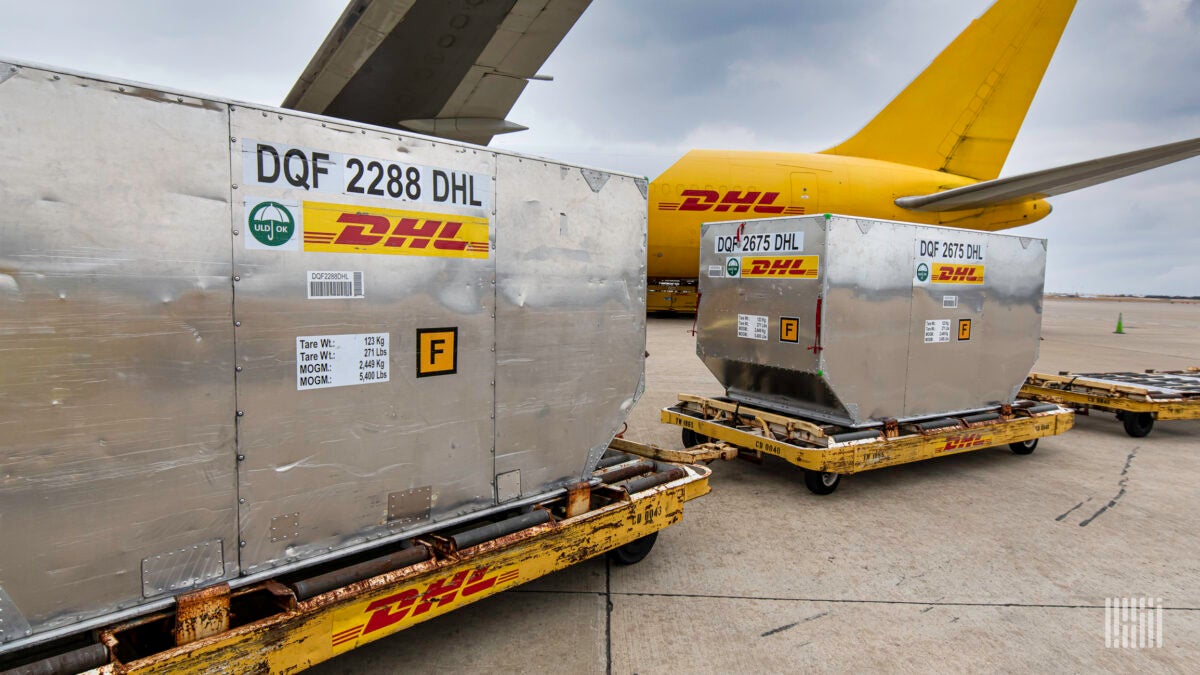
Robertson suggested that fourth-quarter volume gains could be muted because retailers are ordering earlier in the year to avoid potential supply chain bottlenecks and respond to more year-round interest from consumers.
“I think in the future, the concept of a single peak may be irrelevant. Rather we will see multiple peaks throughout the year, as your look at the rise of Prime days, fast fashion and continued developments in the e-commerce market,” said Robertson.
Many retailers are forecasting total merchandise will be flat this holiday season, but that revenues will be higher because of inflation and a higher mix of luxury goods sold, added Scott Surredin, the head of DHL Supply Chain, North America.
Any bump in late-year shipping volumes will likely be from retailers placing last-minute orders leading up to Black Friday and Cyber Monday to replenish stocks for a few specific products popular with consumers, DHL executives added.
During DHL Group’s recent earnings briefing, CEO Tobias Meyer said the company added a handful of charter flights in the trans-Pacific lane because of an unexpected spike in e-commerce volumes. The company is forecasting volumes for its Express business into the U.S. to be 14% higher than last year.
Equity analysts at Royal Bank of Canada said in a research note that they expect peak season to be flat versus last year, revising their previous assumption for modest freight growth across all modes and geographies.
Beyond pockets of increased air shipping, the air cargo sector still faces a long climb to real growth.
Strong U.S. growth of 4.9% during the third quarter could represent a high-water mark for the economy as the higher cost of borrowing resulting from Federal Reserve rate hikes on banks finally causes businesses and consumers to reduce spending, including for housing. And when people aren’t moving into new homes they aren’t buying furnishings, which impacts freight flows. Economists forecast growth could slow to an annual pace of 1.5% in the October-to-December period. A sign of the coming slowdown, Joseph Brusuelas, chief economist at RSM, told The Associated Press, was a 3.8% drop in business spending on new machinery and other equipment last quarter.
COVID stimulus money from the federal government, including through child care credits and student loan deferments, has also ended. More people are using up their savings or adding to personal debt, and defaults for auto and credit card loans are on the rise.
The global economy has weakened to its slowest pace in eight months, with the service sector losing steam. The International Monetary Fund last month said global GDP growth will tick down a 10th of a point to 2.9% in 2024.
S&P Global Market Intelligence forecasts tepid growth in trade in 2024, with U.S. seaborne imports expected to increase by just 2.3% y/y in the first quarter of 2024.
“Many of the forces driving U.S. economic growth in the third quarter will likely reverse in the coming quarters. While growth is strong, maintaining the current momentum will be very difficult in the year ahead. In Europe, the coming months will provide a clearer picture of whether the current economic challenges persist or evolve in 2024,” said Shawn DuBravac, chief economist at IPC, an Illinois-based trade association representing more than 3,000 members in the electronics industry, in the group’s latest outlook.
An emerging bright spot for airfreight companies is the huge demand for massive data centers that house IT infrastructure for delivering digital applications and services. “Every data center needs servers, blades and racks. Data centers continue to be constructed at a dizzying pace and now with the rise of AI, and quantum computing, we don’t see this going away anytime soon, which will have a knock on effect on air freight,” Brian Bourke, chief commercial officer at Seko Logistics, said during a media briefing last month.
Air carriers and freight forwarders have come to the realization that market conditions won’t significantly improve until well into the second half of 2024, said Niall van de Wouw, Xeneta’s chief airfreight officer.
Some ocean carriers say they don’t envision a meaningful freight recovery until 2025. “There are no clear data points showing that the restocking schedule will begin anytime soon, so it does not seem that a recovery will result from near-term growth in demand,” ZIM CFO Xavier Destriau recently said. If true, air carriers likely won’t see significant business improvement until later that year since shippers, absent any urgency to move goods, are expected to direct most new volumes to container lines.
Click here for more FreightWaves/American Shipper stories by Eric Kulisch.
Uptick in airfreight rates creates mirage of market recovery

Belgium-headquartered Katoen Natie plans to spend $59.9 million to expand warehousing and rail facilities in Norfolk, Virginia, to support the growing export market for plastic resins.
Subsidiary Katoen Natie Norfolk will oversee the project, which includes the addition of a 450,000-square-foot warehouse and a rail yard, as well as an expansion of the existing rail spur.
The current facility, which is near the Port of Virginia and has access to both CSX (NASDAQ: CSX) and Norfolk Southern (NYSE: NSC), receives bulk rail transport of plastic resin pellets. The pellets get packaged and loaded onto intermodal containers that sail out of the port.
Virginia officials boasted that the state beat out Georgia and South Carolina to win the expansion. The Virginia Economic Development Partnership, the city of Norfolk, the Hampton Roads Alliance, the Virginia Department of Rail and Public Transportation, and the Port of Virginia worked together to lobby for the project.
“Katoen Natie Norfolk’s increased demand matches the surge Virginia is experiencing as a premier supply chain destination, and this expansion will foster the synergy of the industry ecosystem,” Virginia Gov. Glenn Youngkin said in a Monday release. “Katoen Natie Norfolk has thrived in Hampton Roads for more than a decade thanks to the region’s outstanding logistics advantages, access to The Port of Virginia, and robust workforce, and I look forward to its continued growth.”
“Katoen Natie is making a significant investment in its future [in Norfolk] and The Port of Virginia is investing in parallel to ensure we can meet the demand that this type of expansion requires,” Virginia Port Authority CEO and Executive Director Stephen A. Edwards said. “This announcement shows the confidence Katoen Natie has in the port’s ability to safely and sustainably move its cargo to world markets for years to come. This company is a valued port user, and we welcome the opportunity to work with the Katoen Natie team to ensure even greater success.”
Katoen Natie Norfolk has operated in Norfolk since 2011 when it took over a former Ford Motor Co. assembly plant and body shop. Its parent company is an international logistics service provider and port operator.
Subscribe to FreightWaves’ e-newsletters and get the latest insights on freight right in your inbox.
Click here for more FreightWaves articles by Joanna Marsh.