Trimble’s transportation revenue jumps 35% in Q3

Despite a challenging freight market, Trimble Inc. said its transportation segment performed well during the most recent quarter but could face “adverse” results in the next fiscal period.

The Westminster, Colorado-based company on Wednesday reported its transportation revenue rose 35% year over year (y/y) in the third quarter to $196.6 million.

“While our ARR (annual recurring revenue) has been looking better recently, we do think that the churn we have in our North American mobility business will adversely affect transportation ARR growth in Q4 and going into next year by somewhere around 200 basis points,” Trimble Chief Financial Officer David Barnes said during a call with analysts Wednesday. “Now, we want to emphasize that the rest of the transportation ARR base is doing really well.”

Trimble (NASDAQ: TRMB) is a provider of technology solutions for trucking companies, freight brokerages and 3PLs. In addition to transportation, the company also operates in industries such as buildings and infrastructure, geospatial hardware and software, and resources and utilities.

Trimble posted third-quarter total revenue of $957.3 million, an 8% y/y increase. The company’s third-quarter revenue fell short of Wall Street forecasts, which predicted revenue of $964.4 million.

Third-quarter earnings were 68 cents per share, a y/y increase of 3%. Trimble’s third-quarter earnings beat Wall Street expectations, which had forecast earnings of 59 cents per share. 

Trimble’s guidance for full-year 2023 reports revenue between $3.75 billion and $3.79 billion, with adjusted EPS of $2.58 to $2.66.

For the fourth quarter of 2023, Trimble expects revenue between $890 million and $930 million and adjusted EPS of 55 cents to 63 cents. 

North America remained Trimble’s largest market by revenue during the third quarter at $518.4 million, a 6% increase compared with the same quarter in 2022. The second-largest market was Europe at $260.7 million, a 19% y/y increase.

Barnes said transportation revenue will likely be slowed during the fourth quarter as the freight industry seeks to recover from shipping lower volumes over the last several quarters.

“Transportation segment revenues will be flat or down modestly as the impact of higher customer churn in our North American mobility business offsets the growth across the rest of our transportation offerings,” Barnes said.

Trimble officials also provided an update on Transporeon, a Germany-based logistics provider the company acquired in December 2022 for about $1.98 billion.

Transporeon uses a cloud-based transportation management system to connect carriers, logistics service providers and shippers.

“Transporeon’s top line trends remained below our expectations when we bought the business, driven almost entirely by a contraction in the overall industry, lower shipment volumes and the depressed spot market,” Barnes said. “This outlook assumes no meaningful improvement for Transporean in its core European transportation market in the fourth quarter.”

Trimble Inc.Q3/23Q3/22Y/Y % Change
Total revenue$957.3$884.98%
Transportation revenue$196.6$145.435%
Buildings/infrastructure revenue$395.1$363.69%
Geospatial revenue$180.7$184.2(2%)
Resources/utilities revenue$184.9$191.7(3.5%)
Adjusted EBITDA$268.2$228.117.5%
Operating income$121.3$122.4(1%)
Adjusted earnings per share$0.68$0.663%
Trimble key performance indicators. $ in millions except earnings per share.

Click for more FreightWaves articles by Noi Mahoney.

More articles by Noi Mahoney

US mulls terminating tomato trade agreement with Mexico

Universal Logistics’ Q3 earnings decline in ‘sluggish freight market’

Borderlands: Cargo theft trends changing as supply chains shift to border regions

Truck accidents up 71% and why ELDs may not be helping – WTT

On today’s episode of WHAT THE TRUCK?!? Dooner is talking to FreightWaves’ Rachel Premack about a new study that says truck fatalities are up 71% over the past 12 years. Has anything improved recently and are ELDs helping or hurting? 

MoLo Solutions co-founder Will Jenkins shares his founder’s story of building a company from zero to selling it for $235 million to ArcBest. We’ll find out what he learned along the way and how it has helped shape his freight philosophy. 

FreightWaves’ Justin Martin brings the trucker perspective on trucks as a service, detention pay reform, broker morale, where Yellow’s freight went and charging your kids a trick-or-treat tax.

Plus, the best of Halloween, crashing into bridges, robot dog carriages, disastrous wedding proposals and more.

Watch on YouTube

Visit our sponsor

Subscribe to the WTT newsletter

Apple Podcasts

Spotify

More FreightWaves Podcasts

Optimizing logistics management with quantum computing

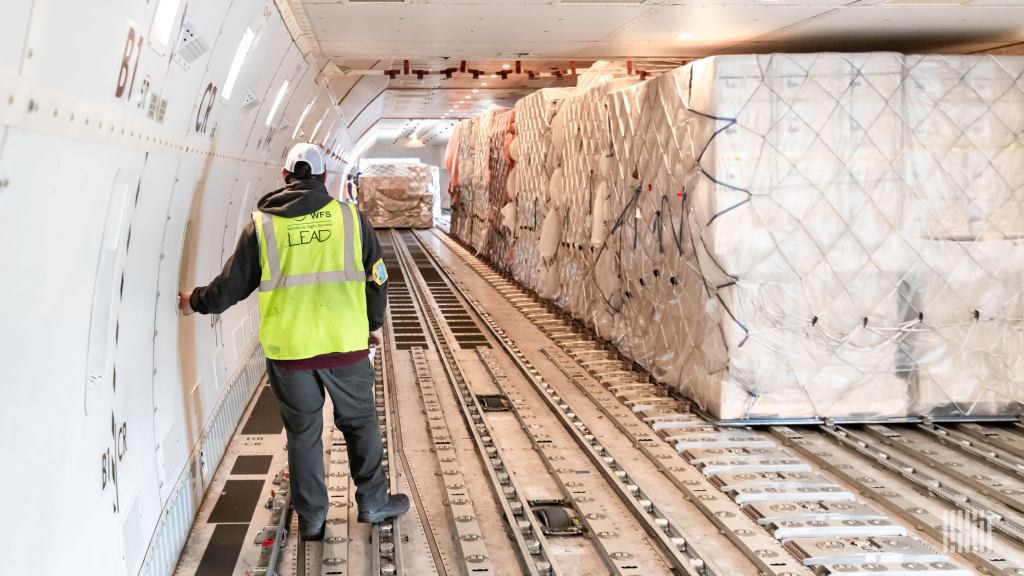
Man in yellow vest monitors loading of pallets on roller system inside body of aircraft.

The supply chain industry has been steeped in manual operations for years, relying heavily on pen-and-paper systems. Yet as customer demands evolve, this old-fashioned approach is proving increasingly inadequate. The industry is rapidly modernizing, and automation and data-driven insights are replacing outdated methods.

Parcels and containers traveling through the supply chain from origin to destination generate vast quantities of data. As the industry continues to digitize operations, it’s grappling with effectively utilizing this data to its full advantage.

Several factors are causing this challenge. Among the most significant is the difficulty in disseminating specialized industry knowledge that exists solely in the expertise of industry professionals, thereby restricting the collective sharing of vital insights.

“The big challenge is how do I get that [data] out of a person’s head and into a format where I can actually use it,” said Sean Tinney, VP of global enterprise computing solutions at Unisys.

A second challenge comes from evolving customer expectations. Elevated by large e-commerce businesses, consumers now expect on-time delivery, real-time tracking and a seamless user experience from all companies, regardless of size. Tinney says the key to meeting these expectations is the skillful use of supply chain data.

For decades, Unisys has been facilitating connections between its air cargo partners and various logistics players such as freight forwarders, 3PLs, 4PLs and ocean carriers, all while meeting escalating service demands. Now, Unisys combines industry knowledge and deep experience with cutting-edge technology to launch Unisys Logistics Optimization. This solution merges industry expertise with advanced technology to tackle some of the most stubborn bottlenecks during the critical last mile of shipping.

The last leg of the freight journey presents a multitude of variables — from building a pallet to loading it successfully onto a plane while considering important details such as temperature and weight distribution. Unisys tackles these challenges by leveraging the combination of artificial intelligence, advanced analytics and quantum computing. This multifaceted approach aids logistics organizations in refining inventory storage locations, planning pallet configurations and determining the most efficient parcel delivery routes. The net effect is a reduction in claims, fewer product damages and a decrease in the overall inventory carrying costs.

In the often unpredictable world of logistics, expert logistics professionals can problem-solve on the spot to readjust freight and get the shipment moving. But this can sometimes result in suboptimal operations, such as space left on the truck or a pallet half-filled, leaving money on the table and increasing a business’ cost base. Unisys’ solution also helps shippers dynamically readjust to these everyday inefficiencies with the help of quantum computing.

“When something goes wrong, and you have to crunch thousands upon thousands of potential scenarios instantaneously, the introduction of quantum computing can power those models and allow someone to get the best answer of what they should do, whether it’s putting on another package, sending it out three-quarters full based on where it’s going. It becomes a key component of this solution,” Tinney explained.

By integrating artificial intelligence, advanced analytics and quantum computing, Unisys Logistics Optimization enables almost instantaneous decisions, leading to significant reductions in time and expenses throughout the supply chain. This solution benefits airlines, freight forwarders and ground handlers, offering enhanced operational processes, revenue efficiency and reduced environmental impact.

Ready to embrace the future of logistics management? Learn more about Unisys and join FreightWaves and Unisys for a webinar on Nov. 28.

IndiGo, Air Inuit opt for converted narrowbody freighters

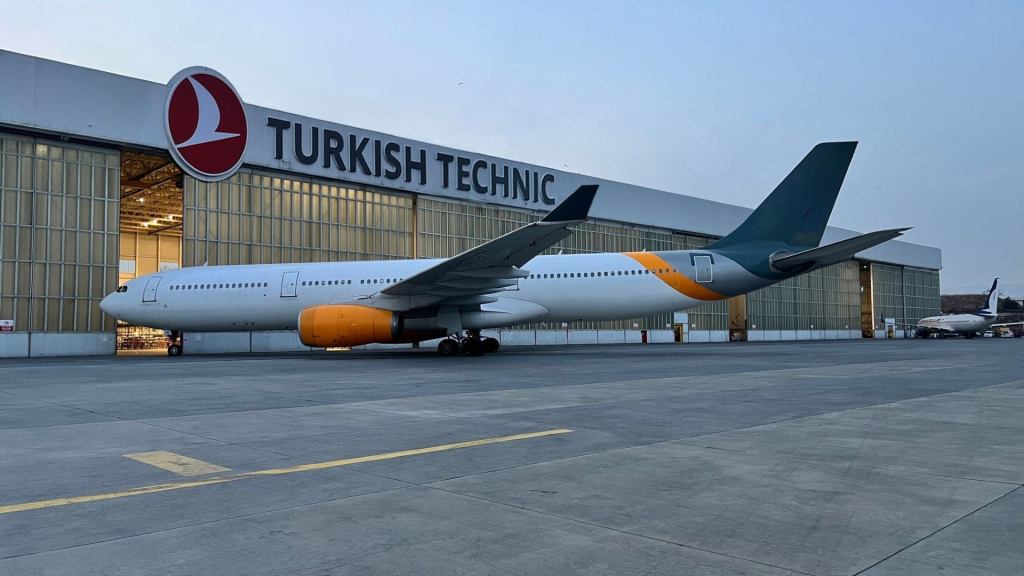
A passenger jet parked in front of a Turkish Technic hangar.

The market for converting used passenger jets into freighters is more subdued this year amid a prolonged downturn in freight demand, but there is still plenty of work to be done fulfilling earlier orders and some new ones.

Indian low-cost passenger airline IndiGo recently received its third Airbus A321-200 converted freighter. IndiGo is leasing the plane from AerCap, the world’s largest aircraft leasing company, which last year reserved 15 production slots with Elbe  Flugzeugwerke GmbH, an Airbus joint venture, for the A321 passenger-to-freighter conversion. AerCap announced the delivery, which took place at EFW affiliate ST Engineering’s facility in Singapore, on Tuesday.

IndiGo began freighter operations last November with its first A321 converted freighter, also built by EFW but provided by a different lessor.

The Indian carrier is operating the freighters on domestic and short-haul international routes, complementing the wider cargo network supported by passenger aircraft. Freighters provide more guaranteed capacity than passenger aircraft, where payloads can vary by the number of passengers and baggage carried.

IndiGo is cautious about further expansion of the cargo fleet considering the global airfreight market is down about 8% to 10% since early 2022 and is not showing signs of a rebound, according to a recent story by The Loadstar.

Orders for new freighter conversions have significantly shrunk in 2023, but conversion shops are expected to set a record for deliveries this year as they work through a backlog of orders. Experts warn the market could soon be oversaturated with narrowbody freighters if shipping demand doesn’t bounce back soon.

The A321 converted freighter can carry more than 25 tons of cargo at a range of 2,300 nautical miles. 

Meanwhile, EFW’s latest conversion center has commenced operation. The company said Monday that contractor Turkish Technic in Istanbul is now removing passenger interiors, cutting the airframe and adding a large cargo door, installing a protective barrier in front of the cockpit and a container handling system as part of the conversion process. Turkish Technic, the maintenance, repair and overhaul center of Turkish Airlines, signed with EFW in the fall of 2022 to convert Airbus A330 widebody aircraft.

EFW has a total of nine modification sites worldwide for the A320/321 and A330 aircraft. EFW, which designed the airframe modification, leads the program while ST Engineering provides much of the hands-on labor. The partners have set up conversion sites in Asia, the United States and Europe to meet demand for used cargo jets. 

The A330-200 variant has a gross payload of 67 tons at a maximum range of more than 4,100 nautical miles, while the larger A330-300 can carry 69 tons and a containerized volume of more than 18,500 cubic feet.

737-800 rival

In related news, Miami-based Aeronautical Engineers Inc. announced last week that Air Inuit, a Canadian airline owned by the Inuit tribe in Canada, has placed an order for conversions of three Boeing 737-800 aircraft, which competes with the A321 in the standard freighter category. 

Two of the aircraft will be turned into combination aircraft, meaning they will have a sliding bulkhead that allows the operator to combine passenger and cargo configurations on the main level. AEI said the first aircraft, a full freighter, is slated to begin modification in November and be redelivered in late March. The work will be performed by authorized AEI conversion center KF Aerospace in Kelowna, British Columbia.

Notably, AEI isn’t involved with combination configuration. It will provide the design and modification kits to KF Aerospace for a typical cargo conversion and KF Aerospace will design, kit and certify the combi portion of the modification, said Robert Convey, AEI’s senior vice president of sales and marketing. 

The three 737-800 are only 11 years old, which is young for conversions. They were previously operated by Kulula, a low-cost South African carrier, and parent Comair — both of which went out of business in 2022.

The second and third aircraft are scheduled to enter the KF Aerospace maintenance hangar in March and July of next year.

Air Inuit provides domestic passenger, charter and cargo services from Montreal to the northern Quebec territories with a fleet of five older Boeing 737 variants with combination capabilities, as well as 17 De Havilland Dash-8 combi and cargo aircraft, according to Airfleets.net.

Click here for more FreightWaves stories by Eric Kulisch.

Orders for freighter aircraft slow ‘to a trickle’

China approves first A321 cargo conversion for Sichuan Airlines

White Paper: Solving Power Procurement Challenges for EV Charging

When it comes to fleets’ electrification at scale, charging infrastructure is the hardest part, and power procurement is a particular challenge. Voltera faces the same challenges a fleet would, but we’re uniquely equipped to solve them.

The challenges that affect power procurement for a multi-megawatt EV charging facility are not new; they’ve always affected large-scale developments that require significant amounts of power. But for fleets and others new to the process of procuring multi-megawatts of power, understanding these challenges – and planning for them – is critical to success.

Access the Playbook today and learn:

  • How proactive investment in strategically located charging sites helps to lock down power in constrained markets
  • How Voltera works to bridge the mismatch between utilities’ distribution system upgrade timelines and fleets’ EV deployment schedules
  • How to work with utilities to streamline interconnection processes and speed timelines
  • How to efficiently and effectively deal with utility differences across markets

2023 Shipper of Choice profile: Southwire Co. LLC

Southwire was chosen as a Shipper of Choice, an award that recognizes retailers and distributors that value their carrier relationships.

The Shipper of Choice award, presented by FreightWaves and sponsored by TriumphPay, recognizes the manufacturers, distributors and retailers that do the best job of keeping the American economy moving by fighting driver detention, providing accessible facilities and understanding what it takes to remove inefficiencies from the supply chain.

Among the top 25 Shippers of Choice for 2023 is … Southwire Co. LLC.

About Southwire

U.S. headquartersCarrollton, Georgia
Shipper of ChoiceFirst appearance

Why Southwire made the cut 

Southwire Co. LLC is one of North America’s largest wire and cable producers. It operates out of 80 facilities in North America, 70 of which it ships from. Its annual transportation spend is between $250 million and $300 million.

Southwire has been on a four-year journey to build a world-class transportation network. The company started with developing a five-year strategic road map that included systems, processes, team members and carrier partners. The road map focused on FreightTech, strategic partnerships, RFPs, carrier scorecards and freight analytics. 

Southwire partnered with key transportation systems providers to make improvements. First, the company implemented a system from U.S. Bank for freight bill audit and payment to enhance its invoice payment process and get carriers paid. Southwire’s Manhattan TMS solution streamlined the company’s load optimization and created a systematic routing guide and shipment tendering. To enhance the customer experience, Southwire launched a project44 visibility tool to provide shipment visibility from its facilities to customers.

Southwire also developed strategic relationships with its asset-based carrier partners. As part of that initiative, Southwire facilitates annual RFPs to strengthen partnerships with incumbent carriers with a focus on economy of scale. Through RFPs, the company continues to optimize its transportation network, furthers its continuous improvement efforts and works to inject new carrier partners in its network efficiently.

Through the development of a carrier scorecard program and identification of key strategic carriers to monitor carrier performance, Southwire determined 10 key measurables and coordinated quarterly business reviews to provide feedback on how the carriers performed. Southwire also created an analytics platform with more than 20 dashboards tailored to monitoring KPIs, network optimization and specific use cases. These dashboards help drive action and communicate the company’s opportunities and success.

In support of its long-term modernization strategy and in an effort to continuously improve customer experience, Southwire will open a new customer service center in the Dallas-Fort Worth area in 2024. The nearly 1.2 million-square-foot facility will distribute products for the full suite of Southwire solutions and effectively streamline the company’s entire product offering to the Southwest and Midwest, emphasizing its commitment to customer service.

The facility will feature three separate driver lounges to provide a safe space for drivers with amenities. Each air-conditioned lounge will have a bathroom, vending machine and waiting area. In addition, the facility will have a drive-thru building flatbed dock with a tarping station.

“It’s a tremendous achievement to receive the FreightWaves Shipper of Choice Award and be recognized in the transportation industry alongside many world-class companies. This achievement is a testament to the efforts of Southwire’s transportation team and demonstrates that our company is a world-class transportation organization,” said Brian Rasperger, Southwire’s director of transportation.

About Shipper of Choice sponsor TriumphPay

TriumphPay is the transportation industry’s premier payment network trusted by leading shippers, brokers, factors and carriers. Its innovative and highly automated fintech payment solution brings cost savings and efficiencies to antiquated transportation payment processes for network participants. Integrated financing options leverage the strength of TriumphPay’s parent bank and can provide liquidity and cash flow visibility.

TriumphPay is a division of Triumph Financial, Inc. (NASDAQ: TFIN).

Keep the ‘do more with less’ mindset during a tough economic freight cycle

The freight market is inching toward recovery, and although everyone has a different prediction of when the turnaround will be felt, the industry’s boom-and-bust cycles indicate that recovery is inevitable.

In recent years, the trucking industry has embraced TMS technology due to its ability to provide complete visibility into operations through powerful data insights and streamline processes. This has enabled companies to operate with leaner staff by maximizing outcomes and minimizing effort, helping businesses reallocate manpower and cut spending, which is especially useful in deflated markets.

As the industry recovers, however, keeping a “do more with less” mindset can enhance a company’s growth. At the same time, it will help it prepare for the next downturn. As a carrier’s command center, Ditat provides businesses with the ability to produce business insights to guide critical decisions and optimize workflows through automation, all underscored by its dedicated staff to ensure customer success.

Ditat is a robust TMS that midsize to large carriers and brokers have used to run their businesses through up and down cycles for the past 13 years. Each week, Ditat updates its system or rolls out new features, which are added to provide cost- or time-saving value to customers while being easy to implement and intuitive to use.

Because of the fast-paced nature of the trucking business, carriers need solutions that will allow them access to all of the metrics necessary for their businesses,  including visualization of their progress toward their targets.

Ditat allows businesses to easily make their data useful, offering thousands of ways to run reports. This helps businesses target the data that’s most important to their vertical and individual company, such as revenue, fuel purchased and fuel prices, and asset and driver counts, just to scratch the surface. Additionally, through its customized dashboards, companies can make sure users only need to see information that’s important to their job scope.

Since companies base their day-to-day and high-level business decisions on data, correct information is essential. There are many tools within Ditat to help mitigate bad data, including automated features to remove human error and prevent users from entering dates that haven’t occurred yet, for example.

Today, trucking companies generate a vast amount of data, which can quickly become overwhelming. Automation helps a business expedite tasks, increase productivity and reduce the need for back-and-forth between carriers and shippers or brokers. For instance, Ditat can automate dispatch, check calls and even the customer notification of approaching detention time.

Ditat takes care to ensure that each new customer has a seamless transition, ensuring it has all the resources and training necessary to be successful and reap a maximum return on investment.

“Implementation is not one-size-fits-all,” said Eric Williams, director of sales at Ditat. “The customer gets a dedicated implementation representative that’s going to help them through all of their training.”

New users can receive training as new features are rolled out, and they can access their past training sessions in a video library.

As the market slowly recovers, businesses should take advantage of a TMS that can provide businesses with the capability to monitor and visualize their key performance indicators, maximize productivity through automation, and get maximum ROI thanks to dedicated customer success managers. This will help them get ahead of the competition as the market picks up and allow them to endure fluctuations during future downturns.

To learn more about Ditat, click here.

White Paper: State of the Industry – November 2023

The November 2023 “State of the Industry Report” — presented in affiliation with Ryder — shares an in-depth overview across the trucking, maritime and intermodal markets, as well as what to expect in the coming weeks. The data contained within the report provides breakdowns of capacity, volumes and rates.

In this report, you will find:

  • Truckload volumes succumb to seasonal trend, declining throughout the first half of October
  • Intermodal volumes continue to rise as peak season is here for the railroads
  • Import volumes will be challenged in the coming months as there was a soft rebound following Golden Week
  • Inflation continues to weigh on both consumers and producers after the most recent CPI and PPI readings
  • Student loan repayments impacts will start appearing in data, but the holiday retail season may mute the impacts during the fourth quarter

Download the complimentary report today to access the full insights.

Scaling strategically with shared warehousing and fulfillment

Business growth can happen unexpectedly these days due to the rise of ecommerce, the sudden popularity of “viral” products and busier-than-usual peak seasons. To keep up with demand and build customer trust, a company needs to easily scale its warehousing, distribution and fulfillment capabilities. The right logistics partner can help businesses do just that.

While best-in-class third-party fulfillment services were previously only accessible to large enterprises, shared warehousing and fulfillment services supported by technology are making it possible for companies to flexibly adapt to surges in order volumes, providing the same functional benefits of an owned facility but on demand. 

The right solutions are also equipped with cutting-edge technology that can optimize returns management and reverse logistics, backed by people providing value-added services and underpinned by a sustainable supply chain infrastructure.

GXO is the world’s largest pure-play contract logistics provider and provides cutting-edge fulfillment solutions for many of the world’s most recognizable brands. It creates customized and advanced solutions to assist businesses on their growth journeys, including GXO Direct, which is GXO’s answer to the industry’s need for a network of flexible shared warehousing, distribution and fulfillment capabilities.

Through GXO Direct, businesses can expand operations to new locations strategically based across the nation within weeks, allowing them to quickly increase fulfillment capacity. It also gives them the tools necessary to drive new efficiencies in their inventory management that set them up for future expansion. GXO’s industry-leading operational technology allows it to achieve high service levels, which ultimately helps its customers improve the experience for their own customers. 

Businesses are already growing operations and boosting profits by leveraging GXO Direct. For instance, one fashion retailer sought to scale its business while also improving its customer experience. It needed a partner to help it flourish from a startup to an established retail brand. Partnering with GXO took it to the next level through the GXO Direct shared-user network.

By working with GXO Direct, the retailer improved inventory availability and sped up click-to-delivery, resulting in a streamlined customer experience. Additionally, the retailer cut return processing time by days and was able to convert returns back to stock and make them available for resale within 24 hours. GXO Direct supported the retailer’s growth as it increased its SKU assortment, facilitated a predictable fulfillment experience and provided value-added services like branded packaging, marketing inserts and support with special projects when needed. 

The scalability GXO Direct offers allows brands to focus on their core products, and leveraging the shared space model makes the solution affordable.

With a logistics partner like GXO, brands and retailers are able to strategically scale their businesses while knowing that their fulfillment provider has the infrastructure, technology and expertise to seamlessly grow alongside them.

Click here to learn more about GXO Direct.

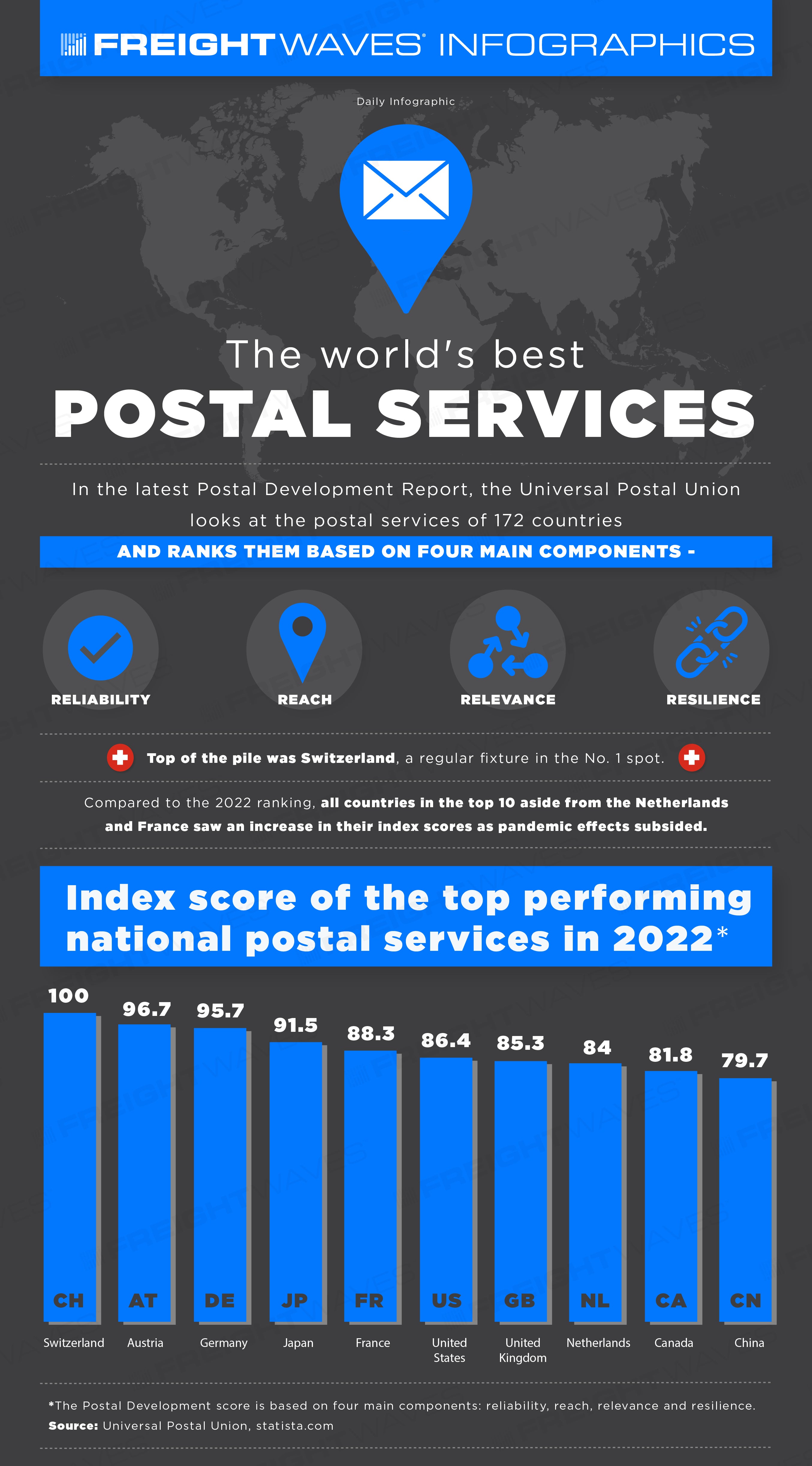
Daily Infographic: The world’s best Postal Services


To view more FreightWaves infographics, click here