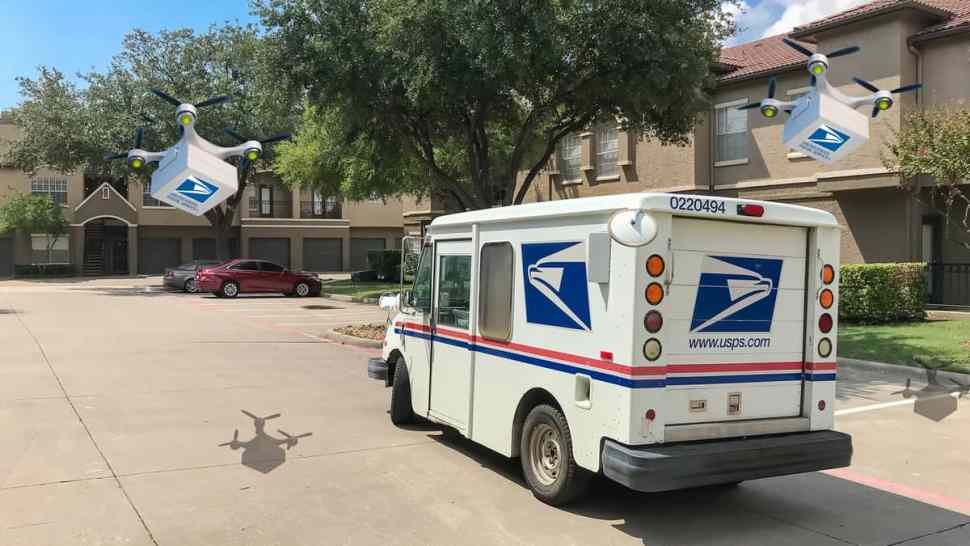
The U.S. Postal Service said Monday it has been greenlighted to slow some deliveries of long-distance parcel shipments, a move that allows it to use more surface transportation and reduce its use of airfreight.
Effective May 1, nearly one-third of all first-class parcels will be delivered one to two days later than the current two- to three-day delivery windows, the Postal Service said. The time in transit will be based on delivery lengths, with a coast-to-coast move likely taking five days. About 68% of parcel volumes will still have two- to three-day deliveries, while about 4% will be upgraded from three days to two. First-class parcel shipments typically weigh less than 1 pound and are mostly designed to move via e-commerce.
The Postal Regulatory Commission, the agency that regulates the Postal Service, approved the initiative, which was first proposed last summer. The agency said in October that it planned to launch the service after the 2021-22 peak holiday shipping season.
Extending the delivery times for long-distance shipments will put more parcels in the Postal Service’s existing ground network, which runs only about 40% full, it said. It will lessen its reliance on air transport, which Postmaster General Louis DeJoy has frequently called costly and unreliable.
Most first-class parcel deliveries are already made by ground transportation. However, because all first-class parcel shipments are required to be delivered in two to three days regardless of the length of haul, the Postal Service has been forced to put more packages in the air than it says is necessary.
Passenger airlines and FedEx Express, the air and international unit of FedEx Corp., (NYSE: FDX) are responsible for air shipping parcels as well as shipments moving via expedited services like Priority Mail Express, the Postal Service’s next-day delivery offering, and Priority Mail, which delivers in two to three days. The Postal Service owns no aircraft.
Read more
Brokerage Compliance Symposium
The day before F3. Every compliance issue you face - fraud exposure, carrier liability, FMCSA rules, cargo theft, insurance gaps - navigated by attorneys and operators defining best practices in a changing industry.
F3 Awards Dinner
The night before F3. FreightTech100 companies honored. FreightTech 25 and Shipper of Choice winners revealed live. Cocktail reception into dinner and live music - 300 industry leaders in one purpose-built room.
F3: Future of Freight Festival
Industry-defining keynotes, rapid-fire technology demos, and industry leaders networking in experiences across Chattanooga - plus the inaugural F3 Awards Dinner featuring the FreightTech and Shipper of Choice reveals.
The day before F3. Every compliance issue you face - fraud exposure, carrier liability, FMCSA rules, cargo theft, insurance gaps - navigated by attorneys and operators defining best practices in a changing industry.
The Signal at Chattanooga Choo Choo • Chattanooga, TN Register NowThe night before F3. FreightTech100 companies honored. FreightTech 25 and Shipper of Choice winners revealed live. Cocktail reception into dinner and live music - 300 industry leaders in one purpose-built room.
The Signal at Chattanooga Choo Choo • Chattanooga, TN Register NowIndustry-defining keynotes, rapid-fire technology demos, and industry leaders networking in experiences across Chattanooga - plus the inaugural F3 Awards Dinner featuring the FreightTech and Shipper of Choice reveals.
The Signal at Chattanooga Choo Choo • Chattanooga, TN Register Now