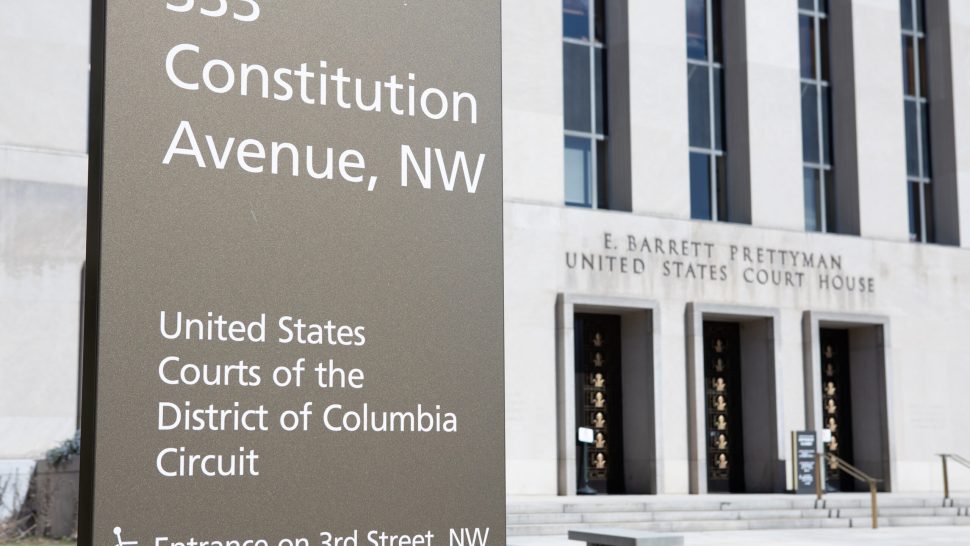
A request by two separate plaintiffs for a court to stay the enforcement of the federal government’s rule governing issuance of CDLs to most non-domiciled drivers has been denied.
The request came from two separate groups of plaintiffs. One is Martin Luther King County in Washington state, more colloquially known as King County, home of Seattle. That was filed in March in the U.S. Court of Appeals for the District of Columbia.
The second motion for a stay was filed in February in the same court by three plaintiffs: the American Federation of State, County & Municipal Employees of the AFL-CIO; the American Federation of Teachers; and the Public Citizen Litigation Group. The primary named defendant in that case is truck driver Jorge Rivera Lujan.
A three-judge panel in the appellate court denied the request Tuesday. However, in a footnote to the order denying the request, the court said Circuit Court Judge Robert Wilkins would have granted the stay.
Schedule released
The combined cases will continue to move ahead, with the court spelling out in its order the schedule for briefing. It begins with petitioners’ briefs on June 15, respondents’ briefs from the Federal Motor Carrier Safety Administration a month later, and final briefs on August 5.
Oral arguments are expected in September.
The court’s order also allowed several other parties to join as amicus curiae, including the Teamsters and the Sikh Coalition.
An interim final rule seeking to restrict the issuances of CLDs to non-domiciled drivers was first issued by FMCSA in October. But the Lujan plaintiffs requested a stay of that rule, which was granted.
FMCSA followed up with its final rule, issued in February and effective March 16. It was that rule the two lawsuits were seeking to put on the shelf via another stay.
As the Lujan plaintiffs summed up the final rule in their request for a stay, “The Rule specifies that non-domiciled CDLs are available only to H-2A, H-2B, and E-2 visa holders, thereby excluding asylum seekers, asylees, DACA recipients, refugees, and people with temporary protected status.”
Arguing against the rule, the Lujan plaintiffs said FMCSA’s rule suggested the agency “first decided on the outcome of the rulemaking and only then looked for reasons to support it. Petitioners are likely to succeed on their claim that the Rule is arbitrary and capricious.”
More articles by John Kingston
Motus steps up: what carriers need to know about new FMCSA ystem
After CBS report, C.H. Robinson seeks to deflect safety responsibility to FMCSA
ORBCOMM pulls in new financing, replaces all publicly-traded debt
Brokerage Compliance Symposium
The day before F3. Every compliance issue you face - fraud exposure, carrier liability, FMCSA rules, cargo theft, insurance gaps - navigated by attorneys and operators defining best practices in a changing industry.
F3 Awards Dinner
The night before F3. FreightTech100 companies honored. FreightTech 25 and Shipper of Choice winners revealed live. Cocktail reception into dinner and live music - 300 industry leaders in one purpose-built room.
F3: Future of Freight Festival
Industry-defining keynotes, rapid-fire technology demos, and industry leaders networking in experiences across Chattanooga - plus the inaugural F3 Awards Dinner featuring the FreightTech and Shipper of Choice reveals.
The day before F3. Every compliance issue you face - fraud exposure, carrier liability, FMCSA rules, cargo theft, insurance gaps - navigated by attorneys and operators defining best practices in a changing industry.
The Signal at Chattanooga Choo Choo • Chattanooga, TN Register NowThe night before F3. FreightTech100 companies honored. FreightTech 25 and Shipper of Choice winners revealed live. Cocktail reception into dinner and live music - 300 industry leaders in one purpose-built room.
The Signal at Chattanooga Choo Choo • Chattanooga, TN Register NowIndustry-defining keynotes, rapid-fire technology demos, and industry leaders networking in experiences across Chattanooga - plus the inaugural F3 Awards Dinner featuring the FreightTech and Shipper of Choice reveals.
The Signal at Chattanooga Choo Choo • Chattanooga, TN Register Now