At TRB: Costly issues weigh on port efficiency
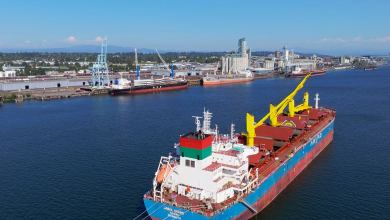
Stakeholders at the Transportation Research Board annual meeting gathered to evaluate port performance, a complicated conversation within the supply chain.
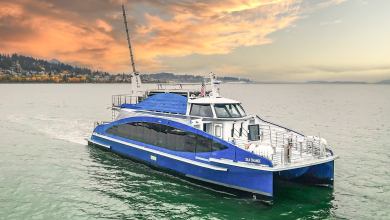

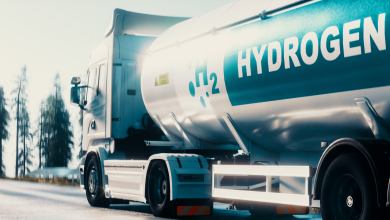
Hydrogen as a fuel is being used in a San Francisco ferry and now it has money to go farther.
Electrification isn’t possible without infrastructure to support it. Voltera is transforming the transportation industry by helping fleets access EV charging infrastructure.
Cummins Inc. will retire two legacy engines, replacing them with one fuel-agnostic powertrain for medium- and heavy-duty trucks.
Without a clear idea of what technological breakthroughs in alternative fuels may be coming, ocean carriers are left searching for a path forward as they look to build vessels.
Danny Gomez and Tyler Cole, who have both hosted FreightWaves’ Net-Zero Carbon over the past year, discuss what they have learned.
A New Climate Ventures expert joins FreightWaves’ Net-Zero Carbon show to discuss the different ways captured carbon dioxide can be used for a circular economy.
AskWaves dives into the potential benefits and drawbacks of using blue hydrogen on the path to green hydrogen.
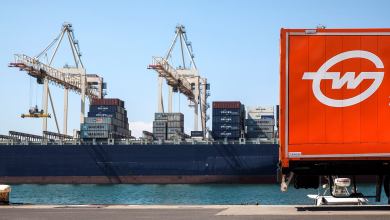
“Climate protection is an issue that impacts everyone. While we can work towards this goal internally, we also wanted to provide an opportunity to enroll our customers in our mission toward carbon neutrality,” said Mark McCullough, Gebrüder Weiss USA CEO.
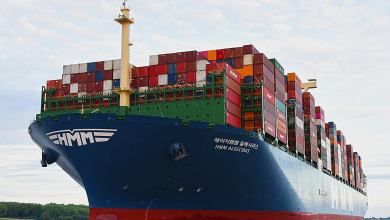
After an 85% revenue jump, the South Korean carrier turns its attention to meeting its carbon neutrality target.
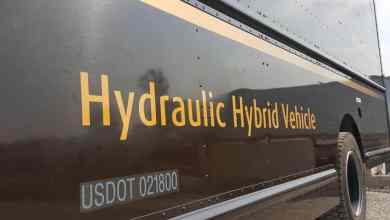
UPS takes part in a business panel on why Congress should support last-mile delivery and electric vehicles.
Ryder offers a wide range of alternative fuel vehicles based on customer demands, total cost of ownership and sustainability goals. FreightWaves interviewed Richard Mohr, CTO at Ryder, to dive deeper.
The European Commission has released its Sustainable and Smart Mobility Strategy. Massive investments and infrastructure are needed to meet the EU Commission’s sustainability milestones.
All trucking operational costs fell in 2019 as freight demand contracted. Drivers earned less per mile but received bigger retention, signing and safety bonuses, according to the American Transportation Research Institute.
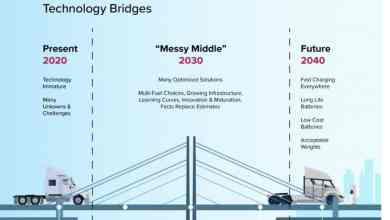
The electrification of commercial trucks is edging closer but the industry first must go through a “messy middle” that sorts out the future of diesel and other alternative fuels.
Convoy says a study of its data shows that carriers in its network are safer than industry averages and have fewer cargo claims than the average carrier.
Germany has spent $580 billion towards renewable energy infrastructure, but still would fall woefully short of its emissions reduction goals of 2020. Andreas Kuhlmann, chairman of German Energy Agency explains why.
Between 2008 and 2018 UPS will have invested more than $1 billion in alternative-fuel and advanced-technology vehicles and fueling stations.
Volvo Trucks has now formally entered the all-electric push with the announcement that its FL Electric vehicle has been introduced in Europe.