Driver training rule phase-in on course despite technical concerns
Regulators say a database designed to standardize and simplify training certification for new drivers will be ready on time next year.


Trucking companies could be exposed to increased liability while a challenge to FMCSA’s hours-of-service preemption in California is pending.
While onboard with the group’s goals, not all truckers seem happy with the approach Black Smoke Matters is taking to achieve them.
FMCSA has ruled that California can’t dictate meal and rest break requirements that conflict with federal hours-of-service regulations.
States will soon be able to give would-be drivers more time to get their CDLs at the same time potentially lowering knowledge exam costs.
No signs of a broader downturn, but the month-on-month numbers are generally a little weaker.
A long list of concerns in the ATA President’s annual speech to his group’s conference, including young drivers and California’s own laws.
Martinez also said the process has begun to look at the overlapping rules regarding agriculture transportation, and he clearly doesn’t favor California’s separate rules on meal breaks.
FreightWaves reached out to OOIDA for their perspective on the current state of affairs in trucking. We also want to engage in a dialog from the fragmented industry interests, seeking points of agreement, as well as naming points of contention.
Under California law, drivers making their way through the Golden State are entitled to a 30-minute meal break for every five hours worked.
ATA chairman outline group’s legislative priorities for this year.
Probably to no great surprise to attendees in the room, American Trucking Associations’ Chief Economist Bob Costello painted a very positive picture of the current and near-term freight environment during the ATA’s 2nd Annual Economic Summit last week in Washington, DC.
It’s no surprise that truck drivers who travel during peak times face slower average speeds and that more flexible HOS regulations could not only speed those travel times, but also would not impact the miles drivers cover in a day, according to ATRI.
Last year’s survey by ATRI had driver shortages as the biggest issue facing the industry, with ELDs second.
A House bill on the issue of drivers under 21—that hasn’t progressed—now has a companion piece of legislation in the Senate.
The trucking industry awaits rulings from the courts, and through legislation, regarding the status of drivers. How often will rest breaks take place, and will they be paid? How will drivers be defined as independent contractors? What will be the implications either way?
Truck drivers involved in certain behaviors are more likely to have a future crash, ATRI research has concluded.
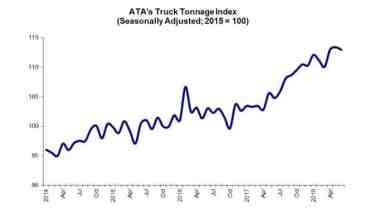
Preliminary numbers on the American Trucking Associations’ (ATA) June For-Hire Truck Tonnage Index shows a slight downturn in tonnage carried despite the generally robust economic numbers that should fuel freight demand.
The FMCSA and ATA talk regulations at SMC3; Cummins has to pay tariffs to import its own engines; Canadian National and Canadian Pacific investing in Port of Vancouver; why protectionist rhetoric is roiling the markets; key takeaways from OPEC’s Vienna meeting.
Truck tonnage rose for the second consecutive month in May, as improving economic conditions and gains in hiring have helped trucking performance.