Eight charged in alleged $10 million international cargo theft conspiracy
Court documents outline an investigation involving stolen freight, alleged carrier impersonation and shipments ranging from consumer goods to high-value merchandise.

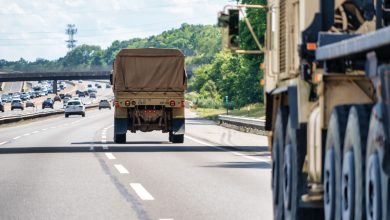
This week in Borderlands Mexico: Cargo theft falls, but attacks on truckers turn deadlier; Clarios opens $147M battery distribution center; and Craters & Freighters Austin opens new logistics facility.
A federal jury convicted a former Army civilian contractor of stealing more than 200 pallets of Meals-Ready-to-Eat from Fort Bliss. Prosecutors said the operation relied on false paperwork, rental trucks and an El Paso warehouse to move and sell approximately $1.12 million in government property.
The bipartisan CORCA bill passed the House with overwhelming support, but a growing debate over cargo theft data has followed it to the Senate. Critics question whether documented losses justify a larger federal response, while supporters argue the current reporting system misses much of the problem.
Indiana police arrested a California truck driver after recovering nearly $2.9 million worth of tungsten oxide powder that authorities say was stolen in Pennsylvania. Police allege the driver used fraudulent documents to obtain the shipment, which was headed to Japan.
A Montana man received a 41-month federal prison sentence after admitting he transported more than $181,000 in stolen construction equipment from Montana to Idaho.
Class 8 analyzed more than 3.2 million truck unload events across 68,340 commercial vehicles using a three-stage detection pipeline that combines vehicle weight telemetry, satellite imagery and behavioral analysis. The study classified nearly 42,600 unload events as High or Critical risk and, according to CEO Chris Atkinson, has been validated against a statistically significant number of confirmed cargo theft investigations
California Highway Patrol investigators recovered more than $2.2 million in allegedly stolen cargo after executing a search warrant at an Anaheim warehouse. Authorities say the investigation remains ongoing, and additional details have not yet been released.
Two stolen trailers carrying more than $1.3 million in cargo were recovered at a suburban Chicago truck yard, according to the Cook County Sheriff’s Office. The trailers, reported stolen in Alabama and Florida, contained approximately $300,000 in copper wire and $1 million in infrastructure equipment for data centers. Investigators are working to identify the driver who delivered the trailers and anyone else who may have been involved in the thefts.
A shipment of approximately 10,800 bottles of Noble Oak Bourbon valued at $500,000 was allegedly stolen after suspects posed as authorized representatives to pick up the freight. The incident highlights a growing cargo theft tactic in which criminals use legitimate shipment information and impersonation to obtain freight without using force.
Transfix has integrated Highway’s carrier vetting technology into its transportation management system, allowing freight brokers and third-party logistics providers to verify carrier identity, insurance and operating authority without leaving the platform. The integration reflects a broader industry shift toward embedding fraud prevention directly into transportation management software.
As cargo theft continues to climb across the United States, Trucker Path has integrated Verisk CargoNet cargo theft intelligence into its navigation platform. The new feature provides drivers with county-level theft risk ratings, theft trends and commodity data while planning routes, as CargoNet reports more than 1,120 cargo theft incidents and $121 million in estimated losses during the first five months of 2026.
A Philadelphia man has been sentenced to nearly eight years in prison after federal investigators dismantled a cargo theft ring responsible for more than $1.5 million in stolen freight. Court filings reveal how the crew targeted sleeping drivers, coordinated thefts through group chats and moved stolen cargo across the region, offering the transportation industry a rare look inside how organized cargo theft operations work.
Cargo theft costs U.S. businesses $35 billion annually. Samsara’s new tracking label delivers real-time freight visibility across any carrier with no system overhaul required.
The theft of England’s World Cup equipment is being treated as a sports story. It should also be treated as a logistics story. While the losses were relatively small and the property was recovered, the incident serves as a reminder that even minor security failures can expose larger vulnerabilities within a supply chain.
The AI boom is changing more than technology. It is reshaping supply chains, increasing demand for critical components and creating a new class of high-value cargo targets. The question is not whether criminals are paying attention. It is how quickly the transportation industry can adapt.
After criminals allegedly hijacked a Walmart-bound shipment, Global Protection discovered that legitimate carriers, drivers and paperwork are not always enough. The company explains how the incident changed its approach to verification and why slowing down became part of its security strategy.
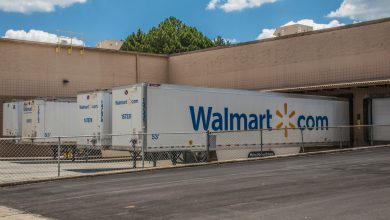
The cargo was unusual. The alleged theft method was not. According to public reporting, criminals compromised a legitimate carrier’s identity and used it to divert a Walmart-bound shipment worth $1.7 million, a tactic the FBI says is becoming increasingly common.
The July 4 holiday doesn’t create supply chain vulnerabilities. It exposes them. As freight sits unattended and operations slow down, security experts warn that organized theft groups are watching closely.
For decades, transportation operated on trust, speed, and relationships. On this episode of Fraud Watch, Malcolm Harris explains why that model is changing as freight fraud becomes more organized, verification becomes more critical, and companies are forced to rethink how freight moves through their operations.