May flowers wither on the vine
Despite expectations for seasonal growth in the second quarter, the health of the American consumer has continued to become more precarious, stirring headwinds for even once-reliable sources of freight.


Volumes are just beginning to tick up at the tail end of April, but freight demand in the quarter has been mostly flat and thus grossly unseasonable.
TriumphPay and Highway join forces to create an exclusive algorithm that will combat double brokering.
“We could make carriers’ lives easier by giving them a single tool that they can use to make sure that they are not missing any hiring steps,” said LogRock co-founder and CEO Hunter Yaw.
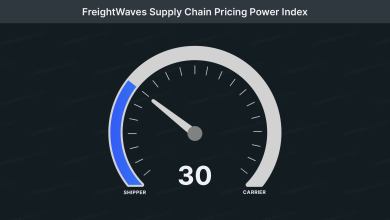
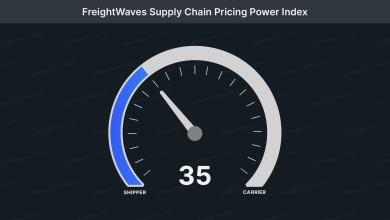
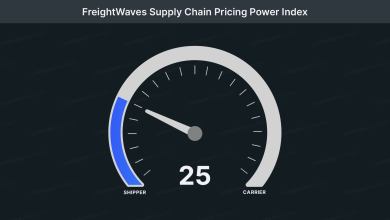
To view more FreightWaves infographics, click here
While ocean carriers are not facing the same risks as their domestic trucking counterparts, given their consolidation and enormous war chests, ocean’s weakness in demand will continue to trickle down into truckload markets.
Despite seeing slight seasonal growth, truckload markets are showing a continued soft patch.
“Our growth and potential were being hindered by manual processes and limited visibility into workflows,” US Cargo Brokers founder Adam Konopko said. “After adopting Ditat’s TMS, US Cargo experienced a complete transformation.”
Echo Global Logistics has held true to the same goal since its inception almost 20 years ago: Make transportation management simpler.
The gap between current levels of freight demand and those of 2019 is narrowing, casting doubt on the market’s ability to sustain growth.
The consumer will be key to resolving the present tension in freight demand’s future, but consumers continue to be predictably unpredictable.
Market conditions will likely become a bit more favorable before they get much worse.
Strangely enough, tender volumes are abiding by seasonal trends.
“If we take what we’ve learned about compliance over the last 20 years and combine it with the latest technology, it’s possible to speed up the process significantly and make it a better experience for drivers,” Foley and CEO Joel Sitak said.
Strangely enough, tender volumes are abiding by seasonal trends. The first quarter of 2022 was unusually active as shippers tried to get ahead of disruptions to capacity, which historically tightens in the spring.
With the inflation-squeezed consumer running through their discretionary budgets, freight demand is in a precarious state.
Consumers’ appetite for discretionary spending has been usurped in favor of squirreling away income into personal savings.
Carriers make good on drivers’ on- and off-the-road preferences
Volumes have continued their recovery from the winter holiday season with a surge in pent-up freight demand unleashed into the market. Naturally, since last week’s data was affected by holiday noise, the Outbound Tender Volume Index (OTVI) faces some absurdly easy comps on a weekly basis. Even still, accepted tender volumes remain below their levels of 2021 and ’22 for the time being.