For all containers moving in and out of the U.S., rates (both contract and spot rates) are required to be filed with the Federal Maritime Commission (FMC) 30 days in advance of the containerized cargo being shipped. This adds an additional layer of complexity to the way ocean container rates are negotiated and governed.
CEO tells FreightWaves the U.S.-China trade war has transformed the trans-Pacific trade and customers are receptive to paying IMO 2020 bills.
With spot container freight rates continuing to tumble, carriers are forecast to withdraw more capacity ahead of annual contract negotiations with shippers.
There are reasons to expect a healthy pop in outbound Los Angeles spot rates.
Freight volumes may have peaked for the season, but it certainly doesn’t feel that way. There is still a lot of uncertainty for Q3 as we close a disappointing Q2.
FreightWaves’ SONAR chart of the week (June 16, 2019 – June 22, 2019) Chart of the Week: Drewry World Container Index – Shanghai to Los Angeles and Shanghai to New York (SONAR: WCI.SHALAX, WCI.SHANYC ) If you are involved in the movement of containerized ocean freight, you are undoubtedly familiar with the beast known as […]
Investors are risk-on for Europe, putting money into Italian, Greek, and junk bonds, and equities.
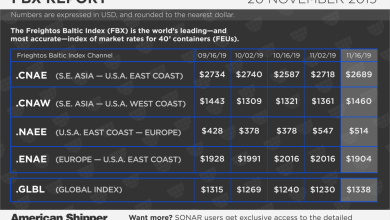
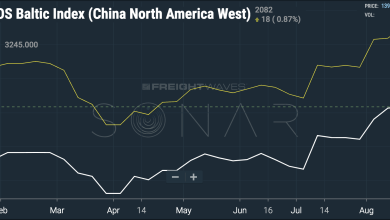
The Panama spread (FBX.PANA) widened last night when Freightos released new container rates for this week: rates from China to the American East Coast (FBX.CNAE) climbed to $3,683, while rates to the West Coast (FBX.CNAW) fell slightly to $2,527.
Los Angeles volumes spiked just before Labor Day, but it doesn’t appear to be an artificial surge related to the holiday. In the next week we’ll start to see how the fall shipping season is shaping up.
Transpacific container rates post gains; United States and Mexico try to reach an agreement on the automotive trade; what Amazon did last week; Lloyd’s of London rethinks marine insurance; Mexico City’s new airport has uncertain future; tanker market faces added pressure from US-China spat.
Transpacific container rates continue to gain momentum; UPS files blockchain patent applications; Uber is uncertain about self-driving cars; Elon Musk doubles-down on ‘no sleep’; cautious optimism for US-China trade talks lifts equities markets; container lines expect profits in the back half of 2018.
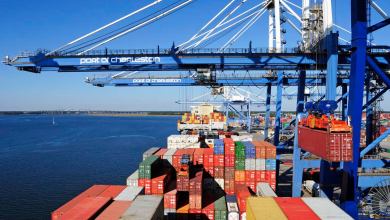
US East Coast ports such as Charleston are seeing double-digit growth.
Small carriers enjoy 30% better retention rates than megas; container lines raise rates worldwide; truckload carriers try to capitalize on a historically favorable freight environment; Tesla begs its suppliers for cash back; LNG production is accelerating.
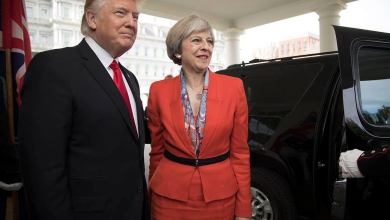
Theresa May and Donald Trump have patched things up; US warehouse capacity tightest in decades; transpacific container rates moving up quickly; Canadian Pacific and its two unions reach a mutually beneficial deal; Lufthansa Cargo offers spot capacity on its app.