




Michael Rudolph
Friday, February 3, 2023
Spot markets are flatlining
Consumers’ appetite for discretionary spending has been usurped in favor of squirreling away income into personal savings.
Consumers’ appetite for discretionary spending has been usurped in favor of squirreling away income into personal savings.

The Freightos Baltic Index (FBX) is the world’s leading—and most accurate—index of market rates for 40′ containers.
Volumes have continued their recovery from the winter holiday season with a surge in pent-up freight demand unleashed into the market. Naturally, since last week’s data was affected by holiday noise, the Outbound Tender Volume Index (OTVI) faces some absurdly easy comps on a weekly basis. Even still, accepted tender volumes remain below their levels of 2021 and ’22 for the time being.

On Tuesday, FreightWaves interviewed Werner Chief Information Officer Daragh Mahon about the company’s recent partnership with Samsara, diving into how AI and updated legacy systems are transforming Werner’s 8,500-truck fleet.

The Freightos Baltic Index (FBX) is the world’s leading—and most accurate—index of market rates for 40′ containers.
Volumes have continued their recovery from the winter holiday season with a surge in pent-up freight demand unleashed into the market. Naturally, since last week’s data was affected by holiday noise, the Outbound Tender Volume Index (OTVI) faces some absurdly easy comps on a weekly basis. Even still, accepted tender volumes remain below their levels of 2021 and ’22 for the time being.

Wabash and J.B. Hunt Transport have signed a multiyear deal that will supply J.B. Hunt with 15,000 trailers. The size and scope of the pact are significant, as the past two years saw pandemic-related supply chain disruptions throttle up new trailer orders, causing the average age of existing trailers to rise.
For all intents and purposes, the month of December has only three weeks of freight activity, as the final week from Christmas to New Year’s is effectively null. In years prior, freight demand has fallen throughout the month before bottoming out in that final week. So far, December looks to be following seasonal trends, which is to say that, while shippers’ activity is winding down, this movement is not alarming by itself. Rather, the gap in freight demand between 2022 and ’21 (or even ’20) is the main symptom of current ailments.
Persistently higher inventory levels are causing a drag on truckload tender volumes as 2023 begins. 2019 and 2018 SONAR data indicates we may approach levels of pre-pandemic seasonality, but higher truckload capacity will continue to negatively impact rates until enough truckload supply leaves the market.

The Freightos Baltic Index (FBX) is the world’s leading—and most accurate—index of market rates for 40′ containers.
For all intents and purposes, the month of December has only three weeks of freight activity, as the final week from Christmas to New Year’s is effectively null. In years prior, freight demand has fallen throughout the month before bottoming out in that final week. So far, December looks to be following seasonal trends, which is to say that, while shippers’ activity is winding down, this movement is not alarming by itself. Rather, the gap in freight demand between 2022 and ’21 (or even ’20) is the main symptom of current ailments.

The Freightos Baltic Index (FBX) is the world’s leading—and most accurate—index of market rates for 40′ containers.
Contrary to popular opinion, December is not a peak season for freight. True, the freight that needs to be moved in this month typically has greater urgency than usual, which does put upward pressure on carrier rates. But peak truckload volumes are largely influenced by maritime imports, which historically peak between July and September.
Historically, November is the month in which maritime imports begin to move inland for their final push before the holiday shopping season. Yet such imports were lost at sea this year, failing to materialize during ocean shippers’ peak season. This one-two punch of weakened import volumes and overstocked retail inventories means that carriers are left with fewer opportunities to source freight.
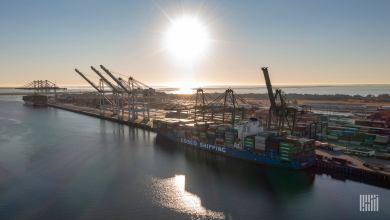
Ocean carriers have been shielded by lucrative annual contracts with cargo shippers, but contract coverage is starting to crumble.
Historically, November is the month in which maritime imports begin to move inland for their final push before the holiday shopping season. Yet such imports were lost at sea this year, failing to materialize during ocean shippers’ peak season. This one-two punch of weakened import volumes and overstocked retail inventories means that carriers are left with fewer opportunities to source freight.

The Freightos Baltic Index (FBX) is the world’s leading—and most accurate—index of market rates for 40′ containers.
Since the pandemic started, many shippers found their existing contracts unable to ensure carrier compliance. Supply and demand were especially volatile, and so spot rates, which are more sensitive to changing market conditions, handily outpaced contract rates.

The Freightos Baltic Index (FBX) is the world’s leading—and most accurate—index of market rates for 40′ containers.
Since the pandemic started, many shippers found their existing contracts unable to ensure carrier compliance. Supply and demand were especially volatile, and so spot rates, which are more sensitive to changing market conditions, handily outpaced contract rates.