Federal Reserve survey highlights tariff impacts, driver shortages
Responses from the Federal Reserve’s Beige Book on regional economic conditions show that recent tariffs and capacity issues in freight are starting to pressure businesses.


“The good news is we picked up 19,000 drivers last year,” says TMW’s Damon Langley. “The bad news is we’re still about 50,000 short.”
OOIDA president Todd Spencer talks about the shortage of drivers in the trucking industry and the circumstances that led to this situation.
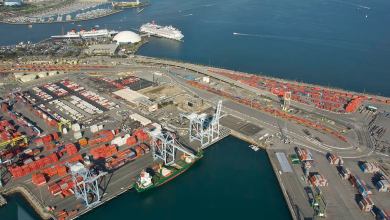
Transport stocks excluding bulk maritime carriers largely unaffected by tariffs; Port of LA getting new container terminal; Boeing and Ford threatened by Chinese tariffs; new autonomous shipping joint venture announced; commercial driving schools see low enrollment; a guide to Tesla’s guidance.
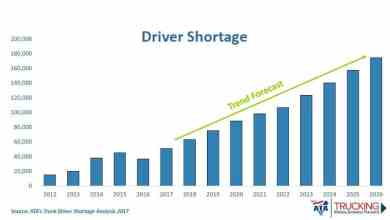
The number is 175,000 out several years, against a base of a half-million.
It’s pay, it’s treatment, it’s training: a long list of personnel issues facing the trucking industry.
The JOBehaviors Assessment helps carriers identify applicants who possess the behaviors, core values, and attributes of top performing truck drivers. Fleets who implement the assessment see higher productivity and lower turnover.
A CDL holder between the ages of 18 and 21 must do all their driving inside a state under current law.
Shippers that work closer with carriers and treat drivers with respect can see lower transportation costs as a result.
Orders for new Class 8 trucks are surging, but used truck prices and workforce growth are weak, suggesting that overall trucking capacity is staying flat.
In spite of a sea change in technology, the US DOT report released Jan. 31st, says the costs of rigorous data collection and analysis would likely outweigh the benefit. Instead, they provide a lot of data from 2013-2014.
Celadon’s turnaround team is bringing back generous vacation time and cash bonus incentives to recruit drivers for its tweener business.
Strong economic fundamentals in the U.S. and globally are driving the second-longest bull market since the 1920s. Could the driver shortage ultimately end it all?
How rapidly the autonomous truck becomes a common sight on local roads and interstate highways – both in the U.S. and abroad – depends on numerous factors. Maybe we should check ourselves at the propaganda and hype-machine door.
Fleet execs are talking about the driver shortage as if it were the worst thing to happen in the industry, but they should be thankful. It keeps gives fleets pricing power.
This is ELD deadline week, and the sky is falling. Or maybe it already fell. Is it the end of the world as we know it?
It is estimated that truck driver vacancies have reached nearly 50,000 this year and if the trend continues, it could explode to six figures in the next decade. Could immigrants fill those gaps?
The cleverness of the plan resides in the kind of “under-21 truckers” they’re talking about: only those with military driving experience.
Last week, FreightWaves published a commentary suggesting that solving the driver shortage may be as easy as raising pay – a supply and demand issue. We got many comments on that, including from Stifel Equity Research’s John Larkin, who said economics is not the only issue at play.
The industry loves to throw around the term “driver shortage.” But what we really face is an economic opportunity shortage. Fix this and you will fix the driver shortage problem.