Driver shortage: Hire qualified drivers faster and without settling
As competition for truck drivers heats up, fleets need to take steps to improve their recruiting, hiring and onboarding processes to find candidates and get them into trucks.

Federal rules mandate the collection and maintenance of driver qualification files, but for fleets, managing this process can be cumbersome and fraught with potential liability.
Using a combination of the Safety Management Cycle and the 5 Why’s helps fleets identify the root cause and eventually end patterns of FMCSA violations.
As the industry prepares for the new entry-level driver training rule to go into effect in February, fleets that train their own drivers and schools face new challenges in complying.
What’s in your Driver Qualification File?
From time to time, truck drivers require additional training. Whether it is refresher training or due to a recent incident, success depends on having the right approach.
J. J. Keller announced its VideoProtects monitoring platform is available on the Geotab Marketplace, making the safety solution available to more than 2.4 million vehicles.
FMCSA’s Drug & Alcohol Clearinghouse has several reporting requirements for carriers, but those without proper protocols in place could be reporting violations they shouldn’t, and that is harming drivers.
Trucking fleets that still use pen and paper to meet their recordkeeping requirements are adding unnecessary costs and complexity, and upping the chance of a recordkeeping violation during an FMCSA audit.
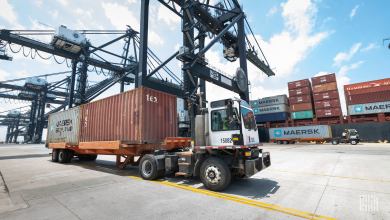
Yard tractors are often found in ports, like this one in Port Houston, but fleets, warehouses and distribution centers are typical users of the vehicles. Anytime a driver is using a yard tractor, it presents a safety risk, so even though it may not be going onto public roadways, driver training is critical to ensure safe operation. (Photo: Jim Allen/FreightWaves)
With the Canadian ELD mandate going into effect on June 12, fleets operating in that country need to know the key differences from U.S. regulations and whether they have a compliant device.
Carriers continue to face fines and out-of-service violations because they don’t understand the difference between intrastate and interstate operating authority.
Drivers often take the blame for roadside violations, but remaining in compliance with regulations is a team effort that includes maintenance personnel and safety operations in a fleet.
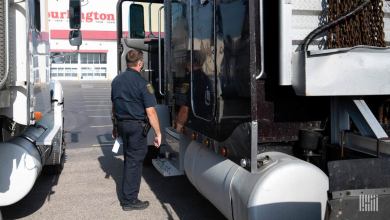
As International Roadcheck 2021 quickly approaches, truck drivers need to prepare for the inspection process. Here are five tips J. J. Keller & Associates, Inc. recommend drivers follow to make the process easier.
An ELD Annotations Guide in collaboration with J. J. Keller
Trucking fleets that conduct only yearly reviews of driver records may miss signs of risky driver behavior that ultimately could put lives in jeopardy.
Compliance with record-keeping regulations is a time-consuming task that can easily fall through the cracks as busy fleet executives focus on day-to-day tasks.
Driver hiring is the first step in building a safer fleet. A simple five-step approach ensures this process is conducted properly and the drivers you hire represent the least amount of risk.
In today’s edition of The Daily Dash, the freight bull market shows no signs of slowing; Chao says goodbye; and trucking continues to add jobs.
The Geotab reseller segment will be the initial target for VideoProtects transport technology, which J. J. Keller has acquired.