




FreightWaves Staff
Wednesday, July 31, 2019
Dry bulk operator Pacific Basin’s profit sinks 73 percent
Jim Wilson reports on Hong Kong-listed dry bulk ocean shipping company Pacific Basin’s earnings.
Jim Wilson reports on Hong Kong-listed dry bulk ocean shipping company Pacific Basin’s earnings.
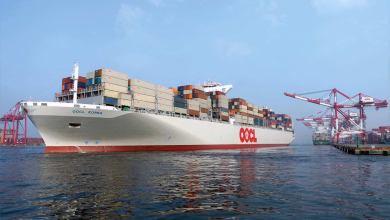
OOCL reported its second quarter 2019 earnings while also announcing that it was canceling several Asia-Europe sailings for a three-month period.

Chris Connor, the new president and CEO of the American Association of Port Authorities, is enthusiastic about advocating for the varied needs of its members.

In this commentary by Ekim Saribardak, he writes about new track and trace technologies that can revolutionize the shipment of ocean freight.

In the wake of Hurricane Barry, Brian Aoaeh writes about the disruption to supply chains that hurricanes and flooding can do. In particular, the state of Louisiana and its ports are critical to the U.S. agriculture and energy industries.

Ben Thrower recently visited the Panama Canal. He writes about the canal’s expansion and what that means to global trade and the maritime industry.

The U.S. fireworks supply comes primarily from China, and one company controls most of that trade. Read Market Expert Henry Byers’ fascinating article about fireworks!

The maritime industry can be well-served with an unmanned vessel that can produce its own energy from the waves and through solar battery panels fixed on its roof.

Market expert writes about the latest tensions in the Mideast and how that might impact air and sea cargo, as well as supply chains.

Nicholas Press, Founder and President of CEC Systems, explores the maritime industry’s problem with empty containers and explores potential solutions to deal with them.

Rail market expert Jim Blaze discusses how FreightWaves SONAR can help determine how best to ship freight.
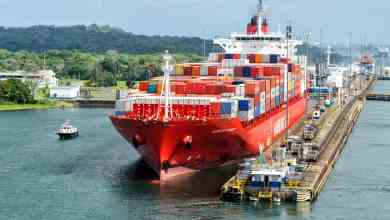
Market expert Brian Aoaeh’s article focuses on the current and upcoming maritime industry issues – IMO 2020, global warming, rising sea levels, etc. Read Brian’s take on how the maritime industry is meeting these challenges.
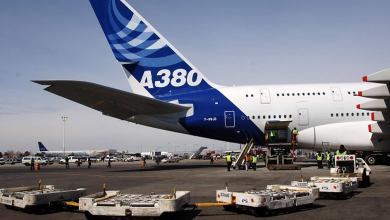
The U.S. is proposing $11 billion in tariffs on European Union goods because of allegations that Airbus received that amount of subsidies when it launched the Airbus 380, thereby harming U.S. interests. Read Jesse Cohen’s explanation of the articles proposed for tariffs and what the tariffs might do to the air cargo and maritime industries.
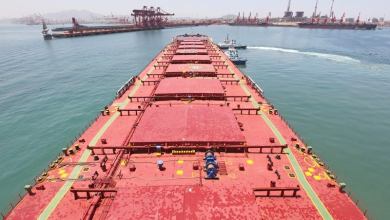
When freight rates are terrible, even a slight improvement seems like an uptick. But a terrible market is still a terrible market. Capesize rates have marginally, slightly, improved… but they’re still dreadful. And the rest of the dry bulk shipping markets are doing their best to impersonate a submarine… they’re all steadily sinking. Ship scrapping that removes some excess tonnage may help rate recovery.

Spanish logistics provider ChainGO Tech has joined the Blockchain in Transport Alliance. Read why the company joined the Alliance and what it hopes to achieve with its membership.

China is the number one country for emerging logistics opportunities in 2019, according to the latest annual Agility Logistics Index, which surveys over 500 logistics professionals. The country also takes the top spot both for domestic and international emerging markets logistics opportunities. India was in second place. Countries in the Middle East and South East Asia showed strongly too.

International terminal mega-operator, DP World, has announced a solid set of results for 2018. Revenues, earnings before interest taxation depreciation and amortization (EBITDA), and net profit all substantially increased last year compared to 2017. Acquisitions and increased box volumes drove revenues and profits. DP World has announced investment plans for 2019.

V.Group has acquired Global Marine Travel (GMT) from Inchcape Shipping Services according to a V.Group press release. The acquisition will increase the scale of V.Group’s operations to offer global 24/7 travel services.
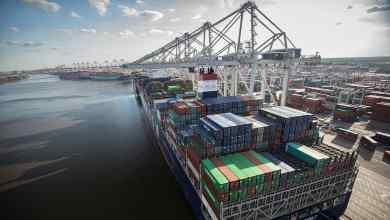
Shippabo has created its own version of a fixed-rate contract, which helps small and mid-sized shippers gain access to direct-to-carrier contracts, allowing them to cut their shipping costs and secure reliable capacity.

In its 2018 annual report, released today (February 7), DSV (NASDAQ OMX: DSV) announced that revenues grew 5.5 percent, from 74.901 billion Danish Krones (DKK), or $11.39 billion, in 2017 to DKK 79.053 billion ($12.022 billion) in 2018.