




Kim Link Wills
Monday, October 11, 2021
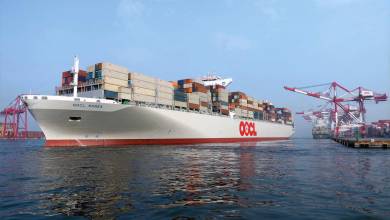
OOCL Q3 revenue up 125% to $4.3 billion
“This record result was achieved despite severe congestion around the network,” says the Hong Kong ocean carrier.
“This record result was achieved despite severe congestion around the network,” says the Hong Kong ocean carrier.
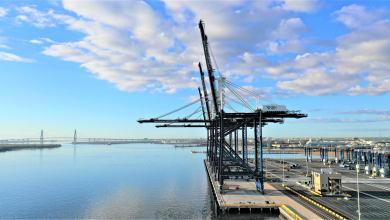
A National Labor Relations Board judge ruled the International Longshoremen’s Association cannot force the use of union labor at the Port of Charleston’s new Leatherman Terminal.
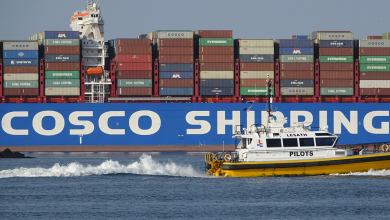
New disclosures by lines point to massive ocean-carrier profits in the second quarter.
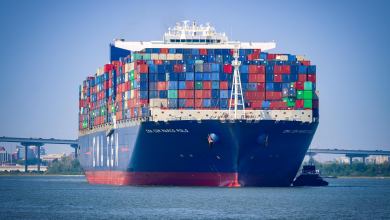
From A.P. Møller – Maersk to ZIM, the world’s shipping lines reported huge profit jumps.
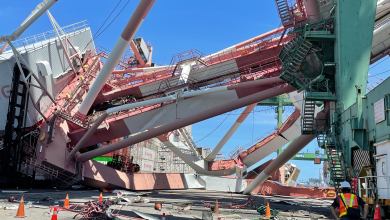
The cranes cost $21.6 million to construct; a price tag on vessel and cargo damage has not yet been estimated.
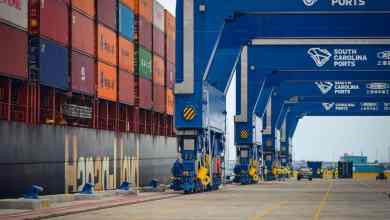
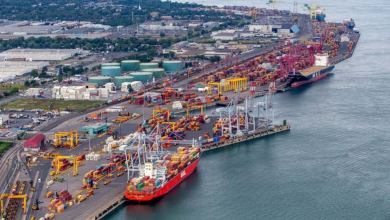
In the next two weeks, only two container ships are slated to berth at the new Leatherman Terminal. Forty are scheduled at the Port of Charleston’s neighboring Wando Welch Terminal.
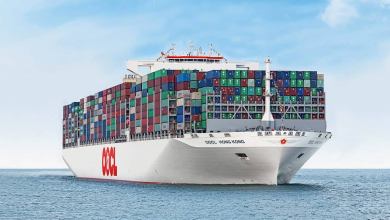
Hong Kong-based container carrier moves 1.94 million TEUs during the third quarter of 2020.
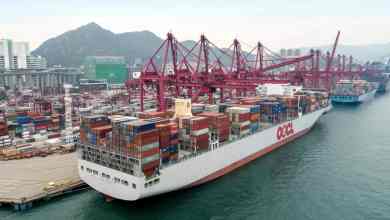
China could decide enough is enough if trans-Pacific rates rise too high.
“We are going to lose some of the food and pharmaceuticals.”
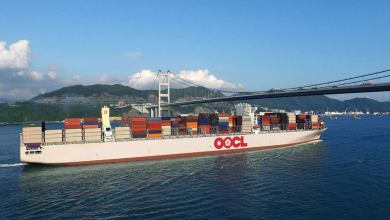
Orient Overseas Container Line briefly outlines performance for the second quarter and first six months of 2020.
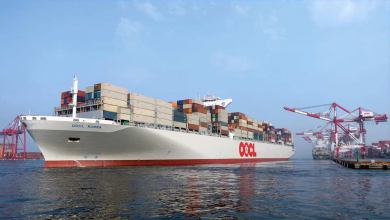
Hong Kong-based shipping line says first-quarter volume was down less than half a percent despite pandemic.

Orient Overseas Container Line (OOCL) said both container volumes and revenue were higher in the third quarter this year than in 2018.
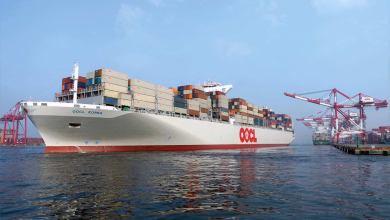
OOCL reported its second quarter 2019 earnings while also announcing that it was canceling several Asia-Europe sailings for a three-month period.
It has now been a half-decade since the emergence of large-scale container liner alliances. What’s their track record?
OOIL and Yang Ming see better revenue growth, but bottom line results diverge as finance and fuel costs hit results.
New group floats alternative blockchain solution for container trade.
State-backed Asian container lines have plans to rapidly expand their capacity; meanwhile Maersk cuts its guidance for 2018 by nearly a billion dollars in EBITDA.
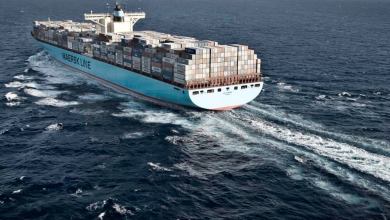
Container line alliances are cutting capacity on their transpacific services in anticipation of a major slowdown in the US-China trade relationship due to tariffs. We see downside risk for Union Pacific and BNSF intermodal volumes, as well as JB Hunt.
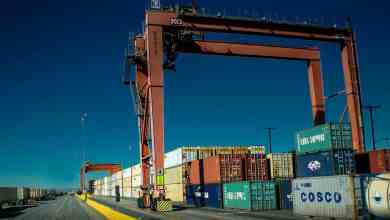
Freight markets still hot to close Q2; COSCO/OOCL merger approved by US, China; Tesla hits Model 3 production goal; CSX revives plan for intermodal hub in North Carolina; EU threatens retaliation over auto tariffs.
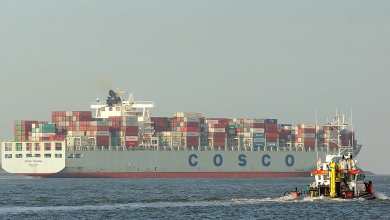
China wants to consolidate the Asia-North America container trade and drive supply chain efficiencies by operating a container terminal in Long Beach, but national security concerns may scuttle the COSCO-OOCL merger.