U.S. rail volumes drift lower
Year-to-date U.S. rail volumes fell yet again this week, although improving economic indicators signal that rail volumes could moderate in the weeks and months ahead.
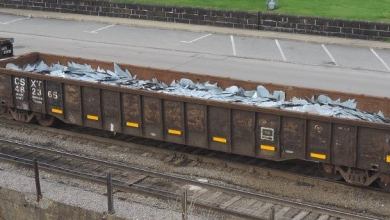

Jim Blaze writes about railroad movement of scrap – the market today and the future of the market.
Brian Aoaeh has written a thought-provoking commentary on the impact of climate change on supply chains, and what governments, companies and startups can do to mitigate supply chain disruptions.
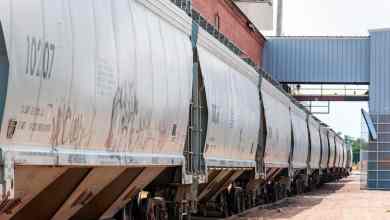
Jim Blaze writes about the movement of grain by rail. This is a huge business for U.S. and Canadian railroads, and is also critical to the export market of the two countries.
Year-to-date U.S. rail volumes fell again amid a loosening truck market, receding floodwaters in the Midwest and overall economic uncertainty.
An additional $300 billion in proposed U.S. tariffs against China could result in lower railroad freight volume , but economic uncertainty and competition from trucks appear so far to be bigger threats for rail volumes.
Market expert Jim Blaze writes about the railroads’ transportation of fracking sand, as well as stone and gravel, aggregates and phosphates.
Should the Class I railroads see U.S. rail volumes sustainably increase, furloughed workers could be called back to meet network capacity needs, resulting in a bump up of headcount levels. But another factor that could affect headcount levels in the long-term is the deployment of automation technologies.
U.S. rail volumes trended downward again for the week ending June 15, with weekly volumes falling over 5 percent and year-to-date volumes declining nearly 3 percent, according to the latest data from the Association of American Railroads.
Market expert Jim Blaze writes about the movement of coal by rail. He explores the history of rail-coal; more importantly, he writes about what the future may hold for coal in the U.S. and how that will impact the railroads.
Flooding impacts, cheap natural gas prices, and trade and economic uncertainty could be factors contributing to a significant slump in weekly U.S. rail volume.
Market expert Jim Blaze explores what railroads need to do to capture more of the market share of oversize loads, which are essential to the economy and profitable as well.
U.S. rail volumes tumbled 6.7 percent for the week ending May 25 as slumping intermodal volumes dragged total volumes lower. Softness in the housing and manufacturing sectors could be contributing to lower U.S. rail volumes year-to-date.
U.S. rail volumes fell again for the week ended May 18, while Canadian volumes grew, according to the latest data from the Association of American Railroads. The theme of higher U.S. carloads but lower intermodal volumes was also expressed by CSX this week.
FreightWaves SONAR now features railroad-related data from Commtrex. The article provides insight about the Commtrex, the data it will provide to SONAR and how SONAR users will benefit from it.
Market expert Jim Blaze explains the economics behind railcars. He also provides information about the various types of railcars and what market conditions the railroads are facing as they seek to “right-size” their fleets.
Canadian rail volumes rose again year-to-date for the week ended May 11, while U.S. rail volumes continued downward amid U.S. tariff uncertainty and a fuzzy economic picture.
April rail volumes fell year-over-year but rose slightly from March 2019, the Association of American Railroads (AAR) said on May 1. But the AAR predicted that improving economic conditions could lead to rail volumes stabilizing or growing in the second half of the year, although some uncertainties still persist.
Market expert Jim Blaze looks at how rail freight volume has changed over the years and what the outlook is for the next decade. Learn what he thinks will happen to the railroad industry in its long-term competition with trucking to carry freight.
Australian Stock Exchange listed bulk rail freight operator Aurizon reported decreases in top-line revenue, earnings before interest, tax and depreciation, and a big decline in net profit after tax on February 11, 2019.