Today’s Pickup: High-tech and low-tech at ATA; more tariffs on China on the way
Head of FMCSA and largest U.S. truck trade group say California attempting to preempt federal regulations.
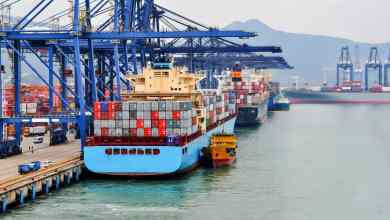

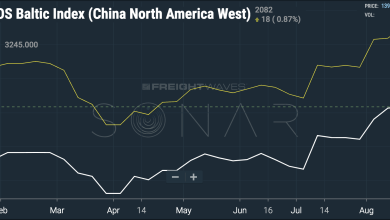
Capacity constraints, strong demand, and chaotic tariff-related traffic pushed transpacific containers rates to new heights, but the current inbound container surge, unrelated to consumer demand, will create a steeper drop off in Q1 2019.
Trump government looks to phase out IMO2020 sulfur cap regulations; Shanghai Composite Index crashes by 3%; Amazon revisting cities for finalizing HQ2.
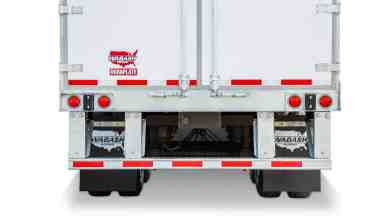
Despite an exceptionally strong year for trailer orders, Wabash National’s stock took a hit when the company guided downward for its Q3 results, blaming higher input costs and labor issues.
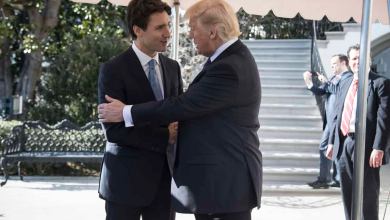
Concerns over a global trade war have eased this morning, as Canada agreed late Sunday to join a trade deal between the US and Mexico. The deal makes modest revisions to the previous North American Free Trade Agreement (NAFTA), and clears up some of the uncertainty surrounding the trade environment.
The US trade deficit in goods widened for the third consecutive month in August as another decline exports was paired with a modest increase in imports. The total value of traded volume fell for the month, but remains generally strong relative to last year.
$200B of tariffs imposed on Chinese imports today; the 4PL era is here; China cancels further trade talks; Germany’s maritime fleet shrinks by 1/3; air cargo not yet feeling tariff pain; oil rallies.
Utility solar projects see growth as prices of imported Chinese solar panels fall despite Trump tariffs; no-deal Brexit could see higher mortgage rates even if housing prices tumble; Chinese car market is weakening and it is troubling major-OEMs.
The ports of LA and Long Beach witness a fall in imports due to upcoming tariffs; Hurricane Florence is now a Cat 2 storm; California passes bill that would make its electricity carbon-free by 2045.
Tariffs Hurt the Heartland sends a letter to Congress today, F1 inspires air taxi development, and more in Today’s Pickup.
Survey data from the manufacturing sector improved significantly in August, in a sign that activity continues at a strong pace after robust growth in the 2nd quarter.
Maersk foresees a $2 billion increase in fuel costs due to sulfur-emissions cap; U.S. consumers might witness increase in car prices after U.S.-Mexico deal; Indonesia is seeing a tremendous growth in ecommerce; German car manufacturers are facing a battery production crisis.
Transpacific container rates post gains; United States and Mexico try to reach an agreement on the automotive trade; what Amazon did last week; Lloyd’s of London rethinks marine insurance; Mexico City’s new airport has uncertain future; tanker market faces added pressure from US-China spat.
Uber Freight is gobbling up $500M per year; the US and China hit each other with a new round of tariffs; Georgia Ports extends its inland intermodal network; Saudi Arabia’s Aramco IPO indefinitely delayed; cannabis supply chains mature; Houston is now an oil exporter.
The trade tariffs spat between the U.S. and the rest of the world is having consequences at home, as importers and consumers have to contend with the rise in product prices in the country.
Transpacific container rates continue to gain momentum; UPS files blockchain patent applications; Uber is uncertain about self-driving cars; Elon Musk doubles-down on ‘no sleep’; cautious optimism for US-China trade talks lifts equities markets; container lines expect profits in the back half of 2018.
Springfield, Illinois hits Walmart with a $50k fine for allowing truck parking. Safeway delivery drivers make history with a newly ratified union contract. We interview Senator Bob Corker about Trump’s tariffs. 162 transportation and logistics companies make the 2018 Inc. 5000 list. JP and Chad discuss all this and more on this week’s episode.
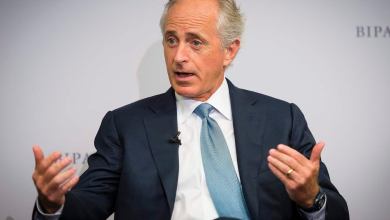
Senator Bob Corker (R-TN) spoke to FreightWaves about his efforts to rein in what he called the Trump administration’s abuse of authority in imposing tariffs on the United States’ allies and trade partners.
Canada, Mexico, China, and the European Union are among those who have instituted retaliatory tariffs on cranberry imports coming from the United States. FreightWaves spoke with Kellyanne Dignan, Ocean Spray’s Director of Global Corporate Affairs, who provided the company’s perspective on the issue.
Starting this week U.S. sanctions against Tehran on sectors like automotive and aircraft are set to return following Trump’s decision in May to pull out of the nuclear agreement with Iran.