Tariffs not enough to derail trucking economy
While there is a lot of noise surrounding tariffs and potential trade wars, it probably isn’t enough to derail the economy and the red-hot freight environment.
President Trump is pushing his trade conflict with China toward a point where neither side can back down.
Tesla wants to build a huge China plant to avoid tariffs; dry bulk carriers find favorable rate environment as countries re-source commodities; Honeywell adds an executive to reconfigure its supply chains; container rates from China to the North America spike as maritime lines take advantage of trade war fears.
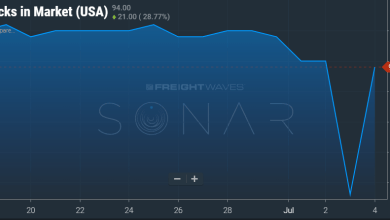
Turndowns and trucks in market both deteriorated this week as shippers and carriers enjoyed their Independence Day holiday. US-China tariffs begin today; railroads worried about tariffs’ impact on carloads; air freight’s pilot shortage accelerating drone adoption; unemployment up slightly as US adds 213K jobs.
Survey data in both the manufacturing and service sectors continued to point to strong economic growth at the end of the 2nd quarter. Details in the survey responses continue to suggest that high transportation costs, labor shortages, and tariff uncertainty remain significant issues in the economy.
President Trump’s global trade war is posing a growing risk to the kind of robust job gains that the U.S. probably enjoyed again in June.
Freight markets still hot to close Q2; COSCO/OOCL merger approved by US, China; Tesla hits Model 3 production goal; CSX revives plan for intermodal hub in North Carolina; EU threatens retaliation over auto tariffs.
Media outlets are reporting that President Trump has repeatedly told his staff of his desire to pull the United States out of the World Trade Organization, which has removed trade barriers and facilitated free trade for decades.
Economists say the impact could spread beyond the specific categories of imports and exports that may be subject to tariffs.
As Trump continues to ramp up protectionist tariff talk and suggesting that imported autos and auto parts will be next, the U.S. auto industry is collectively saying, thanks, but no thanks.
The US trade deficit in goods narrowed for the third consecutive month in May as improved export performance outweighed a modest rise in imports during the month.
The FMCSA and ATA talk regulations at SMC3; Cummins has to pay tariffs to import its own engines; Canadian National and Canadian Pacific investing in Port of Vancouver; why protectionist rhetoric is roiling the markets; key takeaways from OPEC’s Vienna meeting.
The song of 2018 remains the same—and tariffs or no tariffs, it projects to remain so even as infrastructure on the rails and ports expand.
Rhode Island begins tolling trucks today; SCOTUS rejects review request by JB Hunt on California case; Rolls-Royce engine problems spread; transportation companies fret over tariffs; Waymo to buy up to 62,000 Chrysler Pacificas.
Ag haulers are not only dealing with ELDs and hour-of-service uncertainty, but tariff talk is clouding the future outlook as well.
Mexico, Canada, and the EU announce retaliatory tariffs; Dow Transports still above 200 day average; the US asks OPEC for a production hike; DHL remains largest air freight forwarder; containership loses 86 boxes in storm off Australia; how China beats US steel tariffs.
U.S. Sen. Bob Corker, R-Tenn., says he and others are “crafting” legislation requiring congressional authority over levying tariffs in response to President Donald Trump’s imposition of stiff steel and aluminum tariffs on Canada, Mexico and the European Union.
The truckload business is booming, but how high will rates go? Hyundai Merchant Marine orders 20 new containerships; China keeps the door open on US trade talks; global equities rise on US jobs report; a pension fund is building a $4.9B railroad in Quebec; manufacturing activity expands.
The US trade deficit in goods narrowed for the second consecutive month, but a decline in both exports and imports means less transportation to and from ports
China and the United States issued a joint-statement regarding trade consultations and a desire to support bilateral trade between the countries.