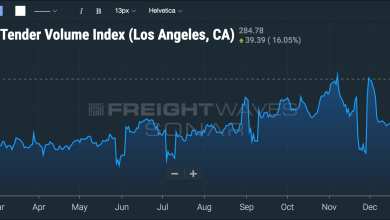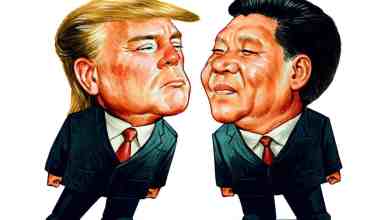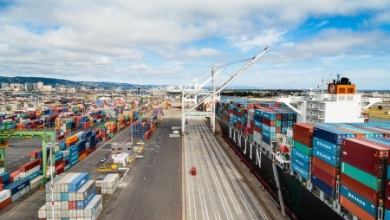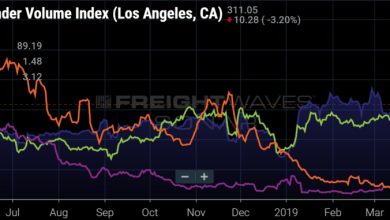
The US-China trade war’s effects on truckload supply and demand in major west coast and east coast port markets
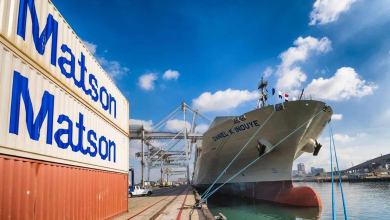
The inbound container flows had a big impact to freight volumes in the port cities of Savannah and Los Angeles this past year.
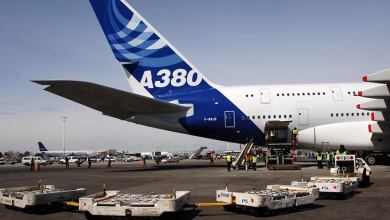
The U.S. is proposing $11 billion in tariffs on European Union goods because of allegations that Airbus received that amount of subsidies when it launched the Airbus 380, thereby harming U.S. interests. Read Jesse Cohen’s explanation of the articles proposed for tariffs and what the tariffs might do to the air cargo and maritime industries.
Talks between the U.S. and China have made significant progress over the last several weeks, and the two sides appear to be closer to a deal than at any time over the past several months. However, while the restoration of positive trade relations will help the trade outlook, other factors are likely to keep trade growth subdued going forward.
Political tensions in the Washington-Beijing bilateral relationship are making the China-based U.S. business community uneasy. Tariffs are being blamed for driving business confidence down, decreasing investment and for re-routing Asia-Pacific supply chains.
The U.S. trade deficit in goods widened to a record in December 2018 as a sizeable decline in goods exports was paired with a jump in goods imports. This reversed the decline in the deficit from the previous month, and the drop in goods exports sent yearly growth into negative territory for the first time in over two years.
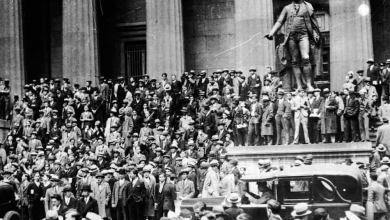
Stifel’s head of equity strategy thinks the stock market will be weak for the next decade and that the federal government will default on debt unless it can force access into Chinese markets.
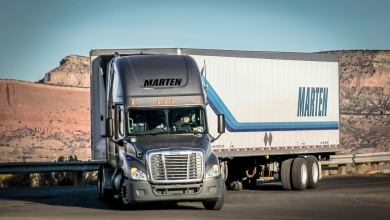
Marten Transport and other public truckload companies could make a good stock investment if historical trends hold, says an analyst from Stephens.
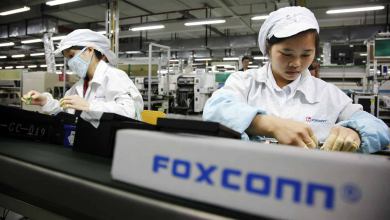
Foxconn Technology Group (OTC US: FXCNY) created more uncertainty for its suppliers on Friday when it announced that it’s recommitting to building a liquid crystal display monitor (LCD) factory in Mount Pleasant, Wisconsin according to the Wall Street Journal.
Missing USDA data on wheat stockpiles has traders reacting cautiously.
In partnership with Slync… There are numerous reasons to be worried about the health of global trade and the goods economy, even though, in our view, a full-on macro-economic recession in the United States is still unlikely.
U.S. Chamber of Commerce president Tom Donohue threw down $25,000 for ideas on how to pay for infrastructure. And told Washington to open back up.
The U.S. – China trade war continues to disrupt freight movements into the new year.
The third week of the partial Federal government shutdown is impacting U.S. agriculture. Without full funding, the U.S. Department of Agriculture (USDA) is not providing some real-time information, full financial support, or some critical services for farmers and ranchers.
China announced wide-sweeping changes to its import and export tariffs over the Christmas break; Australia-based expert China-watchers are divided as to Beijing’s motivations and what it might mean for Australia. Photo: Shutterstock.
U.S. equity futures tumbled and stocks slumped across Europe and Asia after evidence of slowing Chinese growth dashed investor hopes for an upbeat start to 2019.
EU guns towards a new regulation that forces fleets to provide minimum wages to drivers; OPEC meets today over oil price turmoil and production ceiling; China agrees to resume U.S. soybean and LNG imports.
As far as investors are concerned, the trade war is effectively back on.
It seemed like the stuff of posturing and hot air. It was hard to see anything substantive changing from the weekend meetings of the G20 nations in Argentina. Will something more than kicking-the-can come from the concessions?
Executives from MoLo, Steam, and Arrive gave insight into the complexity of West Coast freight market volatility, which goes beyond tariffs, and talked about how brokerages and shippers are responding.
In a normal year, the Port of Oakland stands out from other U.S. ports for exporting more than it imports. Not this year.