




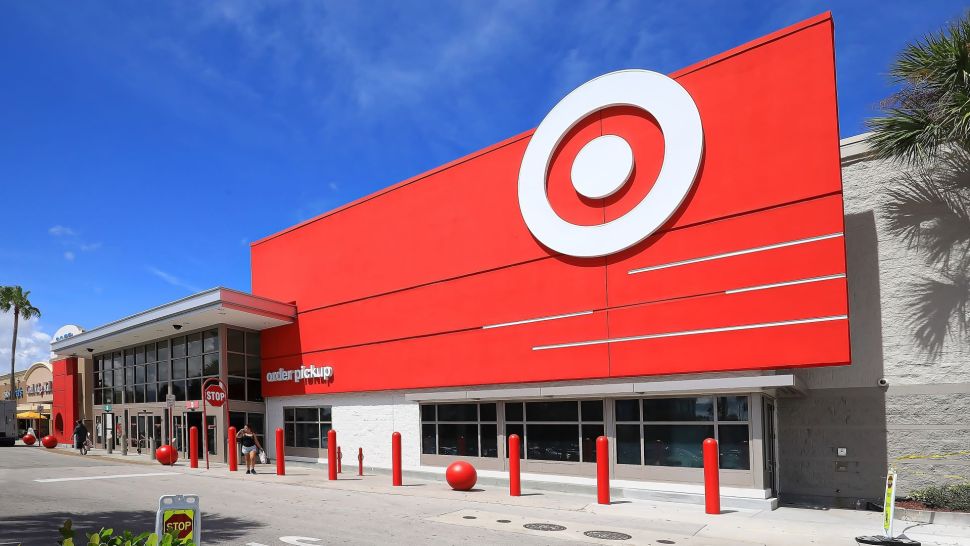
Target Corp. is expanding next-day delivery to 20 additional metropolitan areas, bringing the total number of cities where consumers can quickly receive online orders to more than 50.
The nation’s eight-largest retailer by revenue announced Tuesday, during its fourth-quarter earnings presentation, that it is rolling out next-day delivery to more locations in the spring, as it continues modifying stores to be mini-fulfillment centers. The expanded footprint will bring next-day delivery to 60% of the U.S. population.
Faster delivery service is coming to places like Birmingham, Alabama; Santa Barbara, California; Fort Myers, Florida; and Honolulu, according to a Target fact sheet. Target currently delivers next day in about 35 large markets. The expansion is part of $2 billion in incremental investments during 2026 for stores and operations.
Target (NYSE: TGT) says that two-third of digital sales are fulfilled the same day, through drive-up, in-store pickup or same-day delivery for Target Circle 360 members.
“Our same-day services generated more than $14 billion in sales last year, accounting for two-thirds of our total digital sales. And we’re investing to make those services even faster and more efficient,” said Chief Financial Officer James Lee. “We are already fast. We are cost competitive, and we’re continuing to get more efficient, and we own all the core elements of our digital fulfillment,” which is flowing to the bottom line.
Target also reported more than 30% growth for Target Plus, its third-party marketplace.
Next-day delivery is free for orders over $35 or with no minimum order amount if a person is a Target Circle 360 member or uses a Target credit card for purchases. Most items eligible for shipping are eligible for next-day delivery, including 85% of goods sold in physical stores,
Under Target’s logistics model stores serve as fulfillment hubs, which the company says increases efficiency and lowers cost. Depending on the location, Target retrieves packages from local stores and brings them to one of 11 sortation centers to sort, batch and route for delivery to local neighborhoods by Shipt, its delivery subsidiary, or third-party carriers. About 30 to 40 local stores feed each sortation center, based on the market. Orders are assigned to stores based on inventory, staffing levels, backroom size and cost-to-serve.
Target says that removing the sorting and packing process from certain store backrooms saves valuable time and space for store teams to fulfill additional orders and serve customers. Also, because sortation center technology presorts and arranges packages for easy pickup, it reduces processing time for delivery partners.
“Some stories really lean into fulfillment because they’ve got big backrooms and capacity. And then we have other stores sit it out. We don’t need every store shipping boxes,” said Michael Fiddelke, who took over as CEO on Feb. 1. Simplifying the workflow for store staff improves the customer experience, he explained. “For some stores, size of the in-store business should be the one and only thing we ask that team to focus on versus shipping boxes.”
Click here for more FreightWaves/American Shipper stories by Eric Kulisch.
Write to Eric Kulisch at ekulisch@freightwaves.com.
RELATED STORIES:
Target picks Frontdoor Collective to test electric vehicle delivery
Brokerage Compliance Symposium
The day before F3. Every compliance issue you face - fraud exposure, carrier liability, FMCSA rules, cargo theft, insurance gaps - navigated by attorneys and operators defining best practices in a changing industry.
F3 Awards Dinner
The night before F3. FreightTech100 companies honored. FreightTech 25 and Shipper of Choice winners revealed live. Cocktail reception into dinner and live music - 300 industry leaders in one purpose-built room.
F3: Future of Freight Festival
Industry-defining keynotes, rapid-fire technology demos, and industry leaders networking in experiences across Chattanooga - plus the inaugural F3 Awards Dinner featuring the FreightTech and Shipper of Choice reveals.
The day before F3. Every compliance issue you face - fraud exposure, carrier liability, FMCSA rules, cargo theft, insurance gaps - navigated by attorneys and operators defining best practices in a changing industry.
The Signal at Chattanooga Choo Choo • Chattanooga, TN Register NowThe night before F3. FreightTech100 companies honored. FreightTech 25 and Shipper of Choice winners revealed live. Cocktail reception into dinner and live music - 300 industry leaders in one purpose-built room.
The Signal at Chattanooga Choo Choo • Chattanooga, TN Register NowIndustry-defining keynotes, rapid-fire technology demos, and industry leaders networking in experiences across Chattanooga - plus the inaugural F3 Awards Dinner featuring the FreightTech and Shipper of Choice reveals.
The Signal at Chattanooga Choo Choo • Chattanooga, TN Register Now