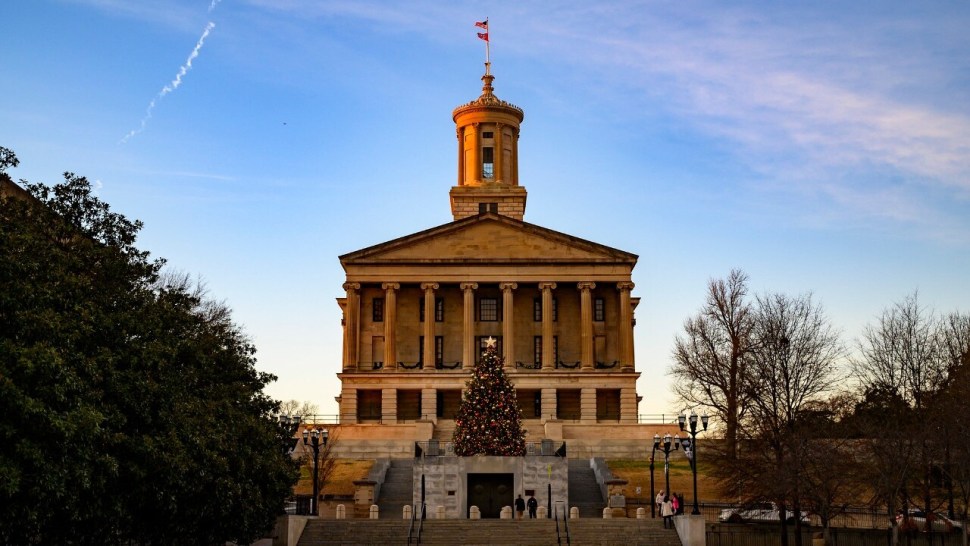
Tennessee lawmakers announced legislation last week that would impose criminal and civil penalties on individuals and companies for the unlawful operation of a commercial motor vehicle (CMV) in the state.
Tennessee Senate Bill 1587 (SB 1587) would amend TCA § 55-50-403 by adding misdemeanor charges for those who knowingly allow a person unlawfully present in the United States to operate a CMV in the state. The bill would also create a new section, TCA § 55-50-419, imposing strict liability in accidents caused by persons unlawfully present in the United States operating a CMV in the state.
Each state has its own set of laws; in Tennessee, it is the Tennessee Code Annotated (TCA). TCA § 55-50-403 would receive added language making it an offense if a person knowingly allows a person unlawfully present in the United States to operate a CMV in Tennessee.
The bill also makes it an offense for a person unlawfully present in the United States to operate a CMV in Tennessee. Violations of these provisions are Class A misdemeanors, applying to both the person who knowingly allowed the operation and the person unlawfully operating the CMV.
Additionally, if a law enforcement officer arrests a person for unlawfully operating a CMV, the officer’s agency must ensure that federal immigration authorities are notified.
Codifying this notification requirement into law is notable. Many law enforcement agencies have standing policies regarding Immigration and Customs Enforcement (ICE) detainers, but some departments may choose not to notify ICE and allow the person to post bond and appear on their court date.
The new section, TCA § 55-50-419, imposes strict, absolute, joint and several liability in accidents caused by persons unlawfully present in the United States operating CMVs. An employer who knowingly allows such a person to operate a CMV, as well as any official or employee of any state who issues a commercial driver license (CDL) knowing the person is unlawfully present, “shall be strictly, absolutely, jointly, and severally liable to any person who suffers personal injury or property damage caused by the unlawfully present person’s operation of a commercial motor vehicle.”
This provision is notable because it extends liability to officials or employees of any state who issued the CDL. An injured person is entitled to recover compensatory damages, punitive damages of not less than $1 million, court costs and reasonable attorney’s fees.
Notably, the bill would mandate that Tennessee law governs these tort cases, voiding any contractual choice-of-law clauses that select another jurisdiction.
The bill also authorizes civil penalties. The Tennessee attorney general may sue employers or state officials and their employees for violations, seeking civil penalties of at least $1 million per violation, among other relief.
Private citizens can also file a qui tam lawsuit on behalf of the state against alleged violators, even if no formal criminal charges exist. If successful, the qui tam plaintiff is entitled to receive between 25% and 50% of the recovered proceeds, depending on the extent of their contribution and whether the attorney general takes over the case.
The $1 million minimum punitive damages and qui tam provisions are considered aggressive by legal standards. The likelihood of this legislation passing is high, given Tennessee’s Republican supermajority, which controls both the House and Senate.
Brokerage Compliance Symposium
The day before F3. Every compliance issue you face - fraud exposure, carrier liability, FMCSA rules, cargo theft, insurance gaps - navigated by attorneys and operators defining best practices in a changing industry.
F3 Awards Dinner
The night before F3. FreightTech100 companies honored. FreightTech 25 and Shipper of Choice winners revealed live. Cocktail reception into dinner and live music - 300 industry leaders in one purpose-built room.
F3: Future of Freight Festival
Industry-defining keynotes, rapid-fire technology demos, and industry leaders networking in experiences across Chattanooga - plus the inaugural F3 Awards Dinner featuring the FreightTech and Shipper of Choice reveals.
The day before F3. Every compliance issue you face - fraud exposure, carrier liability, FMCSA rules, cargo theft, insurance gaps - navigated by attorneys and operators defining best practices in a changing industry.
The Signal at Chattanooga Choo Choo • Chattanooga, TN Register NowThe night before F3. FreightTech100 companies honored. FreightTech 25 and Shipper of Choice winners revealed live. Cocktail reception into dinner and live music - 300 industry leaders in one purpose-built room.
The Signal at Chattanooga Choo Choo • Chattanooga, TN Register NowIndustry-defining keynotes, rapid-fire technology demos, and industry leaders networking in experiences across Chattanooga - plus the inaugural F3 Awards Dinner featuring the FreightTech and Shipper of Choice reveals.
The Signal at Chattanooga Choo Choo • Chattanooga, TN Register Now