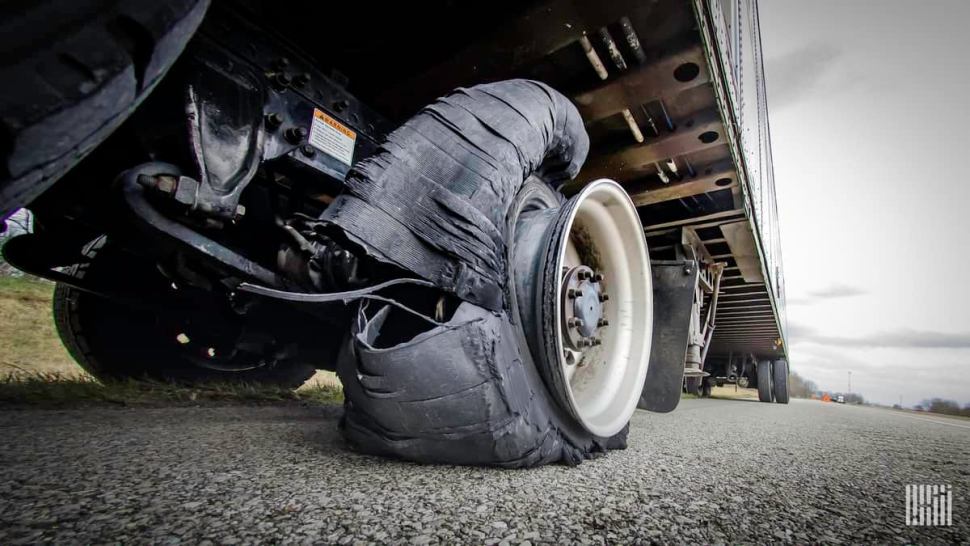
Smart tire technology is quickly becoming a critical tool for fleets across North America as carriers look for new ways to cut fuel costs, extend equipment life and improve uptime.
Executives at Continental Tire say the shift reflects a broader transformation in how fleets manage one of their most overlooked cost centers: tires.
“This is really a hot topic these days, especially considering what’s going on with oil prices,” Renato Sarzano, head of truck tires for the Americas at Continental Tire, told FreightWaves in an interview. “Everything you can do to basically run more efficiently is on the spot.”
Continental’s ContiConnect platform — which uses embedded sensors to monitor tire pressure and temperature in real time — is part of a growing ecosystem of telematics and predictive maintenance tools being adopted by fleets.
The technology allows fleets to track tire performance across trucks and trailers, either through yard-based systems or real-time telematics integrations.
“What we are trying to do today is to help fleets to manage whatever is related to tires in a more professional way,” Sarzano said.
The push comes as fleets face mounting pressure from fuel volatility, maintenance costs and tighter margins. Tire pressure alone can have a significant impact on fuel efficiency.
“We made kind of a test with one big fleet in the U.S. — if you go from 94 PSI to 110 PSI, you gain 1.3 miles per gallon of fuel saving,” Sarzano said.
Despite those gains, adoption remains relatively low across the industry.
“If I look at the number of trucks running, and the number of trucks that are really connected somehow measuring pressure and temperature is really, really low,” he said.
Continental Tire is part of Continental AG, a global automotive supplier headquartered in Hanover, Germany. The company operates across key markets in North America, Europe and Asia, supplying tires and mobility solutions to both original equipment manufacturers and the replacement market.
Adoption uneven across North America
Continental is seeing adoption grow rapidly, though uptake varies by region.
Canada currently leads in adoption on a per-fleet basis, followed by the U.S., while Mexico is still developing.
“Canada is the highest number today for us. U.S. is second… Mexico is a little bit behind,” Sarzano said.
In Mexico, lower adoption is often tied to tighter margins and different purchasing behaviors among fleets.
“The difference in Mexico is that the tire controls are less accurate than here in the U.S. on average,” Sarzano said. “Fleets… buy cheap stuff just because they know they’re going to lose it.”
However, Sarzano said fleets that adopt premium tires and monitoring systems ultimately see lower total operating costs — a shift that could drive future adoption.
Mexico’s growing role in tire supply chains
At the same time, Mexico is becoming increasingly central to North America’s tire manufacturing network.
Over the past several years, tiremakers have expanded production capacity across Mexico to better serve U.S. demand, shorten supply chains and improve logistics efficiency.
Facilities across central and northern Mexico are now integrated into broader North American production strategies, supporting both original equipment and replacement tire markets.
This nearshoring trend allows manufacturers to respond more quickly to demand shifts while reducing reliance on overseas imports.
Fuel costs and tariffs reshape outlook
Looking ahead, Sarzano said the commercial tire market will continue to be shaped by macroeconomic pressures — particularly fuel and raw material costs.
“Tires are very much related to oil prices,” he said. “If the oil price stays where it is, there’s going to be basically a cost impact that will have to be transferred to the market.”
That dynamic creates a double hit for fleets, which face both higher diesel costs and rising tire prices.
At the same time, trade policy has also influenced the market. Sarzano noted that tariffs on imported tires created volatility in recent years, though Continental’s U.S.-based production has helped insulate it from some impacts.
As fleets navigate rising costs and operational complexity, tire performance is emerging as a key lever for efficiency.
Sarzano said the biggest opportunity for fleets today is straightforward: better tire management.
“The very basic mistake is air pressure,” he said. “It’s very basic.”
With fuel savings, safety improvements and longer tire life all tied to proper pressure, the industry is increasingly turning to automation and real-time data to close the gap.
Brokerage Compliance Symposium
The day before F3. Every compliance issue you face - fraud exposure, carrier liability, FMCSA rules, cargo theft, insurance gaps - navigated by attorneys and operators defining best practices in a changing industry.
F3 Awards Dinner
The night before F3. FreightTech100 companies honored. FreightTech 25 and Shipper of Choice winners revealed live. Cocktail reception into dinner and live music - 300 industry leaders in one purpose-built room.
F3: Future of Freight Festival
Industry-defining keynotes, rapid-fire technology demos, and industry leaders networking in experiences across Chattanooga - plus the inaugural F3 Awards Dinner featuring the FreightTech and Shipper of Choice reveals.
The day before F3. Every compliance issue you face - fraud exposure, carrier liability, FMCSA rules, cargo theft, insurance gaps - navigated by attorneys and operators defining best practices in a changing industry.
The Signal at Chattanooga Choo Choo • Chattanooga, TN Register NowThe night before F3. FreightTech100 companies honored. FreightTech 25 and Shipper of Choice winners revealed live. Cocktail reception into dinner and live music - 300 industry leaders in one purpose-built room.
The Signal at Chattanooga Choo Choo • Chattanooga, TN Register NowIndustry-defining keynotes, rapid-fire technology demos, and industry leaders networking in experiences across Chattanooga - plus the inaugural F3 Awards Dinner featuring the FreightTech and Shipper of Choice reveals.
The Signal at Chattanooga Choo Choo • Chattanooga, TN Register Now