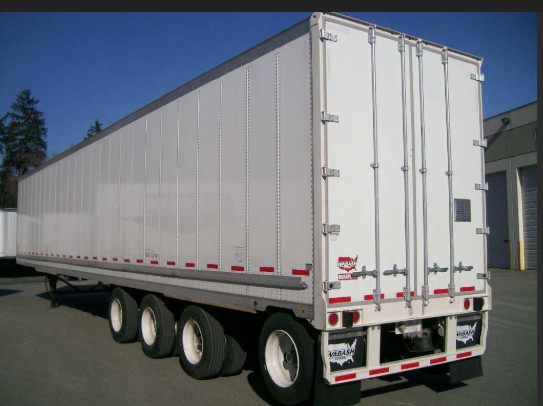
The nuclear verdict against trailer maker Wabash National has been settled out of court
In a recent filing with the SEC, Wabash (NYSE: WNC) said it had settled the Missouri case that when the verdict first came down last year left the trailer manufacturer looking at a judgement of more than $460 million. That initial verdict followed a jury trial in the Circuit Court of the City of St. Louis, Missouri.
The Wabash decision, in a sea of nuclear verdicts–which are defined as being in excess of $10 million–was believed to be one of the largest ever and almost certainly the biggest against a publicly traded trucking-related defendant with deeper pockets than other cases that punished companies which barely existed.
The precise size of the judgement was not disclosed in the SEC filing. However, Wabash said it was facing an out-of-pocket expense of $30 million, which will be its “contribution” beyond what the company’s insurer pays out.
To contrast that exposure to Wabash, Werner Enterprises (NASDAQ: WERN) said repeatedly during the process that ultimately led to a Texas court reversing its own nuclear verdict that the truckload carrier was facing no more than a $10 million cash payout if its appeal had not prevailed. The judgement against Werner at the time it won before the Texas Supreme Court was in excess of $100 million, but more than $10 million of that was accumulated interest.
The original verdict in the St. Louis case was slashed to a punitive damage award of $108 million in March by a Missouri Circuit Court. That decision did not impact the compensatory award of $11.5 million.
A quick verdict
The trial lasted two weeks. The verdict came down after three hours of deliberations, according to the Courtroom View Network, which covered the trial.
Two people were killed in the 2019 crash that saw a car, traveling at approximately 45 miles per hour according to testimony, slam into the back of a trailer built by Wabash in its 2004 model year line. Wabash’s defense, among other things, was that its rear guard barriers had been built to government specifications in place at the time.
The driver’s blood alcohol content, which was in excess of legal limits, was not admitted into evidence, nor the fact that the two passengers in the car were not wearing seatbelts.
Wabash revealed the settlement in the SEC filing. It did not publicly release a media statement.
But in a prepared statement supplied to FreightWaves, Wabash said that “while we continue to believe the verdict in this case was unsupported by the facts or the law, we’ve agreed to a settlement that significantly reduces Wabash’s financial exposure.”
“With the support of our insurance carriers, the company’s contribution to the settlement is expected to be approximately $30 million—well below the final $119.5 million court judgment and original $462 million jury verdict.” the statement said. “This resolution enables us to remain focused on our core commitments: advancing safety, driving innovation and delivering for our customers.”
But the statement also refers to bigger issues that the Missouri case represented for transportation companies specifically and corporations in general.
“Unfortunately, this case reflects a troubling trend in America’s courts, where aggressive plaintiffs’ attorneys target reputable companies regardless of the facts,” the statement siad. “Verdicts like this threaten not only innovation, but the stability of manufacturing and transportation companies that serve as economic anchors in communities across the country.”
Finances going forward
The news about the settlement came in an SEC filing in which Wabash also disclosed preliminary information about its third quarter financial results.
It said net sales would be $382 million versus $464 million a year earlier. And while the filing did not make a sequential comparison, Wabash’s net sales in the second quarter were $400.2 million.
Wabash said its third quarter non-GAAP adjusted loss per diluted share is expected to be minus 51 cts/share, compared to net income in the third quarter of 2024 of 19 cts/share.
Wabash’s non-GAAP EPS in the second quarter was minus 15 cts/share.
Wabash’s stock has shown little movement since it disclosed those third quarter estimates on October 10. The stock closed at $9.12 on October 9. It fell more than 5% a day later, but recently has been trading slightly under $9.
More articles by John Kingston
Wabash bold move: TaaS Pool offering rolled out
5 Chapter 11 filings in transportation in October’s first 2 weeks
Brokerage Compliance Symposium
The day before F3. Every compliance issue you face - fraud exposure, carrier liability, FMCSA rules, cargo theft, insurance gaps - navigated by attorneys and operators defining best practices in a changing industry.
F3 Awards Dinner
The night before F3. FreightTech100 companies honored. FreightTech 25 and Shipper of Choice winners revealed live. Cocktail reception into dinner and live music - 300 industry leaders in one purpose-built room.
F3: Future of Freight Festival
Industry-defining keynotes, rapid-fire technology demos, and industry leaders networking in experiences across Chattanooga - plus the inaugural F3 Awards Dinner featuring the FreightTech and Shipper of Choice reveals.
The day before F3. Every compliance issue you face - fraud exposure, carrier liability, FMCSA rules, cargo theft, insurance gaps - navigated by attorneys and operators defining best practices in a changing industry.
The Signal at Chattanooga Choo Choo • Chattanooga, TN Register NowThe night before F3. FreightTech100 companies honored. FreightTech 25 and Shipper of Choice winners revealed live. Cocktail reception into dinner and live music - 300 industry leaders in one purpose-built room.
The Signal at Chattanooga Choo Choo • Chattanooga, TN Register NowIndustry-defining keynotes, rapid-fire technology demos, and industry leaders networking in experiences across Chattanooga - plus the inaugural F3 Awards Dinner featuring the FreightTech and Shipper of Choice reveals.
The Signal at Chattanooga Choo Choo • Chattanooga, TN Register Now