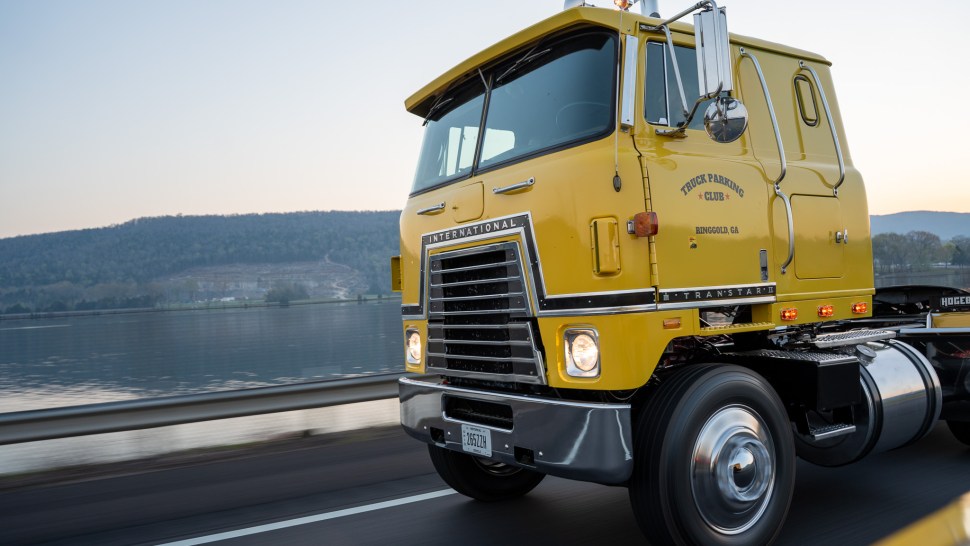
Truck parking is a nationwide problem. The shortage took one step closer to resolution Thursday as Truck Parking Club announced it has surpassed 5,000 locations nationwide.
The Chattanooga-based company’s growth is parabolic. Founded in November 2022, it took 366 days to reach its first 100 locations. The jump from 4,000 locations to 5,000 took just 81 days. This is part of an ambitious plan to double its network to more than 10,000 locations by the end of 2026, requiring around 580 new locations each month or about 19 per day.
The company was recently ranked No. 24 on the FreightWaves FreightTech 25 list for 2026.
One secret behind the success is the business model. The largest network of truck parking in the country doesn’t come from building new locations. Rather, it’s through creating new parking locations in spots that were otherwise unavailable.
“We’ve created a new way to add truck parking capacity at scale and at speed, without waiting on construction, leasing, or new infrastructure dollars,” said Evan Shelley, founder and CEO of Truck Parking Club. “Hundreds of thousands of drivers have already parked with us, and we’re actively partnering with everyone from the largest fleets to independent owner-operators to help them use Truck Parking Club to improve efficiency and deliver real value to both drivers and carriers.”
Drivers from 93 of the top 100 fleets have parked at Truck Parking Club locations, the company said. The network now offers more than 80,000 reservable spaces across 49 states.
Truck Parking Shortage: A Physical and Safety Crisis
Unlike the widely debated truck driver shortage, there is an acute lack of parking spaces for the millions of truckers navigating the highways each day. Limited supply and regulatory barriers are two key factors. Truck Parking Club estimates traditional construction costs at $100,000 to $200,000 per space.
For context, building the equivalent of Truck Parking Club’s current capacity through traditional methods would cost approximately $8 billion.
The safety issue is equally alarming. Federal Motor Carrier Safety Administration data shows 457 fatal crashes and more than 41,000 total crashes annually involving large trucks on highway ramps and shoulders, according to the agency’s Large Truck and Bus Crash Facts 2020 report. Drivers park there because they have no alternative.
To tackle this, Truck Parking Club has expanded the realm of potential places to park by activating unused space on private property. These locations include warehouses, trucking terminals, self-storage facilities, truck repair shops and more.
The network’s 5,000-plus locations are owned and operated by small businesses in every corner of the American economy: trucking companies, warehouses, repair shops, tow yards, self-storage operators, CDL schools, hotels, stadiums, and more. Behind the growth numbers lies a business model that is less a tech platform and more a stewardship of small-business communities.
When a driver books a spot through Truck Parking Club, the majority of every transaction goes directly to the property owner — whether that’s a family-owned repair shop in Akron, Ohio, or a regional trucking company with extra pavement.
The company acts as gatekeeper, handling onboarding, customer service and quality control. But the core is an ecosystem where hosts and drivers transact directly, with built-in incentives to keep standards high.
Looking ahead, the long-term vision extends beyond parking reservations. Each location added can serve as a “node” around which useful services for truckers can aggregate: food, repairs, potentially even electric-vehicle charging — whatever the market demands.
Brokerage Compliance Symposium
The day before F3. Every compliance issue you face - fraud exposure, carrier liability, FMCSA rules, cargo theft, insurance gaps - navigated by attorneys and operators defining best practices in a changing industry.
F3 Awards Dinner
The night before F3. FreightTech100 companies honored. FreightTech 25 and Shipper of Choice winners revealed live. Cocktail reception into dinner and live music - 300 industry leaders in one purpose-built room.
F3: Future of Freight Festival
Industry-defining keynotes, rapid-fire technology demos, and industry leaders networking in experiences across Chattanooga - plus the inaugural F3 Awards Dinner featuring the FreightTech and Shipper of Choice reveals.
The day before F3. Every compliance issue you face - fraud exposure, carrier liability, FMCSA rules, cargo theft, insurance gaps - navigated by attorneys and operators defining best practices in a changing industry.
The Signal at Chattanooga Choo Choo • Chattanooga, TN Register NowThe night before F3. FreightTech100 companies honored. FreightTech 25 and Shipper of Choice winners revealed live. Cocktail reception into dinner and live music - 300 industry leaders in one purpose-built room.
The Signal at Chattanooga Choo Choo • Chattanooga, TN Register NowIndustry-defining keynotes, rapid-fire technology demos, and industry leaders networking in experiences across Chattanooga - plus the inaugural F3 Awards Dinner featuring the FreightTech and Shipper of Choice reveals.
The Signal at Chattanooga Choo Choo • Chattanooga, TN Register Now