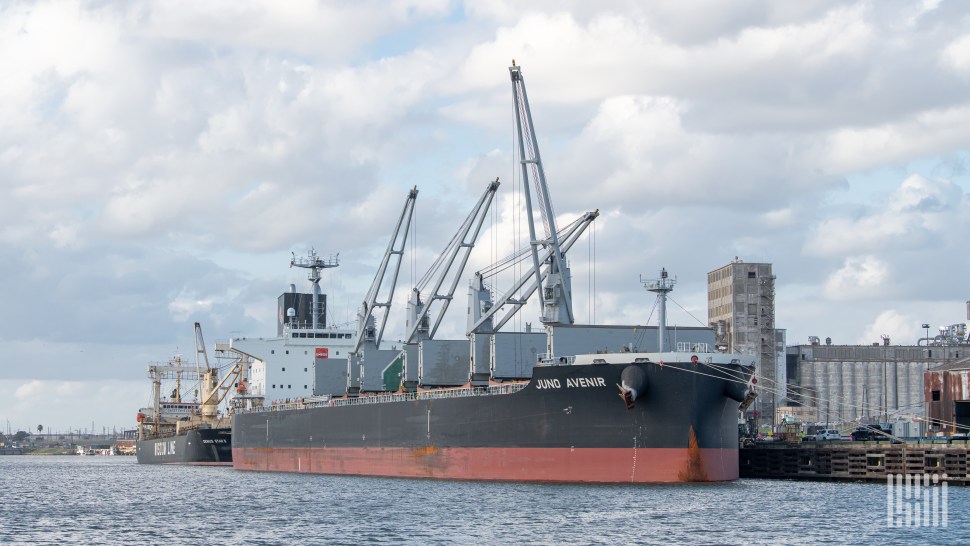
Transatlantic trade relations are set for a shakeup, with the United States and European Union announcing details of a trade deal on Thursday. The Framework on an Agreement on Reciprocal, Fair, and Balanced Trade (“Framework Agreement”) aims to resolve trade imbalances and benefit both economies through mutual concessions and coordinated economic policies.
Under the agreement, the EU will eliminate tariffs on all U.S. industrial goods and provide preferential market access for numerous American agricultural products, including tree nuts, dairy, fruits, vegetables, and meat. In exchange, the U.S. commits to applying a maximum 15% tariff rate on most EU goods, with certain exceptions receiving only Most Favored Nation (MFN) treatment.
“This Framework Agreement represents a concrete demonstration of our commitment to fair, balanced, and mutually beneficial trade and investment,” states the joint announcement from the U.S. and EU. “It reflects acknowledgment by the European Union of the concerns of the United States and our joint determination to resolve our trade imbalances.”
Reactions to the news were mixed across the Atlantic. Velina Tchakarova, a geopolitical analyst, said in an X post, “U.S.-EU trade deal has been sealed today. U.S. gained offensive market access. The EU settled for defensive ceilings. Europe traded autonomy for stability in Trump’s new order of tariffs as a permanent weapon, not a bargaining chip. Strategic autonomy slips further out of reach.”
There were some positives for the Europeans. The EU is the only U.S. trade partner worldwide with an all-inclusive tariff ceiling, according to Ursula von der Leyen, president of the European Commission, in an X post.
On the American side, reactions were positive. U.S. Commerce Secretary Howard Lutnick said in an X post, “The America First Trade Agenda has secured the most important trading partner, creating a major win for American workers, U.S. industries, and our national security. Tariffs should be one of America’s favorite words.”
A substantial part of the agreement centers on energy and technology provisions, with the EU pledging to procure approximately $750 billion in U.S. liquefied natural gas, oil, and nuclear energy products through 2028, plus an additional $40 billion in American AI chips for computing centers.
Beyond tariffs, both sides commit to addressing non-tariff barriers through mutual recognition of automobile standards and enhanced technical cooperation. The framework addresses longstanding U.S. concerns regarding EU environmental regulations, with specific commitments to modify the Carbon Border Adjustment Mechanism and create flexibility in implementing corporate sustainability directives.
The agreement also establishes new parameters for digital trade, with the EU confirming it will not adopt network usage fees and both parties agreeing not to impose customs duties on electronic transmissions.
European companies are expected to invest an additional $600 billion across strategic U.S. sectors through 2028, while the EU plans to significantly increase military and defense equipment procurement from American suppliers.
Both sides view this framework as the first step in an ongoing process to expand trade cooperation, with additional negotiating areas to be addressed in future rounds.
Brokerage Compliance Symposium
The day before F3. Every compliance issue you face - fraud exposure, carrier liability, FMCSA rules, cargo theft, insurance gaps - navigated by attorneys and operators defining best practices in a changing industry.
F3 Awards Dinner
The night before F3. FreightTech100 companies honored. FreightTech 25 and Shipper of Choice winners revealed live. Cocktail reception into dinner and live music - 300 industry leaders in one purpose-built room.
F3: Future of Freight Festival
Industry-defining keynotes, rapid-fire technology demos, and industry leaders networking in experiences across Chattanooga - plus the inaugural F3 Awards Dinner featuring the FreightTech and Shipper of Choice reveals.
The day before F3. Every compliance issue you face - fraud exposure, carrier liability, FMCSA rules, cargo theft, insurance gaps - navigated by attorneys and operators defining best practices in a changing industry.
The Signal at Chattanooga Choo Choo • Chattanooga, TN Register NowThe night before F3. FreightTech100 companies honored. FreightTech 25 and Shipper of Choice winners revealed live. Cocktail reception into dinner and live music - 300 industry leaders in one purpose-built room.
The Signal at Chattanooga Choo Choo • Chattanooga, TN Register NowIndustry-defining keynotes, rapid-fire technology demos, and industry leaders networking in experiences across Chattanooga - plus the inaugural F3 Awards Dinner featuring the FreightTech and Shipper of Choice reveals.
The Signal at Chattanooga Choo Choo • Chattanooga, TN Register Now