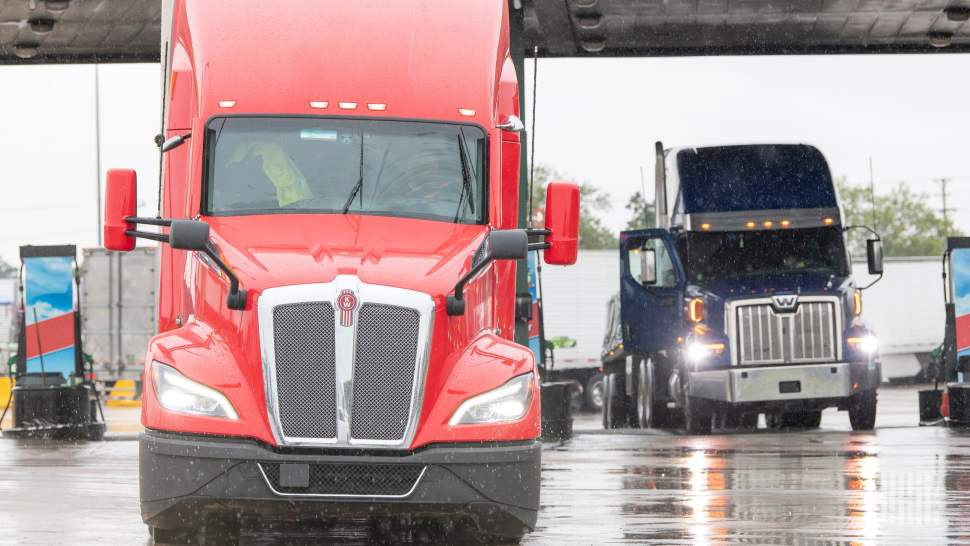
That is the reality facing shippers and carriers as a sprawling winter system stretches from the Lower Midwest into the Southeast. North of Interstate 40, conditions resemble a familiar winter pattern: snow, cold, and manageable delays. South of it, Arctic air at the surface collides with warmer air aloft, creating a corridor of freezing rain and sleet. The result is ice that coats highways, distribution yards, and loading docks, conditions far more disruptive to freight than snow alone.
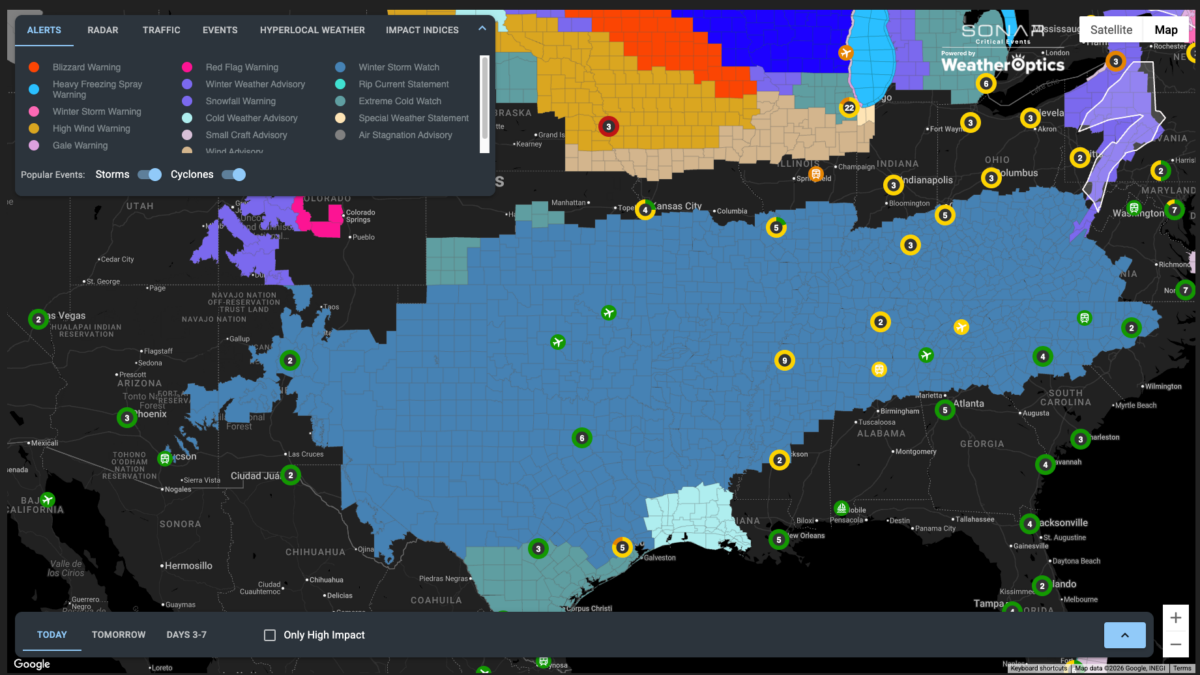
Scott Pecoriello, founder and CEO of WeatherOptics, says this setup is among the most challenging freight networks face. “This storm isn’t moving quickly across the country,” he said. “It’s lingering over several states at once. In the South, that duration alone creates problems. Road crews are limited, de-icing resources are thin, and temperatures are expected to remain below freezing well after the precipitation ends.”
For freight, that distinction matters. Snow slows trucks. Ice shuts them down. Roads may appear wet while behaving like glass, increasing the risk of crashes and strandings. Larger fleets often respond conservatively, parking equipment early and suspending service. Others attempt to operate around the edges of the storm, which is when trucks get stuck mid-route, appointments are missed, and localized disruptions escalate into broader service failures.
Shippers feel the impact almost immediately. Capacity doesn’t fade gradually; it disappears in pockets. Distribution centers across Georgia, the Carolinas, and parts of Tennessee are more likely to implement full closures than partial operations, especially if power outages or staffing shortages emerge. Even facilities that remain open face rolling delays as inbound and outbound schedules become increasingly unpredictable.
Service interruptions are expected to be both significant and prolonged. Arctic air lingering behind the storm will slow cleanup efforts and extend hazardous road conditions, delaying the restart of normal operations.
The critical question for both shippers and carriers is when a forecast becomes an operational trigger. WeatherOptics head meteorologist Josh Feldman notes that three days out, the broad impacts are typically clear. “Within 48 to 72 hours, confidence is high enough to adjust routes, stage equipment, and revise delivery plans,” he said. “By 12 to 24 hours, the details are largely locked in.”
With the 48-hour window now underway, decisions become unavoidable: shut down early and protect drivers, freight, and equipment, or stay open and risk having trucks, employees, and inventory stranded as conditions deteriorate. At this point, any freight that won’t be delivered by Friday afternoon likely won’t be delivered till next week.
Recovery is unlikely to be quick. Cold temperatures are expected to persist for days, meaning any daytime melting may refreeze overnight, creating black ice and additional hazards. Freight that doesn’t move during the storm won’t simply resume on schedule, but instead creates backlogs that ripple through supply chains long after the weather clears.
In events like this, the greatest disruption isn’t always the storm itself; it’s the extended interruption to service that follows.
Brokerage Compliance Symposium
The day before F3. Every compliance issue you face - fraud exposure, carrier liability, FMCSA rules, cargo theft, insurance gaps - navigated by attorneys and operators defining best practices in a changing industry.
F3 Awards Dinner
The night before F3. FreightTech100 companies honored. FreightTech 25 and Shipper of Choice winners revealed live. Cocktail reception into dinner and live music - 300 industry leaders in one purpose-built room.
F3: Future of Freight Festival
Industry-defining keynotes, rapid-fire technology demos, and industry leaders networking in experiences across Chattanooga - plus the inaugural F3 Awards Dinner featuring the FreightTech and Shipper of Choice reveals.
The day before F3. Every compliance issue you face - fraud exposure, carrier liability, FMCSA rules, cargo theft, insurance gaps - navigated by attorneys and operators defining best practices in a changing industry.
The Signal at Chattanooga Choo Choo • Chattanooga, TN Register NowThe night before F3. FreightTech100 companies honored. FreightTech 25 and Shipper of Choice winners revealed live. Cocktail reception into dinner and live music - 300 industry leaders in one purpose-built room.
The Signal at Chattanooga Choo Choo • Chattanooga, TN Register NowIndustry-defining keynotes, rapid-fire technology demos, and industry leaders networking in experiences across Chattanooga - plus the inaugural F3 Awards Dinner featuring the FreightTech and Shipper of Choice reveals.
The Signal at Chattanooga Choo Choo • Chattanooga, TN Register Now