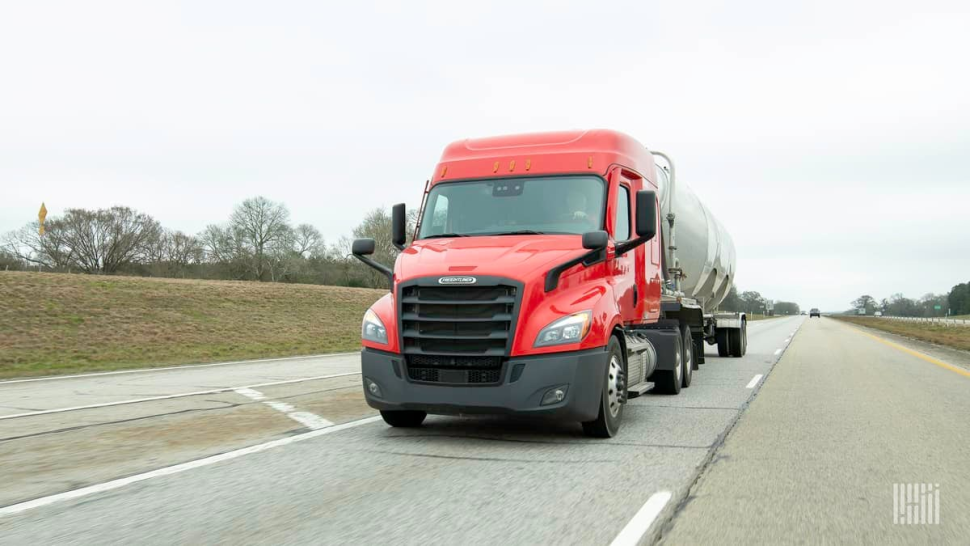
Every year, more than three billion tons of hazardous materials crisscross America’s highways. From explosives and flammable liquids to everyday items like batteries and bleach, these shipments are essential to keeping commerce moving. With winter approaching, HAZMAT carriers become more visible on the roads, reflecting seasonal demand. For many fleets, these loads promise higher pay, but the premium comes with a web of regulation, risk, and operational challenges that can quickly erode margins.
HAZMAT shipping is tightly regulated. The Federal Motor Carrier Safety Administration classifies hazardous materials into nine categories.
- Class 1: Explosives, such as ammunition or gunpowder
- Class 2: Gases, such as spray paints or bathroom cleaners
- Class 3: Flammable liquids and combustible liquids, such as gasoline, lighter fluid, or nail polish
- Class 4: Flammable solids, spontaneously combustible, and anything dangerous when wet, such as coal, matches, and certain types of batteries)
- Class 5: Oxidizers and organic peroxides, such as bleach, hydrogen peroxide, or fertilizer
- Class 6: Poisons, toxic, or infectious substances, such as pesticides or blood samples
- Class 7: Radioactive materials, such as medical isotopes or X-ray machines
- Class 8: Corrosives, such as paint or drain cleaner
- Class 9: Miscellaneous, such as lithium-ion batteries or dry ice
Drivers must hold a HAZMAT endorsement on their commercial driver’s license, obtained only after background checks, fingerprinting, and a written exam. This ensures trained personnel are behind the wheel, but it also limits the pool of available drivers, a constraint for carriers during peak periods.
Compliance doesn’t stop with the driver. Many shipments require a Hazardous Materials Safety Permit, renewed every two years, and carriers must maintain detailed documentation, placard vehicles correctly, and implement comprehensive safety training. This permit is needed before transporting materials like: radioactive materials, explosives, toxic by inhalation, methane, etc
Even small oversights, such as mislabeling a container or missing paperwork, can result in fines, delays, or operational disruptions. Insurance is another significant factor: carriers must maintain at least $5 million in liability coverage, often supplemented by excess policies, which can sharply increase fixed costs. Together with specialized equipment and additional procedures, these expenses reduce the apparent financial advantage of higher rates.
Operationally, HAZMAT loads demand planning. Every shipment requires precise routing, secure loading, and adherence to emergency and security protocols. Drivers coordinate closely with shippers to ensure accurate classification and packaging, while carriers juggle scheduling, vehicle maintenance, and regulatory compliance. Even minor incidents can sideline trucks and drivers, impacting revenue and operational efficiency. High per-mile rates are only one part of the equation; disciplined risk management is critical for profitability.
Despite these hurdles, the HAZMAT sector remains appealing. Tanker drivers with HAZMAT endorsements often earn well over $100,000 annually, and carriers capable of managing these loads can command higher rates.
HAZMAT shipping will remain a vital segment of U.S. logistics. Demand spans energy, industrial, and healthcare sectors and often rises in colder months when chemical and fuel shipments increase. For carriers, the opportunity is clear, but so is the caution: premium rates do not guarantee higher profits. Success depends on balancing risk, maintaining trained personnel and equipment, and mastering the regulatory and operational challenges unique to this type of freight.
Brokerage Compliance Symposium
The day before F3. Every compliance issue you face - fraud exposure, carrier liability, FMCSA rules, cargo theft, insurance gaps - navigated by attorneys and operators defining best practices in a changing industry.
F3 Awards Dinner
The night before F3. FreightTech100 companies honored. FreightTech 25 and Shipper of Choice winners revealed live. Cocktail reception into dinner and live music - 300 industry leaders in one purpose-built room.
F3: Future of Freight Festival
Industry-defining keynotes, rapid-fire technology demos, and industry leaders networking in experiences across Chattanooga - plus the inaugural F3 Awards Dinner featuring the FreightTech and Shipper of Choice reveals.
The day before F3. Every compliance issue you face - fraud exposure, carrier liability, FMCSA rules, cargo theft, insurance gaps - navigated by attorneys and operators defining best practices in a changing industry.
The Signal at Chattanooga Choo Choo • Chattanooga, TN Register NowThe night before F3. FreightTech100 companies honored. FreightTech 25 and Shipper of Choice winners revealed live. Cocktail reception into dinner and live music - 300 industry leaders in one purpose-built room.
The Signal at Chattanooga Choo Choo • Chattanooga, TN Register NowIndustry-defining keynotes, rapid-fire technology demos, and industry leaders networking in experiences across Chattanooga - plus the inaugural F3 Awards Dinner featuring the FreightTech and Shipper of Choice reveals.
The Signal at Chattanooga Choo Choo • Chattanooga, TN Register Now