




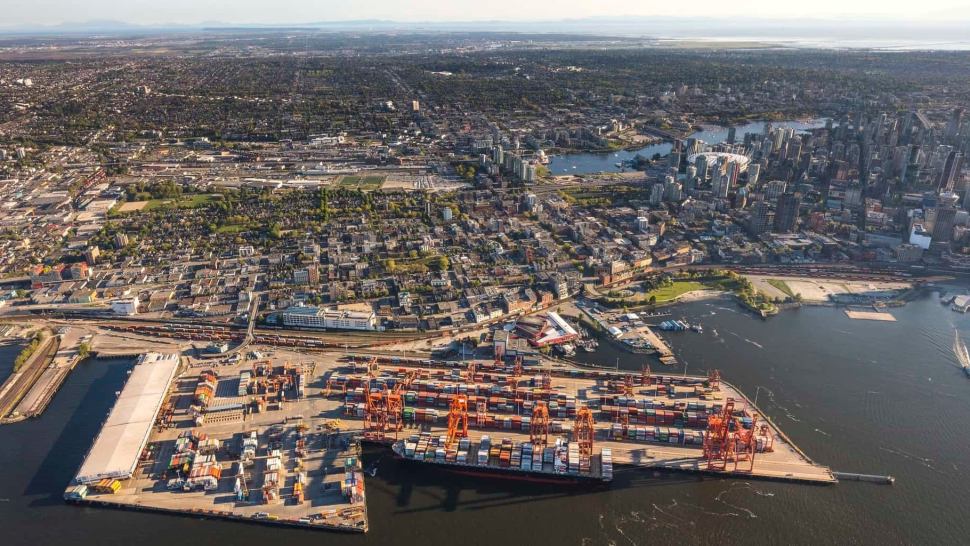
Longshore workers in British Columbia overwhelmingly voted to authorize a strike, raising the specter of a disruption at the Port of Vancouver, Canada’s busiest port.
The International Longshore and Warehouse Union (ILWU) Canada announced on May 10 that 98.4 percent of local members voted “in favor of supporting strike action if necessary.” A work stoppage could come at any time during the next 60 days, with 72 hours notice.
It significantly raises the stakes in contract negotiations between ILWU Canada and the British Columbia Maritime Employers’ Association (BCMEA), which represents companies operating at the ports. A contract for the longshore workers expired in March 2018.
The ILWU and the BCMEA agreed on their previous contract in 2010 after the longshoremen authorized a strike.
About 2,700 ILWU longshoremen work at British Columbia’s ports, which handled 3.6 million 20-foot-equivalent units (TEUs) of cargo in 2018. Most went to Vancouver, whose volumes hit a record 3.4 million TEUs and 147 million metric tons in 2018.
A federal mediator has been attempting to bring get the two sides to reach an agreement. Neither the union or BCMEA has disclosed their areas of contention.
The average unionized longshore worker earned about C$119,000 per year in 2018 (a Canadian dollar equals US$0.75), according to the BCMEA. Their pay lags behind longshore workers at major U.S. ports on the West Coast, who earned about US$171,000 per year on average in 2018, according to the Pacific Maritime Association.
About C$200 billion in trade goes through the Port of Vancouver each year, and it serves as Canada’s main gateway for Asia.
The Canadian International Freight Forwarders Association warned in April that a strike would hurt Canada’s supply chain, and could result in cargo permanently being redirected to ports in the U.S.
Brokerage Compliance Symposium
The day before F3. Every compliance issue you face - fraud exposure, carrier liability, FMCSA rules, cargo theft, insurance gaps - navigated by attorneys and operators defining best practices in a changing industry.
F3 Awards Dinner
The night before F3. FreightTech100 companies honored. FreightTech 25 and Shipper of Choice winners revealed live. Cocktail reception into dinner and live music - 300 industry leaders in one purpose-built room.
F3: Future of Freight Festival
Industry-defining keynotes, rapid-fire technology demos, and industry leaders networking in experiences across Chattanooga - plus the inaugural F3 Awards Dinner featuring the FreightTech and Shipper of Choice reveals.
The day before F3. Every compliance issue you face - fraud exposure, carrier liability, FMCSA rules, cargo theft, insurance gaps - navigated by attorneys and operators defining best practices in a changing industry.
The Signal at Chattanooga Choo Choo • Chattanooga, TN Register NowThe night before F3. FreightTech100 companies honored. FreightTech 25 and Shipper of Choice winners revealed live. Cocktail reception into dinner and live music - 300 industry leaders in one purpose-built room.
The Signal at Chattanooga Choo Choo • Chattanooga, TN Register NowIndustry-defining keynotes, rapid-fire technology demos, and industry leaders networking in experiences across Chattanooga - plus the inaugural F3 Awards Dinner featuring the FreightTech and Shipper of Choice reveals.
The Signal at Chattanooga Choo Choo • Chattanooga, TN Register Now