




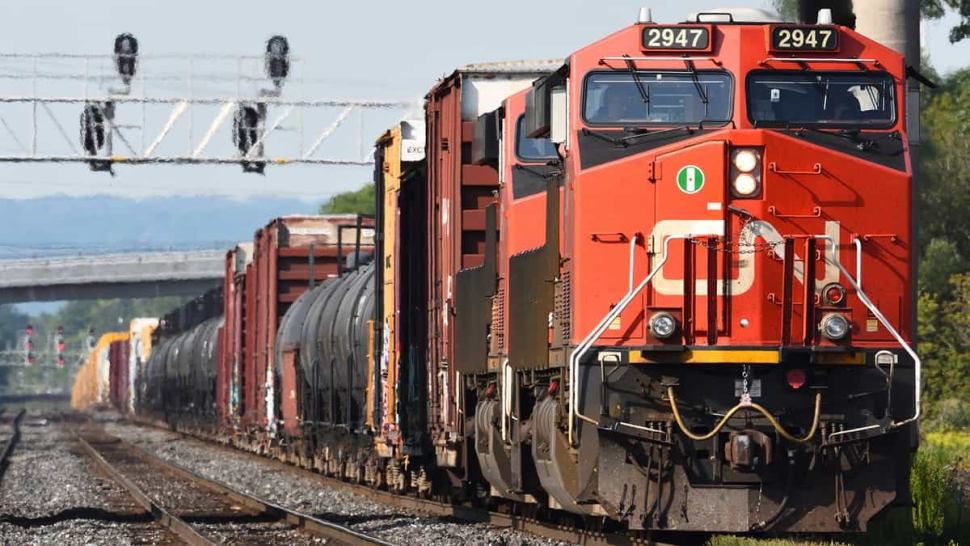
Canadian industry groups that depend on the railways to deliver their goods both domestically and internationally ae pressing the parties to end the union strike at Canadian National (NYSE: CNI) soon.
Members of the Teamsters Canada Rail Conference began their strike on Nov. 19 against Canadian National (CN). The union, which represents conductors, trainspersons and yard workers, walked away from their jobs over issues related to safety, working conditions and benefits. The federal government is mediating the talks between the Teamsters and CN.
CN estimates that it transports more than C$250 billion of goods annually via its Canadian and U.S. network.
“The Western Grain Elevator Association (WGEA) is urging the federal government to use any means at its disposal to ensure a labour disruption does not occur, including the introduction of emergency legislation if required,” said WGEA executive director Wade Sobkowich.
The strike comes at a time when there is an extremely difficult harvest due to grain quality issues, volumes still needing to be harvested and increasing trade restrictions, Sobkowich said.
“The silver lining this fall has been rail service. With car order fulfilment percentages in the mid- to high-nineties, we have been able to count on CN to provide capacity for grain movements so we are not forgoing sales opportunities,” Sobkowich said.
But “now, with a work stoppage situation, we run the risk of adding rail service to the list of issues shippers and producers are facing this year,” he said.
Sobkowich estimates that half of Canada’s elevator locations are served by only CN, which then provides service to the ports at Vancouver and Prince Rupert. Because these grain elevators don’t have other transportation options available, it impacts the elevators’ ability to supply international customers and it lengthens the producers’ delivery times, he said. The disruption also can result in higher costs as a result of delays, lost sales and demurrage, and it has the potential to add to the carry-out of grain tonnage at the end of the crop year on July 31, 2020, he said.
“We are extremely sensitive to these extra costs, not only for our members but for grain producers and customers,” Sobkowich said.
Should the disruption continue, WGEA is urging the federal government to take action, including potentially reconvening the House of Commons prior to Dec. 5 to deal with the situation.
The Chemistry Industry Association of Canada (CIAC), whose members use rail exclusively to ship roughly 80% of their production, also pressed for federal intervention should the parties not come to a resolution.
“Fully C$38 million worth of industrial chemical products rely on CN’s network to get to their destinations every single day and that the economic impact of the work stoppage is C$1 million per day per facility that is shut down,” said Bob Masterson, President and CEO of CIAC. “Some of those goods are also essential to core public services such as water treatment. We urge both sides to consider the far-reaching and urgent economic implications the strike activity and work stoppage at CN is having on industry.”
The CIAC said interruptions to rail service can result in chemical plants running out of storage capacity while also incurring shortages for incoming raw materials. Although some plants might have access to CN’s competitor, Canadian Pacific (NYSE: CP), the plants have been told that CP’s network isn’t in a position to take on extra capacity, the association said.
“CIAC believes that a negotiated solution is always the preferred outcome. Should negotiations fail, however, the Government of Canada must be prepared to act quickly and in the national interest to order the parties to return to work and the negotiating table,” CIAC said.
The Forest Products Association of Canada (FPAC) also called for both parties to end the strike soon, saying that Canada’s forest products often originate in remote locations where there are limited transportation options. The disruption is also occurring amid an ongoing truck driver shortage, making it harder for forest products producers to secure competitive transportation costs, the group said.
“While FPAC respects the collective bargaining process, and the right of workers to go on strike, we are concerned about the devastating economic impacts this dispute will have on our industry, which is already facing significant headwinds, not to mention the impacts on forestry families and communities,” said FPAC President and CEO Derek Nighbor. FPAC estimates that 10% of Canada’s rail volumes come from the forest products sector.
Meanwhile, Peter Xotta, Vancouver Fraser Port Authority’s vice president of planning and operations, said the disruption could threaten the ability to handle export and import volumes at the Port of Vancouver.
“Any disruption in rail service will be extremely detrimental to the Canadian intermodal supply chain and harm Canada’s ability to manage our international and domestic cargo shipments, which serve auto assembly lines, grain producers, and retailers among others,” Xotta said.
“Import containers will be particularly hard-hit, resulting in significant congestion in and around the port. The work stoppage will have immediate negative impacts to partners throughout the supply chain, the Canadian economy and the Port of Vancouver’s international reputation as a global trade hub,” he said.
Brokerage Compliance Symposium
The day before F3. Every compliance issue you face - fraud exposure, carrier liability, FMCSA rules, cargo theft, insurance gaps - navigated by attorneys and operators defining best practices in a changing industry.
F3 Awards Dinner
The night before F3. FreightTech100 companies honored. FreightTech 25 and Shipper of Choice winners revealed live. Cocktail reception into dinner and live music - 300 industry leaders in one purpose-built room.
F3: Future of Freight Festival
Industry-defining keynotes, rapid-fire technology demos, and industry leaders networking in experiences across Chattanooga - plus the inaugural F3 Awards Dinner featuring the FreightTech and Shipper of Choice reveals.
The day before F3. Every compliance issue you face - fraud exposure, carrier liability, FMCSA rules, cargo theft, insurance gaps - navigated by attorneys and operators defining best practices in a changing industry.
The Signal at Chattanooga Choo Choo • Chattanooga, TN Register NowThe night before F3. FreightTech100 companies honored. FreightTech 25 and Shipper of Choice winners revealed live. Cocktail reception into dinner and live music - 300 industry leaders in one purpose-built room.
The Signal at Chattanooga Choo Choo • Chattanooga, TN Register NowIndustry-defining keynotes, rapid-fire technology demos, and industry leaders networking in experiences across Chattanooga - plus the inaugural F3 Awards Dinner featuring the FreightTech and Shipper of Choice reveals.
The Signal at Chattanooga Choo Choo • Chattanooga, TN Register Now