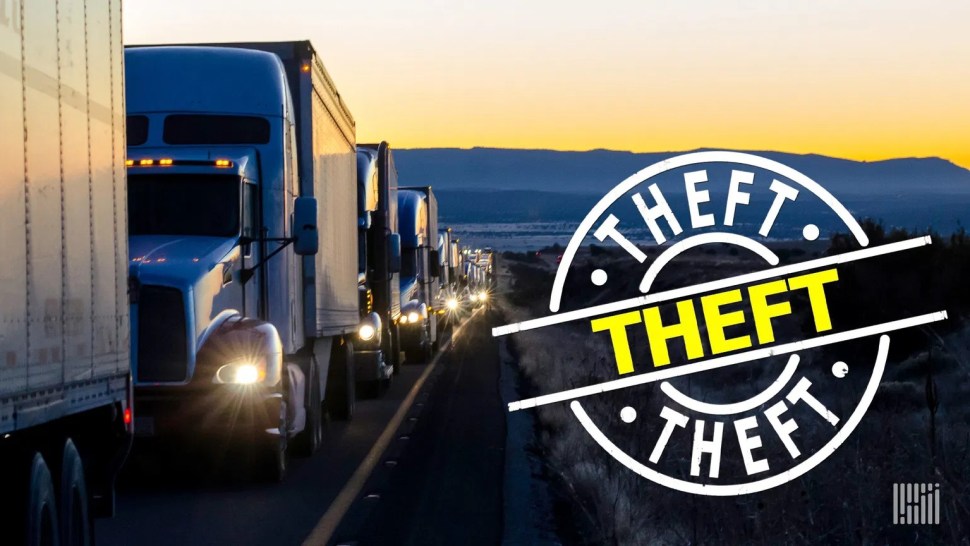
Cargo theft across North America remained elevated in the fourth quarter, with organized criminal groups increasingly targeting rail corridors, major freight hubs and high-value consumer goods, according to new data released by BSI Consulting.
The report shows theft risk clustering around dense transportation nodes in the U.S. — including Southern California, the Chicago metro area, Memphis and the Northeast corridor — while Mexico continues to account for the majority of recorded cargo theft incidents in the region.
BSI analysts said the persistence of theft across both countries underscores the growing sophistication of organized criminal networks and the vulnerability of in-transit freight.
Rail cargo theft remains a major U.S. concern
BSI identified rail cargo theft as a top area of concern, particularly in the Southwest and Midwest. Major rail corridors near Los Angeles, Chicago and Memphis showed sustained theft activity, with organized groups exploiting long stretches of rail infrastructure, rural terrain and limited real-time monitoring.
In the U.S., BSI identified rail cargo theft as a top area of concern, particularly in the Southwest and Midwest. Major rail corridors near Los Angeles, Chicago and Memphis showed sustained theft activity, with organized groups exploiting long stretches of rail infrastructure, rural terrain and limited real-time monitoring.
Rail theft operations are often highly coordinated, involving scouts to identify vulnerable trains, crews to breach containers, and spotters to evade law enforcement. BSI noted that footwear, electronics, appliances and consumer goods continue to be among the most frequently targeted products.
Law enforcement agencies have increased the use of helicopters, drones and advanced mapping technology in response, particularly around Chicago-area rail yards, but criminal groups continue to adapt their tactics.
Mexico’s “Red Triangle” remains a cargo theft epicenter
The trends identified by BSI align closely with what cargo-security technology providers are seeing on the ground, particularly as theft increasingly targets freight while it is moving or changing custody.
Curtis Spencer, founder of covert tracking firm Bloodhound Tracking Device, said cargo theft has evolved far beyond opportunistic crime and is now driven by sophisticated networks that understand brokerage systems, rail operations and intermodal transfer points.
“Freight at rest is freight at risk — and today that includes rail slowdowns, terminal congestion and handoffs between modes,” Spencer said in a FreightWaves interview. “Theft rings are watching where freight pauses and striking when visibility drops.”
Houston-based Bloodhound Tracking Device is a supply chain security company that provides asset-tracking solutions for the freight industry. The company recently launched BTD Tracker 1, a covert container tracking and security solution designed specifically for the global container market.
Spencer said fictitious pickups, spoofed bills of lading and impersonation of legitimate carriers are becoming more common, echoing BSI’s data showing rising thefts from in-transit trucks and trains.
“A legitimate truck can show up with clean paperwork, but if the trailer or container isn’t talking, nobody knows the load is going the wrong direction until it’s gone,” he said. “That’s where many of these crimes succeed — during moments when custody changes hands.”
Spencer said rail theft, in particular, has become increasingly attractive to organized criminal groups because long trains, remote corridors and urban bottlenecks create predictable opportunities.
“When trains slow outside places like Chicago, Los Angeles or Houston, that’s effectively freight sitting still,” he said. “We’ve all seen the videos — containers opened, products pulled out and loaded into vehicles in minutes. These aren’t random actors; they’re coordinated crews.”
BSI’s analysis similarly found that organized groups involved in rail theft conduct reconnaissance, deploy spotters and use multiple vehicles to move stolen cargo quickly and evade law enforcement.
Insider involvement and data gaps worsen risk
Both BSI and Spencer pointed to insider participation as a persistent risk across North American supply chains. Spencer said internal collusion — whether at warehouses, terminals or dispatch operations — remains one of the hardest threats to detect.
“Historically, a majority of large thefts involve some form of internal conspiracy,” he said. “When people are under financial pressure, organized crime knows how to exploit that.”
Spencer added that fragmented data systems across trucking, rail and port operations allow theft to flourish during transitions.
“Every mode, every handoff, every terminal uses different software,” he said. “Until the asset itself provides continuous data, those gaps will continue to be exploited.”
Brokerage Compliance Symposium
The day before F3. Every compliance issue you face - fraud exposure, carrier liability, FMCSA rules, cargo theft, insurance gaps - navigated by attorneys and operators defining best practices in a changing industry.
F3 Awards Dinner
The night before F3. FreightTech100 companies honored. FreightTech 25 and Shipper of Choice winners revealed live. Cocktail reception into dinner and live music - 300 industry leaders in one purpose-built room.
F3: Future of Freight Festival
Industry-defining keynotes, rapid-fire technology demos, and industry leaders networking in experiences across Chattanooga - plus the inaugural F3 Awards Dinner featuring the FreightTech and Shipper of Choice reveals.
The day before F3. Every compliance issue you face - fraud exposure, carrier liability, FMCSA rules, cargo theft, insurance gaps - navigated by attorneys and operators defining best practices in a changing industry.
The Signal at Chattanooga Choo Choo • Chattanooga, TN Register NowThe night before F3. FreightTech100 companies honored. FreightTech 25 and Shipper of Choice winners revealed live. Cocktail reception into dinner and live music - 300 industry leaders in one purpose-built room.
The Signal at Chattanooga Choo Choo • Chattanooga, TN Register NowIndustry-defining keynotes, rapid-fire technology demos, and industry leaders networking in experiences across Chattanooga - plus the inaugural F3 Awards Dinner featuring the FreightTech and Shipper of Choice reveals.
The Signal at Chattanooga Choo Choo • Chattanooga, TN Register Now