Canada’s dockworkers strike impacts freight rail operations
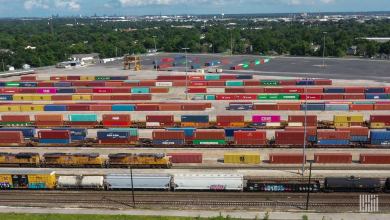
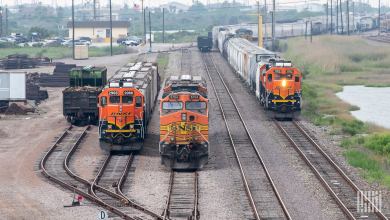
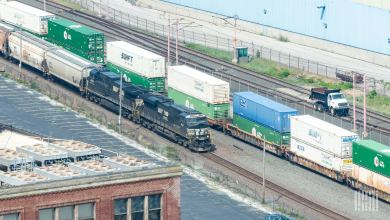
As the labor strike continues at the ports of Vancouver and Prince Rupert, Class I railroads are taking steps to ensure that their networks face minimal disruptions.
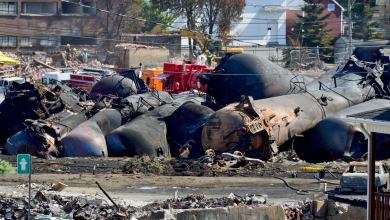
Railroads continue to play a significant role in North America’s economic infrastructure. According to the U.S. Department of Transportation Federal Railroad Administration, the U.S. rail freight network covers almost 140,000 route miles and is generally considered the largest, safest, and most cost-efficient freight system in the world. In addition, says the FRA, the almost $80 billion rail freight industry creates more than 167,000 jobs across the country.
In essence, rail freight companies charge businesses to carry cargo across their network of rails. Their rates are overseen by the Surface Transportation Board, a federal agency that regulates financial aspects of surface transportation. Major railroads in North America include Union Pacific Railroad, BNSF Railway, CSX, Norfolk Southern, Canadian Pacific Kansas City and Canadian National Railway.
Keep up with the latest news, trends and reports concerning rail freight transport here!
As the labor strike continues at the ports of Vancouver and Prince Rupert, Class I railroads are taking steps to ensure that their networks face minimal disruptions.
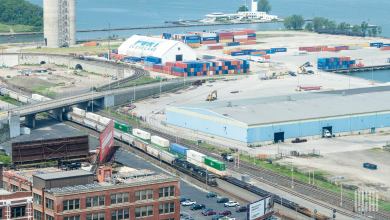
The rail industry has taken steps to prevent another Lac-Mégantic derailment, but more needs to be done, said the chair of the Transportation Safety Board of Canada.
Ohio Gov. Mike DeWine wants President Joe Biden to declare East Palestine a disaster area, while Norfolk Southern calls for rail car owners associated with the Feb. 3 derailment to help pay cleanup costs.
Researchers at the University of California at Berkeley and the Lawrence Berkeley National Laboratory are looking at the idea of using the battery systems of battery-electric locomotives as a way to back up the U.S. power grid.
The Greenbrier Companies sees “steady production” as the rail equipment manufacturer prepares to close out its 2023 fiscal year.
The Reliable Rail Service Act would charge the Surface Transportation Board to provide more clarity on the freight railroads’ common carrier obligation.
Research and development initiatives in the freight rail industry should turn their focus on integrating systems that are typically siloed in railroad operations, sources tell FreightWaves.
Some families of victims of deadly railway accidents say railway police are torn between seeking the truth and protecting the company name. Railroads say safeguards are in place.
Canadian Pacific Kansas City, CSX and Genesee & Wyoming railroads aim to establish a direct interchange connection near Myrtlewood, Alabama.
The Surface Transportation Board has ordered BNSF to meet the Navajo Transitional Energy Company’s request for more coal trains.
A train derailment Saturday morning sent multiple tanker cars carrying hazardous materials into the Yellowstone River.
“There are qualified mechanical inspectors at all these points, and they were not allowed to inspect this car at any of those locations,” Jason Cox, of the Transportation Communications Union, testified at a National Transportation Safety Board hearing Friday.
Class I railroads CPKC and CSX are working together on developing CPKC’s conversion kits that can retrofit diesel locomotives into hydrogen locomotives.
A research note from investment firm Cowen predicts reciprocal switching will hurt U.S. Class I railroads financially.
The National Transportation Safety Board is holding a field hearing in East Palestine, Ohio, to garner more information on why the Feb. 3 derailment of a Norfolk Southern train happened.
CPKC and Americold are collaborating on building a refrigerated service network for markets in the Midwest and Mexico.
BNSF is seeking a waiver from the Federal Railroad Administration to expand a brake health technology program, and the Brotherhood of Railway Carmen supports the effort.
The heads of the International Association of Machinists and Aerospace Workers and the International Brotherhood of Electrical Workers want swift action on the rail safety bill that passed the Senate Commerce Committee last month.
About $2.3 trillion was spent to keep the nation’s logistics system operating in 2022, according to the 34th State of Logistics Report.
The new regulations calling for zero-emissions configurations by as early as 2030 are too lofty in part because technologies are not yet commercially viable.