Trump’s tax plan may be a winner for trucking
Whether you are a large or small trucking company, or even a driver, there is a lot to like about President Donald Trump’s proposed tax plan, even if many of the specifics are lacking at this point.
President Donald Trump’s decision to place softwood lumber tariffs on Canada this week might be an indication that the administration is set for a reset on the North American Free Trade Agreement (NAFTA). It is a gamble that potentially puts billions of dollars in NAFTA trade shipments at risk – much of it hauled by trucks.
Much has been written about Tesla’s electric truck project and while opinions vary on the viability of a heavy-duty electric semi, some are wondering if the truck is only a vehicle to reach a different end game for Elon Musk.
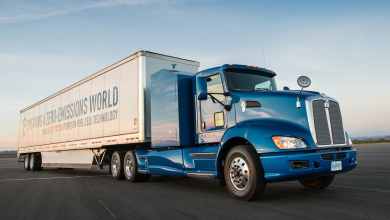
Toyota Motor North America announced its Project Portal hydrogen fuel cell powertrain this week. The engine produces 670 hp. and can pull an 80,000-lb. pound, the company said. Vehicle tests will take place at the Ports of Los Angeles and Long Beach, hauling cargo between the two sites.
This Week in Trucking, the CEO of Old Dominion Freight Line suggests boosting federal fuel taxes to pay for infrastructure improvements and Texas is the first state to require ELDs for intrastate commercial drivers. Also, Toyota unveils a hydrogen fuel cell Class 8 tractor.
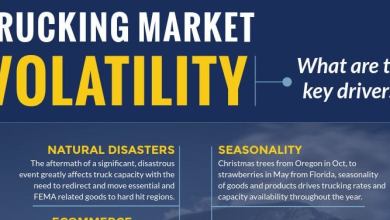
For anyone in the trucking industry, there is one constant: change. Rates change. Customers change. Freight flows change. But why is there so much change? This graphic answers some of those questions.
Is the trucking industry over-regulated? Good luck finding anyone in the industry that would say no. But ask which regulations should be repealed and chances are each one will be mentioned at least once. But will repealing regulations actually make the industry safer?
Trucking fleets have been hit with a series of equipment price increases in recent years due to new government regulations, including thousands of dollars for tractors due to greenhouse gas regulations. The new electronic stability control regulation, though, may be one where the benefit far outweighs its minimal cost.
Since last summer, Elon Musk has been teasing Tesla fans with word the company is building an electric “semi truck.” What form, shape and size that truck will take is still under wraps, but at least now we have a more definitive timeframe.
This Week in Trucking, President Donald Trump’s infrastructure plan is hitting some bumps in the road; economic indicators continue to favor improving conditions for the nation’s trucking fleets and the Owner-Operator Independent Drivers Association is making a last-ditch effort to stop the upcoming ELD mandate.
A futures market will react to the underlying fundamentals of its physical market because in the end, the futures price is linked to the physical market. But, the opposite is also true. A physical market can look to a futures market for transparency and guidance on rate structure. A developing trucking freight futures market might be the answer to solving these industry issues.
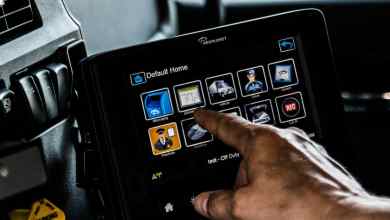
The upcoming electronic logging device (ELD) rule is a great example of the type of mandated technological change coming to the trucking industry, and yet it serves as a great reminder of the importance to perform due diligence before adopting such technologies.
In a stock swap valued at $6 billion, truckload operators Knight Transportation and Swift Transportation have agreed to a merger. The new company, Knight-Swift Transportation Holdings, will have approximately 23,000 tractors, 77,000 trailers, 28,000 employees and control approximately 5% of the nation’s truckload market.
Schneider National Inc. is the first transportation provider to issues shares in an initial public offering since 2010, according to data compiled by Dealogic. But, will it be the last? The time may be ripe for more companies to dip their toes in the water.
This week in the Week in Trucking, we look at improving truck orders and optimism among carriers, why consumer GPS devices don’t work in trucking, GE’s approaching to training workers and how one carrier is finding success by offering its drivers video.
Rate volatility is something that every broker, carrier and shipper must deal with. But, sometimes knowing how shipping rates will react to an event can be a guessing game. The I-85 bridge collapse in Atlanta is a case in point.
The transportation industry is ripe with startups hoping to be the one that disrupts a $726 billion industry, but without help, most don’t last. Dynamo is a Chattanooga-based venture capital firm that specializes in the logistics space and is helping a few of these startups gain a solid foothold in transportation.
In a world which carriers want to be paid quickly for their services, brokers have long turned to factoring as an option. Technology, though, is changing the payments business, and that means quicker payments for carriers and more cash flow flexibility for brokers.
Unlike some technologies, blockchain technology is not likely to displace many workers in the trucking industry. It does promise, however, to streamline financial operations and compliance reporting to make those operations more seamless, potentially saving fleets tens of thousands of dollars.
Once a disparate group of entities, the modern supply chain is becoming more akin to a well-oiled machine thanks to technological advances. As it becomes more digitized, the business case for blockchain technology becomes more powerful.