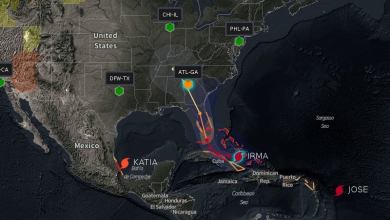
Impacts already rippling through supply chain as Irma approaches
Ports were closed and Florida highways were jammed with people on Friday fleeing Hurricane Irma, as the Category 4 storm approached the state.

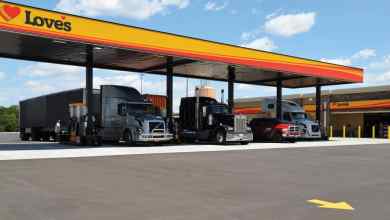
Fuel prices and developments affect the entire supply chain, and can place a lot of pressure on carriers. Check back here for news and information related to fuel prices and the gas sector, plus insights and analysis on trends and issues impacting the industry.
Ports were closed and Florida highways were jammed with people on Friday fleeing Hurricane Irma, as the Category 4 storm approached the state.
Remember when you had to wait to flag down a taxi? Now we order a taxi via an app and it arrives at your door within minutes. The same innovation is now happening to cargo shipping.
Is a trailer just a box on wheels or potentially a portable battery charger? That is one of the questions that could be answered through the continued innovation of commercial vehicles.
A major pipeline supplying diesel fuel from Texas to the East Coast has had to be shut down with no indication of when it will be turned back on.
Cummins has unveiled a Class 7 electric powertrain that will power Class 7 trucks by 2019 and could recharge in as little as 20 minutes.
As efforts to delay implementation of the electronic logging device rule continue to flounder in Congress, opponents have received an olive branch from CVSA. The group says that while it will enforce the ELD mandate on Dec. 18 as planned, out-of-service orders will not be issued until April 1, 2018.
While recovery efforts are still ongoing in many areas, the nation as a whole is about to feel the impact of Hurricane Harvey through increased fuel prices.
How did the solar eclipse last week affect the trucking industry? New data from Lytx tries to some numbers behind the event.
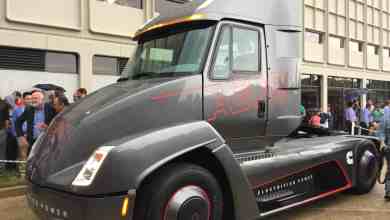
The never-ending mystery over what kind of truck Tesla is building may have moved one giant step closer to being solved on Thursday when it was revealed the electric truck will likely have an operating range of 200 to 300 miles.
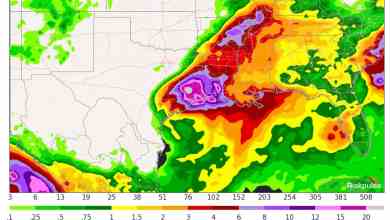
The National Hurricane Center has seen rapid intensification of Hurricane Harvey today and is now expecting the storm to gather strength before it makes landfall in Texas late Friday/early Saturday morning. The trucking interests are watching the storm closely as its final path and impacts will influence area spot rates, capacity, and fuel costs.
After seeing the fleet-wide fuel economy average climb 3% in 2015, the North American Council for Freight Efficiency (NACFE) says that the increase reported in its Annual Fleet Fuel Study was not as dramatic for 2016.
Solar power is most known as a source of electricity, but it is now proving that it belongs in other applications. Within the trucking industry, the use of solar is growing and it’s showing itself quite capable of the demands.
The recent news that the Environmental Protection Agency plans to revisit some portions of its Phase 2 greenhouse gas and fuel efficiency rules for medium- and heavy-duty on-highway trucks and engines has raised concern with the Truck and Engine Manufacturer’s Association (EMA).
As the numbers of electric-powered vehicles grows, questions about whether the electrical grid can handle the power demands are growing. Michael Barnard of Clean Technica looked at the possibility of electric-powered vehicles breaking the grid by the years 2021 and 2040.
An impending terminal crisis in net energy is looming over the global economy, according to Jonathan Rutherford of Insurgent Intelligence. The kind of growth that some multinational companies have been conducting is “green growth,” he notes with no signs of “degrowth.”
Siemens has been awarded a contract by the German state of Hesse to build an overhead catenary line to run electric trucks along. The line will be built on a 10 kilometer stretch of the A5 federal autobahn.
The I-95 Corridor Coalition is moving forward with research that will help it determine whether a mileage use tax is the right approach to taxing in Pennsylvania and Delaware, according to NBC 10 Philadelphia.
Although some politicians abhor rising GHG levels while others deny that global warming even exists, the general consensus of the private sector is that if corporations don’t get on board with safe environmental practices now, they will quickly fall behind their competitors.
As interest in alternative fuels continues to grow, ACT Research is making it easier for fleets to compare different fuel types.
Analysts continue to argue that EVs are not ready to compete with internal combustion engines (ICE), and technology advances will need to come in the next decade or two before EVs can dominate the marketplace. But the Tesla Model 3 is challenging that, and it’s success is something that trucking will watch closely.