Rail customers air grievances on railroad billing tactics
Regulators frustrated by carriers’ lack of candor in justifying service fees
Railroads continue to play a significant role in North America’s economic infrastructure. According to the U.S. Department of Transportation Federal Railroad Administration, the U.S. rail freight network covers almost 140,000 route miles and is generally considered the largest, safest, and most cost-efficient freight system in the world. In addition, says the FRA, the almost $80 billion rail freight industry creates more than 167,000 jobs across the country.
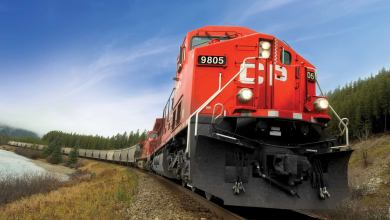
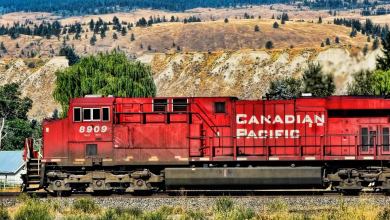
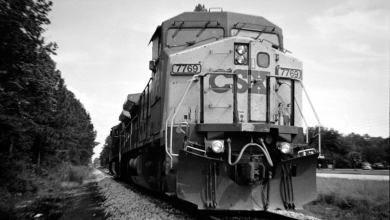
In essence, rail freight companies charge businesses to carry cargo across their network of rails. Their rates are overseen by the Surface Transportation Board, a federal agency that regulates financial aspects of surface transportation. Major railroads in North America include Union Pacific Railroad, BNSF Railway, CSX, Norfolk Southern, Canadian Pacific Kansas City and Canadian National Railway.
Keep up with the latest news, trends and reports concerning rail freight transport here!
Regulators frustrated by carriers’ lack of candor in justifying service fees
This article brought to you courtesy of NEXT Trucking Intermodal and drayage carriers are seeing a drop in demand about midway through the second quarter. The U.S.-China trade war gets most of the blame, but it might be more complicated than that. After 2018’s rush to get containerized goods off of U.S. ports and into […]
John Larkin, arguably the father of all transport analysts and recently an investment banker, is leaving banking to join a small private equity firm
The three stocks get an upgrade not just on Cowen’s optimistic view of the market, but by how much their prices have been hit.
FreightWaves SONAR now features railroad-related data from Commtrex. The article provides insight about the Commtrex, the data it will provide to SONAR and how SONAR users will benefit from it.
“The economy feels pretty good right now,” GWR chief executive Jack Hellmann said at an investor conference on May 14.
U.S. President Donald Trump is pushing ahead on the successor of NAFTA following the end of tariffs on Canadian and Mexican metals.
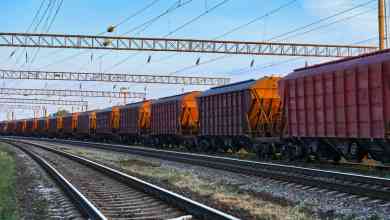
Market expert Jim Blaze explains the economics behind railcars. He also provides information about the various types of railcars and what market conditions the railroads are facing as they seek to “right-size” their fleets.
At least 35 groups will be testifying before the Surface Transportation Board this week to provide their perspective on how the Class I railroads assess demurrage and accessorial charges. The charges have become controversial because some shippers say the changes that the Class I railroads have made in administering the charges are unfair.
Saudi Arabia Customs successfully transported a container to the Port of Rotterdam using blockchain for the packing list and commercial documents.
A Trinity Industries subsidiary has bought 230 acres in Iowa to construct a multi-million-dollar railcar maintenance facility. The facility’s location in Butler County will give Trinity access to the Class I railroad network and the upper Midwest, Trinity said.
The state of Georgia plans a $35 million sale of bonds to upgrade its rail network, a move that could help boost volumes for Genesee & Wyoming (NYSE: GWR) and other short-line operators in the state. The State Transportation Board approved the sale at a May 16 meeting. Georgia’s Department of Transportation (DOT) hopes to […]
For years, shippers have tapped spare capacity of railcars and tracks as a low-cost option for storing and staging bulk commodities. But the widespread adoption of the business model known as “precision scheduled railroading” means the big U.S. railroads want to be in the moving business, not the storage business. And that poses a problem […]
Nevada joins Colorado in requiring freight trains to have at least two crew members on board. Meanwhile, preliminary data from the Surface Transportation Board shows April rail headcount level to be the lowest so far in 2019 and since January 2017.
Rail congestion in regions such as Chicago and Houston may have eased for now, but the railroads will still need to find ways to increase capacity at those busy city locations as the U.S. population grows, Class I railroad executives said at an investor conference this week.
Executives with eastern railroads CSX and Norfolk Southern expressed confidence this week that they can compete alongside trucks for e-commerce business.
Canadian rail volumes rose again year-to-date for the week ended May 11, while U.S. rail volumes continued downward amid U.S. tariff uncertainty and a fuzzy economic picture.
Rail market expert Jim Blaze discusses how FreightWaves SONAR can help determine how best to ship freight.
Amazon has broken ground on its Kentucky air hub, which will bring 2,000 jobs and up to 100 planes to the area.
FreightWaves market expert Jim Blaze looks at a regulatory spat between Canadian National Railway and Canadian Pacific Railway over the concept of “open access.” Learn why that is important to all railroads – and shippers!