Washington state bill could restrict crude-by-rail shipments
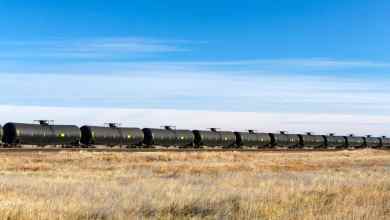
Legislation has been approved by the Washington State Legislature that could restrict the movement of crude oil via railroads. The bill is sitting on the desk of Gov. Jay Inslee (D).
Railroads continue to play a significant role in North America’s economic infrastructure. According to the U.S. Department of Transportation Federal Railroad Administration, the U.S. rail freight network covers almost 140,000 route miles and is generally considered the largest, safest, and most cost-efficient freight system in the world. In addition, says the FRA, the almost $80 billion rail freight industry creates more than 167,000 jobs across the country.
In essence, rail freight companies charge businesses to carry cargo across their network of rails. Their rates are overseen by the Surface Transportation Board, a federal agency that regulates financial aspects of surface transportation. Major railroads in North America include Union Pacific Railroad, BNSF Railway, CSX, Norfolk Southern, Canadian Pacific Kansas City and Canadian National Railway.
Keep up with the latest news, trends and reports concerning rail freight transport here!
Legislation has been approved by the Washington State Legislature that could restrict the movement of crude oil via railroads. The bill is sitting on the desk of Gov. Jay Inslee (D).
U.S. rail traffic dipped again for the week ending April 20, according to data from the Association of American Railroads.
Norfolk Southern (NYSE: NSC) expects to have the next stage of its new operating plan in place by the end of July. In this next stage, which Norfolk Southern dubs “TOP 21,” the railroad will seek to run heavier trains and have them run faster along some routes.
Despite its takeover by ocean carrier, Swiss freight forwarder keeping it multi-modal with introduction of rail service from China to Europe.
Despite higher operating income, Trinity Industries’ (NYSE: TRN) first quarter 2019 net profit fell 24 percent to $30.6 million from $40.2 million in the first quarter of 2018. TRN consists of three business segments: a rail group that includes the manufacturing of rail parts and tanks; a leasing group; and a highway products and logistics service.
GATX’s (NYSE: GATX) first quarter profit fell 46 percent to $41.5 million, or $1.12 per diluted share, from $76.3 million, or $1.98 per diluted share, in the first quarter of 2018. Chicago-based GATX is a railcar lessor, providing railcars and boxcars to freight railroads and shippers.
The company posted an operating ratio (OR) of 66 percent, improving on its fourth quarter 2018 OR of 67.8 percent and setting a first quarter record.
The number of employees working for the U.S. operations of the Class I railroads rose by nearly 1 percent in the first quarter of 2019 compared with the same period last year, according to data collected by the Surface Transportation Board.
“This past winter was one of the most challenging in my railroading career,” Canadian Pacific (NYSE: CP) president and chief executive officer Keith Creel said. “I applaud our employees for their resiliency in overcoming loss and pushing through extraordinary conditions and challenges throughout February and March. Our commitment to precision scheduled railroading [PSR] enabled a strong recovery, and gives us a solid foundation moving forward.”
The Greenbrier Companies (NYSE: GBX) is planning to buy the manufacturing arm of American Railcar Industries as a way to increase its North American presence.
Market expert Jim Blaze looks at how rail freight volume has changed over the years and what the outlook is for the next decade. Learn what he thinks will happen to the railroad industry in its long-term competition with trucking to carry freight.
Add Ohio and Washington state to the list of states where leaders are debating whether to require freight railroads to have at least two crew members per train. Ohio and Washington state legislators have introduced bills this spring mandating a minimum crew size for freight trains. Washington state’s bill takes the debate one step further by also defining how many crew members should be operating a train that’s carrying crude oil.
Changing distribution patterns could spell trouble for intermodal, report says.
Union Pacific’s (NYSE: UNP) first quarter net profit rose 6 percent amid company efforts to rationalize or reorganize existing assets to streamline operations under precision scheduled railroading (PSR).
Higher coal and chemicals volumes drove U.S. carloads upward on a weekly basis for the first time since late February, according to the latest data from the Association of American Railroads (AAR). But despite that weekly gain for U.S. carloads, overall U.S. rail traffic still softened.
Kansas City Southern (NYSE: KSU) said its first quarter 2019 net profits rose nearly 16 percent amid its ongoing transition to precision scheduled railroading (PSR).
Canadian National (NYSE: CNI) plans to appeal a determination by a federal regulator that the railway breached rail service obligations last fall at the congestion-prone Port of Vancouver.
CSX (NYSE: CSX) achieved an operating ratio of less than 60 percent in the first quarter amid continued efforts to employ precision scheduled railroading (PSR) throughout its network.
Market expert Jim Blaze questions the benefits to-date of precision scheduled railroading (PSR). Read his views on how railroads could prove PSR’s value to shippers.
The U.S. Department of Agriculture (USDA) lowered its export projections for corn and wheat in the 2018-2019 harvest season amid slumping grain volumes and Midwest rail operations coping from last month’s record flooding.