White Paper – Mitigating Meltdowns: The Cold Chain Requires Innovative Solutions
If there’s one chain that must never be broken, it’s the cold chain.
Partnering with the right carriers can be a complex decision, and making the wrong choice can easily threaten a shipper’s bottom line.
Reliance Partners’ Graham Gonzales warns how easy it is for one to fall victim to a cyberattack.
The U.S. Department of Energy recently announced it will use roughly $3.5 billion from President Biden’s Bipartisan Infrastructure Law to invest in air carbon capture projects.
The need for streamlined supply chains has never been more pivotal, but many current technologies were not designed to cope with the level of uncertainty companies are facing in 2022.
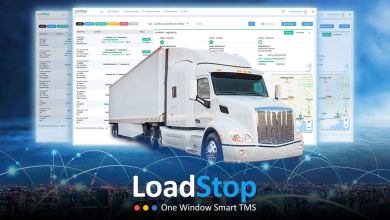
With LoadStop — an enterprise, cloud-based and carrier-focused platform — carriers of all sizes can grow revenue, streamline internal workflows, optimize fleet management and dispatching, and reduce time waste through process automation.
According to Patrascu, it’s important for employers and administrators to continuously be in conversation with their agents and other employees in order to know how to grow their business, their employees and themselves.
Cargo security has been a concern on the radars of many shippers and carriers in recent years, but during the height of the COVID-19 pandemic worries mounted as cargo thefts spiked in transportation hubs across the U.S. Two years after shutdowns caused by the pandemic began, the logistics industry is still grappling with cargo theft. […]
The way that transportation has been traditionally bought and sold has left shippers and transportation providers siloed and connected only to those partners within their existing network.
This white paper offers 6 key steps to help navigate this down market and get you back in the driver’s seat.
The best way to keep your drivers satisfied is to know what they want.
Convoy helped bring sustainability issues to the forefront at FreightWaves’ The Future of Supply Chain event last week in Rogers, Arkansas.
Shippers turn to LTL in light of changing consumer behavior
While drayage has faced demand surges, they have often been the relatively short-lived consequences of labor strikes or steamship company shutdowns. The impact of the pandemic has been much greater, and it is here to stay.
Agility is more important than ever, as pandemic-related headwinds continue to play out and new technologies strengthen competing companies by offering increased flexibility.
This white paper explores how volatility surrounding rates and capacity has affected shippers across the industry.
Poor driving is often a reflection of management. So when fatal accidents occur, it’s not just drivers with blood on their hands.
Jay Gustafson of Echo Global Logistics discusses the traits that determine if a broker’s technology can support the growth of an enterprise fleet in any market.
Since joining third-party-logistics firm, LFS, as an advisor and investor, Justin Hall has been working to rebrand the company under the name of Primo.
There are many reasons why drivers may end up driving miles that are considered wasted. One big reason is weather conditions.