




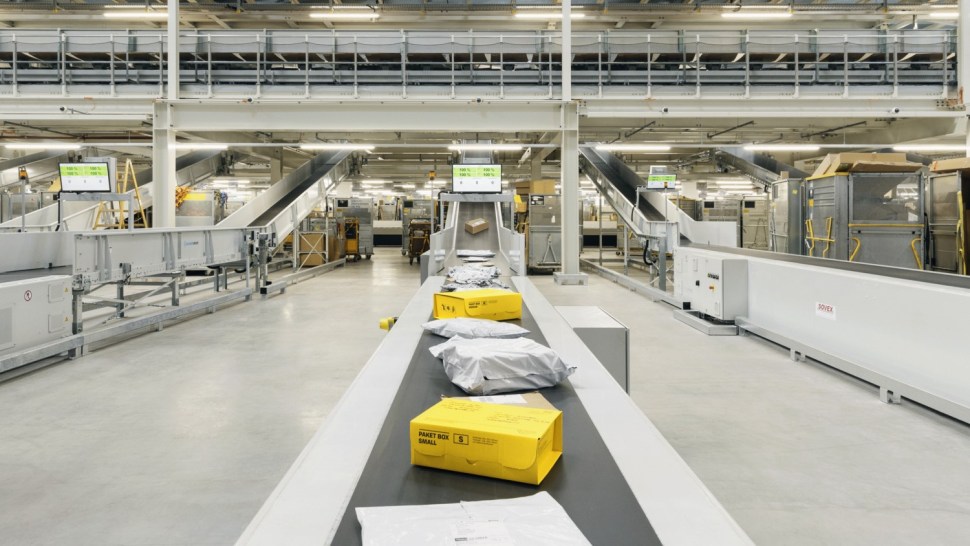
Amid reports that non-compliant shipments are piling up in UPS air terminals following the recent abolition of a U.S. tariff exemption favorable to B2C retailers, there is rising interest in international postal channels as a way to minimize parcel shipping costs and complexity associated with new customs requirements for small-dollar imports.
Large e-commerce platforms mostly shunned postal networks for direct delivery of customer packages because of slow delivery times, preferring commercial air and express transport managed by logistics companies that exploited an expedited U.S. entry process.
Now e-tailers and their logistics partners are taking a second look at the postal environment for some products as a middle ground between the previous de minimis exemption, which allowed products worth less than $800 to be imported duty-free with minimal customs processing, and the rigorous formal entry process, according to trade professionals.
“The postal network is poised to become a sleeper alternative as the new program’s onerous, manual reporting and direct carrier liability for low-value goods will prompt many traditional freight and express couriers to re-evaluate the small-package segment, which could effectively establish the postal system as the mandatory, high-volume path for e-commerce parcels entering the U.S.,” said Ryan Tanner, senior director of compliance for Flexport said in an email exchange.
Flexport is a third-party logistics provider and one of 27 companies authorized by CBP so far to collect and pay duties on international mail shipments.
Shipping through postal networks isn’t inexpensive anymore, but is not as much as for a formal or informal entry (under $2,500), and there are new data requirements, according to customs brokers familiar with the process. The only duty imposed is based on emergency powers invoked by President Trump. Non-postal commercial shipments are subject to multiple types of tariffs and fees, depending on the product.
“So it does give an advantage to postal,” said Cindy Allen, a highly sought-after trade compliance consultant with experience in government and at large express carriers, in an interview.
Nearly 90 foreign postal operators suspended parcel service to the United States after the Trump administration on Aug. 29 subjected all de minimis shipments to the same tariff levels by country of origin that apply for large, containerized shipments arriving by ocean, air or truck at ports of entry. U.S. Customs and Border Protection has said the explosion of de minimis shipments in recent years outstripped its ability to check for potential trade violations and smuggling of illicit products. The agency processed 1.4 billion de minimis shipments in fiscal year 2024.
The new rule’s quick implementation led to surprise invoices for duty due on delivery for many consumers who received online orders through commercial delivery networks after Aug. 29.
For postal shipments, the White House placed the burden of customs duty collection and remittance on transportation carriers or CBP-approved qualified parties. Airlines don’t pay customs duties and were unwilling to take on the new responsibility and technology costs. The U.S. measure essentially wiped out normal postal customs clearance between countries under United Nations’ guidelines. National posts said they were forced to act because there wasn’t time to develop systems for collecting duties and paperwork upfront, and transmitting them to CBP’s automated import system.
(Similarly commercial disruptions occurred when the White House banned de minimis treatment for China and Hong Kong in May. Air cargo volumes plummeted as many online shoppers recoiled at paying 30% import taxes. Postal shipments also ceased.)
Only a handful of postal operators have resumed operations to the United States — notably DHL Post & Parcel Germany and Australia Post — according to the Universal Postal Union. The UN agency last week said parcel traffic to the U.S. was down 70.7% compared to volumes one week before the de minimis changes took effect. That is a 10-point improvement from the week-over-week decline (81%) recorded immediately following the Aug. 29 rule change.
Postal operators now have to meet a higher bar for shipping to the U.S. In addition to duty collection, they must send pre-arrival information, such as the country of origin, emergency tariff rate, and product description, which is transmitted to CBP by the international carrier or qualified third parties.
Posts are expected to add an administrative fee (Germany’s Deutsche Post is charging about $2.36 per parcel) to help pay for the new procedures.
Many large Chinese marketplaces and other electronic retailers have responded to the regulatory clampdown on low-value shipments by following a more traditional supply chain playbook: consolidating merchandise, shipping in bulk via ocean, and air carriers and fulfilling orders from U.S. warehouses.
Flexport works with retail clients to find out what works best for them and their customers, and develop a tailored logistics approach.
“It will be a hybrid situation where it makes sense to have certain commodities in the U.S., especially if you have the volume to sell them quickly, and other commodities you may be able to utilize the postal unions” or even courier services, Tanner said on a recent episode of the “Logistically Speaking” podcast.
He envisions a mini-boom in postal business, which could help relieve pressure on bonded warehouses that are completely stuffed with e-commerce inventory.
“As UPU members start to get back in the game, international mail is actually going to open up quite nicely as an entirely new market for freight forwarders. We’re still a bit early in the game here to see how the market is going to shift predominantly, but I think we’ll see the hybrid model for quite a while,” Tanner predicted on “Logistically Speaking.”
Other executives involved in cross-border e-commerce agree that lower total duties and more predictable clearance make postal shipping an attractive alternative for a subset of online sellers. Modernizing the international postal data standards has enabled automated targeting of suspicious shipments for inspection, giving CBP the confidence to quickly clear most parcel shipments.
“For B2C business, the foreign post to U.S. post is the better, and most efficient, solution because the cost-benefit ratio is very good now,” said Arthur Brown, president of air cargo at International Bridge, which provides small-parcel shipping services to e-commerce retailers in Asia looking to reach consumers in non-continental areas such as Alaska, Hawaii, Puerto Rico, U.S. territories and military addresses.
Postal carriers make sense for brands that prioritize cost over speed and ship low-value, standardized products with clean product data and a consistent country of origin, he explained in an interview.
International Bridge was one of the first companies to be qualified in August to handle international mail. The company, which calls its service SafePackage, has at least a dozen foreign posts and e-commerce platforms as customers, with more expected to come on board soon. Postal operators will see prices come down as more qualified parties enter the market and more shippers adopt the postal channel, said Brown.
“It’s not a middle ground to bypass formal entry. It’s a compliant alternative with its own rules, controls, and fees,” he said.
Even with the new, approved pathway, parcel volumes to the United States are still small. Kate Muth, executive director of the International Mailers Advisory Group, said about two dozen countries have announced plans to send shipments to the U.S., but only three of them appear to be sending any material amount of traffic. The rest are probably still testing small batches with an approved party.
Last month, the Universal Postal Union —the UN special agency for global postal cooperation — introduced a landed-cost calculator to help members restart delivery to the United States. Postal operators can access the tool, which automatically calculates all required duties and fees at origin, via an application programming interface that can be integrated into their retail and counter shipping systems. The UPU now says it is launching a full-fledged solution that will allow every postal operator, regardless of size, to also collect and remit the required duties from customers.
Harmonizing postal and commercial entry environments
But the postal shipping advantage may be temporary, according to several trade experts, because CBP seems interested in making the entry process similar for postal and non-postal shipments.
“Eventually, I think U.S. Customs will probably want to move to a more formal entry environment, but that’s probably further away, said Allen, who founded and currently runs Trade Force Multiplier. “They had nothing [for postal management]. Now they have something. And I think that if there is a large move to postal, away from other types of entry, you’ll see the administration become more concerned that high volumes are moving to postal, where they don’t have the same visibility, they don’t have all of the additional information, and they don’t get all of the duties.”
That will be especially true if duties imposed under the International Emergency Economic Powers Act are struck down, she said. The Supreme Court has agreed to hear the White House’s appeal of a lower-court ruling against the use of emergency tariffs when no clear emergency is present.
“What then happens to those postal shipments? Are they not going to have any duties?” she mused.
UPS fumble
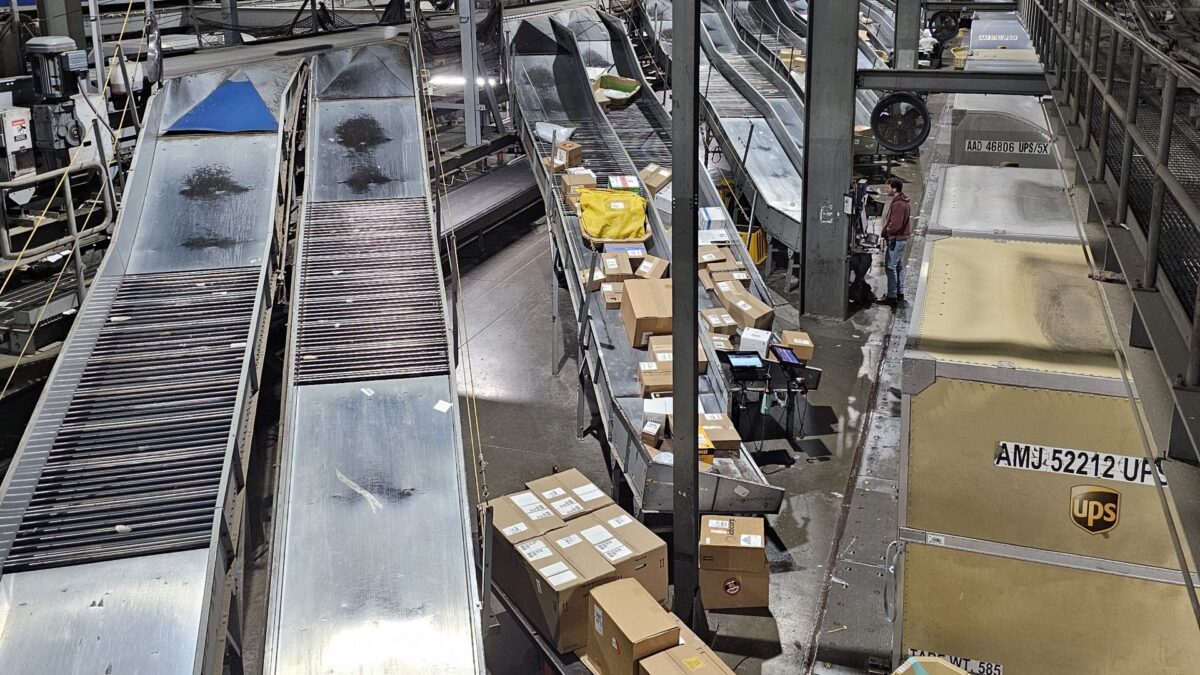
Meanwhile, thousands of packages have been stuck for weeks at UPS warehouses due to missing or incomplete documentation required to clear U.S. Customs, NBC News reported. Some packages are destroyed when UPS can’t obtain the necessary information or the sender doesn’t want to pay for a return. Customers with stranded shipments have created an uproar on social media platforms.
Business Insider followed with similar reporting in which UPS said it is experiencing a significant increase in the number of shipments requiring formal customs clearance.
There have been no reports that FedEx and DHL Express have suffered similar breakdowns, although DHL has much less traffic into the United States than its two rivals.
It’s worth noting that all logistics companies and express carriers handling e-commerce parcels are experiencing some overall delays because shippers, who previously didn’t have to provide any information, are still learning what data points they need to share so service providers can complete the customs entry.
FedEx did a better job than UPS of reaching out to customers to get the information and brought in additional resources to help input the surge of new data on customs documents, whereas UPS continued to rely on its automated filing system in the belief it could meet the extra workload, according to one trade expert who spoke to FreightWaves on condition of anonymity
Click here for more FreightWaves/American Shipper stories by Eric Kulisch.
RELATED STORIES:
German postal operator to resume US parcel shipping
Global postal operators suspend parcel service to US
Trump revokes de minimis privilege for global e-commerce products
Brokerage Compliance Symposium
The day before F3. Every compliance issue you face - fraud exposure, carrier liability, FMCSA rules, cargo theft, insurance gaps - navigated by attorneys and operators defining best practices in a changing industry.
F3 Awards Dinner
The night before F3. FreightTech100 companies honored. FreightTech 25 and Shipper of Choice winners revealed live. Cocktail reception into dinner and live music - 300 industry leaders in one purpose-built room.
F3: Future of Freight Festival
Industry-defining keynotes, rapid-fire technology demos, and industry leaders networking in experiences across Chattanooga - plus the inaugural F3 Awards Dinner featuring the FreightTech and Shipper of Choice reveals.
The day before F3. Every compliance issue you face - fraud exposure, carrier liability, FMCSA rules, cargo theft, insurance gaps - navigated by attorneys and operators defining best practices in a changing industry.
The Signal at Chattanooga Choo Choo • Chattanooga, TN Register NowThe night before F3. FreightTech100 companies honored. FreightTech 25 and Shipper of Choice winners revealed live. Cocktail reception into dinner and live music - 300 industry leaders in one purpose-built room.
The Signal at Chattanooga Choo Choo • Chattanooga, TN Register NowIndustry-defining keynotes, rapid-fire technology demos, and industry leaders networking in experiences across Chattanooga - plus the inaugural F3 Awards Dinner featuring the FreightTech and Shipper of Choice reveals.
The Signal at Chattanooga Choo Choo • Chattanooga, TN Register Now