




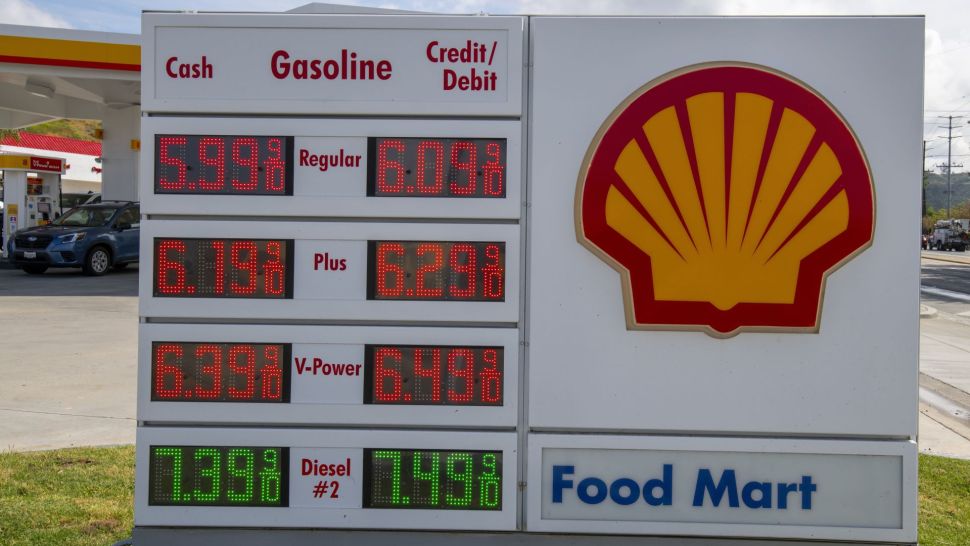
U.S. ground and express parcel shipping costs are on pace for a third consecutive record quarter as parcel carriers, responding to soaring crude oil prices caused by the Iran war, stack higher fuel surcharges on top of accumulated general rate increases, according to a quarterly market report from TD Cowen investment bank and AFS Logistics this week.
The analysis, which leverages freight audit and payment data from shippers of all sizes, predicts that both air and ground fuel surcharges are likely to continue rising should elevated oil prices persist and that they won’t quickly roll back once the conflict ends and crude prices drop.
“While the term ‘new normal’ may conjure unpleasant memories of the COVID era, businesses should brace themselves for a new normal of elevated fuel costs,” said AFS Logistics CEO Andy Dyer in a news release accompanying the report. “Not only do the structural causes that spurred this spike take time to unwind, the related pricing changes, particularly in parcel, tend to be sticky, with effects that linger even after the underlying price of fuel recedes.”
Fuel surcharges are percentage-based add-ons tied to fuel price indexes. When fuel prices move up, so does the surcharge. But when prices fall, minimum thresholds often keep those percentages elevated.
FedEx (NYSE: FDX) and UPS (NYSE: UPS) have built-in fuel surcharge mechanisms that have allowed them to automatically charge extra fees to cover the rising cost of diesel and jet fuel used to power their fleets. It’s no secret that those fees have long been a strong source of carrier revenue because they are padded with extra profit margin. During the first quarter, the price of diesel fuel increased about 10% year over year, but ground fuel surcharges rose 26.7%, according to the TD Cowen/AFS Freight Index.
Rival parcel carriers are now responding with fuel surcharges of their own for the first time. Amazon (NASDAQ: AMZN) on Friday will add a 3.5% fuel surcharge to the fees merchants pay when Amazon Logistics ships their products from its warehouses and the U.S. Postal Service is scheduled to add an 8% transportation surcharge — for direct fuel expenses and pass-through costs from contractors — starting on April 26. Super-regional carrier OnTrac has also updated its surcharge tables in the wake of the fuel price spike.
“Carriers have used the fuel surcharge as a potent revenue generator for years, ratcheting tables higher even during periods with relatively cheap fuel,” explained Mingshu Bates, chief analytics officer and president of parcel at AFS Logistics. “Now that we have sky-high oil prices dominating headlines and priming the market to expect fuel to be a major cost, carriers have no reason to stop pulling that lever.”
Consultancy ShipMatrix last year also documented how legacy carriers have routinely implemented peak season surcharges even when demand growth was flat or low.
The effect of fuel and other surcharges, combined with annual general rate increases, has pushed up parcel shipping costs much faster than the increase in inflation. A five-pound package shipped via ground from Atlanta to a residential address in New York City, for example, cost $22.52 in 2022 compared to $31.94 in 2026 – a 42% increase compared to cumulative inflation of just 15% over the same period. The fuel surcharge alone increased 131% over those four years, according to the TD Cowen/AFS Freight Index.

The report showed that the express delivery cost per package came in higher than initially forecast, reaching 8.5% above the January 2018 baseline in the first quarter. The express cost per package was also 2.6% higher in the first quarter compared to the prior quarter due to higher prices and a seasonal mix in service. The upward trend is expected to continue in the second quarter, with the express parcel index projected to reach a record high of 10.3% in — up 6.4% year over year. FedEx and UPS GRIs took full effect in the first quarter and when U.S. Gulf Coast jet fuel spiked 38% year over year in March, fuel surcharges shot up 46% from levels a year ago.
Elevated fuel surcharges and GRIs also proved a potent combination in ground parcel, with the rate per package index reaching 39.3%. The ground parcel index is projected to set a record high for the third straight quarter — reaching 42% in the current quarter, up 1.9% on a sequential basis and 6.6% from the prior year.
FedEx executives said at the company’s mid-February Investor Day event that surcharges are a key part of the company’s revenue strategy, noting that shippers should pay for the true cost of network infrastructure investments and service.
The TD Cowen/AFS Freight Index noted that surcharges aren’t always applied evenly, creating an opportunity for savvy shippers to reduce their impact. Larger express shippers, for example, have sufficient leverage to secure concessions that small-to-medium customers cannot get. And UPS is tightening pricing more uniformly, while FedEx is deploying deeper discounts to capture more volume.
Shippers should try to negotiate fuel surcharge discounts, rate caps or custom surcharge tables, reduce the base spending the surcharge applies to, or switch to an alternative carrier, said parcel consultant Nate Skiver in his Special Delivery newsletter.
UPS updated its fuel surcharge index table, effective April 13, for the third time since the start of the year. The new table won’t increase fuel surcharges at current diesel prices, but is structured to work against shippers if fuel costs fall, ICC Logistics Services said in its Thursday newsletter.
“Under the previous structure, per-gallon ranges in the index table began widening at $3.55 per gallon. The new April table pushes that threshold up to $4.45 per gallon. The practical effect: the index now declines more slowly as fuel prices drop, meaning shippers won’t see the FSC relief they would have received under the old structure. … If prices return to where they spent much of last year ($3.72), shippers on the new index will pay meaningfully more than they would have under the old one,” ICC said.
Even half-point increases in the minimum fuel surcharge add up when applied to every shipment.
UPS and FedEx have nearly identical fuel surcharge tables and have increased the minimum fuel surcharge to the point that “most shippers don’t realize that if the carriers were to get fuel for free, the shippers would still be charged 18.5%,” said Robyn Meyer, vice president of parcel strategy and solutions at Transportation Insight, in a recent blog.
Click here for more FreightWaves/American Shipper stories by Eric Kulisch.
Contact: ekulisch@freightwaves.com.
RELATED READING:
FedEx doubles down on premium e-commerce, delivery surcharges
Postal Service can proceed with 8% parcel surcharge, regulator says
Brokerage Compliance Symposium
The day before F3. Every compliance issue you face - fraud exposure, carrier liability, FMCSA rules, cargo theft, insurance gaps - navigated by attorneys and operators defining best practices in a changing industry.
F3 Awards Dinner
The night before F3. FreightTech100 companies honored. FreightTech 25 and Shipper of Choice winners revealed live. Cocktail reception into dinner and live music - 300 industry leaders in one purpose-built room.
F3: Future of Freight Festival
Industry-defining keynotes, rapid-fire technology demos, and industry leaders networking in experiences across Chattanooga - plus the inaugural F3 Awards Dinner featuring the FreightTech and Shipper of Choice reveals.
The day before F3. Every compliance issue you face - fraud exposure, carrier liability, FMCSA rules, cargo theft, insurance gaps - navigated by attorneys and operators defining best practices in a changing industry.
The Signal at Chattanooga Choo Choo • Chattanooga, TN Register NowThe night before F3. FreightTech100 companies honored. FreightTech 25 and Shipper of Choice winners revealed live. Cocktail reception into dinner and live music - 300 industry leaders in one purpose-built room.
The Signal at Chattanooga Choo Choo • Chattanooga, TN Register NowIndustry-defining keynotes, rapid-fire technology demos, and industry leaders networking in experiences across Chattanooga - plus the inaugural F3 Awards Dinner featuring the FreightTech and Shipper of Choice reveals.
The Signal at Chattanooga Choo Choo • Chattanooga, TN Register Now