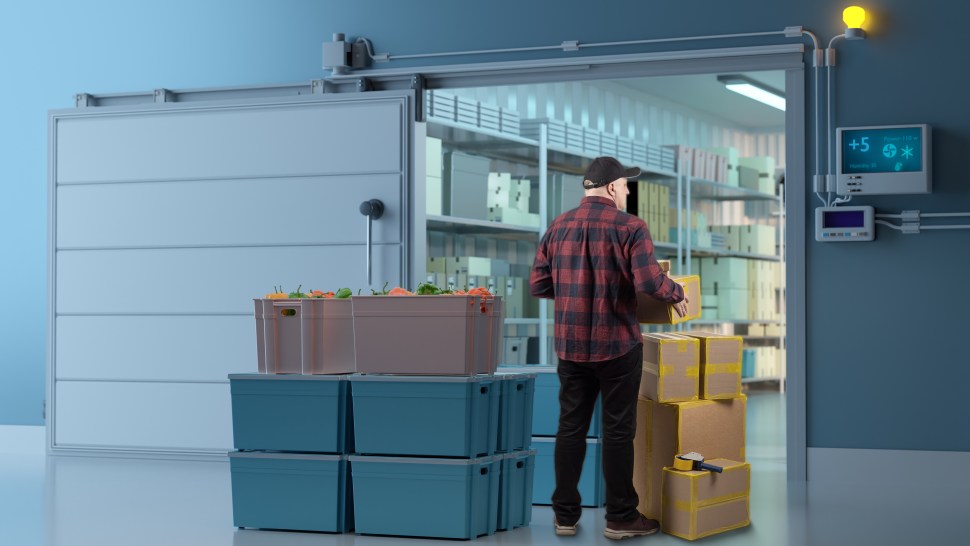
What once felt like a seasonal novelty, insulated boxes of pears, steaks, or chocolates arriving just in time for the holidays, has quietly transformed into one of the most complex and consequential segments of modern e-commerce. The temperature-controlled shipping model popularized decades ago by brands like Harry & David and Omaha Steaks is no longer confined to gift giving or special occasions. Today, it represents a much broader ecosystem of direct-to-consumer food, specialty goods, and perishable products, especially during the holiday surge.
From a supply chain perspective, the shift accelerated sharply after the pandemic. According to Chief Operating Officer Luke Vaccaro of ColdTrack, consumer comfort with ordering food online fundamentally changed post-COVID. “The cold chain space really matured,” he explains. “People got comfortable buying food through e-commerce, and over time, the costs and liabilities improved enough to make it more viable at scale.”
What used to be a carefully planned exception became a regular habit, and the holidays now amplify that behavior rather than define it.
At the same time the e-commerce cold chain expanded far beyond legacy brands shipping a limited catalog of premium goods. Platforms like Goldbelly demonstrated how aggregating demand could unlock entirely new opportunities for small bakeries, butchers, and restaurants. By curating experiences rather than just products, these marketplaces allow regional favorites to reach a national audience without building their own logistics infrastructure.
Consumers, in turn, have shown they are willing to pay a premium for something unique, especially during the holidays, if they trust it will arrive safely and as promised.
That trust is reinforced by one of e-commerce’s biggest advantages over traditional retail: real-time feedback. Online reviews and rapid customer responses create a tight feedback loop that quickly separates brands that execute well from those that don’t. In perishable shipping, where a single failure can mean spoilage and a lost customer, that transparency raises the stakes.
Behind the scenes, however, consumer delivery remains deeply complicated. Much of the work is focused on protecting the product before it ever leaves the warehouse. Packaging is critical, proper insulation, the right box size, and protection against physical damage all matter.
Technology has evolved largely in response to this rising demand. Automation investments have allowed cold chain operators to support higher volumes without sacrificing consistency. E-commerce platforms like Shopify have lowered the barrier to entry, making it possible for smaller shippers to compete by offering better shopping experiences and more variety. That same tech translates into more efficient picking and fulfillment on the back end, helping protect already-thin margins.
Another quiet but critical development has been the expansion of carrier networks. While national players like FedEx and UPS remain central, growing competition from regional carriers has helped keep costs in check and improve service options. Without that pressure, Vaccaro suggests, perishable e-commerce would be even harder to sustain.
Because despite its growth, this remains a brutally difficult business. Keeping products cold, moving them quickly, and absorbing the cost of failures leaves little room for error. Margins are thin enough that inefficiencies can make or break a brand, especially during the holiday rush when volumes spike and weather introduces additional risk.
What the holiday season now represents is not just peak demand, but a stress test. Temperature-controlled e-commerce has outgrown its origins as a gifting niche and become a year-round expectation. The box on the doorstep may look familiar, but the systems behind it, packaging science, automation, carrier networks, and real-time feedback, are far more sophisticated.
Brokerage Compliance Symposium
The day before F3. Every compliance issue you face - fraud exposure, carrier liability, FMCSA rules, cargo theft, insurance gaps - navigated by attorneys and operators defining best practices in a changing industry.
F3 Awards Dinner
The night before F3. FreightTech100 companies honored. FreightTech 25 and Shipper of Choice winners revealed live. Cocktail reception into dinner and live music - 300 industry leaders in one purpose-built room.
F3: Future of Freight Festival
Industry-defining keynotes, rapid-fire technology demos, and industry leaders networking in experiences across Chattanooga - plus the inaugural F3 Awards Dinner featuring the FreightTech and Shipper of Choice reveals.
The day before F3. Every compliance issue you face - fraud exposure, carrier liability, FMCSA rules, cargo theft, insurance gaps - navigated by attorneys and operators defining best practices in a changing industry.
The Signal at Chattanooga Choo Choo • Chattanooga, TN Register NowThe night before F3. FreightTech100 companies honored. FreightTech 25 and Shipper of Choice winners revealed live. Cocktail reception into dinner and live music - 300 industry leaders in one purpose-built room.
The Signal at Chattanooga Choo Choo • Chattanooga, TN Register NowIndustry-defining keynotes, rapid-fire technology demos, and industry leaders networking in experiences across Chattanooga - plus the inaugural F3 Awards Dinner featuring the FreightTech and Shipper of Choice reveals.
The Signal at Chattanooga Choo Choo • Chattanooga, TN Register Now