




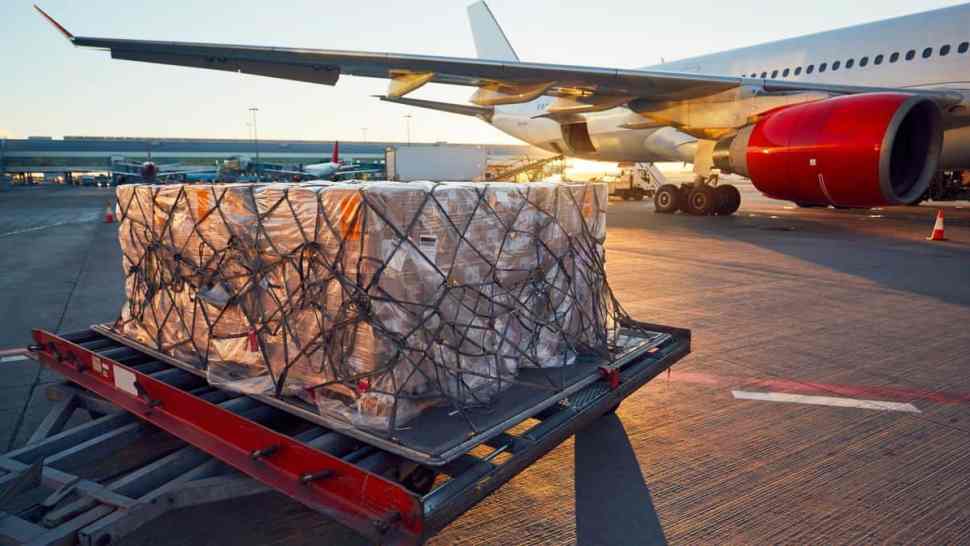
Air freight volume declined 3.2% in July, to about 20.5 billion freight ton kilometers, compared to the same month a year earlier, the International Air Transport Association reported.
It is the ninth straight month of volume decline for the air cargo industry, reflecting economic weakness in key global markets and the pullback in imports and exports due to escalating trade disputes, especially between the U.S. and China. Freight traffic is down 3.5% year-to-date, putting 2019 on track to be the first year since 2009 that the global air freight market shrinks.
The Asia-Pacific trade lane, which represents more than a third of the market, accounts for nearly half the fall in air cargo shipments.
Global trade volumes are 1.4% lower than a year ago and trade volumes between the U.S. and China have fallen 14% year-to-date compared to the same period in 2018. According to the Purchasing Managers Index, new manufacturing export orders have declined since September 2018, and for the first time since February 2009, all major trading nations reported falling orders. An IATA comparison of country export orders and freight ton kilometers indicates a possible structural slowdown rather than simply temporary economic weakness.
“Trade tensions are weighing heavily on the entire air cargo industry. Higher tariffs are disrupting not only transpacific supply chains but also worldwide trade lanes,” IATA Director General Alexandre de Juniac said in a statement. “While current tensions might yield short-term political gains, they could lead to long-term negative changes for consumers and the global economy. Trade generates prosperity. It is critical that the U.S. and China work quickly to resolve their differences.”
Freight volume in July actually increased on a seasonally adjusted basis from June, but IATA said the change simply cancels out a comparable June decrease and should not be considered a market signal.
At the same time demand is rising, airline capacity increased in July by 2.6% from a year ago. The two trends are putting pressure on air rates, but capacity growth has slowed considerably from the monthly average of 5.3% in 2018, according to the IATA report.
In related news, the cost for jet fuel in the U.S. fell 3 cents to $1.98 in July from the previous month and is 22 cents below the July 2018 price, the Bureau of Transportation Statistics said this week.
Brokerage Compliance Symposium
The day before F3. Every compliance issue you face - fraud exposure, carrier liability, FMCSA rules, cargo theft, insurance gaps - navigated by attorneys and operators defining best practices in a changing industry.
F3 Awards Dinner
The night before F3. FreightTech100 companies honored. FreightTech 25 and Shipper of Choice winners revealed live. Cocktail reception into dinner and live music - 300 industry leaders in one purpose-built room.
F3: Future of Freight Festival
Industry-defining keynotes, rapid-fire technology demos, and industry leaders networking in experiences across Chattanooga - plus the inaugural F3 Awards Dinner featuring the FreightTech and Shipper of Choice reveals.
The day before F3. Every compliance issue you face - fraud exposure, carrier liability, FMCSA rules, cargo theft, insurance gaps - navigated by attorneys and operators defining best practices in a changing industry.
The Signal at Chattanooga Choo Choo • Chattanooga, TN Register NowThe night before F3. FreightTech100 companies honored. FreightTech 25 and Shipper of Choice winners revealed live. Cocktail reception into dinner and live music - 300 industry leaders in one purpose-built room.
The Signal at Chattanooga Choo Choo • Chattanooga, TN Register NowIndustry-defining keynotes, rapid-fire technology demos, and industry leaders networking in experiences across Chattanooga - plus the inaugural F3 Awards Dinner featuring the FreightTech and Shipper of Choice reveals.
The Signal at Chattanooga Choo Choo • Chattanooga, TN Register Now