J.B. Hunt transload service starts as shippers deal with intermodal and port congestion
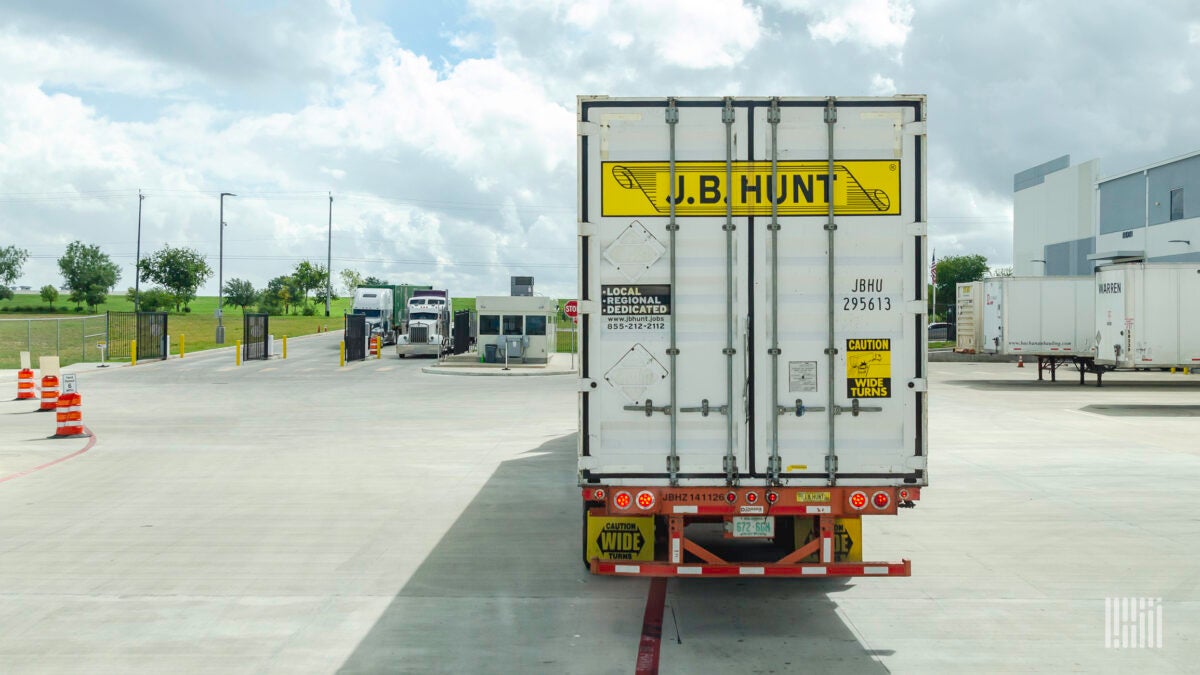
J.B. Hunt Transport Services has started a transload service in the New York metro area. In a press release, the offering is touted as “a one-stop source for quickly transferring ocean freight into equipment for domestic transport.” The facility, located in Jersey City, New Jersey, was recently expanded to 25,000 square feet of space, is open 24/7 and includes on-site parking.
This location is strategically placed to serve the Port of New York/New Jersey, which handled more than 3.4 million loaded import TEUs from the start of 2021 through September, 23% more than the previous year.
Why it’s important:
- The lack of dockworkers at customer facilities has been a major constraint on intermodal growth. This play is J.B. Hunt’s way of addressing congestion and slower turns of its equipment.
- Transloading and warehousing like LTL can be lucrative and offset customer supply chain delays and free up trailers or containers to reload.
- More empty containers equals more loads to move, and J.B. Hunt took delivery of 12,000 additional intermodal containers to unlock its network by early 2022, for a fleet total of around 110,000 boxes in service.
The bottom line
Value-added services like transloading and warehousing are becoming important to large fleets to work around customer issues such as trailer detention, warehouse hiring challenges and parts shortages. Providing a way to unload your equipment, warehouse it and charge the customer for storing it is a potential revenue stream and provides vertical integration compared to only running point-to-point long-haul loads. I’ve addressed some mergers and acquisitions in a previous newsletter, and I would expect to see greater activity regarding M&A deals with large carriers buying attractively priced LTL providers to augment their networks.

COVID omicron variant
COVID variant B11529, dubbed omicron, was first identified by researchers in South Africa, with cases detected in Europe as well as Israel and Australia. Key points:
- Israel has banned all foreigners from entering the country.
- The World Health Organization has labeled this variant a very high global risk.
- Countries around the world, including the U.S., have restricted travel from southern Africa.
- There are a large number of mutations, around 50 total, with more than 30 mutations to the spike protein, the part of the virus that binds to cells in the body.
- Research is ongoing to determine if current vaccines work against the omicron variant, with results possible within two weeks.
- Research is underway to determine if symptoms are milder or worse compared to current strains.
- The new variant has caused companies concern and created confusion.
Effects on trucking include possible lockdowns, additional precautions, changes in consumer spending and vaccine mandates. This is still a recent development and we’ll get a better idea of disruptions or changes in the coming weeks as governments and scientists study this new strain and compare it to our current prevention measures.
Key changes to consider include the reimposing of lockdowns or transmission-limiting policies, as they could cause a greater influx of e-commerce spending compared to brick-and-mortar retail, with freight volumes and supply chains being forced to adjust accordingly.
Market update: Truckload length of haul increases, building inventories as consumption wanes
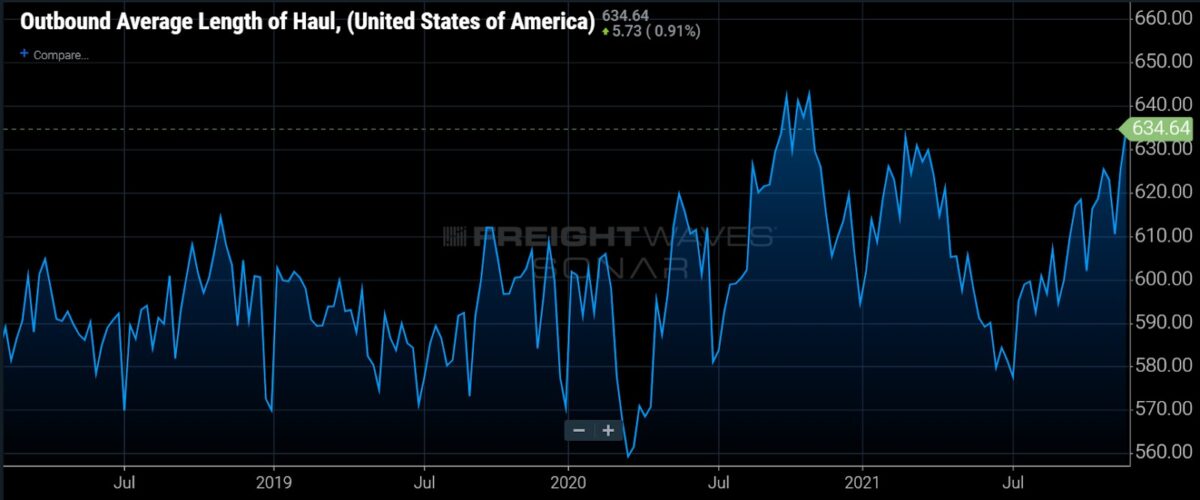
The average outbound length of haul increased 10% over the past five months, indicating shippers see easing demand at the personal consumption level while still trying to build inventories. This data measures the average distance between the origin and destination of a truckload request from a shipper.
Shorter length of haul reflects upstream raw material orders for manufacturing and order fulfillment closer to consumption in the retail sector.
Longer length of haul indicates inventory replenishment, such as raw materials from manufacturing or finished goods for retail. Typical increases are in early spring and early fall due to importing goods ahead of major consumption or production seasons during the summer months and entering the winter holidays.
The routing guide: Links from around the web
Samsung invests $17 billion in Texas for semiconductor and chip production (The Wall Street Journal)
Amazon creating ‘upstream’ warehouses to stage products to feed fulfilment centers (The Loadstar)
Weekly jobless claims reach 52-year low (The Wall Street Journal)
AskWaves: Hedge funds that plowed money into SPACs are taking early exits (FreightWaves)
Black Friday: Salesforce says US sales up despite cost headwinds (FreightWaves)
Like the content? Subscribe to the newsletter here
Brokerage Compliance Symposium
The day before F3. Every compliance issue you face - fraud exposure, carrier liability, FMCSA rules, cargo theft, insurance gaps - navigated by attorneys and operators defining best practices in a changing industry.
F3 Awards Dinner
The night before F3. FreightTech100 companies honored. FreightTech 25 and Shipper of Choice winners revealed live. Cocktail reception into dinner and live music - 300 industry leaders in one purpose-built room.
F3: Future of Freight Festival
Industry-defining keynotes, rapid-fire technology demos, and industry leaders networking in experiences across Chattanooga - plus the inaugural F3 Awards Dinner featuring the FreightTech and Shipper of Choice reveals.
The day before F3. Every compliance issue you face - fraud exposure, carrier liability, FMCSA rules, cargo theft, insurance gaps - navigated by attorneys and operators defining best practices in a changing industry.
The Signal at Chattanooga Choo Choo • Chattanooga, TN Register NowThe night before F3. FreightTech100 companies honored. FreightTech 25 and Shipper of Choice winners revealed live. Cocktail reception into dinner and live music - 300 industry leaders in one purpose-built room.
The Signal at Chattanooga Choo Choo • Chattanooga, TN Register NowIndustry-defining keynotes, rapid-fire technology demos, and industry leaders networking in experiences across Chattanooga - plus the inaugural F3 Awards Dinner featuring the FreightTech and Shipper of Choice reveals.
The Signal at Chattanooga Choo Choo • Chattanooga, TN Register Now