




By Eric Johnson
When people not keenly acquainted with the container shipping business find out that its largest company is based in Denmark, they are usually surprised.
But the fact that the epicenter of the global liner business is Copenhagen is a credit to Maersk Mc-Kinney Møller, the long-time head of the A.P. Møller – Maersk Group and son of the company’s founder.
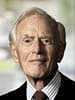
Møller died in mid-April at age 98, after a life which saw him lead his namesake company as chief executive or chairman for nearly 40 years. But that hardly measures the influence he exerted over the shipping conglomerate that is as close to a household name as exists in the shipping world.
Møller was intimately involved in his father’s company from 1940, when he was named partner in the growing liner business, until his death. In that seven-decade span, Maersk grew to become the largest liner shipping company in the world, aided by the development of dynamic new services, key acquisitions, and ever-larger ships.
Behind it all was Møller, a man revered within the company and throughout Denmark for his dedication and vision.
“Will and energy marked Maersk Mc-Kinney Møller’s endeavors,” said Group Chief Executive Officer Nils Anderson, currently on medical leave as he recovers from heart valve surgery.
Møller was initially sceptical of the idea of containerization, but soon fervently pushed the concept within his company. Maersk’s first containerships emerged from its Denmark shipyard in the mid-1970s, a period of intense innovation in the shipping business. Though Maersk had ground to make up on McLean’s Sea-Land, Møller drove hard to match and then surpass the American line.
Decades later, Maersk’s success is proof of his vision. Aided by the 1999 acquisition of Sea-Land’s international container business (the two companies started an operating alliance in 1995), Maersk is now the biggest liner carrier in the world by fleet capacity, annual volume, and revenue. Other key acquisitions included Safmarine (also in 1999) and P&O Nedlloyd in 2005.
Maersk has also regularly set benchmarks for new ship sizes — though the most recent ships, the E-class 15,600-TEU and the to-be-delivered triple-E 18,000-TEU ships were ordered after Moller stepped down as chairman, they had all the hallmarks of his expansive, ambitious leadership.
“The A.P. Møller group was unique in designing and building a continuous stream of ever-larger new ships of all types at its own shipyard in Denmark,” Francis Phillips, chief analyst for American Shipper liner affiliate ComPair Data wrote in an August 2011 commentary on the line’s operational strategy. “From very early on it was able to cascade its older containerships into new trades where Maersk Line proved a ferocious newcomer.”
Phillips also hailed Møller’s “remarkable farsightedness and breathtaking scale of vision,” noting his determination to build a company that was unassailable following his World War II experiences. Møller was exiled to the United States during the war after Germany invaded Denmark and, according to the A.P. Moller autobiography, the experience left him determined never to see Denmark breached in such a way again.
That only constituted a part of his extensive ties to the United States. His mother, Chastine Estelle Roberta McKinney, was American. He was also indelibly impacted by the rise of Sea-Land and containerization, helping to launch dynamic new fixed-day weekly services from Asia to the United States. The purchase of Sea-Land merely completed the cycle.
Møller also fostered a management style at the company that saw young graduates learn things the “Maersk way” and progress up the ranks, populating the industry with thousands of well-versed workers.
“His importance for liner trade is significant — educating people in A.P. Møller – Maersk to be amongst the best in their industry, as well as instilling a very strong work ethic throughout the company has always been a hallmark,” said Lars Jensen, founder of the maritime analyst SeaIntel and former Maersk executive.
“When meeting people in the shipping community throughout the world I am constantly amazed at just how many people have at one time or another worked in A.P. Møller – Maersk, and as such his company has been able to provide the global shipping community with literally tens of thousands of skilled people,” Jensen added.
Phillips pointed out that the dedication to Denmark and the initiative to produce a quality workforce went hand in hand.
“Møller’s greatest success probably lay in motivating a generation of young Danish men with a hard-working brand of patriotic capitalism,” he wrote. “In general he preferred recruiting them into his business direct from school rather than from university. Initiative was rewarded and he challenged them to make decisions. Underlying everything was the ideology that what was good for A.P. Møller was also good for Denmark.”
In another story, on the 2006 unveiling of the Emma Maersk — currently the world’s largest containership — Phillips wrote that admiration for Møller trickled down through every crevice at Maersk.
“Meeting him in person was the greatest moment of my life,” the ship’s cook told Phillips.
Jensen said his prominence in Denmark’s business community is nearly unmatched.
“He was a very big figure in Denmark, right up there likely in the top five of business icons in the past 150 years in Denmark, with a good chance to take the No. 1 spot,” he said.
He left similar impressions on others in the industry.
“I met him in the very early days, when containerization was just coming on the scene,” said former Sea-Land president R. Kenneth Johns, who heads New York-based R.K. Johns & Associates. “He was a very impressive leader at that time for Maersk. As the years went by, he became a legend. He’s done so much for this industry and made Maersk the world leader. I have a healthy respect and great admiration for him.”
Chris Koch, president and chief executive officer for the World Shipping Council, said Møller will go down as a titan of the industry.
“For half a century, Mr. Møller led the growth of the world’s largest shipping line with his focus, his leadership and his timing,” said Koch, who is also a veteran of Sea-Land. “He always showed a keen interest in world events, a special affinity for the United States and an intense loyalty to Denmark. Like other industrial titans, such as Ford, Carnegie and Gates, he will be long remembered not only for the very successful business enterprise he built, but his leadership and contributions to his country and his community.”
Møller was more than just a shipping magnate. The A.P. Møller – Maersk Group is a true conglomerate, presiding over a wide-ranging portfolio of businesses that range from oil and gas interests to Danish supermarkets. Within the transportation and logistics industry, the company also manages terminal operations and forwarding units. Maersk is also the biggest individual shareholder of Danske Bank, Denmark’s largest bank.
The diversity of businesses and interests under the Maersk umbrella has kept the company somewhat insulated from the wild fluctuations in revenue and profits that have characterized its core container shipping business in recent years. It’s an advantage that none of its competitors enjoy.
| Møller |
Møller remained chairman of the board of the A.P. Møller and Chastine Mc-Kinney Møller Foundation, the A.P. Møller Relief Foundation, and the Maersk Employee Foundation, three family foundations that collectively control more than half of the group’s shares.
“The A.P. Moller – Maersk Group has lost a businessman of international format and the man who, if any, can take credit for the group being among the world’s leading and Denmark’s undisputed largest business with activities in a number of areas such as shipping, oil and retail,” said current Group Chairman Michael Pram Rasmussen.
Møller had three daughters, all born in the 1940s.
“We are grateful that our father lived a long and eventful life,” Ane Maersk Mc-Kinney Uggla, the youngest, said in a statement. “In his never failing wish to do good, together with many and great initiatives, he has left a significant mark on our time. My sisters and I have lost a father who never failed neither his family nor his business.”
Brokerage Compliance Symposium
The day before F3. Every compliance issue you face - fraud exposure, carrier liability, FMCSA rules, cargo theft, insurance gaps - navigated by attorneys and operators defining best practices in a changing industry.
F3 Awards Dinner
The night before F3. FreightTech100 companies honored. FreightTech 25 and Shipper of Choice winners revealed live. Cocktail reception into dinner and live music - 300 industry leaders in one purpose-built room.
F3: Future of Freight Festival
Industry-defining keynotes, rapid-fire technology demos, and industry leaders networking in experiences across Chattanooga - plus the inaugural F3 Awards Dinner featuring the FreightTech and Shipper of Choice reveals.
The day before F3. Every compliance issue you face - fraud exposure, carrier liability, FMCSA rules, cargo theft, insurance gaps - navigated by attorneys and operators defining best practices in a changing industry.
The Signal at Chattanooga Choo Choo • Chattanooga, TN Register NowThe night before F3. FreightTech100 companies honored. FreightTech 25 and Shipper of Choice winners revealed live. Cocktail reception into dinner and live music - 300 industry leaders in one purpose-built room.
The Signal at Chattanooga Choo Choo • Chattanooga, TN Register NowIndustry-defining keynotes, rapid-fire technology demos, and industry leaders networking in experiences across Chattanooga - plus the inaugural F3 Awards Dinner featuring the FreightTech and Shipper of Choice reveals.
The Signal at Chattanooga Choo Choo • Chattanooga, TN Register Now